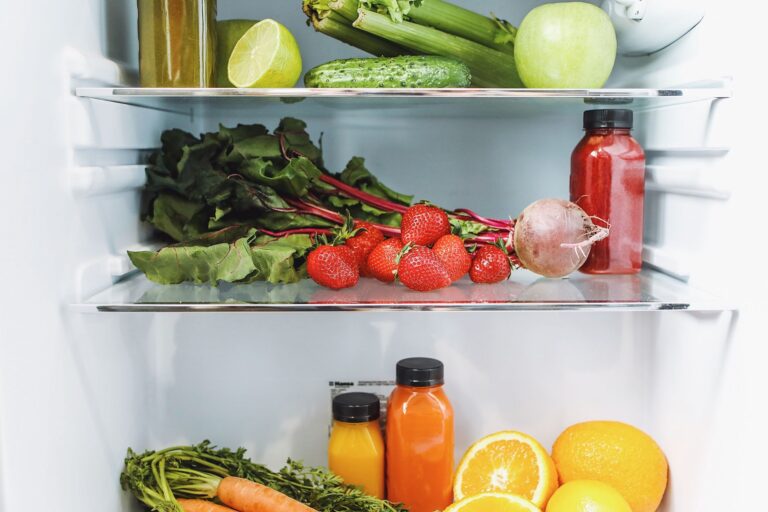
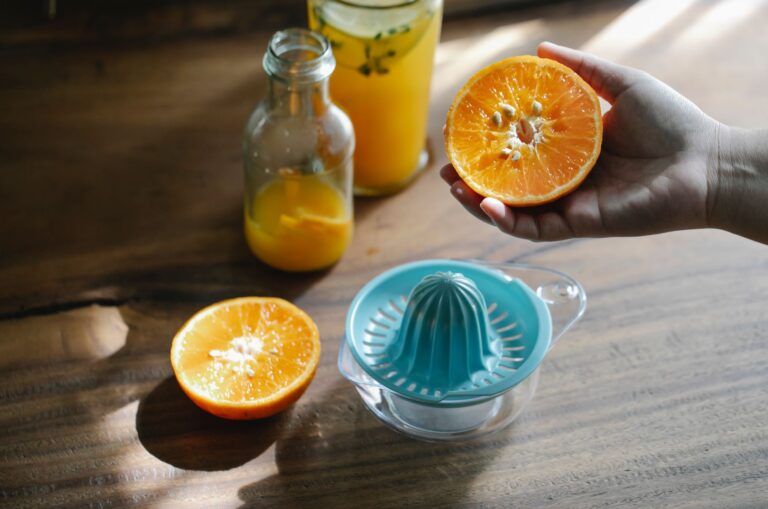
A glass of juice delivers liquid carbohydrates from produce into your bloodstream soon after you drink it. Juice can raise blood glucose faster than whole fruit because much of the dietary fiber-rich pulp is removed, letting you drink several pieces of fruit in minutes.
This discussion covers juice, smoothies, portions, diabetes care, glucose checks, and low-blood-sugar use so you can match each drink to your own eating pattern and care plan.
Juice Delivers Produce Carbohydrates Faster
A juicer can turn three oranges into eight ounces of liquid that you can drink in less than a minute. Your body still receives the carbohydrates from that fruit, but the chewing, volume, and pulp that slow eating are largely gone.
Centrifugal and masticating juicers separate liquid from much of the plant material. That pulp contains dietary fiber, which your digestive system does not break down into glucose. Fiber slows stomach emptying, so carbohydrates reach your small intestine at a more measured pace.
Natural Sugar Still Raises Blood Glucose
A label stating “no added sugar” means sugar was not added during processing. It does not mean the drink has no effect on blood glucose. Orange juice, apple juice, pomegranate juice, and grape juice contain naturally occurring sugars that your body absorbs and uses.
Fruit-heavy juice, a large bottle, or juice taken without food can push glucose upward quickly. Your insulin response must move incoming glucose from the bloodstream into cells, and lower insulin sensitivity can make the rise higher or longer.
That rapid carbohydrate delivery becomes more consequential when juicing removes the structure that normally slows absorption.
Fruit juice is not “bad,” but it is a carbohydrate-containing food. Treating it like flavored water can leave your blood glucose higher than you expected.
Fiber Loss Changes the Glucose Response
That missing pulp changes more than texture. Whole fruit takes bites, chewing, and time, while juice lets you drink the sugars from several pieces of produce with little fullness. Your appetite may not register an eight-ounce juice the same way it registers several whole oranges.
Fiber Slows Absorption Without Removing Carbohydrates
Dietary fiber does not erase the carbohydrate in an apple or orange. Soluble fiber forms a gel-like mixture in the gut that slows gastric emptying and delays contact between digestible carbohydrates and intestinal enzymes.
Your post-meal blood glucose reflects that timing. A whole orange still contains sugar, but its cells, membranes, water, and fiber remain intact. Juice reaches digestion in a much less structured form.
Glycemic Index and Glycemic Load Describe Different Things
Glycemic index ranks how quickly a fixed amount of carbohydrate from a food raises glucose. Glycemic load also accounts for the portion you drink, making it more useful for a real glass of juice. Your serving size can turn a lower-index drink into a substantial glucose load.
| Food form | Fiber and structure | Fullness effect | Practical glucose pattern |
|---|---|---|---|
| Whole orange | Intact cells and several grams of fiber | High | Slower rise for your usual portion |
| Orange smoothie | Blended fiber remains | Moderate | Recipe size shapes the response |
| Orange juice | Little retained pulp | Low | Faster rise from liquid carbohydrate |
How juicing affects blood sugar also depends on the meal around it. Four ounces of juice with eggs and whole-grain toast acts differently from sixteen ounces before your commute, even though the juice contains the same basic ingredients.
Sweet Juice Can Raise Blood Glucose Within Minutes
Within about 15 minutes, a sweet juice can start pushing blood glucose upward. The peak differs from one person to another, but liquid carbohydrates can show their strongest effect from 30 minutes to two hours after drinking.
Your sleep, stress, activity, illness, medication timing, and insulin resistance can alter that curve. A continuous glucose monitor (CGM) can show the rise and fall more clearly than a single finger-stick result.
The Glucose Rise Follows a Clear Sequence
- Liquid enters quickly. Your stomach moves juice onward faster than intact fruit because little chewing or solid structure remains.
- Sugars reach the intestine. Enzymes split sucrose into glucose and fructose, then intestinal transporters move them into circulation.
- Blood glucose rises. Your pancreas releases insulin, or injected insulin begins working according to its timing profile.
- Cells use fuel. Muscle, liver, and fat cells take up glucose at different speeds based on insulin sensitivity and activity.
- The curve settles. A mixed meal can flatten the slope, though it does not remove the carbohydrates in your glass.
Sweet fruit juice on an empty stomach tends to produce a sharper curve than tomato juice with a meal. Your usual portion matters because eight ounces of grape juice contains far more carbohydrate than four ounces of tomato juice.
Meal Timing Changes Speed More Than Total Carbohydrate
Protein, fat, and fiber-rich foods slow digestion. Drinking four ounces of juice beside Greek yogurt, nuts, or a meal containing beans can slow absorption. Your body still counts the liquid carbohydrate, so food pairing does not make a large serving neutral.
A meter or CGM pattern gives you more useful information than a general rule. Use the same recipe, amount, and meal setting across several checks before drawing a conclusion from one unusual reading.
Consistent comparisons matter because processing the same produce changes both its texture and its metabolic effect.
Whole Produce, Smoothies, and Juice Produce Different Patterns
The difference becomes clearer once food form changes. A whole apple keeps its peel, cell walls, and water in each bite; apple juice leaves much of that structure behind; a smoothie sits between those two forms.
Whole Produce Slows Eating and Adds Fullness
Whole fruit and non-starchy vegetables bring volume and chewing into your meal. That physical work slows eating and makes it easier for you to stop after one apple instead of drinking the equivalent sugars from several apples.
Cucumber, celery, spinach, kale, tomato, and lemon contain less carbohydrate than grapes, apples, mangoes, or pineapples. Your serving still matters, yet those ingredients give a homemade drink a less sugar-dense starting point.
Smoothies Retain Fiber but Portions Still Matter
Blending breaks produce into small pieces but retains most fiber unless you strain the drink. A smoothie with berries, plain yogurt, spinach, and water can fit into a meal. A large blend with fruit juice, dates, sweetened yogurt, and several bananas can carry far more carbohydrate.
| Choice | What remains | Glucose trade-off |
|---|---|---|
| Whole fruit | Fiber, water, structure, chewing | More filling and slower carbohydrate delivery |
| Blended smoothie | Most fiber, less structure | Recipe size can push carbohydrate high |
| Traditional juice | Water, vitamins, minerals, sugars | Fast delivery with less fullness |
Fruit juice versus vegetable juice for diabetes comes down mainly to carbohydrate content rather than the word “vegetable.” Carrot juice contains meaningful carbohydrate, while a cucumber-and-celery drink can contain far less. Your recipe tells the useful story.
Ingredients and Portions Set the Size of the Rise
An eight-ounce serving can look modest, yet grape juice can contain close to 38 grams of carbohydrate. That is more carbohydrate than some meal plans assign to a full snack, and a cafe bottle can contain two servings.
The figures below are rounded values from standard nutrition data. Brands and recipes differ, so your package label is the number to count, especially for blends and refrigerated drinks.
| Eight-ounce drink | Total carbohydrate | Sugars | Fiber and expected impact |
|---|---|---|---|
| Orange juice | About 26 g | About 21 g | Under 1 g fiber, moderate-to-fast rise |
| Apple juice | About 28 g | About 24 g | Under 1 g fiber, fast rise |
| Grape juice | About 38 g | About 36 g | Very little fiber, high carbohydrate load |
| Cranberry cocktail | About 34 g | About 31 g | Added sugars raise the carbohydrate load |
| Tomato juice | About 10 g | About 6 g | About 1 g fiber, lower-carbohydrate choice |
| Carrot juice | About 22 g | About 9 g | Some fiber, yet meaningful carbohydrate |
| Green vegetable juice | About 6-12 g | Varies | Recipe-dependent; check fruit additions |
Added sugars put cranberry cocktail in a different category from unsweetened cranberry juice. Tomato juice brings a separate trade-off because bottled versions can contain substantial sodium, which matters for your blood pressure plan.
No single food needs a “worst” label. The useful question is which portions and food patterns repeatedly push your readings high. Four ounces of apple juice with lunch may fit your pattern, while sixteen ounces at breakfast may not.
Measured Portions Make Juice Less Disruptive
A smaller glass changes the carbohydrate amount before digestion starts. Four ounces of orange juice contains roughly 13 grams of carbohydrate, while eight ounces supplies about 26 grams. Your portion can matter as much as your fruit choice.
Vegetable-Forward Ingredients Limit Sugar Density
- Start with cucumber. Cucumber adds volume and water while contributing little sugar to your homemade blend.
- Add leafy greens. Spinach or kale supplies micronutrients with far less carbohydrate than apple or pineapple.
- Use fruit sparingly. Half a green apple or a few berries can brighten flavor without becoming most of the drink.
- Add acid and herbs. Lemon, lime, ginger, mint, and parsley add sharpness without syrup or honey.
- Pour four ounces. Use a small glass rather than drinking from a large bottle with unclear serving marks.
- Drink with food. Pair your serving with protein, fat, and fiber instead of drinking it alone.
A cucumber, celery, spinach, lemon, and ginger juice has a very different carbohydrate profile from a drink based on apple, mango, pineapple, and beet. Your taste can shape the recipe, but sweet fruit works best as a flavor accent rather than the bulk of the volume.
Whole Fruit Gives You More Fullness
An apple or orange tends to keep you fuller when hunger drives the decision. An orange takes time to peel and eat, while its juice can disappear between errands. That pause gives your appetite signals time to catch up.
Skip syrups, honey, agave, and sweetened mixers. These additions raise carbohydrate without restoring the fiber removed during juicing.
How juicing affects blood sugar becomes easier to predict once you record the recipe, portion, meal timing, and response. Those four details reveal patterns that a front-label claim cannot show.
Diabetes Care Requires Carbohydrate Counting and Personal Checks
For type 1 diabetes, type 2 diabetes, or prediabetes, juice belongs in your carbohydrate count. The American Diabetes Association lists fruit juice as a carbohydrate source, even where a label lists no added sugar.
Personal Data Matters More Than a Health Halo
The safest juice for diabetics is not a universal drink. An unsweetened, vegetable-forward recipe in a measured portion can contain less carbohydrate than fruit juice, yet your glucose data, medication plan, and meal pattern decide whether it fits.
Vegetable juice can raise blood sugar. Tomato juice and cucumber-forward blends tend to contain less carbohydrate than grape or apple juice, but carrot, beet, fruit additions, and large servings can still push glucose upward.
Consistent Checks Show Your Pattern
Use the same recipe, measured serving, and meal setting each time you check your response. Record blood glucose before drinking, then follow the timing set by your clinician, such as one or two hours after the meal. A CGM can show the full rise and fall instead of one point.
Medication changes the stakes. Insulin and sulfonylureas can lower glucose beyond the effect of food, so your juice choice belongs beside your prescribed carbohydrate plan. Bring several recorded patterns to a diabetes visit rather than relying on memory.
Your lunch might include chicken, lentils, salad, and four ounces of tomato juice. On another day, twelve ounces of apple juice before lunch creates a different situation. The portion, food pairing, and medication timing shape the result.
Juice Has Separate Roles in Daily Drinking and Low-Blood-Sugar Care
Fast absorption can be a drawback during routine sipping but useful during hypoglycemia care. Juice can raise blood glucose quickly during a low, which differs sharply from choosing a breakfast drink.
Low Blood Glucose Needs a Prescribed Plan
The American Diabetes Association advises the 15-15 approach for many adults: take 15 grams of fast-acting carbohydrate, wait 15 minutes, then recheck glucose. Four ounces of regular orange juice supplies close to that amount, though your personal care plan takes priority.
Homemade juice is poorly suited to urgent low-blood-sugar care because its carbohydrate content shifts with each ingredient. A measured, labeled source makes dosing clearer. Your clinician may set different instructions for children, pregnancy, insulin pumps, or repeated lows.
Health Conditions Can Change Your Daily Choice
Pregnancy can involve gestational diabetes, where post-meal targets can be tighter and meal timing carries more weight. Kidney disease can involve potassium or fluid limits, making large servings of tomato, carrot, beet, or green juice unsuitable for some meal plans.
Frequent highs, unexplained lows, nausea, illness, or unpredictable readings call for individualized medical advice before routine juicing. Your drink is one part of a larger medication, meal, and health picture.
Bottom Line
Juice concentrates the carbohydrates from produce into a drink that reaches your bloodstream faster than whole fruit, largely because much of the fiber-rich pulp is gone. Your strongest tools are a measured portion, a vegetable-forward recipe, food pairing, and personal glucose checks. Use juice deliberately, and reserve fast sweet juice for hypoglycemia only under your established care plan.
FAQ
Can juicing spike blood sugar?
Yes. Fruit-heavy juice can raise blood glucose quickly because it delivers concentrated sugars with little fiber and is easy to drink in a large amount. Your rise depends on the recipe, portion, meal timing, insulin sensitivity, activity, and medicines.
How quickly will juice raise blood sugar?
Blood glucose can start rising within about 15 minutes after sweet juice, with the strongest rise appearing from 30 minutes to two hours. Your response can be faster on an empty stomach or with lower insulin sensitivity.
Why does juice affect blood sugar differently than whole fruit?
Juice removes much of the pulp and dietary fiber that slow digestion. Whole fruit takes time to chew and brings more structure into your meal, while juice delivers liquid carbohydrates quickly and creates less fullness.
Is 100% fruit juice safe for people with diabetes or prediabetes?
100% fruit juice still counts as a carbohydrate source, even without added sugar. Your portion, medication plan, blood glucose goals, and meal pairing determine whether a serving fits. The American Diabetes Association treats fruit juice as a carbohydrate-containing food.
What is the safest juice for diabetics?
An unsweetened, vegetable-forward drink in a measured portion can be a lower-carbohydrate choice than fruit juice. Tomato, cucumber, celery, leafy greens, lemon, and herbs can fit many meal plans, but your glucose pattern and medication plan remain the deciding factors.
Does vegetable juice raise blood sugar?
Carbohydrate remains in the glass, so even vegetable-based juice may raise blood sugar. Tomato or cucumber-forward blends tend to contain less than apple or grape juice, while carrot, beet, and fruit-based additions can raise the carbohydrate serving quickly.