Kale and spinach bring fewer sugars, sharper flavors, and compounds such as chlorophyll to the glass, while apples and oranges add sweetness, more carbohydrate, and higher liquid yield. Your ingredient ratio shapes the drink more than its color.
You’ll see how greens and fruit behave in a juicer, how fiber changes after pressing, and how to choose a mix that fits your taste, health needs, and kitchen routine.
Leafy Greens and Fruits Start With Different Nutritional Strengths
A bright green drink can still contain more fruit than vegetables. Kale, spinach, romaine, chard, cucumber, and celery add chlorophyll, vitamin K, folate, carotenoids, and savory notes. Apples, oranges, grapes, pineapple, mango, and pears bring more natural sugar and a sweeter finish.
Your drink becomes green-forward once non-starchy vegetables make up most of the produce. Cucumber, celery, leafy greens, and lemon add flavor with less carbohydrate than grapes, mango, apple, or pear.
| Feature | Leafy-Green-Forward Juice | Fruit-Forward Juice |
|---|---|---|
| Natural sugar | Lower without much added fruit | Higher, especially with grapes, mango, apple, or pear |
| Calories | Lower per 8-ounce glass | Higher as fruit portions stack up |
| Fiber after juicing | Much insoluble fiber enters the pulp bin | Much insoluble fiber enters the pulp bin |
| Notable nutrients | Vitamin K, folate, carotenoids | Vitamin C, potassium, fruit polyphenols |
| Flavor | Grassy, bitter, savory, crisp | Sweet, tart, aromatic |
| Liquid yield | Lower from loose leaves | Higher from juicy flesh |
| Common role | Lower-sugar vegetable drink | Sweet beverage or flavor addition |
Neither style keeps the structure of whole fruits and vegetables. Juice carries vitamins and minerals into the glass, yet pulp separation changes fullness, chewing time, and your glycemic response.
That difference matters before you pick a machine. Thin leaves, firm stems, watery fruit, and soft fruit flesh all move through a juicer in their own way.
Leaf Structure and Fruit Flesh Move Differently Through a Juicer
Loose spinach can disappear down a feed chute and leave little liquid behind. Leaf cells hold water, but thin leaves also contain strands that a fast spinning basket can send into the pulp container.
You get more consistent results by packing soft leaves tightly and pairing them with a firmer ingredient. Cucumber, celery, carrot, apple, or pear can push leafy material toward the screen rather than letting it spin in place.
Fibrous Greens Need Better Feeding Technique
Kale ribs, Swiss chard stems, parsley, and wheatgrass can wrap around centrifugal parts. Your prep changes that outcome: trim very woody stems, roll large leaves into bundles, and alternate greens with firmer produce.
A masticating juicer crushes produce with an auger before pressing it through a screen. Juicing greens in a masticating juicer leaves drier pulp in many kitchens because the auger keeps pulling fibers forward.
| Kitchen Factor | Fibrous Greens | Juicy Fruits |
|---|---|---|
| Prep | Wash leaves, trim tough stems, bundle tightly | Wash, peel citrus, remove pits and hard rinds |
| Machine behavior | Can cling to screens or spin around blades | Moves quickly through the chute |
| Texture | Thin liquid with fine green sediment | Smoother liquid with more foam |
| Cleanup | Leaf strands cling to screens | Sticky pulp coats containers |
Juicy Fruit Releases Liquid Quickly
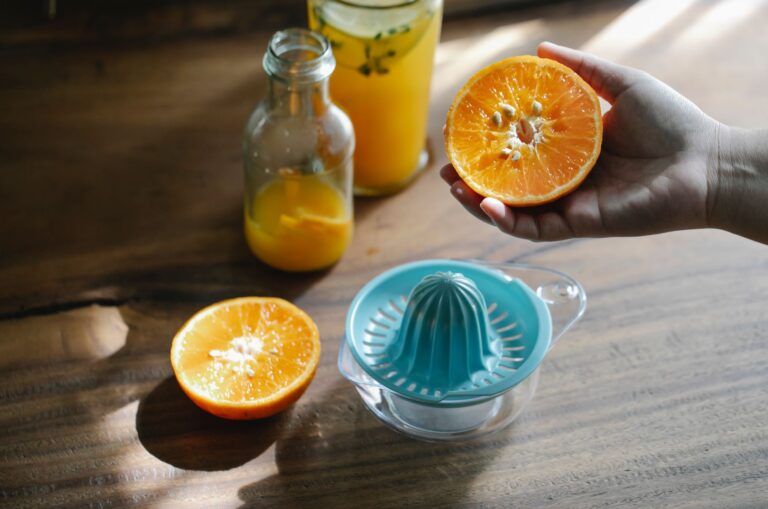
Oranges, melon, pineapple, and ripe apples release water with little resistance. Their soft flesh raises juice yield, though a centrifugal juicer can whip extra air into the liquid and leave a foamy layer on top.
An 8-ounce glass can take a packed handful of spinach plus cucumber and celery. The same glass can come from three medium oranges. Your fruit portion can climb quickly because juice removes the chewing that slows a snack.
That easy flow leads into the largest nutrition split. A fruit-heavy drink can carry far more sugar than a vegetable-heavy drink, even though both began as produce.
Sugar Content Creates the Largest Nutrition Gap
An 8-ounce fruit drink can hold juice from several pieces of sweet produce without the eating time of a whole snack. Fruit juice sugar compared with green juice rises fastest with grapes, pineapple, mango, apple, pear, and orange.
Your body still processes natural fruit sugar as sugar. A drink made from four apples carries more carbohydrate than one made from cucumber, celery, lemon, and kale.
Fruit Portions Add Up Fast
Blood glucose can rise more sharply after fruit juice than after a drink based on non-starchy greens. The reason is simple: fruit juice carries more rapidly absorbed carbohydrate while retaining little intact fiber.
Your meal also affects the result. Protein, fat, fiber-rich foods, serving size, and your own metabolism all shape the glycemic response after you drink juice.
The American Diabetes Association advises attention to carbohydrate portions and blood glucose patterns. That guidance makes a large fruit juice less casual than its bright color suggests for anyone managing diabetes or prediabetes.
A Small Fruit Addition Changes the Recipe
Leafy green juice versus fruit juice is not a fixed contest between two separate recipes. Half a pear, one green apple, or a large handful of pineapple can turn a lower-sugar base into a much sweeter drink.
Your lower-sugar choice is usually a glass built around cucumber, celery, leafy greens, and a modest fruit addition. But whole fruit still keeps its edible pulp, which slows eating and adds more fullness.
Use fruit as a flavor tool rather than the bulk of the pitcher. Your tongue still gets sweetness and brightness, while the glass stays closer to a vegetable drink.
That lost pulp changes more than calorie totals. It also changes whether your drink satisfies you for an hour or passes through like flavored water.
Fiber Loss Changes Fullness and Blood Sugar
The pulp bin shows where much of the insoluble fiber goes. Juice retains some soluble fiber, vitamins, minerals, and phytochemicals, but it does not keep the full fiber network found in intact produce.
Your body receives extracted liquid in seconds. Chewing a whole apple, cucumber, kale leaf, or celery stalk takes longer and gives your stomach more physical bulk.
Juicing Removes Much of the Insoluble Fiber
During extraction, the machine separates liquid from pulp, leaving much of the greens’ insoluble fiber behind. Your juice still contains plant compounds, but the missing structure changes fullness and carbohydrate absorption.
Fruit-heavy juice creates the clearer concern because its sugar reaches your system without the fruit’s intact form. A large glass can contain several fruit portions that would take longer to eat whole.
Blending Keeps More Edible Plant Material
Juicing versus blending greens and fruit comes down to separation. A blender keeps skins, flesh, and edible fibers in the cup, leaving you with a thicker drink that tends to feel more filling.
- Choose whole produce for meals and snacks where chewing and fullness matter.
- Choose smoothies for a drink that keeps pulp, fiber, and a thicker body.
- Choose green juice beside a meal rather than in place of one.
- Limit fruit volume when your goal is a lower-sugar glass with less carbohydrate.
- Save suitable pulp for soups or savory muffins where its flavor and texture fit.
Your juicer cannot put removed fiber back into the glass. It can, however, change how much liquid you get from a packed bundle of leaves.
Masticating Juicers Press Leafy Greens More Thoroughly
Dry, crumbly pulp signals that a machine pressed leaves thoroughly. A cold-press juicer uses an auger to crush produce against a screen, which suits kale, spinach, chard, parsley, and wheatgrass.
A centrifugal juicer spins at high speed and works well with hard apples and watery cucumbers. Leafy material can ride around its spinning chamber, leaving wetter pulp behind.
Slow Pressing Fits Leaf Structure
Your spinach yield can improve with a masticating juicer because the auger grips fibers and keeps them moving toward the screen. That action differs from a spinning basket, which can toss loose leaves outward.
Oxidation starts once cut produce meets air, whether your machine runs slowly or quickly. Drink fresh juice soon after pressing, cover leftovers tightly, refrigerate them promptly, and discard liquid that smells fermented or looks unusually dull.
Bundled Leaves Reduce Waste
- Rinse every leaf under running water and rub away grit near stems and folds.
- Trim tough ribs from mature kale or chard that could slow the feed path.
- Bundle soft greens into compact handfuls instead of dropping loose leaves into the chute.
- Alternate firm produce with greens so the auger keeps gripping the fibers.
- Brush the screen right after juicing before leaf residue dries into the mesh.
You still will not get melon-level liquid from kale or spinach. Realistic yield expectations keep you from adding excess fruit just because the leafy portion made less juice.
An 80/20 Mix Keeps the Drink Green-Forward
Four parts non-starchy vegetables and leafy greens to one part fruit gives your glass sweetness without making fruit the main ingredient. The 80/20 juicing rule is a kitchen ratio, not a medical formula.
Your vegetable portion can include cucumber, celery, romaine, kale, chard, lemon, and parsley. The fruit portion can be half a green apple, half a pear, or a small pineapple wedge.
Volume Matters More Than Exact Weight
An 8-ounce glass solves a practical taste problem more effectively through proportion than precise ingredient weight. Fruit softens bitter notes, while the vegetable base keeps calories and rapidly absorbed carbohydrate lower.
You do not need a scale for every batch. Start with four handfuls or pieces of vegetable ingredients for each small fruit portion, then adjust your next batch after tasting.
Green-Forward Flavor Combinations Stay Balanced
- Kale and cucumber pair with lemon and half a green apple for crisp tartness.
- Spinach and celery work with pear and ginger because pear softens spinach’s mineral edge.
- Romaine and pineapple suit lime, with pineapple kept near one-fifth of the ingredients.
- Chard and apple benefit from cucumber because its water content thins chard’s earthiness.
- Arugula and lemon pair with a small pear portion to soften peppery heat.
The best fruits to add to green juice depend on the leaves in your glass. Pear softens spinach, lemon brightens kale, and pineapple stands up to arugula or dandelion greens.
Start with the smaller fruit amount and taste before your next batch. Your preference stays in charge without losing the character of the greens.
Flavor Changes Should Not Turn Juice Into a Sweet Drink
Bitterness is not a flaw. Kale, dandelion greens, arugula, and mustard greens contain compounds that taste sharp, peppery, or earthy.
Your drink needs contrast rather than a flood of pineapple. Cucumber adds watery volume, celery brings salt-like savoriness, lemon or lime adds brightness, and ginger brings heat.
Layer Flavor Before Adding More Fruit
- Use mild bases such as romaine or spinach while your palate adjusts to green flavors.
- Add bright acid with lemon or lime to lift dull, earthy leaves.
- Use ginger sparingly because a thumb-size piece can dominate an 8-ounce serving.
- Match bold greens with apple, pear, or citrus rather than several sweet fruits.
- Skip bottled juice as a mixer because it adds sugar without fresh vegetable volume.
Sweetness Comes With a Clear Trade-Off
Pineapple can make kale easier to drink, but repeated large portions raise sugar, calories, acidity, and carbohydrate. A drink that tastes like dessert has moved from vegetable-forward juice into fruit beverage territory.
Your palate can shift across several batches. Move from romaine to spinach, then add small amounts of kale or arugula rather than forcing a bitter blend that pushes you toward an all-fruit recipe.
Flavor is only one concern. Medication, kidney history, thyroid conditions, and food handling can matter more than the exact fruit in your glass.
Personal Health Needs and Food Safety Set Useful Limits
Juice can add vitamins and minerals, but a juice-heavy routine can leave meals short on protein, fat, fiber, and lasting fullness. Your meals still need foods such as beans, eggs, yogurt, fish, whole fruits, and vegetables.
Use green juice as a beverage or side rather than a meal replacement. That choice leaves room for the nutrients and texture that extracted juice lacks.
Dark Greens Need Consistent Intake for Some Diets
Vitamin K helps blood clot, and dark leafy greens contain substantial amounts. Your intake should stay steady from day to day while taking warfarin because sudden shifts can affect medication management.
Spinach, Swiss chard, and beet greens contain oxalates. Your clinician can give personal advice around frequent large green juices when you have a history of calcium oxalate kidney stones.
Raw cruciferous greens such as kale fit many diets, yet kidney disease and thyroid disease call for individual food guidance. Your registered dietitian or clinician can account for medications, potassium limits, fluid limits, and your health history.
Clean Produce Before Juicing
Rinse produce under running water before cutting it, including fruit with peels you plan to remove. A knife can carry surface dirt from an orange rind or melon skin into the flesh.
Juicing skips the heating step that reduces some foodborne hazards. Discard leaves with slimy spots or an off odor, refrigerate fresh juice right away, and avoid homemade raw juice when your care team has advised against unpasteurized drinks.
Whole produce and smoothies fit days when your priority is fiber and meal satisfaction. A green-forward juice fits days when you want a lighter vegetable drink with fruit used for taste.
Final Thoughts on Green Juice and Fruit Juice
The defining split is not green versus orange. Your ratio of leafy vegetables to fruit decides whether the glass leans savory and lower in sugar or sweet and carbohydrate-dense.
Juicing leafy greens vs fruits comes down to purpose. You can choose leafy greens for a lower-sugar vegetable base, fruit for measured sweetness, and whole fruits and vegetables for the fiber that juice leaves behind.
FAQ
How does juicing leafy greens differ from juicing fruits nutritionally?
Leafy greens such as kale, spinach, romaine, celery, and cucumber contain less carbohydrate than sweet fruits such as grapes, mango, pineapple, apples, and pears. Your green-forward juice tends to contain less sugar, while fruit-forward juice delivers more sweetness and rapidly absorbed carbohydrate.
Does green juice contain less sugar than fruit juice?
When leafy greens and non-starchy vegetables make up most of the glass, the finished drink has less sugar than one dominated by fruit. Your sugar content rises as you add grapes, mango, pineapple, apples, pears, or several oranges.
Do leafy greens juice well, and which juicer works well for them?
Leafy greens juice well with careful feeding, though loose leaves produce less liquid than oranges, melon, or pineapple. Your masticating juicer can press kale, spinach, chard, parsley, and wheatgrass more thoroughly than a centrifugal juicer.
Which is healthier: fruit juice or vegetable juice?
Vegetable-forward juice is the lower-sugar and lower-calorie choice in most home recipes. Your healthiest routine still includes whole fruits and vegetables because their intact fiber supports fullness and slows carbohydrate absorption.
What is the 80/20 rule for juicing?
A typical produce blend uses about 80 percent non-starchy vegetables and leafy greens with about 20 percent fruit. You can shift the fruit amount for bitterness, but keeping fruit near one-fifth keeps your drink green-forward.
Does juicing remove fiber from leafy greens and fruits?
The machine separates liquid from pulp, leaving much of the insoluble fiber from greens and fruits behind. Your juice retains some soluble fiber, vitamins, minerals, and phytochemicals, yet blending keeps more edible plant material.