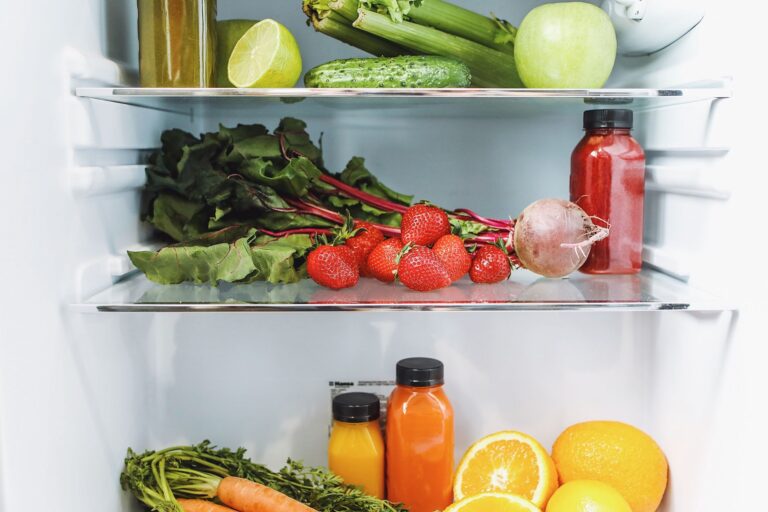
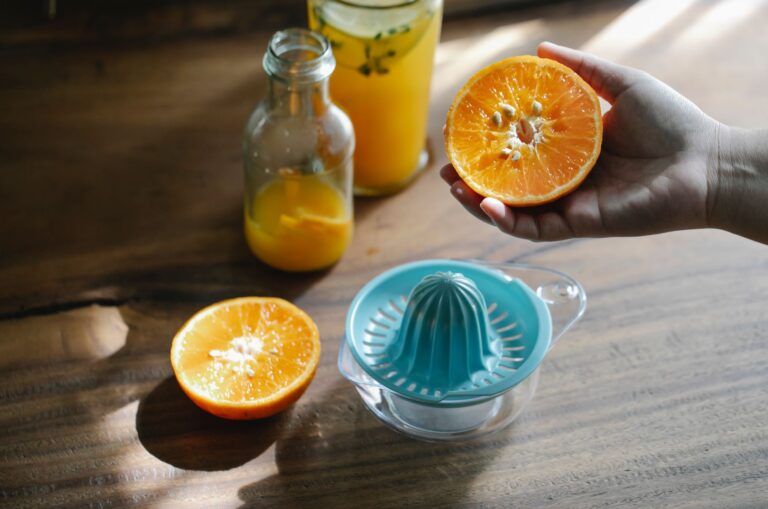
From 1 kilogram of trimmed produce, the recovered liquid provides a clear measure of extraction. Water-rich watermelon, cucumber, and citrus fruit fill a pitcher quickly, while kale, herbs, and dense root vegetables leave more fiber and pulp behind after extraction.
Your kitchen results depend on produce condition, trimming, water content, juicer design, and the balance of liquid and solids in each ingredient. The figures below help you plan practical batches.
Consistent Measurement Makes Yield Comparisons Useful
A full glass can hide a weak return. Start with prepared produce weight after removing bruised spots, woody stems, cores, peels, citrus pith, and other parts that do not belong in your drink.
You can track output in two ways: volume and yield percentage. Volume tells you how many fluid ounces reach the pitcher, while yield percentage compares finished juice weight with prepared produce weight.
Volume Estimates Help You Plan Recipes
Fluid ounces per pound give you a workable kitchen estimate because produce is sold by weight and juice recipes are built by volume. A cucumber that gives 6 fluid ounces leaves you 2 ounces short of an 8-ounce base.
Your batch will vary with cultivar, size, storage time, ripeness, trimming, and machine design. A firm Honeycrisp apple and a soft McIntosh apple do not leave the same amount of liquid in the pitcher.
Yield Percentage Shows Extraction Performance
Weight gives you a cleaner comparison than volume alone. Juice weighs close to water, though dissolved sugar and suspended pulp make the finished liquid slightly heavier.
For your batch, divide finished juice weight by prepared produce weight and multiply by 100. Sixteen ounces of prepared carrots that produce 9 ounces of juice deliver a 56.25 percent yield.
That percentage varies because each ingredient releases a different share of its weight as liquid.
Track prepared weight rather than store weight. A pineapple with skin, crown, and core can look generous at checkout, yet a large share of that weight never enters your juicer.
Water Content, Fiber, and Pulp Set the Extraction Limit
That gap between watermelon and kale begins inside the plant. Water-rich cells release liquid with light pressure, while dense fibers and thick cell walls hold moisture inside pulp and pomace.
You can picture each ingredient as a sponge with a different structure. Cucumber flesh releases water quickly, while carrot tissue needs crushing and pressing before its liquid reaches the screen.
| Produce trait | Action inside the juicer | Effect on your glass |
|---|---|---|
| High water content | Cells release liquid with light crushing. | You get larger volume from cucumber, celery, tomato, and watermelon. |
| Dense fiber structure | Plant strands hold liquid inside compact pulp. | Your carrot or beet output stays moderate after pressing. |
| Soft flesh | Fruit collapses into thick puree. | You may see cloudy juice, wet pulp, and more foam. |
| Thick skins and pith | Nonjuice material adds weight and blocks extraction. | Your citrus return falls after trimming, though flavor stays cleaner. |
| Seeds and cores | Hard pieces yield little liquid. | Your usable return depends on what you remove before juicing. |
Moisture Alone Does Not Predict Juice Volume
Tomatoes contain substantial water, yet their gel, seeds, and soft flesh produce a thick output rather than a thin stream. Your juicer can send moist tomato solids into the pulp chute without separating every drop.
Resistance also changes from ingredient to ingredient. A ripe pear breaks down fast and can coat a screen, while celery carries long fibers that need steady pressure despite its high water content.
Cell Walls Hold the Last Few Ounces
Pectin binds plant cells together in apples, pears, citrus pulp, and berries. Commercial juice plants sometimes add food-grade enzymes before pressing pectin-rich mash, which can raise extraction beyond home-kitchen results.
At home, your strongest gains come from fresh produce, sharp cutting surfaces, small feed pieces, and a machine suited to the ingredient. Industrial pressure and controlled mash handling are not available in a standard kitchen setup.
Produce Categories Follow Clear Yield Patterns
Water content and plant structure make broad groups easier to sort. Watery fruits and vegetables produce the largest volumes, root vegetables sit in the middle, and leafy greens contribute concentrated flavor with less liquid.
Watery Produce Builds Volume Fast
Watermelon, cucumber, celery, tomatoes, oranges, grapefruit, and other citrus fruit sit near the high-yield end. Their volume gives you a full glass without relying heavily on sweet fruit.
Your choice inside this group still changes the result. A thin-skinned Valencia orange can give a different return than a thick-rinded navel, and seed content, pith removal, and dry segments change the final amount.
- Watermelon flesh delivers abundant liquid, though its soft texture leaves rosy, wet pulp.
- Cucumber centers release water rapidly and give green blends a mild base.
- Celery stalks give ample liquid but need steady pressing through stringy fibers.
- Ripe tomatoes make substantial volume with more suspended pulp than cucumber or citrus.
- Citrus segments give strong output after peeling, with sweetness and acidity shaped by variety.
Apples, Pears, Carrots, and Beets Give Middle-Range Output
Apples can yield substantial juice, especially crisp and juicy cultivars. Three medium apples make about 8 fluid ounces in many kitchen batches, though fruit size and moisture decide where your output lands.
Carrots and beets hold less available water than cucumber, and their firm tissue leaves a larger pulp mound. Your return can still feel worthwhile because their flavor is strong, but neither ingredient works as a low-cost volume base like celery.
Mealy apples, grainy pears, and dehydrated roots leave less liquid because less mobile moisture remains inside their cells. Fruit can look intact on the counter while its interior has already lost the crisp texture that aids extraction.
Leafy Greens and Herbs Add Intensity
Kale, spinach, parsley, cilantro, mint, Swiss chard, and cabbage leaves contain water, yet thin leaves carry a high share of fiber relative to extractable liquid. A large bunch can become only a few ounces of dark juice.
Use greens for bitter, mineral, or herbal character instead of pitcher volume. Your recipe becomes easier to predict once cucumber, celery, or apple supplies the bulk and leafy greens serve as concentrated accents.
A Yield Chart Helps You Shop and Scale Recipes
A pound gives you a common measurement for watermelon, carrots, apples, and kale. The ranges below assume washed, trimmed produce and a capable home juicer.
| Prepared produce, 1 pound | Expected juice volume | Cup estimate | Planning role |
|---|---|---|---|
| Watermelon flesh | 12 to 15 fl oz | 1.5 to 1.9 cups | High-volume fruit base |
| Cucumber | 8 to 14 fl oz | 1 to 1.75 cups | Mild watery base |
| Celery | 8 to 12 fl oz | 1 to 1.5 cups | Salty green base |
| Tomatoes | 8 to 12 fl oz | 1 to 1.5 cups | Thick savory juice |
| Oranges, peeled | 8 to 12 fl oz | 1 to 1.5 cups | Sweet citrus body |
| Apples, cored | 7 to 11 fl oz | 0.9 to 1.4 cups | Sweet crisp base |
| Pineapple flesh | 8 to 12 fl oz | 1 to 1.5 cups | Tart tropical sweetness |
| Carrots | 6 to 10 fl oz | 0.75 to 1.25 cups | Sweet root backbone |
| Beets | 5 to 8 fl oz | 0.6 to 1 cup | Earthy color and body |
| Kale | 2 to 5 fl oz | 0.25 to 0.6 cups | Concentrated leafy accent |
| Spinach | 3 to 6 fl oz | 0.4 to 0.75 cups | Mild green addition |
| Lemons, peeled | 4 to 7 fl oz | 0.5 to 0.9 cups | Acid and brightness |
| Limes, peeled | 3 to 6 fl oz | 0.4 to 0.75 cups | Sharp finishing flavor |
Your juice yield chart for fruits and vegetables works as a planning range rather than a fixed promise. A 10-ounce cucumber can give 4 to 8 ounces because its seed cavity, age, size, and juicer design all affect extraction.
Piece Counts Turn Weight Into Grocery Amounts
Three medium oranges yield about 6 to 9 fluid ounces after peeling. Six medium oranges can approach 1 quart, though thick peel, small fruit, and dry segments pull the amount down.
One medium cucumber gives about 4 to 8 fluid ounces. Your 12-ounce glass comes together more easily with two cucumbers or with one cucumber, celery, and a juicy apple.
For 1 cup of apple juice, start with three medium apples. Crisp apples with high moisture can need two large fruits, while mealy apples can need four.
Start recipes with the low end of each planning range. Extra produce can go into another batch, while a short pitcher leaves you searching for a replacement ingredient.
Juicer Design Changes Extraction by Texture
The same pound of kale can leave very different pulp in two machines. Juicer extraction efficiency by produce depends on how a machine cuts, crushes, squeezes, and separates liquid from solids.
| Juicer style | Extraction action | Strong produce matches | Yield limitation |
|---|---|---|---|
| Centrifugal juicer | Fast spinning blade and mesh basket | Apples, carrots, cucumber, celery | Fibrous greens can leave damp, loosely processed pulp. |
| Masticating juicer | Slow auger crushing and pressing | Kale, spinach, herbs, celery, carrots | Soft fruit can clog screens with thick pulp. |
| Hydraulic press | Ground pulp pressed under high pressure | Greens, apples, roots, mixed batches | Needs more setup, cleanup, and separate grinding. |
| Citrus press | Reaming or pressing halved fruit | Oranges, lemons, limes, grapefruit | Works only with citrus and can add bitterness from pith. |
Centrifugal Juicers Favor Firm Produce
A centrifugal juicer handles carrots, apples, cucumber, and celery well because its spinning basket shreds firm pieces quickly. Your watermelon output can also be generous, though soft fruit can leave foam and wet pulp.
Leafy greens expose the limitation. Long kale fibers can circle the basket instead of staying against the cutting surface, leaving clumps that still feel moist in your hand.
Masticating and Cold-Press Juicers Squeeze Fibers Longer
A masticating juicer crushes produce against a screen with a slow auger. Your greens, herbs, celery, and roots tend to release more liquid because the pulp stays under pressure for longer.
A cold-press juicer or hydraulic press squeezes ground pulp after milling. That extra force matters most for fibrous leaves, while cucumber and watermelon show a smaller gain because their water releases readily in nearly any capable machine.
Commercial processors can crush fruit, hold the mash, and press it under far greater force than household machines. The Food and Agriculture Organization of the United Nations describes pressing as a central stage in fruit juice processing, though home output remains lower.
Freshness, Ripeness, and Preparation Change the Final Volume
A cucumber left uncovered in the refrigerator loses the firm, water-heavy feel that made it a strong base. Storage loss lowers extractable liquid before you cut the produce.
Your produce should feel heavy for its size and firm where firmness belongs. Wilted spinach, rubbery celery, shriveled citrus, and soft carrots send less liquid into the pitcher.
Ripeness Changes Pulp Before Weight Falls
Ripe oranges, pineapple, pears, and tomatoes soften as cell walls loosen. Your juicer can release liquid more readily, but fruit past its prime turns toward thick puree and leaves wetter pulp rather than a large rise in clear juice.
Grapes show why cultivar and maturity matter within one crop. Thin-skinned juicy grapes crush readily, while firmer grapes hold more material in skins and seeds, which is why wineries use crushing and pressing stages.
Produce Preparation Changes the Starting Weight
Trimming lowers yield against whole purchase weight because material leaves the scale before extraction. That removal is sensible for mold, woody stems, bitter citrus peel, pineapple crown, and damaged flesh.
- Wash every surface Rinse produce under running water before cutting, especially celery ribs, kale folds, and root crevices.
- Trim damaged spots Remove soft, discolored, or moldy areas so off flavors stay out of your drink.
- Cut for feeding Slice long celery stalks and tough greens into lengths that pass through your machine evenly.
- Peel citrus fruit Remove peel and much of the pith unless your citrus attachment is made for halved fruit.
- Keep thin skins Leave edible skins on apples, cucumbers, carrots, and beets after thorough washing.
- Juice produce promptly Process delicate greens and cut watermelon soon after preparation for better moisture retention.
Fresh cutting also protects flavor. Oxidation begins after cutting, and a long pause can darken apples, dull leafy notes, and leave your finished drink tasting flatter at the same volume.
Recording those shifts in output reveals which handling choices actually improve your own results.
Yield Percentage Turns Estimates Into Personal Records
A kitchen scale converts planning ranges into figures from your produce, your machine, and your trimming habits. How to calculate juice yield percentage starts with prepared weight and finished juice weight.
- Prepare the produce Wash, trim, peel where needed, then weigh usable pieces in ounces or grams.
- Juice the batch Run ingredients through your machine without water, ice, or bottled juice.
- Weigh the output Zero a container on the scale, then weigh the finished liquid.
- Find the percentage Divide juice weight by prepared produce weight and multiply the result by 100.
- Record key details Write down variety, condition, juicer style, and finished fluid ounces for your next batch.
Your notes gain value after two or three batches. A masticating juicer can pull 10 ounces from 1 pound of celery while an older centrifugal unit gives 8 ounces, and that difference changes recipe planning.
Prepared Produce for One Cup
One cup equals 8 fluid ounces. Divide 8 by your measured ounces per pound to estimate the produce needed for one cup of juice.
| Ingredient | Middle planning yield per pound | Prepared produce for 1 cup | Prepared produce for 4 cups |
|---|---|---|---|
| Cucumber | 11 fl oz | About 0.75 pound | About 3 pounds |
| Celery | 10 fl oz | About 0.8 pound | About 3.2 pounds |
| Apples | 9 fl oz | About 0.9 pound | About 3.6 pounds |
| Carrots | 8 fl oz | About 1 pound | About 4 pounds |
| Kale | 3.5 fl oz | About 2.3 pounds | About 9.1 pounds |
For your own figures, replace the middle estimate with your recorded result. A 24-ounce pitcher from 3 pounds of prepared produce needs 0.125 pound per finished ounce, or 1 pound for each 8-ounce cup.
Cost Per Glass Shows the Real Tradeoff
Store price alone can mislead you. A low-priced bunch of kale becomes costly juice once it produces only a few ounces, while a higher-priced cucumber can form a larger share of the drink.
Divide ingredient spending by finished ounces, then multiply by 8 for an 8-ounce glass. A $3.00 batch that produces 24 ounces equals $1.00 per cup before electricity, labor, and cleanup.
Carrot juice can feel costly because carrots retain substantial pulp and a recipe can need 1 pound or more for each cup. Your cost per glass falls when carrots bring flavor beside a high-volume base rather than carrying the batch.
Lower cost and higher output only help when the resulting blend still tastes balanced.
Balanced Ingredient Choices Matter More Than Maximum Volume
A tall pitcher is not automatically a better pitcher. Watermelon can flood a batch with liquid, yet an all-watermelon drink can taste thin and sweet while missing the acidity, bitterness, or root depth you wanted.
Your goal is a balance of volume, flavor, nutrition, and pulp behavior. Start with a high-yield base, then add ingredients that earn their smaller return through taste, color, or aroma.
High-Yield Bases Give Recipes Structure
Cucumber, celery, tomato, and watermelon work well as bases because they bring water without a heavy pulp load. Add kale, parsley, ginger, carrot, beet, lemon, or lime in smaller amounts to shape your finished drink.
A 16-ounce green juice can start with one large cucumber, six celery stalks, one apple, a handful of spinach, half a lemon, and a small piece of ginger. Your spinach and ginger bring character, while cucumber and celery carry the volume.
A savory batch follows the same pattern. Tomato, cucumber, celery, lemon, and a small beet create more drinkable volume than a beet-heavy blend while the beet still brings earthy color.
The 80/20 Rule Describes Recipe Balance
A typical glass combines about 80 percent vegetables with 20 percent fruit for a balanced recipe. Your ratio can limit sweetness, but it does not predict extraction or set a required formula for every glass.
Your vegetable portion can still be high-yield or low-yield. Cucumber and celery give a larger return than kale and parsley even though all four ingredients sit on the vegetable side of the recipe.
Dry Pulp Gives Only One Signal
After pressing, a dry-looking residue often indicates strong extraction, though it cannot alone confirm a productive batch. Soft mango, pear, tomato, and watermelon leave moist solids because their pulp holds puree, not because your juicer has failed.
- Match machine and texture Feed leafy greens through a masticating juicer or press system rather than expecting fast spinning baskets to excel.
- Rotate dense pieces Alternate spinach or kale with apple, cucumber, or celery so fibrous material moves through the screen.
- Skip tired produce Reserve wilted leaves, shriveled citrus, and rubbery carrots for cooking rather than low-volume juice.
- Judge finished output Track finished ounces, flavor, and pulp texture instead of dry pomace alone.
- Weigh repeat batches Record the same recipe twice before blaming your machine for normal crop variation.
Chasing every last drop can make juice bitter or overly pulpy. Stop pressing citrus peel and pith once harsh flavor enters the pitcher, even with more liquid inside.
Final Takeaways
Water-rich produce fills your pitcher, fibrous produce asks more from your machine, and fresh preparation protects the moisture already inside each ingredient. Use planning ranges to shop, weigh a few batches to learn your own extraction rate, then build drinks around flavor rather than volume alone.
Your most reliable juice routine starts with prepared weight and ends with the amount that reaches the glass. Juice yield by produce type gives you a practical baseline, but your produce condition and juicer decide the final number.
FAQ
How does produce type affect the amount of juice extracted?
Produce type affects extraction through water content, fiber structure, pulp, skin thickness, seeds, and cell-wall strength. Your cucumber, watermelon, celery, and citrus fruit give more liquid by weight than kale, parsley, carrots, and beets because they hold more readily released water.
Which fruits and vegetables yield the most juice?
Watermelon, cucumbers, celery, tomatoes, oranges, grapefruit, and other juicy citrus fruits tend to give the largest volume per pound. Your final amount changes with ripeness, peel thickness, seed content, freshness, and the pressure your juicer applies.
Why do leafy greens and herbs produce less juice by weight than cucumbers or citrus?
Leafy greens and herbs contain water, but their thin leaves carry more fiber relative to extractable liquid. Your kale, parsley, cilantro, and mint add strong flavor, while cucumber and citrus fruit supply the larger volume needed for a full glass.
How do water content, fiber structure, and pulp affect juice extraction?
High water content raises volume because cells release liquid with light crushing. Dense fiber traps moisture in pulp, while soft fruit pulp can pass through as cloudy juice or wet pomace instead of separating into clear liquid.
Does a masticating or cold-press juicer produce more juice than a centrifugal juicer?
A masticating juicer or cold-press juicer tends to pull more liquid from leafy greens, herbs, celery, and root vegetables because it keeps pulp under pressure longer. Your centrifugal juicer still works well with apples, carrots, cucumbers, and firm produce.
How do ripeness and freshness affect juice yield?
Fresh produce holds more moisture and gives firmer texture for extraction. Your ripe fruit can release liquid readily, but overripe fruit can turn into thick puree that leaves wetter pulp and more foam.