

Pomegranate season is short, and the seeds are stubborn. Cutting one open feels like defusing a tiny grenade, and the reward is a thick, jewel-toned juice that rarely makes it into a glass without a fight. The right juicer changes that equation entirely, separating rind, pith, and arils with a process that protects the bright, slightly tart flavor. This list covers countertop cold-press models for daily routines, sturdy manual presses for citrus-leaning pomegranate fans, and a few smart accessories that round out a juicing setup.
The Leading Options At A Glance

Nama J3 Compact Cold Press Juicer (White)

Nama Large Pitcher Set 100oz with Strainer

Nama Sorbet Attachment for J2 Juicer

Nama Citrus Attachment for J2 Juicer
Hurmovae Cast Iron Manual Citrus Juicer

Nama J2 Cold Press Juicer (Black)

Zulay Kitchen Pulperizer 9-in-1 Cast Iron Juicer

Tocualvoss Aluminum Hand Citrus Press (Silver)
More On The Choices That Made The List
The Nama J3 takes the hands-free cold-press concept and shrinks it down. Where the larger J2 dominates a counter, the J3 is the version you can tuck into a cabinet between uses, making it a natural pick for apartment dwellers and anyone who treats the kitchen counter as prime real estate. The single-auger masticating design (a slow-turning screw that crushes rather than spins) gently processes pomegranate arils without generating much heat, which helps preserve the bright flavor the fruit is loved for.
It works particularly well for pomegranate blends that mix in carrots, apples, or ginger, where you want a hands-off approach. The self-feeding hopper, which is the chute where you drop whole produce, accepts a full recipe at once, so the machine does the work while you chop the next round. Compared with the J2, you give up some of the larger machine’s capacity, but you gain portability. For most small kitchens, that is a fair trade.
Practical Advantages
- Compact footprint suits galley kitchens, RVs, and studio apartments where counter space is at a premium.
- Self-feeding hopper lets you load a full recipe in one go, so the juicer does the work while you prep the next round.
- Masticating auger crushes slowly, which helps the juice hold onto flavor and color compared with high-speed centrifugal models.
- White finish reads clean and modern, blending into light-colored kitchens without feeling visually heavy.
- Covered breakdown protection is offered for accidental damage and parts, depending on the plan chosen.
Things To Consider
- Smaller hopper capacity than the J2 means longer juicing sessions when you are prepping for a crowd.
- Masticating juicers run slowly by design, so you trade speed for juice quality, something pomegranate purists appreciate but impatient cooks may not.
Who It Suits Best
Solo juicers and small households who want a countertop-friendly cold-press that disappears into a cabinet when the glass is empty.
Where Another Pick Suits Better
Households juicing for four or more at a time will get more done with the Nama J2, which moves volume faster and shares the same hands-free approach.
The Nama Large Pitcher Set is not a juicer, and that is precisely why it earns a spot on a pomegranate list. Cold-press sessions produce a lot of juice at once, and most kitchen pitchers are too small or too flimsy to hold a full run. This 100-ounce set, complete with a built-in strainer and pulp catcher, catches the day’s yield in one pour and keeps it ready in the fridge until the last glass is gone.
Think of it as the cleanup-reducing partner to the J2 and J3 covered above. The sealing lid helps slow oxidation, which is the browning and flavor loss that happens when juice meets air. You pour straight from the spout into bottles or glass jars without fishing out a separate strainer. For weekly meal prep, the math is simple: one batch, one vessel, five days of breakfast.
A Few Strong Suits
- 100-ounce capacity handles a full juicing session without mid-run transfers that dirty extra containers.
- Built-in strainer and pulp catcher keep solids out of the final pour, useful when you prefer clear juice over pulpy blends.
- Sealing lid helps preserve flavor in the fridge, so the last glass tastes close to the first.
- Balanced handle and smooth spout make measured pours into bottles and jars clean and controlled.
Honest Caveats
- It is a serving and storage vessel, not a juicer, so you still need a press or attachment to do the actual extracting.
- 100 ounces of liquid is heavy, and the pitcher takes up real fridge shelf space, which smaller fridges may struggle to spare.
Right Fit For
Meal preppers and families who batch juice on Sunday and want one sealed container to pour from all week.
Skip It When
You only juice one glass at a time. A standard 32-ounce mason jar with a regular lid covers that routine for less.
Once the J2 is on the counter, the Sorbet Attachment is the add-on that turns it into a frozen dessert maker. Drop in frozen fruit, a splash of yogurt or a non-dairy alternative, and the same auger that grinds pomegranate arils presses the mixture into a soft, scoopable sorbet in minutes. There is no separate machine to store, which is a quiet win in smaller kitchens.
The honest read is that this attachment only makes sense if you already own the J2 (or plan to), so it functions as a system expansion rather than a standalone purchase. For pomegranate specifically, the use case is more limited than it is for berries, mango, or banana, but it shines for anyone who treats their juicer as a year-round tool rather than a single-purpose gadget.
Real Benefits
- Reuses the J2’s motor and auger, which keeps storage requirements flat while adding dessert capability.
- Works with frozen fruit plus dairy or non-dairy yogurt, giving you a quick path to dairy-free treats.
- Quick processing time, often under five minutes from frozen cubes to scoopable sorbet.
- Covered breakdown protection on the attachment for accidental damage, depending on the plan selected.
Points To Note
- Requires the Nama J2 base unit to function, so it is not a standalone sorbet maker.
- Hard frozen fruit straight from the freezer needs a minute or two to soften for the cleanest feed, something first-timers may not expect.
Made For
J2 owners who want to stretch their juicer into a year-round frozen-dessert tool without buying a second appliance.
Look Elsewhere When
You do not yet own a J2. In that case, the Citrus Attachment for the J2 is a more directly useful first add-on for pomegranate season.
The Citrus Attachment for the J2 is the part of the Nama system that handles oranges, lemons, limes, and grapefruits without peeling them first. You cut the fruit in half, press it onto the reamer, and the machine does the squeezing while you move on. For pomegranate-heavy households that also keep citrus around, this is the attachment that keeps a single machine on the counter rather than a second juicer in the cabinet.
Worth flagging: pomegranate itself is not a citrus fruit, so the attachment’s direct role in pomegranate juicing is limited. The connection is workflow. You might press pomegranates through the J2 main auger and run a tray of citrus through the same base on the same morning. If your routine is juice plus a citrus vinaigrette or a morning lemon water, the time savings compound fast.
The Helpful Details
- No-peel operation cuts prep time in half compared with peeling citrus by hand before juicing.
- Swaps onto the J2 base, so the kitchen footprint stays the same and storage stays minimal.
- Direct-feed design keeps pulp and seeds out of the pour for cleaner, smoother citrus juice.
- Reusable through the same covered breakdown and support channels as the rest of the Nama lineup.
Practical Considerations
- Like the sorbet attachment, it is dependent on owning the J2, and offers nothing as a standalone unit.
- Citrus-only function means it does not directly process pomegranate arils, so it pays for itself only in mixed routines.
Best Suited To
J2 owners who juice citrus weekly alongside their pomegranate and produce runs and want one base machine for everything.
Not Your Match When
You are a pomegranate-only household. The main J2 juicer alone covers your needs without spending on attachments.
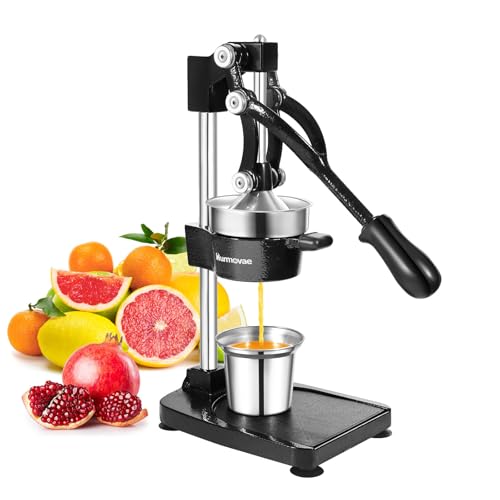
Stepping away from the electric lineup, the Hurmovae is a cast iron lever press built like a piece of workshop equipment. The 17-inch handle creates serious downward force, while the 5-inch funnel is wide enough to drop in a halved pomegranate and let the machine do the work. There is no motor, no power cord, and very little to go wrong mechanically, which is the quiet appeal for a backup or off-grid juicer.
You will not get the throughput of a Nama J2 here, and that is the trade. A lever press is a slower, more deliberate process, but for someone juicing a few glasses at a time, the result is excellent extraction with almost zero noise. The cast iron body is heavy, so plan a permanent spot on the counter or in a deep cabinet rather than shuffling it in and out daily.
What Earns Its Place
- Solid cast iron construction gives the press real weight and stability, which matters when the lever is under load.
- 17-inch lever geometry makes squeezing large citrus halves and small pomegranate pieces equally manageable.
- Manual operation produces no motor heat, helping preserve the bright, fresh flavor pomegranate is prized for.
- Works without power, which makes it a useful backup during outages or in cabins and RVs.
Some Limits To Know
- Cast iron is heavy, so the press is not something you store on a high shelf or move around the kitchen daily.
- Slower than electric cold-press models, and the hands-on lever motion is not a fit for anyone with limited grip strength.
Perfect Match For
Home juicers who prefer a no-electric, no-noise setup and have a permanent counter spot for the press to live.
Reach For A Different Pick When
You need a fast, set-and-forget routine. The Nama J2 covers that workflow in a smaller footprint and without the lever work.
The Nama J2 is the workhorse of this list, and the model around which the rest of the Nama accessories are designed. The single-auger masticating system runs slowly enough to keep heat low and flavor high, and the self-feeding hopper accepts a full recipe at once, so you can load it up and walk away to do something else. For pomegranate specifically, that hands-free cycle is a quiet game-changer on busy mornings.
Where the smaller J3 prioritizes portability, the J2 leans into capacity. Pomegranate season produces a lot of fruit, and the J2 chews through it without requiring constant attention. Black is the stealth finish for kitchens where you would rather the appliance blend in than stand out, and it matches the look of most modern small appliances on the counter.
Positive Takeaways
- Self-feeding hopper loads an entire recipe at once, which makes hands-off morning routines realistic.
- Masticating auger crushes pomegranate arils gently, helping the juice keep its deep color and clean flavor.
- Larger capacity than the J3, so it handles weekly prep and family-sized batches without overloading.
- Compatible with the Citrus and Sorbet attachments above, which extends the machine’s usefulness across the year.
- Covered breakdown and accidental damage support available, depending on the plan selected.
Worth Noting
- Bulkier than the J3, so it needs a dedicated counter spot or a generous cabinet to live in between sessions.
- Cold-press juicers run for several minutes per batch, so this is a slow, steady process rather than a fast one.
Who Will Love This
Daily juicers and family households who want a single machine that handles pomegranate, citrus, and produce without babysitting.
Consider Something Else When
Counter space is the limiting factor. The Nama J3 fits the same workflow in a noticeably smaller footprint.
The Zulay Pulperizer takes the manual press format and stretches it taller, which translates into more leverage and less effort per squeeze. The stainless steel bowl catches the juice and pulp separately, so cleanup is a rinse-and-go rather than a disassemble-the-press situation. For pomegranate, the bowl diameter handles halved fruit comfortably without forcing you to quarter smaller pieces.
Like the Hurmovae above, this is a no-power option, so it earns its keep in routines where simplicity, silence, and reliability matter more than speed. It also doubles as a conversation piece, since few guests expect to see a cast iron press on a modern counter. The trade is the same: you are trading hands-off automation for hands-on pressing.
Well-Handled Touches
- Extra-tall lever geometry makes pressing large fruit halves and pomegranate pieces easier on the hands.
- Stainless steel bowl separates juice and pulp, which speeds cleanup and keeps the counter tidy.
- Cast iron body is built for long-term use and resists flexing under repeated pressing cycles.
- Manual operation means no motor heat and no noise, useful for early-morning sessions in shared spaces.
Factors To Consider
- Cast iron weight means a permanent kitchen spot rather than a tucked-away appliance.
- Slower than electric cold-press models, so it suits smaller, more deliberate batches.
Built With In Mind
Home juicers who prefer a heavy-duty manual press and value easier cleanup over automation.
A Better Fit Elsewhere
You want a fully automated pomegranate session. The Nama J2 loads and walks away without the lever work.
The Tocualvoss hand press is the lightweight, no-fuss option at the end of this list. Aluminum construction keeps it light enough to grab from a drawer each morning and tuck back when you are done, and the curved ergonomic handle is comfortable to grip even when you are working through a tray of halved pomegranates. It will not replace a proper cold-press for volume, but it covers the quick-squeeze routine without taking up space.
For pomegranate specifically, this is the right tool for a single serving or two, not a batch. The bowl size is best matched to small citrus and halved pomegranate pieces, and the manual squeeze gives you tactile control over how hard you press. It is also the kind of press that travels well to a friend’s house for brunch or a tailgate, where electricity is not on the menu.
What Stands Out
- Lightweight aluminum build makes the press easy to grab, use, and store in a kitchen drawer.
- Curved ergonomic handle reduces hand fatigue during repeated squeezing, helpful when pressing several fruits in a row.
- No power required, so it works anywhere: picnics, outdoor brunches, or a friend’s kitchen.
- Simple construction keeps cleanup to a quick rinse under the tap.
Points To Keep In Mind
- Smaller than the cast iron presses above, so it is best for single servings rather than weekly batch prep.
- Aluminum is lighter and less rigid than cast iron, so very firm pressing on large fruit may flex the handle.
Whose Shelf It Belongs On
Casual juicers, occasional entertainers, and anyone with limited kitchen storage who wants a one-glass-at-a-time press.
Another Choice May Suit
You juice daily and want hands-free automation. The Nama J2 sets the standard for that workflow in this list.
What To Weigh Before Picking Your Pomegranate Press
A pomegranate juicer is really a small category of generalist machines, because pomegranate is rarely the only fruit you process. The right pick depends on how often you juice, how much counter space you can spare, and whether you want a hands-free electric workflow or a tactile manual press. Below are the attributes that genuinely shape day-to-day use, and the trade-offs worth weighing before you commit.
Masticating Versus Manual Press
A masticating juicer (also called a slow juicer or cold press) uses a single turning auger to crush produce at low RPM, which keeps heat low and protects color and flavor. Manual presses use a lever and a reamer, so they trade speed for simplicity and silence. Daily juicers benefit from a masticating model, while occasional or single-glass users get more value from a cast iron or aluminum hand press.
Capacity And Footprint
Cold-press machines range from compact travel-ready units to full countertop systems. The trade is direct: larger hoppers mean longer uninterrupted runs, but they also demand a permanent counter or cabinet spot. In small kitchens, a compact masticating model paired with a sealed pitcher for storage often beats a full-size machine that has to be dragged out and put away each morning.
Pomegranate-Specific Behavior
Pomegranate is high in sugar and lower in fiber than apples or carrots, so the juice runs thin and the pulp separates quickly. Cold-press machines handle that loose pulp well, and many include a separate strainer for the bright, clear pour pomegranate fans usually want. Manual presses catch the juice in a bowl, so you may need a fine mesh strainer to reach the same clarity. For mixed routines that include citrus, attachments that swap onto a base unit save you from owning two machines.
Build, Cleanup, And Long-Term Care
Stainless steel and cast iron last the longest but weigh the most. Aluminum presses are lighter and friendlier to small drawers, though they flex more under heavy pressure. Masticating machines with covered breakdown protection and accessible parts tend to age better in daily use. Plan to rinse components immediately after each session: pomegranate pulp dries fast and bonds to plastic once it sets.
Things To Keep In Mind Before You Buy
Mistakes Worth Dodging
The most common miss is buying for capacity you will not use. A full-size masticating machine on a small counter often ends up stored in a closet, which defeats the point. Match the machine to your real routine, not the busiest week of pomegranate season you can imagine. Another trap is overlooking the role of a sealed pitcher or storage jar. Cold-press juice oxidizes quickly once it meets air, and a flimsy lid cuts shelf life in half.
Where The Extra Money Goes
Spending up on a cold-press machine typically buys a more powerful motor, a larger feed chute, and tighter tolerances on the auger housing, all of which show up in cleaner juice and faster cleanup. Premium tiers also tend to offer more accessory options, so the system can grow with you rather than lock you into a single function. For occasional users, that upgrade rarely pays back, but for daily juicers, the difference in daily friction is real.



