

Hand-kneading a stiff pizza or bread dough tests your patience and your wrists. A capable stand mixer takes the labor out of gluten development so you can focus on flavor, shaping, and timing. Whether you bake weekly or just pulled a sourdough starter out of the fridge for the first time, the right machine changes everything.
An Overview Of The Picks

KitchenAid KSMPDX Pasta Deluxe Set & Metal Food Grinder Attachment
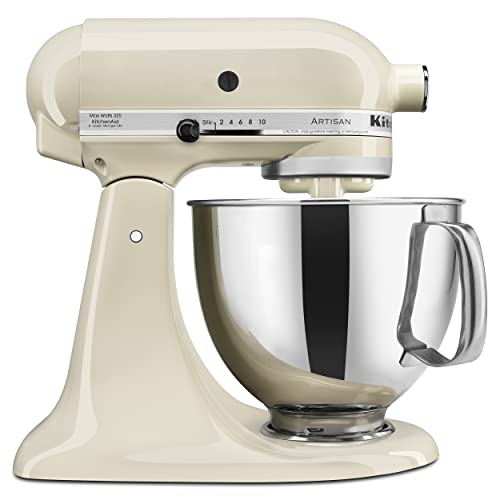
KitchenAid Artisan 5-Qt Tilt-Head Stand Mixer (Almond Cream)
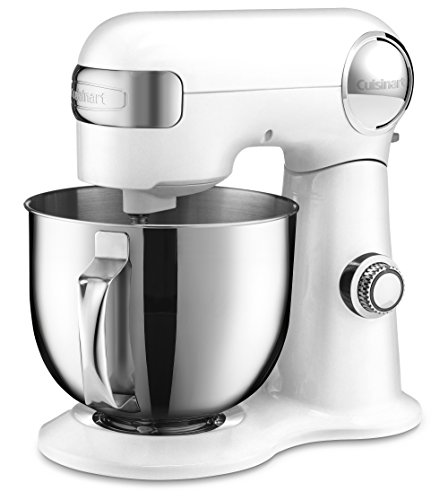
Cuisinart 5.5-Qt 12-Speed Stand Mixer (White Linen)

KitchenAid Artisan Mini 3.5-Qt Tilt-Head Stand Mixer (Contour Silver)

KitchenAid Artisan Mini 3.5-Qt Tilt-Head Stand Mixer (Candy Apple Red)

Cuisinart SM-50BLU Precision Master 5.5-Qt Stand Mixer (Frosted Blue)

Aucma 6.5-QT 660W 6-Speed Tilt-Head Stand Mixer (Black)

Hamilton Beach Die-Cast Metal Stand Mixer, 12 Speeds
More On The Choices That Made The List
This two-piece bundle is the only entry here that isn’t a mixer itself. It turns the KitchenAid stand mixer you already own into a fresh-pasta workshop and a meat-grinding station. If your counter already hosts a tilt-head or bowl-lift KitchenAid, the power hub accepts these attachments directly, so the dough that comes out of your mixer feeds straight into the rollers.
The Pasta Deluxe side uses stainless steel rollers and cutters with eight thickness settings, covering spaghetti, fettuccine, lasagnette, and capellini. Bundled with the Metal Food Grinder, which includes fine, medium, and coarse plates plus sausage stuffer tubes, this combination works well for weekend cooking projects where dough leads to fillings. It assumes you already have the mixer; without one, this bundle is just metal on a shelf.
The Upside
- Eight thickness settings give you real control over pasta texture, from delicate capellini to thicker lasagnette
- Stainless steel rollers and cutters resist wear and wash up easily after floury sessions
- The grinder’s expanded food tray processes more ingredients per batch, speeding up burger or sausage prep
- Three grinding plates plus two sausage stuffer tubes cover a wide range of textures
Things To Consider
- Requires a separate KitchenAid stand mixer to function, adding to the total investment
- Pasta rollers need careful hand-washing and thorough drying to prevent surface corrosion over time
Who It Suits Best
Home cooks who already own a KitchenAid stand mixer and want to branch into fresh pasta and small-batch grinding without buying a second appliance.
Where Another Pick Suits Better
Shoppers who don’t yet own a KitchenAid should start with the KitchenAid Artisan 5-Qt Tilt-Head Stand Mixer, which gives you the mixer and the hub this set depends on.
The KitchenAid Artisan 5-Qt has been a kitchen-counter staple for good reason. The 5-quart stainless bowl handles enough dough for two loaves of bread, a tray of cinnamon rolls, or a thick pizza batch without crowding the hook. Tilt-head access makes swapping the flat beater, wire whip, or spiral dough hook a quick motion, so you can move from kneading to whipping in seconds.
Ten speeds cover everything from a slow stir for activating yeast to a vigorous whip for meringue. Unlike the KitchenAid pasta bundle above, this is the full mixer, so it’s a true standalone solution for anyone starting a baking routine. The almond cream finish adds warmth to kitchens with neutral cabinets, and the same hub accepts the pasta and grinder attachments from Item 1 if you want to expand later.
Notable Gains
- 5-quart capacity covers most family-sized baking projects in a single batch
- Ten speeds give precise control from slow yeast mixing to fast whipping
- Tilt-head design provides clear bowl access for scraping and ingredient additions
- Compatible with the full KitchenAid attachment ecosystem for future expansion
Worth Noting
- Body is primarily coated metal, which shows fingerprints and may scuff over years of heavy use
- Larger footprint than the Artisan Mini, so it may crowd a small galley counter
Key Specs
Right Fit For
Family bakers who want a versatile all-purpose mixer and plan to bake multiple loaves or large cookie batches each week.
Skip It When
Studio-apartment dwellers with very limited counter space may prefer the smaller footprint of the KitchenAid Artisan Mini 3.5-Qt instead.
Cuisinart’s SM-50 leans into the heavier end of the category. The die-cast metal body gives it real weight on the counter, which matters when you set a stiff bread dough to kneading and walk away. That extra mass keeps the head from walking across the surface during long hydration cycles.
The 5.5-quart bowl is slightly larger than the KitchenAid Artisan above, and 12 speeds add finer tuning between gentle folding and aggressive whipping. A chef’s whisk, mixing paddle, and dough hook come included along with a splash guard that has a pour spout, so adding oil or water mid-knead doesn’t require stopping the machine. The white linen finish brightens traditional kitchens, though you may find the heavier weight makes it less convenient to move for storage.
A Favorable Mix
- Die-cast metal construction adds stability during heavy kneading sessions
- 12 speeds provide finer control across mixing, whipping, and folding
- 5.5-quart bowl handles larger dough batches than typical 5-quart competitors
- Included splash guard with pour spout supports mid-mix liquid additions
Room For Improvement
- Heavier build makes it harder to lift or relocate for storage
- Larger footprint than smaller tilt-head options, requiring dedicated counter space
Feature Snapshot
Best Suited To
Bakers who work with dense, heavy doughs weekly and value a stable, weighty machine that won’t shift during extended kneading.
Consider Something Else When
Shoppers who bake lighter recipes and want more color options should look at the Cuisinart SM-50BLU Precision Master, which shares the same mechanical build in a frosted blue finish.
The Artisan Mini takes the classic KitchenAid silhouette and shrinks it for tighter counters. The 3.5-quart bowl still handles a single loaf of bread or about five dozen cookies, which covers most weeknight baking projects. The lighter weight and reduced footprint make it easier to lift out of a cabinet and tuck back when the counter is needed for dinner prep.
Compared to the full-size Artisan above, the Mini trades bowl volume for a roughly 20 percent smaller footprint. It still runs the same 10-speed range and accepts the tilt-head accessory hub, so a single loaf of pizza dough or brioche works without crowding. For small households or studio kitchens, the capacity trade-off often feels worth the reclaimed counter space.
Everyday Perks
- Compact footprint fits comfortably on narrower counters and tucks into cabinets
- Lighter body is easier to lift and reposition for occasional bakers
- Same 10-speed range as the full-size Artisan, so no compromise on control
- Power hub remains compatible with the standard KitchenAid attachment lineup
Points To Note
- 3.5-quart bowl caps batch size, limiting large holiday baking projects
- May require splitting recipes designed for standard 5-quart stand mixers
At A Glance
Who Will Love This
Couples, singles, or apartment dwellers who bake smaller batches and need a mixer that disappears into storage between uses.
A Better Fit Elsewhere
Bakers who regularly tackle double batches or holiday-scale recipes will find the 5-quart KitchenAid Artisan or the 6.5-quart Aucma more accommodating.
The Candy Apple Red Artisan Mini carries the same 3.5-quart bowl, 10-speed motor, and tilt-head design as the Contour Silver version above. What changes is purely the visual: a glossy red finish that turns a small appliance into a counter accent. For kitchens with white cabinetry or open shelving where the mixer stays visible, the color shift does real decorative work.
Mechanically nothing separates it from the silver Mini, so your buying decision comes down to aesthetics and how the mixer will look in your space. If you keep appliances stored in a cabinet, the color advantage disappears. If the mixer lives on the counter, the finish becomes a small but daily dose of personality in a kitchen that otherwise trends neutral.
Noteworthy Benefits
- Vivid red finish doubles as a counter accent piece in visible kitchens
- Compact 3.5-quart design suits small-batch bakers and tight spaces
- 10-speed range covers both delicate and heavy mixing tasks
- Tilt-head access keeps ingredient additions simple during kneading
Honest Caveats
- Color preference is subjective, and red may clash with specific kitchen palettes
- Glossy painted finish can show fingerprints and smudges more than matte options
Made For
Bakers with a visible, design-forward kitchen who want the mixer to function as a small accent piece rather than hide in a cabinet.
Not Your Match When
Shoppers who prefer understated finishes or store appliances out of sight will get the same performance from the Contour Silver Artisan Mini for a similar outlay.
The Precision Master shares the 500-watt motor and 12-speed architecture with its White Linen sibling above, but the frosted blue finish gives it a different presence on the counter. The tilt-back head design swings clear of the bowl, so you can add heavy flour or scrape down the sides without the dough hook swinging into your knuckles.
That 500-watt rating matters for bread dough: lower-wattage mixers can stall or overheat on stiff, low-hydration loads like bagel or pretzel dough. With the chef’s whisk, flat mixing paddle, dough hook, and splash guard included, this is a complete package out of the box. For bakers who value a distinct color story and the same mechanical strength as the SM-50, the SM-50BLU fills the same role in a different finish.
Points In Its Favor
- 500-watt motor handles stiff, heavy doughs without bogging down
- 12 speeds provide precise control for folding, kneading, and whipping
- Tilt-back head gives full bowl access for scraping and additions
- All standard attachments ship in the box, so no extra purchases are required
Trade Offs
- Frosted blue finish may not suit kitchens with cool-toned cabinetry or warm wood accents
- Heavier body, similar to other die-cast Cuisinart models, requires a permanent counter spot
Quick Facts
Perfect Match For
Frequent bakers tackling dense doughs like bagels, pretzels, or stiff pizza who want strong motor performance in a distinctive finish.
Another Choice May Suit
Casual bakers who don’t push dough to stiff extremes may find the KitchenAid Artisan Mini more than capable and easier to store.
The Aucma brings the largest bowl in this roundup, a 6.5-quart stainless steel basin, paired with a 660-watt motor. That combination makes it well suited to family-scale projects: holiday cookie trays, multi-loaf bread bakes, or large pizza batches for a gathering. The bowl’s built-in handles help when you lift a heavy, fully-loaded basin out of the cradle.
Six speeds with a pulse function cover the basics without overwhelming beginners. A pure copper motor and ABS housing keep the unit’s listed noise level around 76 dB, which matters in open-plan homes where the mixer runs while dinner conversation continues. Compared to the smaller KitchenAid Artisan Mini, the Aucma trades compactness for raw capacity, so it makes more sense as a permanent counter fixture than a storable appliance.
What Works In Its Favor
- 6.5-quart bowl handles the largest dough batches on this list
- 660-watt motor supports heavy kneading without straining
- Built-in bowl handles simplify lifting when the basin is full
- Lower reported noise output suits open-concept kitchens
Things To Weigh
- ABS plastic housing feels lighter and less premium than all-metal competitors
- Bulky footprint demands a dedicated counter spot rather than cabinet storage
Feature Card
Built With In Mind
Large households and holiday bakers who need enough capacity to handle multi-load projects without splitting recipes across batches.
Reach For A Different Pick When
Solo bakers in small apartments may find the Aucma oversized and prefer the smaller footprint of the KitchenAid Artisan Mini.
The Hamilton Beach Die-Cast Metal brings a 400-watt motor and 12 speeds to a price tier well below most KitchenAid and Cuisinart models. The die-cast metal housing is a meaningful upgrade from the all-plastic budget mixers, adding the stability that kneading requires. A 4.5-quart bowl with a handle sits between the Artisan Mini and the full Artisan in capacity.
This is a sensible starting point for someone testing whether a stand mixer will earn a permanent spot on the counter. The 12-speed range covers standard mixing, kneading, and whipping tasks, and the included dough hook, whisk, flat beater, and pour shield cover the basics. For bakers who outgrow its 4.5-quart capacity, stepping up to the KitchenAid Artisan 5-Qt or the Cuisinart 5.5-Qt is a natural next move.
Advantages To Know
- Die-cast metal housing offers stability at a lower cost than premium competitors
- 12 speeds provide versatile control for everyday baking tasks
- 4.5-quart bowl with handle balances capacity and compactness
- Standard attachment set ships in the box, so no extra purchases are needed
Softer Spots
- 400-watt motor may struggle on very stiff, low-hydration doughs
- Smaller accessory ecosystem than KitchenAid, limiting future expansion
Whose Shelf It Belongs On
New bakers, renters, and anyone seeking a capable mixer at a lower entry cost before committing to a premium model.
Where A Sibling Pick Shines
Experienced bakers who anticipate tackling dense bagel or stiff pizza dough regularly should consider the Cuisinart SM-50BLU Precision Master for its stronger motor.
What To Weigh Before Choosing a Stand Mixer for Dough
Motor Strength and Dough Type
The wattage of a stand mixer’s motor determines how it handles stiff, low-hydration doughs like bagels, pretzels, and thick pizza bases. Mixers in the 400-watt range handle sandwich loaves and soft rolls comfortably, but the motor may bog down on particularly dense recipes. Stepping up to 500 watts or more gives you headroom for heavier work without the motor stalling mid-knead. For most home bakers, a mid-tier motor paired with a sturdy die-cast or metal housing is the sweet spot between cost and capability.
Bowl Capacity and Batch Size
Bowl size directly controls how much dough you can mix at once. A 3.5-quart bowl works for one loaf of bread or a small pizza batch. A 5-quart bowl covers most family-sized projects, while 5.5- to 6.5-quart bowls handle holiday-scale baking without splitting recipes. For solo bakers or couples, smaller bowls keep the footprint manageable. For households that bake in volume, the larger bowls save real time by avoiding multiple cycles.
Speed Range and Control
More speeds mean finer control over the mix. Lower speeds are critical for incorporating flour without puffing it into the air, while higher speeds whip air into meringue or cream. Tilt-head and tilt-back designs both give bowl access, but tilt-back heads swing wider and may suit bakers with larger hands or those who frequently scrape the bowl mid-mix.
Attachment Ecosystem and Expansion
A mixer that accepts a wide range of attachments grows with your kitchen ambitions. The KitchenAid hub in particular supports pasta rollers, meat grinders, and spiralizers, letting you expand functionality without buying a second machine. Other brands offer fewer official accessories, though third-party options sometimes exist. Shoppers who anticipate moving beyond basic dough work benefit from a strong attachment ecosystem.
Smart Buying Notes Across These Picks
Where Shoppers Go Wrong
A common misstep is choosing the largest bowl available, only to find the mixer dominates a small counter. Capacity matters, but so does footprint. Another trap is underestimating the motor: a lower-wattage mixer that handles cookies well may stall on dense bread. Match the machine to your most demanding recipe, not your easiest one. Finally, shoppers sometimes overlook the included attachments, then buy duplicate tools a few months later. A unit that ships with a dough hook, whisk, flat beater, and splash guard covers immediate needs without extra trips.
What Separates Premium From Basic
Higher-tier stand mixers earn their step-up through heavier motors, all-metal housings, and broader attachment compatibility. Die-cast construction reduces vibration during long kneads, and stronger motors run cooler on repeated heavy cycles. Premium models also tend to support a wider accessory ecosystem, so the mixer becomes a platform rather than a single-purpose tool. For bakers who knead several times a week, those differences pay off in durability and reduced noise. For occasional users, a mid-range model often covers the work without the extra cost.
Frequently Asked Questions
How Many Watts Do You Really Need for Bread Dough?
For everyday sandwich loaves and rolls, a 400-watt motor is generally enough. For stiffer, low-hydration doughs like bagels, pretzels, or thick pizza, a 500-watt or higher motor is worth the upgrade. The motor’s torque matters as much as raw wattage, so a die-cast body that resists vibration helps in practice.
Can a 3.5-Quart Mixer Handle a Full Pizza Dough Recipe?
A 3.5-quart bowl accommodates one small to medium pizza dough batch, typically enough for two to three personal pizzas. Larger dough loads for full sheet pans may require splitting into two batches. Mixing in two smaller cycles usually produces better gluten development than overloading a small bowl.
Is a Tilt-Head or Tilt-Back Design Better for Dough?
Both designs give bowl access, but tilt-back heads swing wider and offer more clearance for adding flour or scraping the sides during long kneads. Tilt-head designs are typically more compact and lighter, which helps in smaller kitchens. The difference matters more for heavy bakers who frequently add ingredients mid-mix.
Do Stand Mixers Need Breaks During Long Kneads?
Most modern stand mixers handle 10 to 15 minutes of continuous kneading without issue, but giving the motor a brief pause between batches helps with long-term durability. If the housing becomes noticeably hot to the touch, stop and let it cool before continuing. This simple habit extends the life of the motor and gearbox.
What Attachments Matter Most for Dough Work?
The dough hook is the single most important attachment for bread and pizza. A flat mixing paddle handles cookie dough and cake batters. A wire whisk is essential for whipping eggs or cream but less relevant to dough. A splash guard with a pour spout simplifies adding liquids mid-knead without stopping the machine.



