

Hand-kneading bread for twenty minutes teaches you exactly one thing: your forearms are not built for it. A proper stand mixer turns that same dough into a smooth, elastic ball while you measure out the next loaf, and a dedicated dough mixer with a ferment function goes further, handling the rise too. The eight options below cover everything from compact tilt-head workhorses built for weekend bakers to larger bowl-lift machines aimed at small bakeries and hungry families. Each pick was chosen for a specific kind of home baker, so a quick read of the lineup should point you toward the right one without guesswork.
The Lineup, Simplified

KitchenAid Classic Series 4.5 Quart Tilt-Head Stand Mixer K45SS (White)

KitchenAid Artisan Series 5-Qt. Stand Mixer with Pouring Shield (Tangerine)
AIZIYO DoughChief 7.4QT Dough Maker with Ferment Function

VIVOHOME Stand Mixer with Dough Proofing, 6-Quart Tilt-Head (Red)

VIVOHOME 6-Quart Tilt-Head Kitchen Stand Mixer (Red)
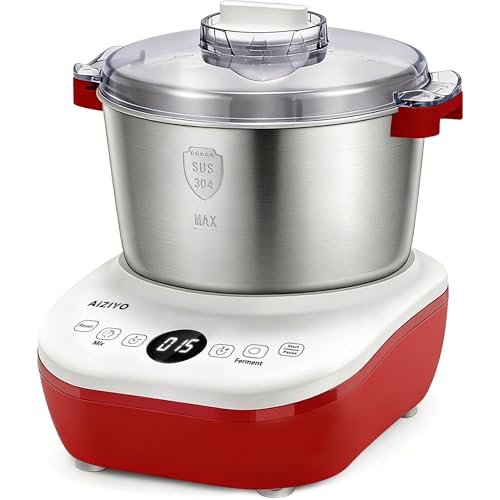
AIZIYO DoughChief 7.4QT Dough Mixer with Proofing Box
AIZIYO DoughChief Electric Dough Mixer 7.4Qt with Microcomputer Control

VIVOHOME 3-in-1 Stand Mixer, 6-Quart Tilt-Head (Red)
The Details Behind The Selections
Most home bakers start with a question about capacity, and this 4.5-quart tilt-head model answers it for everyday loaves without dominating the counter. The 59-point planetary mixing action (the head and beater rotate in opposite directions, so the beater sweeps the entire bowl) means fewer flour pockets survive the knead, which matters more for sandwich bread than for rustic loaves where some texture is welcome.
You get the classic KitchenAid build: all-metal housing, a stainless bowl that pops in the dishwasher, and a tilt-head that gives you clear access to scrape down the sides. For a small household baking one or two loaves a week, it covers the essentials without buying extras. Compared with the Artisan below, it skips the pouring shield and the larger bowl, which keeps the footprint and price lower for casual bakers.
Everyday Advantages
- Durable metal construction handles dense whole-wheat dough without strain.
- 4.5-quart bowl fits roughly eight dozen cookies per batch, useful for weekend prep.
- Tilt-head design opens the bowl fully, so adding flour mid-knead stays clean.
- Wide compatibility with KitchenAid attachments means it can grind, slice, or pasta-roll later.
Worth Noting
- Bowl is smaller than newer Artisan or 6-quart models, so double loaves need batching.
- No dedicated dough hook arm lock on older units, so heavy doughs may creep up the beater.
- Owners commonly report the head pin wearing after a decade of weekly use, which is repairable but worth knowing.
Key Product Details
Who It Suits Best
Casual bakers in one- or two-person households who bake a couple of loaves a week and want a machine that disappears into the counter when not in use.
Where Another Pick Suits Better
Step up to the KitchenAid Artisan 5-Qt. if you want a roomier bowl and a pouring shield for adding liquids mid-mix without spatter.
The Artisan series is the one most people picture when they think of a KitchenAid, and this tangerine version brings the same ten-speed motor and 5-quart bowl found across the line. The added half-quart and the pouring shield, a hinged plastic collar that lets you add liquids without stopping the machine, make it a more practical daily baker than the Classic above, especially if you bake two loaves back to back.
The color range is part of the draw: the Artisan series ships in well over twenty finishes, which matters if the mixer lives on an open counter rather than inside a cabinet. The 5-quart bowl with its comfort handle handles roughly nine dozen cookies or a triple batch of bagels. For bakers mixing pizza dough one day and buttercream the next, the ten speeds cover both jobs without compromise.
A Strong Showing
- Pouring shield lets you stream in oil or water without stopping the knead.
- Wider color range than the Classic line, which is helpful for visible-counter kitchens.
- 5-quart bowl with a handle gives you a firm grip when transferring heavy dough.
- Same attachment ecosystem as the Classic, so the mixer grows with your cooking.
Trade Offs
- Painted finish can chip near the bowl collar if the beater rubs over time.
- Heavier than the Classic, so moving it for cabinet storage is a two-hand job.
- The pouring shield adds a plastic part to wash, which some bakers find fussy for simple doughs.
Right Fit For
Style-conscious daily bakers who want a roomier bowl than the Classic and like keeping the mixer on display.
Skip It When
You’d rather skip the painted finish and the color premium entirely, in which case the VIVOHOME 6-quart tilt-head below offers more bowl for less.
Most stand mixers stop at kneading, leaving the rise to a bowl on the counter with a damp towel. The AIZIYO DoughChief folds the proofing stage into the same machine, with a ferment function that holds the bowl at a steady warm temperature so yeast activates on schedule. For beginners still learning the rhythm of bread, that built-in step removes one of the most common failure points: forgetting the dough on the counter for too long.
The 7.4-quart 304 stainless steel bowl is large by home-mixer standards, and the S-shaped dough blade with a face-up touch panel keeps operation simple. You press one preset and the machine takes over the mix, rest, and proof cycle. Compare this to the traditional stand mixers above: those assume you want full control, while this one is built for hands-off results, especially on busy weekdays.
Useful Strengths
- Built-in ferment function holds a steady proofing temperature, so dough rises even in cool kitchens.
- 7.4-quart bowl handles enough dough for two large loaves or a single big pizza base.
- Face-up touch panel keeps the controls visible when the lid is on, reducing guesswork.
- Removable lid simplifies cleaning, which is a common pain point on enclosed dough machines.
Points To Keep In Mind
- It is a dough-only machine, so it will not whip cream or beat egg whites like a traditional stand mixer.
- The 7.4-quart rating sounds bigger than it bakes, since very soft, high-hydration doughs may not fully clear the blade.
- First-time users may need a few cycles to learn the right flour ratios for the ferment program.
Best Suited To
Beginner bakers who want a single machine that handles the entire bread workflow, from flour to proofed dough, on autopilot.
Not Your Match When
You also bake cakes and cookies weekly; the VIVOHOME 3-in-1 at the bottom of this list covers dough plus juicing in one unit.
VIVOHOME bridges the gap between a traditional stand mixer and a dough-only machine, with a fermentation setting built into a 6-quart tilt-head frame. The three one-click presets, knead, whisk, and stir, each auto-run at a tuned time and speed, so you press once and walk away. Eleven manual speed settings let you override the presets when a recipe needs more control.
The 360-degree planetary mixing pattern covers the bowl evenly, important when you are making brioche where unmixed butter pockets would sink to the bottom. For bakers running two or three loaves a week, the proofing mode saves the constant mental check of dough temperature. That said, this mixer is heavier than the VIVOHOME 6-quart model without proofing, so you will want a permanent home for it on the counter.
The Helpful Details
- Three one-touch presets remove the guesswork for common tasks.
- Eleven manual speeds cover delicate meringues up through dense rye.
- Fermentation setting holds a steady temperature without a separate proofing box.
- Planetary mixing path reaches the bowl wall, limiting the need to stop and scrape.
Soft Spots
- Heavier than the standard 6-quart VIVOHOME, so storage planning matters more.
- The proofing range is narrower than a dedicated proofing cabinet, so very cool kitchens may under-proof.
- Tilt-head and base share one body, which can collect flour dust near the hinge without regular cleaning.
Quick Facts
Made For
Mid-volume home bakers who want presets for repeatability but still like to override them on a tricky recipe.
Another Choice May Suit
If you mostly bake lighter sandwich loaves and want something lighter on the counter, the AIZIYO DoughChief with the dedicated ferment function is purpose-built for that exact workflow.
For a straight-up workhorse stand mixer, this 6-quart VIVOHOME pairs a 660-watt motor with a ten-speed dial and a stainless bowl, the practical core that most home bakers need. The bowl handles roughly three loaves of bread or 2.2 pounds of flour in a single mix, which is the threshold where most family kitchens feel fully covered.
It is the sibling model to the VIVOHOME with proofing above, and the main difference is the absence of the fermentation preset and the 11-speed dial. You trade those extras for a lighter, more traditional stand mixer experience. For bakers who already own a proofing basket or a warm spot on the counter, that is usually a fair swap.
Real-World Strengths
- 660W motor handles heavy whole-wheat dough without stalling mid-knead.
- 6-quart bowl fits the standard family-bakery loaf size without splitting across batches.
- Ten speeds cover most cookie, cake, and bread recipes without hunting for a sweet spot.
- Lighter than the proofing-enabled sibling, so moving it for storage is easier.
Honest Caveats
- No dedicated proofing setting, so cold kitchens may need a warm spot for the rise.
- The included attachments are functional but thinner than premium brand options.
- Owners commonly report the head tilt lever feeling slightly stiff until broken in.
Perfect Match For
Family bakers who need enough capacity for a triple batch but prefer keeping the controls simple, ten speeds, no presets to learn.
Consider Something Else When
You bake through cold winters and want the dough to rise inside the machine, in which case the VIVOHOME with proofing above will save you the warm-counter workaround.
This DoughChief variant focuses on the same core job as the one earlier, mixing and proofing in a single bowl, with a published target of fifteen minutes of kneading and forty-five minutes of fermentation. For first-time bread bakers, those time windows are gold: the machine gives you a working baseline, and you can adjust flour or hydration from there once you understand how the dough should look at each stage.
The 304 stainless steel bowl is non-reactive, important for sourdough or any recipe that sits in the bowl for an extended ferment, and the removable lid makes cleanup more straightforward than fully enclosed dough machines. The touch panel keeps the controls at face level, so you can check the cycle without leaning over the bowl. Where the Artisan stand mixers above assume a confident hand, this one assumes you would rather not babysit the dough.
The Upside
- Stated 15-minute knead and 45-minute proofing window gives beginners a clear timing template.
- 304 stainless steel bowl holds up against long ferments without flavor carryover.
- Removable lid simplifies washing, which matters when sticky dough finds the seal.
- Face-up touch panel reads clearly from a standing position.
A Few Limitations
- You cannot use it as a regular stand mixer for cakes or whipped cream, so plan a second machine for that.
- Very wet ciabatta-style doughs may need manual scraping partway through the cycle.
- The unit is bulky, so counter space matters before committing.
Feature Snapshot
Who Should Grab It
Anyone baking their first or second loaf who wants a guided timing structure before learning to freestyle the process.
Look Elsewhere When
You bake multiple kinds of recipes, since a traditional stand mixer like the VIVOHOME 6-quart above handles bread plus buttercream in the same bowl.
The “microcomputer” in this DoughChief is less a gimmick and more a logic board that runs a mix-pause-mix routine designed to mimic how a baker’s hands actually work, push, rest, fold, push again. That pause is what lets the flour hydrate before the next push, which is the part most entry-level dough machines skip, leading to a rough, under-kneaded ball.
For tech-comfortable bakers who want the result of a hand-folded dough without standing over the bowl, this is the model in the AIZIYO lineup to look at. The face-up touch panel, 304 stainless bowl, and removable lid stay consistent with the other DoughChiefs above, so the choice between the three really comes down to how much you want the program to think for you.
A Few Highlights
- Mix-pause-mix program lets the dough rest between passes, improving hydration.
- Microcomputer control holds consistent cycle times regardless of batch size.
- Removable lid and stainless bowl simplify cleanup, which is the most common ownership pain point.
- Same 7.4-quart capacity as the other DoughChiefs, so all three share a large-batch sweet spot.
Room For Improvement
- Pricier than the simpler DoughChief above, with the difference mostly in the control logic.
- No manual override on the mix cycle, which experienced bakers may find limiting.
- The microcomputer program assumes a fairly standard hydration, so very wet or very dry doughs may need recipe adjustments.
Whose Shelf It Belongs On
Home bakers who trust a programmed cycle and would rather press a button than time a hand-fold routine themselves.
A Better Fit Elsewhere
Bakers who like to feel the dough during kneading and adjust on the fly should step to the VIVOHOME 6-quart with proofing, which offers a full manual speed range.
The 3-in-1 framing refers to the included juicer attachment, a 1.5L glass jar, and the standard mixer setup, which puts this VIVOHOME a step beyond a pure bread machine. The 650W pure copper motor and the 360-degree planetary mixing action give it the same bread capability as the 6-quart VIVOHOME earlier, while the juicer adds weekday breakfast utility without dragging out a separate appliance.
For households where bread baking shares counter space with morning juice, this consolidation is genuinely useful. The bowl kneads 2.2 pounds of flour, enough for three loaves, and the 6-quart stainless construction keeps cleanup straightforward. The trade-off is that the juicer attachment adds another component to store and wash, so the multi-use pitch pays off only if you actually use it.
Where It Delivers
- 650W copper motor handles dense bread dough without bogging down.
- 360-degree planetary mixing covers the bowl wall, limiting unmixed pockets.
- 6-quart bowl kneads up to three loaves at once, suitable for family-size baking.
- Includes a juicer attachment, which saves a separate appliance for daily use.
Practical Considerations
- The juicer attachment adds storage and cleaning time compared with a mixer-only model.
- Glass jar is heavier than plastic equivalents and can chip if dropped.
- Heavier than the standard VIVOHOME 6-quart, so plan a permanent counter spot.
At A Glance
Built With In Mind
Cooks who bake bread regularly and also want a daily-use juicer without cluttering the counter with a second machine.
Reach For A Different Pick When
You only bake and do not need the juicer, since the standard VIVOHOME 6-quart gives you the same bowl and motor in a lighter, simpler package.
What To Weigh Before Picking a Bread Mixer
Capacity shapes the entire decision. A 4.5-quart bowl covers one large loaf; a 6-quart bowl covers three; a 7.4-quart bowl covers two big loaves or a family pizza. Match the bowl to your household, not to the largest possible batch, because an under-filled mixer lets the beater miss the dough on the walls. A bowl that is too big wastes flour on the sides during small batches.
Motor power matters most for dense doughs. Whole-wheat, rye, and high-hydration breads all push back hard against the beater, and a 600W or higher motor keeps the speed consistent instead of dragging. For lighter white loaves, a 300W motor handles the work fine. If you bake more than one loaf a week, lean toward the higher end of the range.
Tilt-head versus bowl-lift is mostly about storage and weight. Tilt-head models open the bowl for quick ingredient additions and weigh less for cabinet storage. Bowl-lift designs handle heavier doughs more steadily but take up more vertical space. For most home kitchens, tilt-head is the more forgiving choice.
The proofing question is real. Traditional stand mixers leave the rise to you, which works fine in warm kitchens or with a separate proofing box. Dough machines with built-in ferment functions, like the AIZIYO DoughChiefs, hold a steady warm temperature for the rise, helpful in cooler months. Pick the proofing option if your kitchen runs cool or you bake on a schedule.
Attachment ecosystems are worth a thought. KitchenAid’s lineup of pasta makers, meat grinders, and spiralizers all bolt onto the front hub. VIVOHOME and AIZIYO stick closer to the included accessories, with juicers or extra bowls on some models. If you see yourself grinding sausage or rolling pasta in a year, the KitchenAid hub saves you a second motor.
What Often Gets Overlooked
Traps First Timers Fall Into
A common slip is choosing a 4.5-quart bowl for a family of four on the assumption that “mixer is mixer.” The bowl fills up fast once you start baking two loaves at a time, and an under-sized bowl pushes dough up the beater shaft. Going one size up at the start usually beats replacing a machine two years in. Another pitfall is over-trusting the dough hook on a basic stand mixer: a stiff whole-wheat dough can still need a hand-fold to fully hydrate the bottom of the bowl.
When Paying More Pays Off
The jump from a base 6-quart stand mixer to a model with a built-in ferment function is the most noticeable upgrade in the category. You trade a manual proofing step for a timed, temperature-controlled cycle, and the time you save compounds across every loaf. If you bake twice a week or more, that upgrade earns its keep in the first year. For occasional bakers, a simpler stand mixer plus a warm spot on the counter is a fair trade.
Frequently Asked Questions
How big of a bowl do you really need for bread?
For one standard sandwich loaf, a 4.5-quart bowl works, though it leaves little headspace. A 5-quart bowl is the comfortable minimum for most home bakers. If you bake two loaves at a time or work with high-hydration doughs, a 6-quart bowl is the right call. Anything beyond 6 quarts helps mainly if you bake for a family of four plus sharing extras.
Do you need a stand mixer or a dough machine with proofing?
A traditional stand mixer assumes you will handle the rise separately, which gives you full control but adds a step. A dough machine with a ferment function handles both stages in one bowl, which removes a common failure point in cold kitchens. Pick the stand mixer if you bake multiple kinds of recipes weekly and want the same machine to whip cream or mix cake batter. Pick the dough machine if you mainly bake bread and want a hands-off workflow.
Is a 660W motor overkill for bread?
For white sandwich loaves, a 660W motor is plenty of headroom, and it rarely runs near its limit. For dense whole-wheat, rye, or enriched brioche, that extra power keeps the beater speed steady when the dough pushes back. A lower-wattage motor can handle bread, but it works harder and tends to run warmer on long kneads.
Can a stand mixer handle pizza dough too?
Yes, a stand mixer handles pizza dough easily, especially the 5- and 6-quart models above. The dough hook kneads the flour and water into a smooth ball in roughly eight to ten minutes. Very wet, high-hydration doughs still benefit from a short hand-fold to bring everything together at the bottom of the bowl.
How long should a stand mixer last with weekly bread baking?
A well-built stand mixer, like the KitchenAid Classic or Artisan above, commonly runs a decade or more with weekly use, though the head pin and beater bushing are the parts that most often need attention over time. Dough machines with sealed bowls and heating elements tend to have shorter mechanical lifespans, since the heating components add wear that a plain mixer never sees. For either type, regular cleaning of the beater shaft and the bowl-locking mechanism extends the life noticeably.



