

A good stand mixer changes the rhythm of baking weekend after weekend, taking the arm-tiring work of creaming butter and kneading stiff dough off your hands so you can focus on the recipe. The right model depends on your batch size, your counter space, and how often you bake beyond the basics. This lineup covers eight strong stand mixers across compact, full-size, premium, and family-friendly tiers, with a mix of trusted names and newer challengers, so you can match capacity, color, and budget to the way you actually cook.
A Closer Look At The Lineup

KitchenAid Classic Series 4.5 Quart Tilt-Head Stand Mixer K45SS

KitchenAid KSM150PSTG Artisan Series 5-Qt. Stand Mixer (Tangerine)

KitchenAid Artisan Mini 3.5-Qt Tilt-Head Stand Mixer

KitchenAid KSM180QHSD Queen of Hearts 5-Qt. Stand Mixer (Passion Red)

VIVOHOME 6-Quart Tilt-Head Kitchen Mixer (Gray)

VIVOHOME 6-Qt. Tilt-Head Mixer with Dough Proofing (Red)

VIVOHOME 6-Quart Tilt-Head Kitchen Mixer (Red)
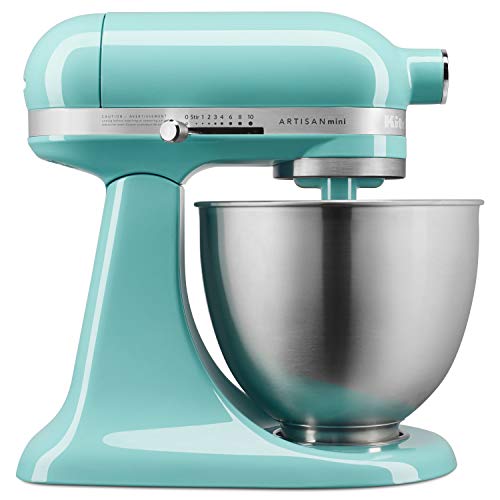
KitchenAid KSM3311XAQ Artisan Mini 3.5-Qt. Stand Mixer (Aqua Sky Blue)
A Deeper Look At The Lineup
The Classic K45SS is the mixer many home bakers learned on, and the design has earned that long run for good reason. The all-metal body anchors the unit firmly while the tilt-head swings back, giving you direct access to swap beaters or scrape down the sides of the 4.5-quart stainless bowl.
You can expect enough capacity for roughly eight dozen cookies in a single batch, which covers most family-sized cookie, cake, and bread projects without overwhelming your counter. Planetary mixing action (the beater rotates while traveling the bowl’s circumference) keeps ingredients folding into themselves evenly, so the bottom corners don’t get missed.
Useful Strengths
- Full metal construction holds up to weekly use and stays planted on the counter during stiff doughs.
- 4.5-quart bowl handles large cookie batches and double cake recipes comfortably.
- Tilt-head design gives clear access for adding chips, fruit, or flour mid-mix.
- Standard attachment hub accepts the wider KitchenAid ecosystem of pasta rollers and meat grinders.
- Clean white finish fits into most kitchen color schemes without clashing.
Worth Noting
- Lacks a pouring shield, so loose flour can puff out during low-speed starts.
- Heavier than the Mini models, so moving it for storage takes more effort.
Key Specs
Best Suited To
Home bakers who want a proven, no-fuss stand mixer that handles cookies, cakes, and weekly loaves without a learning curve.
Look Elsewhere When
Tight counter space is your main constraint, in which case the KitchenAid Artisan Mini 3.5-Qt. Tilt-Head Stand Mixer takes up much less room.
The Artisan Series is the model that turned the stand mixer into a kitchen showpiece, and the Tangerine finish here leans into that. A 5-quart stainless bowl with a comfortable handle bumps capacity above the Classic, while ten speeds cover everything from gentle folding to aggressive dough kneading.
The included pouring shield helps contain flour clouds when you add dry ingredients, a small touch that makes a real difference during longer bakes. Compared to the K45SS reviewed earlier, you get more bowl volume, more speed range, and a finish that doubles as decor.
Advantages To Know
- 5-quart bowl handles larger bread loaves and double cake layers without splitting batches.
- Pouring shield reduces flour mess during ingredient additions.
- Ten speed settings give finer control over delicate meringues and stiff pizza dough.
- Wide color range lets you match a remodeled kitchen or pick a bold accent piece.
- Same attachment hub as the Classic line for future expansion.
Trade Offs
- Heavier than the Classic K45SS, so permanent counter placement is the practical choice.
- Bowl handle clearance can feel snug under the tilt-head during scraping.
Feature Snapshot
Made For
Bakers who want extra capacity and a mixer that pulls double duty as a colorful countertop centerpiece.
Not Your Match When
Your kitchen is short on both counter and cabinet space, where the KitchenAid Artisan Mini 3.5-Qt. Tilt-Head Stand Mixer is the smarter size.
The Artisan Mini delivers the planetary mixing action of a full-size KitchenAid in a chassis built for tighter counters. The Candy Apple Red finish gives it personality, and the lighter weight makes it far easier to slide in and out of a cabinet between uses.
A 3.5-quart bowl still handles up to five dozen cookies in a single batch, so smaller households can bake without compromise. It pairs down footprint while keeping the same attachment ecosystem, which makes the Mini feel less like a downsized version and more like a focused tool.
Strengths Worth Knowing
- Smaller, lighter body fits studio apartments and galley kitchens comfortably.
- 3.5-quart bowl covers typical cookie and cake recipes for one or two bakers.
- Same motor power family as the larger KitchenAid units for reliable dough kneading.
- Bowl and beaters clean up easily by hand or in the dishwasher.
Points To Note
- Smaller bowl means double batching for holiday or party-sized bakes.
- Tilt-head clearance is tighter, so oversized spatulas need a careful approach during scraping.
- Lacks the pouring shield included with the larger Artisan Series.
Right Fit For
City dwellers and small-household bakers who want full KitchenAid performance without surrendering counter real estate.
Reach For A Different Pick When
You bake for a crowd every weekend, in which case the VIVOHOME 6-Quart Tilt-Head Kitchen Mixer (Gray) gives you far more headroom per batch.
The Queen of Hearts limited edition swaps standard KitchenAid trim for a passion-inspired band of miniature red hearts and a custom chrome power hub cover. It carries a 5-quart stainless bowl, the same 10-speed range as the standard Artisan, and tilt-head access for ingredient additions.
Bakers who treat their countertop as a curated space will appreciate that the visual upgrade does not come at the cost of capability. Compared to the standard Artisan covered earlier, this is the same working mixer in a more expressive outfit, the kind of piece that earns a permanent spot on the counter rather than cabinet storage.
A Strong Showing
- Limited-edition styling turns the mixer into a kitchen focal point.
- 5-quart capacity handles up to nine dozen cookies in a single batch.
- 10-speed range supports everything from gentle folding to stiff bread dough.
- Compatible with over a dozen KitchenAid attachments for future expansion.
Honest Caveats
- Limited-edition colorways can be harder to find once stock thins.
- Heavier body means it’s best left in a permanent spot on the counter.
- Costs more than the standard Artisan finish for the same core performance.
Quick Facts
Who Should Grab It
Style-conscious bakers and gift-givers who want a stand mixer that looks as intentional as the rest of their kitchen.
Swap It Out When
Performance and budget matter more than limited-edition styling, in which case the KitchenAid KSM150PSTG Artisan Series 5-Qt. Stand Mixer is the more practical path.
VIVOHOME’s 6-quart tilt-head mixer is built around family-sized baking, with a 660W motor and planetary mixing that handles dense doughs without stalling. The 6-quart stainless bowl tackles up to three loaves of bread or roughly 2.2 pounds of flour, which covers most weekend projects in one go.
Ten speed settings give enough range for delicate whipped cream and aggressive kneading, while the included splash guard keeps flour from coating the counter. Compared to the KitchenAid Artisan reviewed earlier, the trade is capacity and motor strength for a different price profile, with a more utilitarian gray finish.
Practical Advantages
- 6-quart bowl handles three loaves of bread or large cookie batches in a single mix.
- 660W motor manages heavy doughs without bogging down.
- Planetary mixing action folds ingredients evenly across the bowl.
- Splash guard and pouring spout reduce countertop mess during additions.
Worth Bearing In Mind
- Gray finish lacks the decorative appeal of KitchenAid’s color palette.
- Heavier chassis makes cabinet storage a two-handed operation.
- Attachment ecosystem is smaller than the KitchenAid hub.
Feature Card
Whose Shelf It Belongs On
Family bakers and bread enthusiasts who regularly mix larger batches and want a motor that can keep up.
Consider Something Else When
Color and curated styling are part of the appeal, in which case the KitchenAid KSM150PSTG Artisan Series 5-Qt. Stand Mixer in Tangerine makes a stronger design statement.
The standout feature on this VIVOHOME model is the dedicated fermentation setting, which holds dough at a controlled temperature so it can rise without a separate proofing box. Three one-touch presets cover kneading, whisking, and stirring, while 11 manual speeds give finer control when a recipe calls for it.
The 6-quart bowl and 360-degree planetary mixing keep the same family-batching capacity as the gray VIVOHOME reviewed earlier, with a bolder red finish. The proofing function is the genuine differentiator here, and for yeast-heavy bakers it removes one of the most fussy steps in bread making.
The Good Stuff
- Built-in fermentation setting maintains ideal dough-rising temperature.
- Three one-touch presets simplify common mixing tasks.
- 11 manual speed settings offer more control than the standard 10-speed tier.
- 6-quart bowl handles family-sized bread and cookie batches comfortably.
- Red finish adds visual energy to a working kitchen counter.
Small Caveats
- More complex control panel means a slightly longer learning curve.
- Proofing mode is most useful in cooler kitchens, where ambient temperature affects rise times.
Who Will Love This
Yeast bakers, sourdough tinkerers, and hobbyists who want the mixer to handle the proofing stage as well as the kneading.
A Better Fit Elsewhere
You mostly mix cookies, cakes, and quick breads, where the simpler VIVOHOME 6-Quart Tilt-Head Kitchen Mixer (Gray) gets the job done with less to learn.
This red VIVOHOME is essentially the gray 6-quart model with a different finish, and that simplicity is part of the appeal. You get the same 660W motor, 10-speed range, and 6-quart stainless bowl for big-batch cookies, loaves, and double-layer cakes.
It shares the splash guard and planetary mixing with the gray version, so messy flour clouds stay contained during ingredient additions. The red colorway suits kitchens that lean warm or already feature red appliances.
Notable Upsides
- Same large 6-quart bowl as the gray VIVOHOME for family-sized baking.
- 660W motor handles stiff doughs without slowing down.
- Planetary mixing covers the bowl evenly for consistent results.
- Red finish pairs well with warm-toned kitchens and other red appliances.
- Includes splash guard to keep counters cleaner during mixing.
Room For Improvement
- Lacks the proofing preset found on the other red VIVOHOME model.
- Attachment ecosystem is smaller than the KitchenAid hub.
Perfect Match For
High-volume home bakers who want a workhorse mixer with a warmer finish than the standard gray option.
Skip It When
You bake a lot of yeast bread, where the VIVOHOME 6-Qt. Tilt-Head Mixer with Dough Proofing handles the rising stage automatically.
The Artisan Mini Series in Aqua Sky Blue takes the same motor power as the Classic K45SS and shrinks the chassis by roughly 20 percent, with a 25 percent weight reduction. The lighter, more compact body suits renters, condos, and kitchens where counter real estate is at a premium.
The 3.5-quart bowl still handles up to five dozen cookies in a single batch, and full KitchenAid attachment compatibility means you don’t lose the brand’s accessory ecosystem. The Aqua Sky Blue finish stands out without overwhelming a small space.
Strong Points
- 20% smaller footprint than the Classic, freeing up counter and cabinet space.
- 25% lighter, so moving it for storage is far easier.
- Same motor power family as the Classic K45SS for capable dough kneading.
- Aqua Sky Blue finish adds a soft, modern color accent.
- Compatible with the full KitchenAid attachment lineup.
Where It May Fall Short
- Smaller bowl limits large-batch entertaining without splitting recipes.
- Tilt-head clearance can feel tight when scraping with full-size spatulas.
Feature Overview
Built With In Mind
Apartment dwellers and small-household bakers who want KitchenAid performance in a counter-friendly size.
Where A Sibling Pick Shines
You bake larger volumes for family gatherings, in which case the KitchenAid KSM150PSTG Artisan Series 5-Qt. Stand Mixer offers noticeably more bowl headroom.
What To Weigh Before Picking A Stand Mixer
Bowl capacity is the first filter, because it sets the upper limit on what you can mix in one pass. A 3.5-quart bowl covers a small household’s cookies and cakes, while 5 to 6 quarts handles family loaves, double cakes, and big cookie batches. Choosing capacity to match your typical batch size means you will not be splitting recipes or running the mixer twice for one project.
Motor power and speed range matter most when you bake yeast bread. Planetary mixing (where the beater orbits the bowl while spinning) keeps ingredients folding evenly, and a motor around 660W tackles stiff doughs without stalling. Lower-powered units can handle cookies and cake batter just fine, so they remain a smart match for non-bread bakers.
Weight and footprint deserve real attention in smaller kitchens. Lighter Mini models around 20 to 25 percent smaller than full-size Classics slide in and out of cabinets more easily, and full-size units often earn a permanent counter spot. Consider where the mixer will live, since you will be reaching for it often.
Attachment ecosystems vary by brand, and the wider the lineup, the more your mixer can grow into pasta, meat grinding, or vegetable slicing. Brand-color options also matter if your mixer doubles as decor, since some lines offer twenty-plus finishes while others stick to two or three. Picking a finish and ecosystem you will not outgrow keeps the mixer useful for years.
Key Considerations Across These Picks
Pitfalls Shoppers Hit
A common mistake is choosing capacity based on the biggest holiday bake rather than the weekly routine, which leaves a too-large mixer taking up counter space most of the year. Another is overlooking attachment ecosystems, which means missing out on pasta rollers or meat grinders that could replace other single-purpose appliances. Always confirm the included accessories, since some models ship with pouring shields and dough hooks while others offer just the basics.
What The Higher Tier Buys
Spending more on a premium model usually means a sturdier all-metal body, a quieter motor, and a wider color range that fits a curated kitchen. Higher tiers also tend to include pouring shields, larger bowls, and longer manufacturer support. The upgrade is worth it when you bake weekly, entertain often, or want the mixer to anchor the counter visually rather than hide in a cabinet.
Frequently Asked Questions
How many quarts should a stand mixer for baking be?
For one or two bakers, 3.5 to 4.5 quarts handles most cookie, cake, and bread recipes. Families or anyone who bakes double batches should look at 5 to 6 quarts to avoid splitting recipes.
What is planetary mixing action?
Planetary mixing is when the beater rotates on its own axis while traveling around the bowl’s circumference, so it contacts more of the bowl than a fixed-point mixer. This produces more even incorporation and fewer unmixed pockets of flour or butter.
Can a stand mixer knead bread dough?
Yes, most stand mixers with at least a 5-quart bowl and a dedicated dough hook handle standard bread doughs well. Very stiff or heavily hydrated artisan doughs can still challenge smaller motors, so larger units tend to be a safer bet for serious bread bakers.
What is the difference between a tilt-head and a bowl-lift mixer?
Tilt-head mixers swing the head back for bowl access, which works well in smaller kitchens and for lighter recipes. Bowl-lift mixers raise the bowl up to the beater, which offers more stability for very heavy or large dough batches and is more common in commercial-tier models.
Do I need a pouring shield?
A pouring shield is not required, but it helps contain flour clouds when adding dry ingredients mid-mix. Bakers who work with fine ingredients like cocoa powder or confectioners’ sugar tend to appreciate the cleaner counter that a shield provides.



