

Meat mixing and grinding sits at the heart of homemade sausage, burger prep, and DIY charcuterie, yet the tools you use shape every batch. Picking the right mixer meat grinder depends on how much you process, how much space you have, and whether you need electric muscle or hand-powered control. This roundup lines up eight options across electric mincers, manual crank mixers, and handheld choppers, each built for a different kind of cook.
The Choices Worth Comparing

Facelle Electric Meat Grinder for Home Use

RyanDesign 5-Blade Nylon Meat Chopper

LEM Products BigBite Tilt Meat Mixer 25 lb

Sinyder Electric Meat Grinder 3000W Stainless Steel

Sinyder Electric Meat Grinder 3000W with Meat Claws

Sinyder 3000W Electric Meat Grinder 304 Stainless Steel
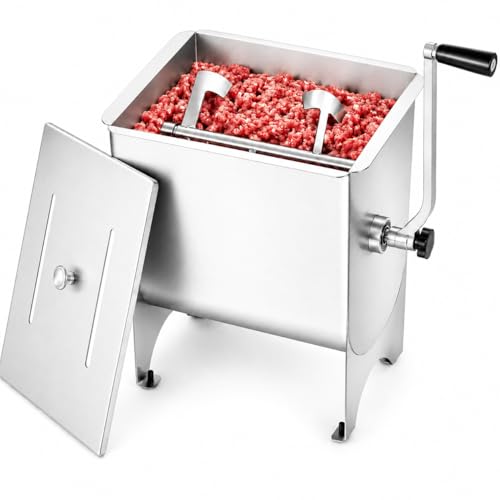
CUBELLIN 20lb Manual Meat Mixer 304 Stainless Steel

MEAT! 50 lb Meat Mixer with Stainless Tub
Meet The Standout Selections
The Facelle Electric Meat Grinder for Home Use sits in a sweet spot for weeknight cooks who occasionally want fresh ground beef or a small batch of breakfast sausage. Where bulk mixers like the LEM BigBite tilt toward large-format game processing, this unit stays compact enough for a standard kitchen counter. A reverse function (a built-in mechanism that lets you back out jammed material without taking the grinder apart) is genuinely helpful when a stray piece of sinew snags the auger, the spiral feed that pushes meat toward the cutting blade.
Compared to the pure handheld chopper covered later, this one actually minces rather than just breaking up clumps. The included sausage stuffer and kubbe kit (a Middle Eastern-style attachment for shaping stuffed shells) expand what you can make on a Saturday afternoon, and the suction-cup base helps keep the housing planted on smooth countertops.
Everyday Wins
- Reverse function clears clogs quickly, saving you disassembly time after a long prep session
- Sausage stuffer and kubbe attachments included for versatile home sausage making
- Suction-cup base keeps the grinder stable on slick counters, reducing walk during heavy feeds
- Compact footprint compared to tilt mixers like the LEM BigBite, easier to store in a small kitchen
Things To Consider
- Best suited for smaller batch volumes; the 25-pound LEM or 50-pound MEAT! mixer handles much larger loads
- Cleaning the grinding head takes patience, and the parts need a full hand-wash rather than a quick rinse
Key Specs
Right Fit For
Home cooks who want a versatile mid-size grinder for a few pounds of meat per session and appreciate included attachments for sausage and kubbe.
Look Elsewhere When
You need to mix 20+ pounds at a time; the CUBELLIN Manual Meat Mixer or the MEAT! 50 lb Meat Mixer is purpose-built for that kind of volume.
The RyanDesign 5-Blade Meat Chopper is a completely different tool from anything else in this roundup. Instead of an electric motor, you press five angled nylon blades through cooked ground beef directly in the skillet. Where the Facelle grinder and the Sinyder electric units turn raw cuts into mince, this chopper handles already-cooked crumbles and works beautifully for potato salad, pasta sauces, and taco meat.
The nylon body holds up to cooking temperatures, so you can break up ground meat right where it browns without dragging a hot pan to a countertop appliance. It is the kind of low-tech tool that quietly solves one specific problem and disappears into a drawer afterward.
What Helps Most
- Heat-resistant nylon lets you chop directly in a hot pan, reducing dish count on busy nights
- Five angled blades produce more even crumbles than a single-blade spatula or wooden spoon
- Doubles as a mixing tool for potato salad, eggs, and other chunky preparations
- No electricity or setup, so it works on camping trips, vacation kitchens, or small apartments
Worth Noting
- Only works on meat that is already ground; it cannot process raw cuts the way the Facelle or Sinyder grinders can
- Hand fatigue sets in during large pans, and the nylon head can stain from heavily spiced foods over time
Made For
Anyone who regularly browns ground meat in a skillet and wants faster, more uniform crumbles without dragging out a countertop appliance.
Skip It When
You need to grind raw beef, pork, or venison; the Sinyder Electric Meat Grinder 3000W Stainless Steel handles that workload properly.
The LEM Products BigBite Tilt Meat Mixer is aimed at hunters, weekend processors, and home sausage enthusiasts who regularly work through 10 to 25 pounds of ground meat at a time. Unlike the Facelle or Sinyder grinders, this is a dedicated mixer rather than a mincer. Its job is to fold seasonings and fat into already-ground product evenly so every link of sausage tastes the same.
The tilt head is the design highlight, letting you load from above and unload into a tray or stuffer without scooping. For anyone who has tried stirring seasonings into 20 pounds of beef with a spoon, the appeal is immediate.
What Pays Off
- 25-pound capacity suits full deer or pork shoulder batches in a single load
- Three-position tilt head simplifies filling, mixing, and emptying without awkward lifting
- Even seasoning distribution across large batches eliminates bland pockets in finished sausage
- Stable footprint on a sturdy table, important when working with heavy loads
Trade Offs
- Significantly larger and heavier than countertop grinders like the Facelle, so storage and counter space matter
- Does not grind meat on its own; you still need a grinder or pre-ground product to feed it
Quick Facts
Best Suited To
Backyard processors and hunters who regularly blend large ground meat batches for sausage or burger patties and need even seasoning distribution.
Another Choice May Suit
Casual home cooks grinding a few pounds weekly; the Sinyder 3000W Electric Meat Grinder 304 Stainless Steel is a more kitchen-friendly option.
The Sinyder Electric Meat Grinder 3000W Stainless Steel steps up the wattage from the Facelle model and brings a stainless steel housing into the conversation. Where the Facelle is a balanced all-rounder, the Sinyder leans harder on throughput, processing roughly five pounds of meat per minute in spec. For a home cook who grinds once a week or stocks a chest freezer with ground venison, that extra speed adds up.
The internal metal gear system is worth flagging because it directly affects how long the grinder holds up under repeated use. Plastic gearing tends to wear faster when you push through sinew or chewy cuts.
Real Benefits
- Higher throughput rate means less time standing at the counter during batch sessions
- Stainless steel exterior wipes clean more easily than painted plastic housings
- Internal metal gears typically outlast plastic drivetrains in this price range
- Reverse function still included for clearing the occasional jam quickly
Some Limits To Know
- Larger footprint than compact home models, so it needs dedicated counter or shelf space
- Cleaning the cutting blade and plate thoroughly is still required between uses, especially for fatty pork
Feature Snapshot
Who It Suits Best
Home processors who want more power than entry-level grinders provide, especially those handling venison, pork shoulder, or tougher beef cuts on a regular basis.
Where A Sibling Pick Shines
If you need even more batch capacity downstream, the MEAT! 50 lb Meat Mixer pairs nicely with this grinder for stuffing sausages in volume.
The Sinyder Electric Meat Grinder 3000W with Meat Claws is a sibling of the previous pick with one practical addition: a pair of meat handling claws thrown into the box. If you have ever tried to lift a 10-pound chuck roast into a grinder tray with bare hands, the value of those claws is obvious. They shred pulled pork, lift whole roasts, and keep your fingers away from the feeding tube.
Otherwise, the core specs mirror the stainless steel Sinyder reviewed just above, so the choice between them really comes down to whether you want the claws included or prefer to save the space and use a fork.
Points In Its Favor
- Meat claws included for shredding and lifting, useful well beyond the grinding task itself
- Same high-output motor as the sibling Sinyder, around five pounds per minute in spec
- Stainless steel exterior holds up to repeated wipe-downs between sessions
A Few Limitations
- Adds bulk to the package with extra accessories, so storage needs grow
- For very small kitchens, the included claws may simply live in a drawer and go unused
Perfect Match For
Home cooks who also smoke or slow-cook large cuts and want a single purchase that handles both grinding and shredding tasks.
Swap It Out When
You primarily grind smaller weekly batches; the Facelle Electric Meat Grinder keeps things simpler with fewer accessories to store.
The Sinyder 3000W Electric Meat Grinder 304 Stainless Steel emphasizes the steel grade in its name, and that detail actually matters. 304 stainless (a corrosion-resistant alloy widely used in food equipment) shows up in the cutting plate, blade, and housing contact points, which makes the grinder more resistant to rust and pitting than painted steel alternatives. For a kitchen tool that sees raw meat weekly, that corrosion resistance is a real ownership benefit.
Like the other Sinyder units, the 700W rated power handles tougher cuts, and the reverse function helps clear occasional jams. The main distinction is material quality on the parts that touch your food.
Noteworthy Benefits
- 304 stainless contact parts resist corrosion and staining from acidic seasonings and blood
- Same high-output motor across the Sinyder line for consistent throughput on busy days
- Easy to disassemble by hand for thorough cleaning between protein types
- Metal gear internals support frequent use without premature wear
Honest Caveats
- Higher-tier material means a heavier unit, so it is less portable than lighter home grinders
- The investment makes more sense for frequent users; occasional grinders may not justify the upgrade
Feature Rundown
Who Should Grab It
Grinders who use their machine weekly and care about long-term corrosion resistance on every food-contact part.
Reach For A Different Pick When
You mainly want to mix already-ground meat; the LEM BigBite Tilt Meat Mixer is purpose-built for that step.
The CUBELLIN 20lb Manual Meat Mixer is the outlier in this roundup because it does not plug in. You crank the handle to mix seasonings into already-ground meat, with a covered 20-pound tub keeping the contents contained. For hunters running a cabin off the grid, cooks who want a quiet prep session, or anyone wary of electric motors near raw meat, manual mixing is a genuine option rather than a compromise.
The lid keeps meat from splashing out during cranking, and the handle is the only moving part you need to manage. It is a slower process than an electric mixer, but the trade-off is total control over the pace.
Practical Pluses
- No electricity needed, so it works anywhere from a hunting cabin to an outdoor patio
- 304 stainless steel on the contact parts resists rust and handles repeated washings
- Covered tub design keeps ingredients contained during cranking and reduces splatter
- Simple mechanical design means very little can break over time
Points To Keep In Mind
- Mixing 20 pounds by hand takes real effort and noticeably longer than electric alternatives
- Does not grind meat, so it pairs with a separate grinder or pre-ground product
Feature Overview
Whose Shelf It Belongs On
Home sausage makers and hunters who already have a grinder but need a quiet, electricity-free way to blend seasonings into bulk ground meat.
Consider Something Else When
You want one tool that both grinds and mixes; the Sinyder 3000W with Meat Claws or the LEM BigBite route handles both jobs, depending on batch size.
The MEAT! 50 lb Meat Mixer is the heavyweight of this roundup, with a 50-pound capacity tub, an ergonomic reversible handle, and a transparent plastic cover that lets you watch the mixing happen. It pairs with the brand’s own 1.5 HP grinder to create a continuous prep line: grind into the mixer tub, fold in seasonings, then feed the stuffer.
At roughly 42 pounds empty and standing 26 inches tall, this is a stationary tool, not a stovetop helper. The upside is genuine batch muscle. If you process a deer, a whole hog shoulder, or run a small farm-to-table operation from home, the time savings are real.
The Case For It
- 50-pound capacity handles the largest home batches on this list in a single load
- Reversible handle allows switching mix direction without re-gripping mid-batch
- Transparent cover lets you visually confirm even seasoning distribution
- Pairs with the brand’s 1.5 HP grinder for a connected prep workflow
Room For Improvement
- Large footprint and roughly 42-pound weight mean it needs a permanent spot in a garage, basement, or workshop
- Pure mixer, so it requires a separate grinder; not a stand-alone solution for casual cooks
At A Glance
Built With In Mind
Serious hobbyists, small-scale processors, and hunters running whole-animal breakdowns who need the largest batch capacity on this list.
A Better Fit Elsewhere
For weeknight cooking, the Facelle Electric Meat Grinder or RyanDesign chopper covers the basics without dedicating garage space to a 42-pound mixer.
Choosing the Right Mixer Meat Grinder for Your Kitchen
Match Capacity to Your Real Output
The biggest mistake is buying for the day you wish you had rather than the day you actually live. A 50-pound MEAT! mixer is overkill for a household grinding two pounds of beef per week, and a handheld chopper is the wrong tool for processing a whole deer. Think about the realistic batch size you handle, plus a 20 percent buffer for occasional bigger cooks.
Decide Between Grinding and Mixing
Several picks on this list are mixers, not grinders. The LEM BigBite, CUBELLIN manual, and MEAT! 50 lb all assume you already have ground meat or a separate grinder. The Sinyder and Facelle models actually grind raw cuts. If you want one tool, choose a grinder; if you already own a grinder and need even seasoning distribution, choose a mixer.
Materials Affect Longevity More Than Wattage
The wattage race on electric grinders looks dramatic on paper, but a 304 stainless steel cutting plate outlasts a plated steel plate in real kitchens. Rust on the parts touching raw meat is the most common durability issue, so prioritize stainless contact parts and metal gearing if you plan to grind frequently.
Consider Storage and Power Constraints
Counter space, outlet access, and noise tolerance all matter. Manual mixers work anywhere but require effort. Large electric mixers demand a permanent home and a nearby outlet. Handheld choppers fit in a drawer and add no electrical load. Choosing the right category is half the battle.
Key Considerations Across These Picks
Where Shoppers Go Wrong
The most common slip is buying a high-wattage grinder for tiny weekly batches and then being disappointed by the cleaning effort that comes with disassembly. Grinders with more throughput also have more parts to wash. A second frequent miss is grabbing a mixer when you actually need a grinder, or vice versa. Decide first whether you are processing raw cuts or blending already-ground product, then match the tool.
What The Higher Tier Buys
Stepping up to the Sinyder 3000W with 304 stainless contact parts or the MEAT! 50 lb mixer buys you corrosion resistance, batch capacity, and longer mechanical life. For a casual cook who grinds once a month, that upgrade is hard to justify. For a weekly processor, the smoother workflow and longer service life make the higher price feel reasonable within a couple of seasons.
Frequently Asked Questions
What is the difference between a meat grinder and a meat mixer?
A meat grinder minces raw cuts of meat using a screw-type auger that pushes product through a cutting plate. A meat mixer blends seasonings, fat, and spices into already-ground meat without further mincing. The LEM BigBite and MEAT! 50 lb are mixers, while the Facelle and Sinyder models are grinders. Some cooks use both in sequence.
How much meat do I need to justify a 50-pound mixer?
A 50-pound mixer pays off when you regularly process whole animals, large family gatherings, or small-batch sales. For households grinding under 10 pounds per week, a 25-pound LEM or a countertop electric grinder is usually enough capacity without the footprint.
Are manual meat mixers worth the effort?
Manual mixers like the CUBELLIN 20lb work well for small batches, off-grid settings, and cooks who prefer mechanical simplicity. They require more physical effort and take longer than electric mixers, but the absence of a motor means very little can break. For occasional sausage sessions, the trade-off often makes sense.
What does 304 stainless steel actually do for a grinder?
304 stainless steel resists rust and pitting when exposed to blood, salt, and acidic seasonings. In a grinder that sees raw meat weekly, those properties translate into longer-lasting cutting plates, blades, and housings. It is not a flavor difference, but it is a real durability advantage over plated or painted steel.
Can a handheld meat chopper replace an electric grinder?
No, because a handheld chopper like the RyanDesign 5-Blade only breaks apart already-cooked ground meat or soft ingredients. It cannot process raw cuts of beef, pork, or venison. For pan-side browning and quick crumble work it is excellent, but actual grinding requires an auger-style electric or manual grinder.



