

A quick squeeze of lemon can rescue a salad dressing, finish a pan sauce, or wake up a weeknight pasta, yet the wrong tool turns a thirty-second job into a sticky mess. Manual citrus presses solve the problem cheaply and quietly, no electricity, no bulky motor, and nothing to assemble in the morning. The picks below cover everyone from the home cook who juices one lime a week to the household that runs through a bag of Meyer lemons every weekend.
The Main Contenders
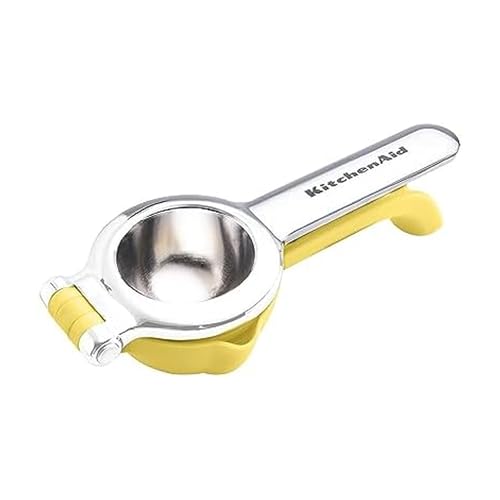
KitchenAid Citrus Press Squeezer with Seed Catcher

OXO Good Grips Citrus Squeezer

Amco 2-in-1 8.8-Inch Aluminum Squeezer (Yellow)

SE Citrus Squeezer for Limes – SQ160LM

Dreamfarm Fluicer Fold-Flat Citrus Juicer (Lime)

IMUSA Lemon or Lime Manual Squeezer (Green)

Buzazzy Metal Lemon Squeezer and Lime Squeezer

Dreamfarm Fluicer Fold-Flat Citrus Juicer (Lemon)

OXO Good Grips 2-in-1 Citrus Juicer
The Picks, Examined More Closely
Manual lemon squeezers tend to fall into two camps: hinged hand presses that meet resistance mid-squeeze, and flat presses that sit on the counter and use your palm for leverage. The KitchenAid lands firmly in the second camp, and that choice changes how it feels to use on a Tuesday night.
You place the cut side down, press straight down with your hand, and the built-in strainer catches the pulp while the pour spout directs juice cleanly into a glass or measuring cup. In most kitchens, that flat geometry means less wobble on a damp countertop.
Benefits That Matter
- Hopper design holds the juice before pouring, so a half-cut lemon does not leave a trail across the counter.
- Built-in seed and pulp strainer keeps drinks and vinaigrettes clear without extra tools.
- Lemon-themed color fits naturally with most kitchen palettes and does not scream for attention.
- Pressing motion transfers through your palm rather than your wrist, which most home cooks find more natural.
Things To Consider
- Smaller fruit like key limes can rock inside the bowl and lose some yield.
- Aluminum body can show water spots if you skip towel-drying after each wash.
Who It Suits Best
Home cooks who juice a lemon or two a day and want a stable, no-fuss press that rinses in seconds.
Where Another Pick Suits Better
For anyone juggling a mix of limes, oranges, and grapefruits in the same week, the Amco 2-in-1 8.8-Inch Aluminum Squeezer offers a wider bowl that handles larger fruit without repositioning.
OXO built its reputation on tools that feel good in the hand, and the Good Grips Citrus Squeezer is one of the most-copied designs in the category for a reason. The handles are oversized, slightly curved, and soft enough to absorb serious pressure without digging into your palm.
Drop a halved lemon in, squeeze the handles together, and the cast aluminum body flexes just enough to push juice through the strainer. For most people squeezing three or four limes in a row, that cushioning matters more than they expect.
Everyday Perks
- Non-slip cushioned handles reduce hand fatigue during batch juicing.
- Die-cast aluminum body feels substantial without feeling heavy.
- Strainer pulls out for quick rinsing, and most parts are dishwasher safe.
Trade Offs
- Larger fruit like grapefruit often needs a second pass to fully extract.
- Two-piece hinge design means a small crevice where pulp can collect.
Key Product Details
Made For
Anyone with hand or wrist sensitivity who still wants a no-compromise manual press.
Look Elsewhere When
Buzazzy’s Metal Lemon Squeezer is a simpler single-hinge option if you want fewer parts to keep track of in the dishwasher.
The Amco 2-in-1 is the press you reach for when “lemon” is just one of several citrus fruits in rotation. Its 8.8-inch body is noticeably longer than most squeezers here, and that extra length gives it room for a patented dual-sided center push plate.
That plate adjusts as you press, so a tiny key lime and a fat navel orange both sit in the same bowl without rocking. In a busy kitchen, that kind of forgiveness is genuinely useful.
Real-World Strengths
- Adjustable center plate handles small limes through large oranges without swapping tools.
- Longer lever reach reduces the hand strength needed for tough citrus.
- Yellow finish makes it easy to spot in a crowded utensil drawer.
- Cast aluminum body holds up to heavy weekly use without flex.
Honest Caveats
- Length takes up more drawer space than compact alternatives.
- The dual-sided design has more parts to rinse thoroughly after use.
Best Suited To
Households that buy whatever citrus is on sale, from key limes to navel oranges, and want one tool that handles all of it.
Swap It Out When
For pure lemon-and-lime prep in a small kitchen, the OXO Good Grips Citrus Squeezer takes up less room and cleans in half the time.
Not every kitchen needs a multi-feature press with cushioned grips and color-coordinated bowls. The SE SQ160LM is the kind of tool that does one job very well and gets out of the way. It is a single-piece cast aluminum press, and that simplicity is the whole point.
For anyone stocking a home bar or a small apartment kitchen, this kind of stripped-down design often beats a fancier tool that sits in a drawer unused.
What It Does Well
- Heavy-duty aluminum resists warping and reacts safely with acidic juice.
- One-piece construction means no hinges to loosen or strainers to remove.
- Rinses clean in seconds under running water.
Points To Note
- Hard aluminum handles can dig into palms during extended juicing sessions.
- Less effective on larger fruit like oranges or grapefruits.
Whose Shelf It Belongs On
Bartenders and home cooks who mostly juice limes and want a no-frills tool that holds up to daily use.
Reach For A Different Pick When
The KitchenAid Citrus Press Squeezer with Seed Catcher is worth the upgrade if you want a built-in strainer and a more comfortable pressing angle.
Storage is the silent dealbreaker for a lot of manual juicers. The Dreamfarm Fluicer tackles that problem directly: it folds completely flat, so it slips between a stack of baking sheets or inside a narrow drawer without a fight. The lime version is tuned for smaller fruit, with a bowl sized to fit a standard halved lime.
You press with the palm, and the in-built pip catcher catches seeds while acting as a small funnel. For a one-bedroom apartment, that flat profile is a real daily win.
Well-Handled Touches
- Folds flat for drawer-friendly storage, no bulky hump to work around.
- Built-in pip catcher doubles as a pouring funnel.
- Lime-tuned bowl fits small fruit without overhanging the edge.
Some Limits To Know
- Lime-specific bowl is not ideal for larger lemons or oranges.
- Plastic components may show wear sooner than full-metal presses.
Feature Snapshot
Perfect Match For
Small-kitchen dwellers who reach for limes more than lemons and hate cluttered drawers.
Not Your Match When
If you mostly juice lemons, the Dreamfarm Fluicer Fold-Flat Citrus Juicer (Lemon) version is tuned for larger fruit and fits better.
First-time citrus press owners often hesitate because they do not know how much they will use one. The IMUSA squeezer answers that uncertainty with a lightweight cast aluminum build and a cheerful green finish, the kind of tool that earns its place on a counter or in a first apartment kitchen without a big commitment.
It is a basic hinged design, so the learning curve is essentially zero. Halve, place, squeeze, done.
Points In Its Favor
- Lightweight aluminum body is easy to handle and store.
- Bright color makes it easy to spot in shared kitchens.
- Simple hinged mechanism needs no setup or assembly.
Practical Considerations
- Thinner aluminum walls may flex slightly under heavy pressure.
- Strainer holes are larger, so a bit more pulp makes it through than with premium presses.
Right Fit For
Beginners building a first kitchen kit who want a serviceable citrus press without overspending.
Where A Sibling Pick Shines
For daily use over years, the OXO Good Grips Citrus Squeezer has a more comfortable grip and a tighter strainer.
Some tools earn their place by being hard to overcomplicate. The Buzazzy Metal Lemon Squeezer is exactly that: a single-hinge, metal-bodied press that does the work without extra features to clean or break. There is a quiet appeal to owning a tool you can hand to anyone and explain in five seconds.
For minimalist kitchens where every drawer slot is contested, a press that pulls double duty for lemons and limes and rinses in one motion is hard to beat.
The Upside
- Single-hinge metal body has no removable strainer to lose or misalign.
- Universal design handles both lemons and limes without adjustment.
- Slim profile fits into narrow utensil drawers.
Less Ideal Details
- Lacks the cushioned grip of ergonomic models like the OXO Good Grips.
- No dedicated spout, so pouring requires a steady hand.
Who Will Love This
Minimalist cooks who prefer a no-frills tool over multi-feature designs, and who value easy rinsing above all.
Skip It When
Anyone who juices several fruits a week and wants a built-in spout will find the KitchenAid Citrus Press Squeezer with Seed Catcher more convenient.
Same fold-flat engineering as its lime sibling, but tuned for larger fruit. The Dreamfarm Fluicer Fold-Flat Citrus Juicer in the lemon configuration has a bowl that matches a standard halved lemon, so the fruit sits centered without rocking or overhang.
The built-in pip catcher acts as a small funnel that directs juice into a glass with reasonable control. For a baker measuring out tablespoons of lemon juice, that level of precision is a small daily pleasure.
The Helpful Details
- Lemon-sized bowl fits halved lemons with less rocking.
- Folds flat, so storage is a non-issue in compact kitchens.
- Pip catcher doubles as a controlled-pour spout for measuring.
- Works for both lemons and limes, depending on the angle of the cut.
Factors To Consider
- Less efficient on small key limes compared to the lime-tuned version.
- Plastic parts may need gentle hand-washing to extend lifespan.
Quick Facts
Who Should Grab It
Home bakers and recipe-precise cooks who want measured pours and a tool that disappears into a drawer.
Consider Something Else When
The Amco 2-in-1 8.8-Inch Aluminum Squeezer makes more sense if you regularly switch between lemons and oranges in the same session.
Unlike the hinged Good Grips squeezer earlier in this list, the OXO 2-in-1 is a reamer-style juicer that swaps between two cone sizes. The smaller reamer handles lemons and limes, and the larger one tackles oranges and grapefruits without a second tool.
For most households that buy a mix of citrus through the week, that flexibility is the whole reason to consider it. The contoured body, measurement markings up to 1.5 cups, and drip-free spout make it feel more like a small measuring pitcher than a basic juicer.
A Few Strong Suits
- Two interchangeable reamers cover small and large fruit in one tool.
- Measurement markings let you juice directly to a target volume.
- Drip-free spout keeps counters clean during pouring.
- Contoured body sits comfortably in hand during use.
Things To Weigh
- Reamer-style juicing can leave more pulp in the juice than a press-style design.
- Takes up more cabinet space than a single-purpose hand press.
Spec Overview
Built With In Mind
Households that rotate between limes, lemons, and oranges and want one juicer that handles the full range with a measuring feature built in.
A Better Fit Elsewhere
For tight drawer storage, the Dreamfarm Fluicer Fold-Flat Citrus Juicer (Lemon) collapses nearly flat and slips out of sight when not in use.
What To Weigh Before Choosing A Manual Citrus Press
Manual lemon squeezers look similar at a glance, but the differences in materials, leverage, and design show up the moment you press your first fruit. The right tool depends on what you actually juice, how often, and where you plan to store it.
Bowl Size And Fruit Range
The bowl, sometimes called the reamer cup, determines which fruit fits comfortably. Small bowls are tuned for limes and small lemons, and they extract more juice from those fruits because the fit is snug. Larger bowls handle oranges and grapefruits but tend to under-extract on tiny limes. If your kitchen runs on mixed citrus, a dual-sided press or a reamer-swap design covers more ground with one tool.
Material And Long-Term Durability
Most manual squeezers in this category use cast aluminum, which stays rigid under pressure and resists corrosion from acidic juice. Heavier cast bodies feel more substantial and tend to last longer, while thinner aluminum can flex slightly during heavy use. Coatings, where present, make rinsing easier but may wear over years of daily washing.
Comfort And Leverage
A cushioned handle or palm-press geometry reduces strain during batch juicing. For most home cooks squeezing one or two fruits at a time, comfort is a nice-to-have, not a must. For bartenders or anyone running through a bag of limes, ergonomic grips or longer lever arms matter more than they first appear.
Storage Footprint
A press that lives on the counter is always within reach, but few kitchens can spare the space. Fold-flat designs or slim single-hinge presses disappear into drawers and still pull out in seconds. Measure the drawer before you buy, since some 8-inch-plus models need a wider slot than expected.
Key Considerations Across These Picks
Pitfalls Shoppers Hit
The most common slip is buying a press sized for oranges when you mostly juice limes, which leaves you reaming tiny fruit at a frustrating angle. Another is assuming all aluminum bodies feel the same: thinner cast aluminum flexes under pressure, while heavier cast stays rigid and extracts more juice per squeeze. Match the tool to the fruit you actually buy.
Where The Extra Money Goes
Spending more in this category typically buys better materials, tighter strainer holes for clearer juice, and ergonomic touches like cushioned grips or spouts that pour without dripping. For a household that juices citrus a few times a month, those upgrades are genuinely nice. For occasional cooks squeezing a single lime for a weekday recipe, a basic cast aluminum press gets the job done without the extra cost.
Frequently Asked Questions
How often should I clean a manual lemon squeezer?
Rinse it under warm water right after each use to stop acidic juice from drying on the metal. A deeper wash with soap once or twice a week keeps the strainer clear and the finish looking fresh.
Can one squeezer handle both small limes and large oranges?
Some can. Dual-sided presses like the Amco 2-in-1 and reamer-swap designs like the OXO Good Grips 2-in-1 are built for that range. Single-bowl presses work best on the fruit they were sized for.
Are manual juicers better than electric ones for small jobs?
For one or two fruits, a manual press is faster to set up, easier to clean, and stores in a drawer. Electric juicers earn their keep when you process large batches of citrus at once.
Will acidic lemon juice damage an aluminum squeezer?
Food-grade cast aluminum used in kitchen tools resists corrosion from citrus acids under normal use. Drying the press after washing helps prevent water spots and keeps the finish in good shape over time.
Is it worth paying more for a cushioned handle?
Comfort matters most if you juice frequently or have hand sensitivity. For occasional use, a basic metal press works fine, but for daily or batch juicing, an ergonomic grip noticeably reduces fatigue.
Bottom Line
A good manual lemon squeezer disappears into the routine. You halve a fruit, press, pour, and move on, with no motor to warm up and no parts to assemble. Match the bowl to your most common fruit, choose a body that feels right in your hand, and think honestly about where it will live when dinner is over. The picks above cover the full range from minimalist tools to feature-rich multi-citrus presses, so the right fit is in here somewhere.



