

A cramped counter, a toaster, a coffee maker, and somehow you still want fresh juice every morning. Sound familiar? The right slow juicer for tight spaces trades a bit of capacity for a much smaller footprint, without giving up the cold-press extraction that keeps nutrients intact. Here is a roundup of nine models that actually fit small kitchens and earn their counter space.
The Main Contenders

Whuto Wide Feed Chute Masticating Juicer (Gray)

Hurom H70 Cold Press Slow Juicer (Black)

TUUMIIST Cold Press Juicer 5.8″ Chute (Black)

TUUMIIST 3-in-1 Juicer for Juice, Sorbet, Nut Milk
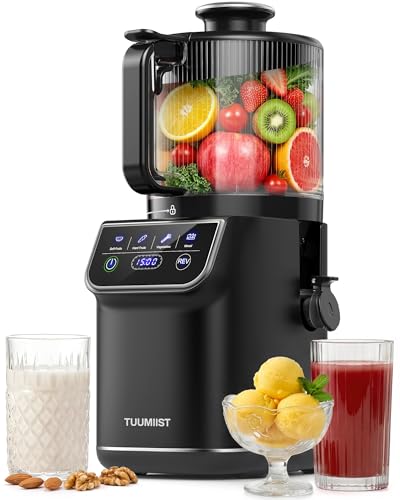
TUUMIIST Smart Touch 3-in-1 Slow Juicer 6.5″

Anybear 350W Cold Press Juicer 4.9″ Chute

Hurom H330 Self-Feeding Slow Juicer (Charcoal)

Hurom H330 Self-Feeding Slow Juicer (Ivory)

Hurom H400 Cold Press Slow Juicer (White)
A Deeper Look At The Lineup
The Whuto cold press juicer lands on the counter with a quietly small footprint, the kind of boxy presence that tucks behind a kettle without complaint. Its wide feed chute handles whole apples and carrots, which matters most for shoppers who want a fast pour without a cutting board between every piece of produce.
This is a single-auger masticating juicer, meaning a slow-turning screw crushes and presses rather than spinning at high speed. The result is less heat, less foam, and a glass of juice that holds color longer. The gray knob and dark housing blend into most kitchen palettes, and the build feels more substantial than the price suggests.
What Makes Sense
- Wide chute skips most pre-chopping, which saves real time on rushed mornings.
- Slow-press extraction preserves flavor and keeps the juice from separating quickly.
- Compact frame suits galley kitchens and studio apartments with thin counter strips.
- Handles soft and firm produce, from cucumbers to ginger root, with reasonable consistency.
Points To Keep In Mind
- The chute, while wide, still benefits from halving very large apples for safety.
- Cleanup takes a few minutes; the mesh screen commonly needs a soft brush to release pulp.
Feature Snapshot
Whose Shelf It Belongs On
Solo apartment dwellers and couples who want a simple slow juicer that fits a 24-inch counter run.
Consider Something Else When
Pick the Hurom H70 if you want a strainer-free design that rinses clean in under a minute.
Hurom built the H70 to solve the most common complaint about slow juicers: scrubbing a fine mesh screen. The Easy Clean chamber uses a two-part auger system that filters pulp as it juices, with no mesh layer to trap residue. For renters and busy parents, that single decision shapes every morning you own it.
The H70 also self-feeds through a wide-mouth hopper, so you drop in whole produce and walk away. The compact frame sits lower than many competitors, and the matte black shell hides minor smudges between cleanings.
Useful Touches
- Strainer-free chamber rinses in under a minute, which removes the biggest cleanup barrier.
- Wide-mouth self-feeding hopper accepts whole apples and bunches of greens.
- Slow extraction produces dry pulp, which means more liquid in your glass.
Small Caveats
- Parts are dishwasher-safe but the chamber is bulkier to store than slimmer vertical juicers.
- Hard root vegetables run best when quartered, despite the wide mouth.
Made For
Small-kitchen owners who juice most days and dread a long cleanup routine.
Not Your Match When
Step up to the Hurom H400 if you want a sleeker countertop silhouette with similar strainer-free logic.
The TUUMIIST 5.8″ chute model leans into a single idea: load, press, pour, done. The feed tube is generous enough for whole apples and long carrots, so a rushed breakfast routine doesn’t stall on chopping. The black housing keeps it looking tidy in a working kitchen.
Underneath, a 300-watt slow motor runs at the low RPMs that cold-press juicers are known for. The slower squeeze means less heat and less oxidation, which helps the juice hold its color and taste for a few hours in the fridge.
The Upside
- 5.8-inch chute handles whole produce, cutting morning prep in half.
- Slow press action yields smooth, low-foam juice with vibrant color.
- BPA-free components are reassuring for daily family use.
- One-piece assembly makes disassembly quick and intuitive.
Where It Is Less Suited
- The pulp container fills quickly during big batches, so larger juicing sessions need a pause to empty.
Feature Snapshot
Best Suited To
Commuters and parents who want a single glass of fresh juice ready in three minutes flat.
Look Elsewhere When
Choose the Anybear 350W if you run heavy root vegetables or fibrous greens on a daily basis.
The 3-in-1 model is a juicer for people who treat the kitchen like a small lab. The single smart strainer switches between cold-pressed juice, frozen sorbet, and homemade nut milk without extra attachments piling up in a drawer. The 6.5-inch chute swallows whole apples, which is the whole point: less chopping, more blending.
The 100-ounce hopper is unusual for a compact cold-press machine. You can load it once and walk away, which matters when dinner prep is already underway. The BPA-free build and simple assembly keep it approachable for first-time slow-juicer owners.
Notable Upsides
- Three functions in one chassis, useful for plant-milk and sorbet fans.
- 6.5-inch chute handles whole apples for a faster load-in.
- 100-ounce hopper fits large batches without constant refills.
Points To Note
- Bulkier footprint than the simpler 5.8-inch TUUMIIST model, so plan counter depth.
- Cleaning the smart strainer thoroughly takes a few extra minutes after sorbet runs.
Who It Suits Best
Plant-based home cooks who alternate between almond milk, green juice, and frozen fruit sorbets in the same week.
Swap It Out When
Pick the Whuto wide chute juicer if you only plan to juice and never touch sorbets or nut milk.
The Smart Touch version takes the 3-in-1 platform and adds a sealed control panel where buttons live behind the surface. That sounds small, but on a kitchen counter, fewer crevices mean fewer sticky spots to wipe. The wide 6.5-inch chute and 100-ounce hopper carry over from its sibling, so the loading experience is identical.
It still handles juice, nut milk, and sorbet, and the slow press action pulls a high yield from firm produce. For tech-leaning shoppers, the touch interface feels modern without being gimmicky.
Noteworthy Benefits
- Sealed touch panel wipes clean with a single pass of a damp cloth.
- Same 6.5-inch chute and 100-ounce hopper as the standard 3-in-1, so prep stays minimal.
- Multi-function design suits households that want one appliance instead of three.
Honest Caveats
- Smart panel relies on electronics, so a heavy splash near the controls warrants a quick wipe.
- Price typically sits above the simpler TUUMIIST model for the touch upgrade alone.
Key Specs
Right Fit For
Home cooks who want modern controls and batch capacity in one compact cold-press body.
A Better Fit Elsewhere
Choose the TUUMIIST 5.8″ model if you don’t need sorbet or nut milk and prefer a simpler panel.
Anybear takes a different angle with a high-torque 350W motor that emphasizes quiet over raw speed. The 4.9-inch feed chute is narrower than some competitors, so you cut bigger produce, but the trade is a compact frame and noticeably lower noise. In an open-plan apartment, that quiet motor earns its place quickly.
The dual-stage auger is built to extract efficiently, leaving behind drier pulp and a more filled glass. It is the kind of juicer you reach for when someone in the next room is on a call.
The Case For It
- 350W high-torque motor handles tough roots like carrots and beets with confidence.
- Quieter operation suits open-plan kitchens and early-morning runs.
- Dual-stage auger maximizes juice extraction from each piece of produce.
Practical Considerations
- 4.9-inch chute requires halving larger apples, so prep time goes up a bit.
Perfect Match For
Light sleepers and apartment dwellers who juice early without waking the household.
Reach For A Different Pick When
Pick the Hurom H70 if a strainer-free chamber matters more than motor torque.
The H330 in charcoal is the heavyweight option of the roundup, both in build and in capacity. A 2-liter self-feeding hopper takes whole apples, carrots, and celery, then runs unattended, which is a quiet luxury on weekend mornings. The 15-year warranty signals confidence from the manufacturer, rare in this category.
It is also made in Korea, and the BPA-free, eco-minded build aligns with shoppers who plan to keep a juicer for a decade rather than replace it every few years. The charcoal gray finish looks at home next to stainless or black appliances.
Notable Gains
- 2-liter self-feeding hopper handles full recipes without babysitting.
- 15-year warranty covers long-term ownership better than most competitors.
- Quiet motor keeps kitchen noise low during extended runs.
- BPA-free, eco-friendly construction appeals to sustainability-focused shoppers.
- Made in Korea, with a build quality that feels engineered, not assembled.
A Few Limitations
- The footprint is larger than the H70, so very tight counters may feel crowded.
- Pulp container needs emptying during multi-batch sessions.
Feature Snapshot
Who Should Grab It
Families and committed daily juicers who batch-prep once and pour all week.
Where A Sibling Pick Shines
Pick the Anybear 350W if your kitchen is small enough that the H330’s footprint feels intrusive.
The ivory version of the H330 shares every functional spec with its charcoal sibling: 2-liter self-feeding hopper, 15-year warranty, quiet motor, BPA-free build. The difference is purely cosmetic, and that matters for kitchens that lean light, warm, or Scandinavian in palette.
If your countertop is white quartz, butcher block, or pale stone, the ivory finish blends in where charcoal would stand out. The same batch capacity and long warranty still apply, so the choice comes down to color preference rather than performance.
Standout Benefits
- Light ivory finish matches warm or pale kitchen palettes.
- Self-feeding hopper runs a full recipe unattended.
- 15-year warranty supports long daily use.
Things To Weigh
- Ivory finish shows beet and carrot stains more readily than dark colors.
- Footprint is identical to the charcoal H330, so plan counter depth carefully.
Built With In Mind
Design-conscious shoppers with light-toned kitchens who want the same H330 muscle in a softer finish.
Skip It When
Choose the charcoal H330 if your counters trend dark or you juice lots of beets and turmeric.
The H400 is Hurom’s refined take on the strainer-free slow juicer. Its two-part auger handles the filtering itself, so no mesh screen traps pulp and minerals. For a small kitchen, the clean white housing reads modern, and the wide-mouth hopper accepts whole produce without forcing you to stand over it with a pusher.
It is also designed for low-pulp output, which appeals to anyone who likes a smooth glass without sediment at the bottom. Easy assembly rounds it out as a polished daily-use option.
What Works In Its Favor
- Strainer-free auger design rinses clean in seconds, no mesh scrubbing required.
- Wide-mouth hopper accepts whole apples, reducing prep work.
- Slow press technology minimizes oxidation, keeping juice fresher longer.
- Low-pulp output suits shoppers who dislike gritty texture.
Soft Spots
- Premium positioning puts it above the H70 in price for similar cleaning logic.
- Soft fruits like bananas and papaya work better mixed with firmer produce.
Feature Snapshot
Who Will Love This
Small-kitchen owners who want a polished, near-effortless daily juicer and don’t mind paying for it.
Where Another Pick Suits Better
Choose the TUUMIIST 3-in-1 model if you also want to make sorbets and nut milks from the same machine.
What To Weigh Before Choosing Juicers For Small Kitchen
Footprint and Counter Depth
Measure the open counter area where the juicer will live, not just where it will sit during use. Vertical slow juicers like the Hurom H70 use less depth, while self-feeding models like the H330 need clearance above the hopper for whole apples to drop in. A juicer that fits on the counter but blocks the toaster oven is a juicer you stop using.
Feed Chute Width vs. Prep Time
A wider chute, like the 6.5-inch openings on the TUUMIIST 3-in-1 and the H330, takes whole apples without slicing. Narrower chutes, such as the Anybear 4.9-inch tube, ask for a quick halve of larger produce. The trade is footprint and price for prep time saved.
Cleanup Architecture
Strainer-free auger systems, found in the H70 and H400, skip the mesh screen that traps pulp and minerals. That means faster rinses, no mineral buildup, and fewer brushes involved. Mesh-screen models still extract well, but you will spend a couple of minutes after each run keeping the screen clear.
Yield, Noise, and Motor Feel
Higher-torque motors, like the Anybear 350W, push through tough roots and fibrous greens without stalling. Quieter motors are easier on shared walls and early-morning routines. Slower RPMs across all of these picks help preserve color and taste by reducing heat during extraction.
Key Considerations Across These Picks
Common Shopping Slip Ups
The most frequent mistake is buying for peak capacity rather than daily use. A 2-liter self-feeding hopper is wonderful for batch sessions, but on ordinary mornings it sits mostly empty, taking up valuable counter space. The honest read is: match the hopper size to the routine, not the exception. Another misstep is ignoring chute width. A narrow chute forces chopping, which adds five minutes you didn’t plan for, and those minutes compound across a week.
What The Higher Tier Buys
Spending up typically delivers one of three things: a longer warranty, a strainer-free cleaning system, or a larger self-feeding hopper. The Hurom H400 leans into cleaning ease with its auger-only chamber, and the H330 leans into warranty length and batch capacity. In this category, the upgrade payoff shows up over years of daily use, not in the first glass of juice. If you juice three or more times a week, those refinements tend to justify the difference. If you juice occasionally, the value-tier picks keep you well fed without the premium.
Frequently Asked Questions
Are slow juicers better than centrifugal for small kitchens?
Slow juicers, also called masticating juicers, tend to have narrower vertical profiles than centrifugal models, which is helpful on tight counters. They also extract with less heat and foam, which keeps juice fresher in the fridge. Centrifugal juicers are faster but bulkier and louder, so for a small kitchen the slow press category usually wins on fit.
How wide should the feed chute be for whole apples?
Look for a chute of at least 5 inches if you want to drop in whole medium apples without slicing. The 6.5-inch chutes on the TUUMIIST 3-in-1 models and the Hurom H330 take whole apples comfortably, while 4.9-inch chutes like the Anybear still ask for a quick halve.
What makes a juicer “strainer-free”?
A strainer-free design uses a two-part auger system that filters pulp as it presses, rather than relying on a fine mesh screen. The benefit is faster cleanup, no mineral buildup, and fewer parts to scrub. Both the Hurom H70 and H400 use this approach.
How loud are these juicers during operation?
Slow juicers in this roundup run quieter than typical centrifugal machines, but the Anybear 350W is notably restrained, which matters in studio apartments. The Hurom H-series models also emphasize quiet motors, so any of these picks should sit well in shared spaces.
Do cold press juicers handle leafy greens?
Yes, but with realistic expectations. Soft greens like spinach and kale need to be packed down in the chute and mixed with firmer produce like apples or carrots to push through effectively. Single-auger masticating designs handle greens far better than centrifugal spinners, and the self-feeding hoppers on the H330 models are particularly convenient for bigger green batches.
Bottom Line
A small kitchen doesn’t mean a small juicing routine, it just means choosing the right chassis. For tight counters and simple use, the Whuto and Hurom H70 are the easiest wins. For batch cooks and design-focused kitchens, the H330 and H400 reward a slightly larger footprint with serious daily-use muscle. Pick the one that matches the routine you actually keep, and the glass of fresh juice becomes a habit instead of a project.



