

Carrots and beetroot are unforgiving. Both are dense, fibrous, and loaded with pigment that stains everything they touch, which means the wrong juicer leaves you with half a glass of foam and a pulp bin full of waste. Choosing the right machine for these roots means matching auger style, motor torque, and chute width to the produce you actually prep at home. This roundup focuses on cold press and slow masticating designs, the category built specifically to squeeze every drop out of hard vegetables without flooding the juice with air. The right pick for you depends on how often you juice, how much counter space you can spare, and whether hands-free feeding matters more than surgical control.
The Lineup, Simplified

Anybear 350W Cold Press Juicer 4.9″ Feed Chute
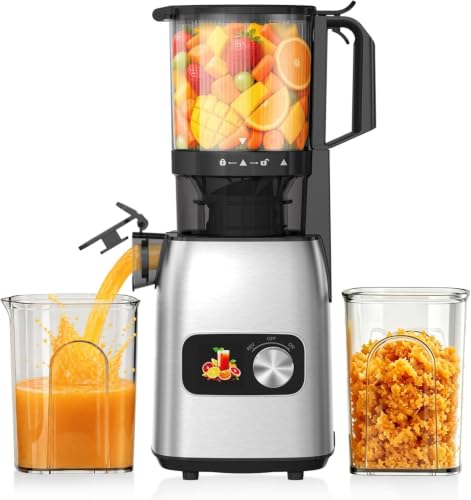
PSIIDAN 5.3″ Wide Chute Cold Press Juicer
Anybear 200W Cold Press Juicer 4.3″ Feed Chute

PSIIDAN LED Touch Screen Cold Press Juicer

PSIIDAN 150W Cold Press Juicer 4.5″ Chute
ECOSELF Wide Mouth Cold Press Juicer

Airon 500W Centrifugal Juicer 3″ Chute
The Picks, Examined More Closely
The Anybear 350W earns the top slot because it tackles the two hardest jobs in home juicing: cramming whole carrots into the chute without trimming, and chewing through beetroot fibers without stalling. The 4.9-inch opening swallows most medium-sized roots in one piece, and the 230Nm high-torque motor (torque measures twisting force, and a higher number means the auger can push through tough produce) keeps the auger turning even when fibrous strands wrap around it. In a household that juices every morning, that combination removes the single biggest friction point: knife work.
Compared to the smaller Anybear 200W later in the lineup, this one trades compactness for muscle. For most people juicing dense roots daily, the upgrade in torque shows up the moment you push a whole beet through. The dual-stage auger (a two-step pressing system that crushes produce, then squeezes the pulp a second time) helps recover more liquid from the same volume, which matters when beetroot alone can cost a few dollars per pound.
Well-Handled Touches
- 4.9-inch chute accepts whole carrots and medium beets with no pre-cutting, saving several minutes each session.
- 230Nm torque handles fibrous strands without bogging down, a real advantage for beetroot greens and stalks.
- Dual-stage pressing pulls more juice per pound, so a weekly beet-carrot blend stretches further.
- Low-RPM extraction limits heat buildup, helping preserve color and flavor in beet-heavy blends.
Things To Consider
- Body runs larger than the 200W Anybear, so counter space matters in tight galley kitchens.
- Disassembly for cleaning takes a few extra steps given the dual-stage parts, which adds a minute or two per cleanup.
Key Specs
Who It Suits Best
Daily juicers working with whole carrots and beetroot who want muscle over compactness.
Where Another Pick Suits Better
Solo juicers in tight apartments may prefer the Anybear 200W for its smaller footprint and lighter motor.
PSIIDAN’s 5.3-inch chute is the widest opening in this roundup, and that single spec reshapes the whole juicing routine. Most whole carrots and trimmed beets drop straight in without a knife touching them. For people who avoid juicing because the prep work feels like cooking, this model removes the barrier entirely. The slow masticating auger (a gear-shaped screw that crushes and presses produce at low speed rather than slicing it) keeps temperatures low, so beetroot color stays vivid instead of oxidizing to brown.
Where the Anybear 350W emphasizes torque, the PSIIDAN focuses on convenience. The trade-off is that wider chutes often need a slightly longer press path, which can mean marginally wetter pulp on very tough beetroot batches. For most households, the convenience of skipping prep more than compensates.
Useful Touches
- 5.3-inch chute fits full-sized carrots and most beets whole, cutting prep time to nearly zero.
- Slow masticating extraction limits heat and oxidation, so juice keeps its bright beet color longer in the fridge.
- Easy-clean design typically includes a brush and fewer small parts, which speeds up the post-juice wash.
- BPA-free construction keeps food-contact surfaces safe for daily use.
Worth Noting
- Wider chute models can leave slightly more moisture in the pulp when juicing dense beetroot, depending on batch size.
- Footprint runs larger than smaller single-auger options, so storage planning matters.
Feature Snapshot
Right Fit For
Busy households that want to skip chopping and prioritize hands-off feeding over maximum yield.
Consider Something Else When
Yield-focused shoppers pushing large beet batches daily may want the Anybear 350W for its higher torque.
The 200W Anybear takes the same slow-press philosophy as the 350W and shrinks the package. The 4.3-inch chute still accepts most carrots whole, and the 65 RPM auger keeps extraction gentle. For solo juicers or couples who run small batches two or three times a week rather than every morning, the smaller motor is plenty. Lighter weight and a tighter footprint also make it easier to slide into a cabinet between uses.
Where the 350W model flexes its torque, this one earns its keep with portability and price accessibility. The honest read: pushing a very dense batch of raw beetroot through it takes a touch more patience, but the resulting juice is just as clean.
Everyday Perks
- 4.3-inch chute handles most whole carrots, so prep stays minimal for small daily batches.
- 65 RPM slow press keeps motor noise low, a plus in open-plan apartments.
- Smaller body stores easily in cabinets, freeing counter space for other prep work.
- Lower power draw suits standard kitchen circuits without tripping breakers.
Points To Note
- 200W motor may slow on very large beet batches, so users typically feed smaller handfuls at a time.
- Smaller pulp container means more frequent emptying on family-size juicing days.
Best Suited To
Singles or couples running two or three juices a week who want cold-press quality without a heavy countertop machine.
Look Elsewhere When
Anyone running heavy daily beetroot sessions will find the Anybear 350W’s higher torque more reassuring.
The LED touch screen on this PSIIDAN signals a different priority: control. Two operating modes let you switch between soft produce and harder roots, while a reverse function helps clear clogs when beetroot fibers bunch up. For shoppers who want feedback on the machine’s state without guessing at a dial, the screen is genuinely useful. The horizontal auger design also extends the press path, which can pull more liquid from fibrous greens than vertical designs.
Against the touchscreen-free Anybear 350W earlier, this PSIIDAN trades pure torque for finer control and an easier way to manage clogs. If you’ve ever stopped a juicer mid-batch to back out tangled greens, the reverse feature earns its keep fast.
A Favorable Mix
- LED touchscreen with two modes gives clear feedback and adapts to soft versus hard produce.
- Reverse function clears clogs quickly, which matters when beetroot and kale fibers jam the auger.
- Horizontal auger geometry extends the pressing path, often yielding drier pulp on fibrous greens.
- BPA-free parts keep contact surfaces food-safe for family use.
Honest Caveats
- More electronic components mean a slightly larger learning curve for owners new to touch-controlled appliances.
- Horizontal footprint can demand more dedicated counter space than vertical models.
Quick Facts
Who Will Love This
Tech-comfortable juicers working with kale, chard, and beet greens who want on-screen control and a reverse safety net.
Skip It When
Shoppers who prefer simple dial-free operation may feel more at home with the Anybear 350W.
The 150W PSIIDAN is the gentlest option in this roundup. The 65 RPM auger barely raises its voice, and the 4.5-inch chute still accepts whole apples and medium carrots. For early-morning juicers in apartments with thin walls, or households with sleeping kids, low noise is the standout feature. Cold-press extraction at this speed also keeps heat low, helping delicate beet pigments stay vibrant.
Set against the Anybear 200W earlier, this model prioritizes quiet operation over torque. The honest trade-off shows up on the toughest beetroot batches, where patience matters more than raw power. For most routine carrot-and-beet sessions, though, the quieter ride is worth it.
Practical Pluses
- Low-RPM operation keeps motor noise minimal, ideal for early risers and shared walls.
- 4.5-inch chute accepts whole apples and most carrots, so prep time stays short.
- Slow extraction limits oxidation, helping juice keep its color and nutrients over a day in the fridge.
- Compact body fits comfortably on small countertops and slides into standard cabinets.
Small Caveats
- 150W motor requires more patience when feeding the toughest beetroot batches, so plan smaller handfuls.
- Lower power may feel underwhelming for shoppers used to high-speed centrifugal juicers.
Perfect Match For
Apartment dwellers and early-morning juicers who want a near-silent cold press without sacrificing chute width.
Swap It Out When
Households running heavy daily beetroot batches may want the Anybear 350W for extra torque headroom.
ECOSELF’s defining feature is the auto-feeding design: drop whole produce into the wide chute and the auger pulls it in without you standing over it with the pusher. For parents juggling school lunches or anyone batching a week’s juice while handling morning emails, that hands-off approach is the real appeal. The wide mouth handles whole carrots and medium beets, and the slow press keeps temperatures low.
Compared to the PSIIDAN 5.3″ model earlier, ECOSELF leans further into convenience by adding the self-feeding pull. The trade-off is that the feed rate can vary by produce firmness, and very fibrous beet greens may still want a guiding hand.
What Stands Out
- Self-feeding chute pulls produce in automatically, freeing your hands for other prep work.
- Wide mouth accepts whole carrots and pre-trimmed beets, removing the knife step entirely.
- Slow masticating extraction limits heat, preserving color and nutrients in beet-heavy juices.
- Included cleaning brush simplifies the post-batch wash, which owners tend to appreciate.
Points To Keep In Mind
- Auto-feeding speed varies with produce firmness, so dense beetroot may need occasional nudging.
- Larger chute housing takes up more cabinet space than narrower compact models.
Spec Overview
Whose Shelf It Belongs On
Multitaskers who want to load produce and walk away while the machine handles the rest.
Not Your Match When
Yield-focused shoppers pushing large dense beet batches may prefer the Anybear 350W for tighter control.
The Airon is the only centrifugal (high-speed blade-and-basket) juicer in this roundup, and it brings a different set of strengths. A 500W motor and three-speed control produce a glass of juice in seconds, which appeals to anyone who has used a slow press and felt the time drag. The 3-inch chute is narrower than the cold-press options, so a little chopping is required, but the speed more than compensates for weekend batches.
Set against the Anybear 350W earlier, the Airon trades nutrient-gentle extraction for sheer pace. Centrifugal juicers introduce more air and heat, so beetroot juice may oxidize faster and lose vibrancy sooner. For shoppers who prioritize throughput and don’t mind juicing right before drinking, it’s a solid alternative.
What Helps Most
- 500W motor produces a 15 oz cup of juice in seconds, ideal for busy mornings and weekend prep.
- Three-speed settings adapt to soft, medium, and hard produce, giving useful control over the batch.
- 3-inch chute speeds up feeding compared to narrow openings, even if some chopping is still needed.
- Included cleaning brush helps clear the basket and mesh between sessions.
Factors To Consider
- Centrifugal extraction runs hotter and introduces more air, so juice oxidizes faster than cold-press output.
- Beetroot color and flavor may fade quicker in the fridge compared to slow-press juice.
- Hard vegetables still need rough chopping to fit the 3-inch chute.
Built With In Mind
Casual weekend juicers who want fast results and drink juice immediately rather than storing it.
Reach For A Different Pick When
Anyone storing beet-carrot juice for a day or two will get better color and flavor from the PSIIDAN 5.3″ slow press.
What To Weigh Before Buying A Juicer For Carrot And Beetroot
Masticating vs. Centrifugal
Masticating juicers (also called slow or cold-press juicers) crush and press produce at low RPM, which keeps temperatures down and protects enzymes, color, and flavor. For beetroot, that means a vibrant ruby juice that holds its character in the fridge. Centrifugal models spin a blade basket at high speed, which is faster but introduces heat and air, shortening the window where juice tastes its best. Shoppers who drink juice within minutes of making it will be happy with either style. Anyone batching ahead for the week benefits from the slow-press approach.
Feed Chute Width and Prep Time
Chute width dictates how much knife work you do before juicing. A 4.5 to 5.3-inch opening handles whole carrots and medium beets without trimming. A 3-inch opening, common on centrifugal models, still requires cutting most roots down. The wider the chute, the less time you spend prepping, but wider chutes often pair with larger housings that demand more counter or cabinet space.
Motor Torque and Hard Produce
Beetroot is one of the densest common juicing ingredients, and carrot is no slouch either. Torque, the twisting force the motor delivers to the auger, matters more than peak wattage when pushing through fibrous strands. Look for 200Nm or higher if you juice tough roots daily. Lower-torque machines handle softer produce easily but can stall on beetroot if you overload the chute.
Cleaning and Long-Term Ownership
Every juicer in this category disassembles for washing, but the number of parts varies. Fewer parts generally mean faster cleanup. Look for models that include a dedicated cleaning brush, and consider whether the mesh or basket tolerates a dishwasher cycle if you prefer hands-off cleaning. Stains from beetroot pigment are a real ownership reality: plastics may tint over time, which is cosmetic but worth expecting.
Key Considerations Across These Picks
Pitfalls Shoppers Hit
One common mistake is choosing a centrifugal juicer for storing beetroot juice. The high-speed process oxidizes the juice quickly, and that gorgeous ruby color turns muddy within hours. Another trap is underestimating chute width. A 3-inch opening sounds reasonable until you stand at the counter quartering carrots for twenty minutes. Buyers also overlook pulp moisture, since wetter pulp means you’re literally throwing away juice you paid for. Look for slow-press models that advertise dry pulp output if yield matters.
What The Higher Tier Buys
Spending up in this category typically delivers more torque, wider chutes, and dual-stage augers. The real-world payoff shows up in three places: faster prep thanks to whole-vegetable feeding, less stalling on dense beetroot, and drier pulp that signals better extraction. The PSIIDAN touchscreen model and the Anybear 350W both earn their price tags by handling the toughest ingredients without babysitting. For occasional juicers, a mid-tier pick still delivers cold-press quality. Daily juicers get the most out of the premium tier’s headroom.
Frequently Asked Questions
Are slow juicers really better for carrots and beetroot?
Slow masticating juicers handle dense roots more efficiently and produce juice with less heat and oxidation. For beetroot especially, cold-press output keeps its color and flavor noticeably longer in the fridge.
Do I need to peel carrots and beetroot before juicing?
Most slow-press models handle unpeeled roots as long as you scrub them well. Centrifugal models often recommend peeling because the high-speed blade catches skins more aggressively. Beetroot skins contribute color and nutrients, so leaving them on is usually preferable when the juicer can handle it.
How wide does a feed chute need to be for whole carrots?
Most medium carrots fit through a 4.3 to 4.5-inch chute without cutting. Larger or unusually thick carrots may need halving regardless. A 5-inch or wider chute handles nearly every carrot whole.
Why does my beetroot juice foam so much?
Foam is air introduced during extraction, and centrifugal juicers create the most. Switching to a slow-press model dramatically reduces foam. Straining through a fine mesh after juicing also helps.
How do I clean beetroot stains off plastic juicer parts?
Soak stained parts in a mix of warm water and baking soda for thirty minutes, then scrub with the included brush. Beetroot pigment is stubborn but eventually fades with repeated cleaning.
Bottom Line
Carrots and beetroot reward patience and torque, which is why the Anybear 350W leads this roundup. Shoppers who care more about hands-off convenience should look at the PSIIDAN 5.3-inch or ECOSELF models, while weekend speed-seekers will find the Airon centrifugal a different kind of fit. Match the machine to your juicing rhythm rather than to specs alone, and the daily glass of juice becomes something you actually look forward to making.



