

Soap making rewards precision. Getting oils and lye water to “trace”, the moment they emulsify into a stable, pudding-like consistency, is the whole game, and a weak stick blender turns that step into a 20-minute arm workout with uneven results. The right immersion blender for soap making chops that time down to minutes, drives a stable emulsion in small batches and big ones alike, and survives the caustic splash zone of regular lye work.
Below, seven immersion blenders worth your attention, including high-torque corded workhorses, lightweight starters, and a cordless option for soap makers without a permanent studio setup.
An Overview Of The Picks

Vitamix 5-Speed Immersion Blender, 625-Watt

Vitamix 5-Speed Immersion Blender 3-Piece Bundle

KitchenAid Variable Speed Corded Hand Blender KHBV53
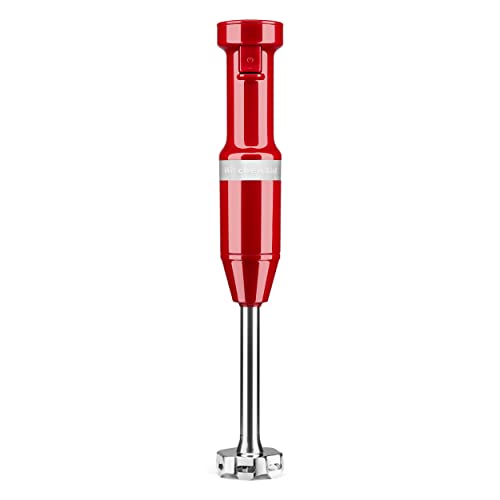
KitchenAid Variable Speed Corded Hand Blender KHBV53, Empire Red

Turelar 1100W 5-in-1 Hand Blender Set
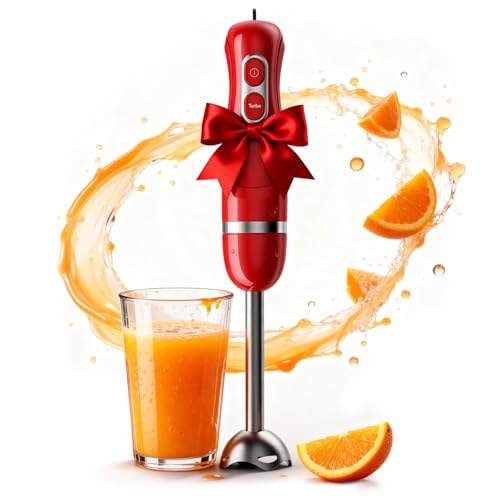
Turelar Immersion Blender 400W 2-Speed
Turelar Cordless Immersion Blender with Rechargeable Battery
Meet The Standout Selections
The Vitamix 5-Speed anchors this list for soap makers who treat their stick blender like a serious tool, not a kitchen drawer afterthought. The 625-watt motor is the headline number, and in practical terms it means trace, the moment soap oils and lye water thicken into a stable emulsion, lands in two to three minutes even with stubborn recipes like high-olive Castile or thick shea-heavy bars.
Five speed settings let you ease into a batch without splashing lye, then ramp up once the mix starts moving. The stainless steel shaft resists the caustic environment of soap work better than plastic-bodied units, and the bell guard is wide enough to clear the bottom of a standard 2-quart mixing jug. Compared to the KitchenAid picks below, you trade a smaller footprint for noticeably more torque, which matters when you scale up to 5-pound loaves.
Advantages To Know
- 625-watt motor drives thick, high-saponification batches without bogging down in the way lower-watt units tend to.
- Five speeds give precise control from gentle mixing to full emulsification, reducing lye splash risk on cold-process days.
- Stainless steel shaft tolerates the corrosive environment of lye and essential oils far better than plastic alternatives.
- Bell guard is tall enough to handle taller mixing vessels, useful when you scale soap recipes from 1-pound test batches up to full 5-pound loaves.
Things To Consider
- Heavier than the compact Turelar picks below, so long sessions may tire smaller hands.
- The shaft and motor housing couple directly, meaning the full unit needs dedicated drying space after rinsing to keep motor seals happy.
Who It Suits Best
Cold-process soap makers running 2-pound batches and up, especially those working with slow-tracing recipes that punish underpowered motors.
Consider Something Else When
You mainly make 1-pound test batches on a counter-height workspace, in which case the KitchenAid KHBV53 in Matte Black offers plenty of power in a lighter frame.
Take the same 625-watt motor and five-speed control from Pick 1, then add a whisk attachment and a storage case. That is essentially the deal here, and for soap makers who also bake, make lotion, or emulsify small cosmetic batches, the bundle pulls double duty without forcing a second tool purchase.
The whisk earns its slot when you are whipping lightweight soap toppings like merengue-style foams or aerating a small batch of whipped body butter. The storage case matters more than it sounds, because loose shafts rolling around a craft drawer tend to nick each other’s blades. Compared to the standalone Vitamix above, you pay a small premium for the extras, but the case alone justifies it for anyone who ships bars to customers and needs organized, damage-free transport.
Practical Advantages
- Same proven 625-watt motor as the standalone model, so trace times and torque carry over directly.
- Whisk attachment handles light aeration tasks, useful for whipped soap tops and small cosmetic emulsions.
- Included storage case protects blades and attachments from the kind of drawer damage that shortens blade life.
- Modular setup means you only attach the whisk or blender shaft you need, reducing cleaning time per use.
Honest Caveats
- Costs more than the single-shaft version, so the bundle only pays off if you’ll actually use the whisk attachment.
Made For
Soap makers who also dabble in lotions, body butters, or light baking, and who want one organized kit instead of separate tools.
Look Elsewhere When
You make soap and only soap, in which case the bare Vitamix 5-Speed leaves the whisk money in your pocket for lye or fragrance oils.
The KitchenAid KHBV53 is the approachable workhorse of the soap-making world, the one beginners gravitate toward and seasoned makers quietly keep as a backup. The variable-speed trigger gives analog control, so you feather the throttle as the mix thickens, which is genuinely useful when you are working close to the surface and want to avoid burping air into your batter.
The 8-inch removable blending arm reaches the bottom of a standard 2-quart mixing pitcher without awkward angling, and the four-point stainless steel blade handles typical cold-process recipes without complaint. The patented pan guard, a small plastic ring near the bell, keeps the blade off the bottom of your vessel, which protects non-stick finishes on cooking pots but matters less in a dedicated soap bucket. Versus the Vitamix above, you lose roughly 300 watts of motor, so 5-pound batches take longer, but most 1 to 2-pound test batches hit trace in a comfortable window.
A Favorable Mix
- Variable-speed trigger offers fine control over the emulsification rate, helping prevent air pockets in finished bars.
- Removable 8-inch blending arm simplifies post-soap cleanup, since lye residue rinses off the detached shaft much faster.
- Four-point stainless blade is durable enough for weekly soap sessions without dulling quickly.
- Lower weight than the Vitamix picks, easier for extended tracing sessions or makers with smaller grip strength.
Worth Noting
- No fixed speed dial, so repeatability between batches depends on your own trigger pressure.
- The pan guard sits low, which can splash a thin batter if you plunge too aggressively at start.
Best Suited To
First-time cold-process soap makers running 1 to 2-pound batches, and anyone who wants a lighter tool that still handles weekly craft work.
A Better Fit Elsewhere
You regularly scale to 4-pound-plus loaves for retail or gifting, in which case the Vitamix 5-Speed’s higher torque is the smarter match.
Functionally identical to the Matte Black KHBV53 above, this is the same variable-speed motor, the same 8-inch removable arm, the same four-point blade, just in KitchenAid’s signature Empire Red finish. If you have a color-coordinated kitchen or craft studio, or you sell bars and want your process photos to pop, that matters.
Soap chemistry does not care what color your stick blender is, but the rest of your shop might. The red finish also hides lye splatter marks slightly better than lighter colors, a small but real benefit during long pour sessions. Compared to the Turelar 1100W pick below, you trade motor power for the KitchenAid’s reputation for long-term reliability and a parts ecosystem that includes replacement arms and guards when the originals eventually wear.
Key Advantages
- Same proven variable-speed trigger and removable shaft design as the rest of the KHBV53 line, no learning curve.
- Empire Red finish coordinates with other KitchenAid tools, useful if you already own the brand’s stand mixer or kettle.
- Accessible replacement parts ecosystem through the wider KitchenAid catalog, in case the shaft or guard ever needs swapping.
Small Caveats
- No motor upgrade over the Matte Black version, so this is a style choice rather than a performance one.
- The bright color makes a sticky soap film on the handle more obvious than darker finishes do.
Who Will Love This
Soap makers who care about their workshop aesthetic, run a content channel, or already standardize their tools on the KitchenAid color family.
Swap It Out When
Power and torque matter more to you than finish color, in which case the Turelar 1100W 5-in-1 hand blender set below delivers noticeably more muscle for similar money.
The Turelar 1100W lands as the highest-wattage option in this lineup, which translates directly to faster trace times on dense, high-palm recipes that would leave lighter blenders panting. The 5-in-1 bundle adds a whisk, chopper, beaker, and milk frother alongside the main shaft, so the package reads more like a small kitchen system than a single tool.
For soap work specifically, that headroom is the selling point. Heavy palm-oil and tallow batches that take five or six minutes on a 400W unit often hit trace in under three here. The pulse-activated trigger is responsive, so you can build emulsion gradually without splashing. Against the Vitamix, the Turelar delivers more raw wattage, though owner experiences with long-term durability tend to favor the Vitamix, so the choice is partly about how hard you push the tool.
What Makes Sense
- 1100W full-copper motor drives thick, high-saponification recipes to trace noticeably faster than sub-700W units.
- Five-piece attachment set covers whisk, chop, and froth tasks beyond soap, so the kit earns its space in a multi-use kitchen.
- Pulse-activated trigger allows quick throttle changes during the critical emulsification window.
- Lower entry price than the comparable Vitamix bundle, given the included accessories.
Points To Keep In Mind
- More attachments mean more parts to clean and dry after every session, a real consideration on busy soap days.
- Heavier in the hand than the KitchenAid or 400W Turelar picks, so smaller grip sizes may fatigue sooner.
Right Fit For
Soap makers running large 4 to 6-pound batches, or anyone who wants one stick blender system to cover soap, sauces, and small kitchen prep.
Reach For A Different Pick When
You mostly make small 1-pound test batches and value a lighter tool, in which case the Turelar 400W below is the smarter everyday pick.
This is the entry-level Turelar, a 400W two-speed unit that handles 1-pound test batches and small starter soap recipes without complaint. Two speeds is plenty when you are mostly working in shallow vessels, and the BPA-free construction keeps lye-contact surfaces food-safe across both cosmetic and kitchen use.
The honest read is that 400W is on the low end for serious cold-process work, and 4-pound batches will take longer than you want. Where this one shines is in the testing phase, the part of soap making where you iterate on small batches, try new fragrances, and don’t want to risk an expensive motor on a learning-curve spill. Against the Turelar 1100W above, you trade raw power and the attachment bundle for a lower price and a noticeably lighter grip.
Where It Excels
- Lightweight frame and small grip make it approachable for newer soap makers still building hand endurance.
- Two-speed control covers the gentlest mix-in and full emulsification without overwhelming a small batch.
- BPA-free contact surfaces align with cosmetic-grade and food-grade cleaning routines.
- Lower price point leaves room in the budget for lye, oils, and fragrances while you learn.
Trade Offs
- 400W struggles with thick 3-pound-plus palm or tallow recipes, where trace takes noticeably longer than premium picks.
- No whisk or extra attachments, so anything beyond blending requires a separate tool.
Built With In Mind
Beginners and hobbyists working through 1-pound test batches before committing to larger formulations.
Not Your Match When
You already know your recipe scales beyond 3 pounds, in which case the Turelar 1100W above handles growth without a motor upgrade later.
Cordless immersion blenders are still a niche in soap making, but the Turelar with its 12V lithium-ion battery and USB-C charging fills a real gap for mobile crafters. If you teach classes, demo at markets, or work in a studio without a dedicated outlet near your mixing station, the absence of a cord is genuinely freeing rather than a gimmick.
Trade-offs come with the territory. Battery power is finite, so for a typical 1 to 2-pound cold-process batch, plan to charge between sessions. The full-copper motor still drives a respectable emulsion, though it won’t match the sustained torque of a corded 1100W unit on a 5-pound loaf. Compared to the rest of the Turelar line, this one swaps power cord convenience for location flexibility.
Standout Benefits
- USB-C rechargeable battery means you can top up from a laptop, power bank, or car charger during travel days.
- No cord eliminates the awkward reach across hot lye water that corded units force during long pour sessions.
- Compact form factor stores easily in a craft tote, helpful for makers who teach soap classes on the road.
- Full-copper motor still delivers enough torque for typical 1 to 2-pound small-batch recipes.
Honest Caveats
- Limited battery life per charge, so large 4-pound-plus batches may require a mid-session recharge or a backup corded unit.
- Less raw power than corded equivalents, so dense palm or tallow recipes will trace more slowly.
Perfect Match For
Mobile soap makers, market vendors, and instructors who teach soap classes away from a fixed workshop outlet.
Where Another Pick Suits Better
Your studio has a dedicated outlet and you run 4-pound-plus production batches, in which case the Vitamix 5-Speed or Turelar 1100W remain the stronger daily tools.
What Matters Most Before Choosing Immersion Blenders For Soap Making
Motor power and torque. Wattage tells you how much raw power the motor can deliver, but torque is what actually drives a thick soap emulsion to trace. Aim for at least 400 watts for 1-pound test batches, and 625 watts or more for batches over 2 pounds. Higher torque means less time blending, less air entrapment, and a more stable finished bar.
Shaft material and length. Stainless steel shafts hold up to repeated lye exposure, where plastic alternatives can degrade over time. Length matters for vessel reach, and 8-inch arms clear most 2-quart mixing pitchers. A removable shaft also simplifies the post-soap rinse, since you can flush lye residue without dunking the motor housing.
Speed control type. A variable-speed trigger, the kind you squeeze harder to go faster, lets you feather the throttle as the batter thickens. Fixed-speed units are fine for experienced makers who know their recipe’s rhythm, but a trigger reduces splashing during the early mix-in phase.
Weight and ergonomics. Soap batches demand a few minutes of continuous plunging, and a heavy tool wears out your forearm faster than a lighter one. Lighter blenders around 2 pounds serve small hands and long sessions, while heavier high-torque units trade comfort for muscle.
Corded vs cordless. Corded blenders deliver consistent power, which matters for big batches. Cordless picks offer location flexibility but limited battery life. Match the tool to your studio setup and typical batch size.
Cleaning and storage. Removable shafts rinse faster and dry separately, which extends motor seal life. Bundles with storage cases protect blades from drawer damage, a small detail that adds years of usable life.
Smart Choices Across The Lineup
Where Shoppers Go Wrong
Picking by wattage alone is the most common soap-making tool mistake. A 1100W unit sounds impressive, but in a 1-pound test batch it just splatters batter everywhere. Match motor size to typical batch volume, not raw spec sheet. Another misstep: buying a blender with a non-removable shaft. Lye residue trapped at the shaft-motor joint corrodes seals over time, and you cannot rinse what you cannot take apart. Finally, skipping weight and grip considerations leads to fatigue. The best motor in the world does not help if your hand cramps at minute two of a tracing session.
What The Higher Tier Buys
Stepping up from a budget 400W unit to a 625W or 1100W model pays off in three concrete ways. First, faster trace times, often halving the minutes you spend blending. Second, more stable emulsions, since a struggling motor introduces air bubbles that mar finished bar tops. Third, longer service life under heavy weekly use, because a motor that never strains runs cooler and lasts longer. The upgrade is worth it the moment your batch size crosses the 2-pound line, or the moment you start selling bars and consistency matters as much as craft.



