

Cookie dough asks a lot from a mixing tool. You need to cream butter and sugar until pale, fold in flour without overworking the gluten, and handle sticky batches of chocolate chip or snickerdoodle without stalling halfway through. The right handheld tool turns that chore into something almost relaxing. The wrong one leaves you with a sore wrist, a clumpy mess, or a tangled ball of dough stuck between tines.
This guide focuses on handheld mixers and whisks purpose-built for cookie dough and similar batters. Some are motorized electric hand mixers with multiple speed settings. Others are manual Danish-style whisks and dough blenders that rely on your arm power. Each has a real use case, and the right pick depends on how often you bake, what kinds of dough you tackle, and how much counter space you want to give up.
A Side-By-Side Look

King Arthur Baker’s Batter Whisk Triple-Loop 18/8 Stainless Steel
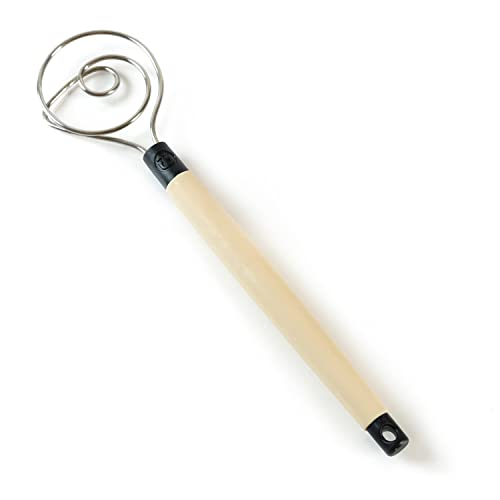
Brod & Taylor Dough Whisk Heavy Duty Dishwasher-Safe

ALLTOP Danish Dough Whisk Stainless Steel Dough Hook

ALLTOP Pastry Shortening Blender Cutter Stainless Steel
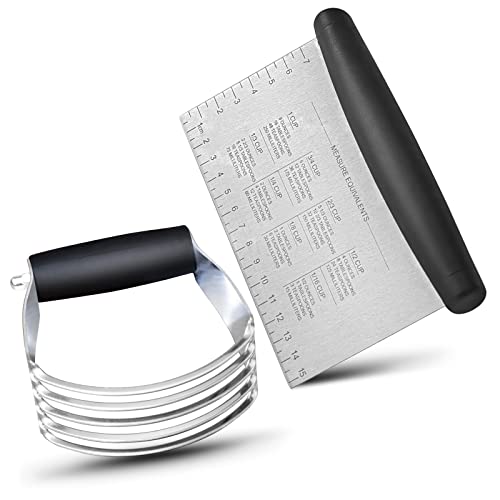
ALLTOP Bench Scraper and Pastry Blender Cutter Set
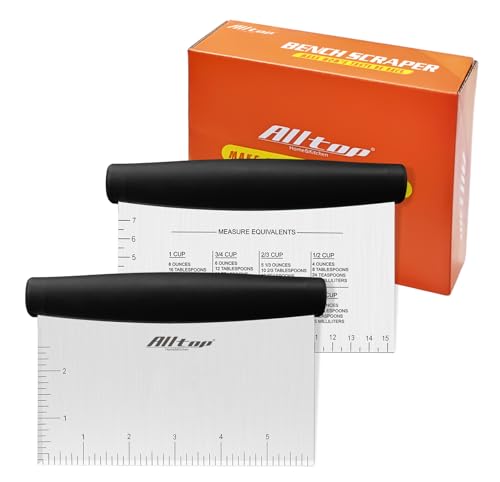
ALLTOP Bench Scraper and Chopper Set of 2

Lord Eagle Hand Mixer Electric 400W 5-Speed with Storage Case
A Breakdown Of The Leading Choices
Cookie dough can be a tough teacher. A whisk with too few loops catches on sticky dough and stalls your arm halfway through a batch. The King Arthur Baker’s Batter Whisk solves that with a triple-loop head, which means batter flows through three open channels instead of clogging at a single crossing point. The 18/8 stainless steel loops (a common food-grade alloy with 18% chromium and 8% nickel for corrosion resistance) hold their shape even when you press into a thick oatmeal-raisin batch, and the beechwood handle keeps the grip warm and steady during longer mixing sessions.
For weekend bakers making muffins, quick breads, or a single tray of cookies, this whisk hits a sweet spot between a flat wooden spoon and a full electric mixer. It won’t power through a triple batch of stiff gingerbread, but for everyday baking it gets the job done with less air whipped into the dough than high-speed beaters.
Real-World Strengths
- Triple-loop design keeps batter flowing instead of clumping, so you finish mixing faster with less wrist strain.
- Stainless steel loops resist bending during heavy mixing, which matters when you stir thick oatmeal cookie batches by hand.
- Beechwood handle stays comfortable during long sessions and won’t get cold or slippery like metal grips.
- Compact size fits in a standard utensil drawer, unlike bulkier electric hand mixers that demand a cabinet shelf.
Points To Keep In Mind
- Manual mixing means your arm does the work; large or repeated batches can leave you fatigued.
- Wooden handle needs hand-washing and quick drying to prevent splitting, which is a small extra step in cleanup.
Key Product Details
Made For
Casual bakers making muffins, quick breads, or single-batch cookies who want a gentler hand-mix than a powered beater provides.
Consider Something Else When
Skip the King Arthur Baker’s Batter Whisk in favor of the Lord Eagle Hand Mixer Electric if you bake large cookie batches weekly and want the motor to handle the workload.
When cookie dough turns thick and heavy, a flimsy whisk just folds over. The Brod & Taylor Dough Whisk takes a different approach: a single, stiff Danish-style loop forged from one continuous piece of stainless steel. That single-piece construction (a manufacturing method where the head is shaped from a single rod of metal rather than welded from separate wires) is the reason the loops don’t wobble or snap when you push into a cold butter and flour mixture. The non-slip silicone handle absorbs torque, so you can lean into the dough without the tool twisting in your hand.
This is the whisk for the baker who treats cookie dough like a serious project. It won’t fold egg whites or whip cream the way a balloon whisk does, but for the heavy lifting of stiff cookie and bread dough, it cuts through ingredients with noticeably less effort than a flat wooden spoon.
Notable Upsides
- Single-piece stainless construction handles heavy mixing without flexing or bending, even in cold, stiff doughs.
- Silicone handle reduces arm strain during longer mixing sessions, which matters for double-batch recipes.
- Dishwasher-safe build simplifies cleanup after sticky, butter-heavy doughs.
Worth Noting
- Stiffer design makes it less suited for thin batters like pancake mix or crepe batter, where a King Arthur Baker’s Batter Whisk handles flow better.
- Larger head may not reach into smaller mixing bowls as easily as a standard hand whisk.
Best Suited To
Bakers who regularly tackle thick, heavy cookie dough and want a manual tool that won’t flex under pressure.
A Better Fit Elsewhere
Reach for the ALLTOP Pastry Shortening Blender Cutter instead if your baking leans toward buttery biscuits and pie crusts where cutting fat into flour matters more than wet mixing.
The ALLTOP Danish Dough Whisk leans into a simple, effective formula. Its head is built from 430 food-grade stainless steel, which the manufacturer describes as BPA-free and rust-proof, and the open Danish-style loop cuts through sticky cookie dough without trapping chunks the way closed whisks can. The handle is lightweight, so the tool feels balanced even during longer mixing sessions, and the open construction makes it easy to rinse dough off the tines after baking.
For a baker who wants a no-fuss manual tool that handles everything from pizza dough to chocolate chip cookies, this whisk earns its place. It doesn’t have the heavy-duty single-piece build of the Brod & Taylor, but it covers the same core task at a lower cost and with similar ease of cleaning.
Features That Help
- Open Danish-style loop design keeps dough moving instead of wedging between tines.
- Lightweight build reduces arm fatigue during multi-batch baking days.
- Rust-proof stainless construction handles frequent washing without degrading.
Trade Offs
- Less rigid than the Brod & Taylor, so very stiff cold-butter doughs may require more pressing effort.
- No silicone grip, which can matter during long sessions or for bakers with limited grip strength.
Feature Snapshot
Whose Shelf It Belongs On
Home bakers who want a versatile, low-cost manual whisk for cookie dough, pizza dough, and quick bread recipes.
Look Elsewhere When
Pick the Brod & Taylor Dough Whisk if you bake weekly and want a stiffer, single-piece tool that holds up to heavier long-term use.
Cookie dough isn’t just about wet mixing. When you make shortbread, sugar cookies, or any recipe where cold butter needs to stay in distinct pieces through the flour, a dough blender is the right tool for the job. The ALLTOP Pastry Shortening Blender Cutter uses a row of curved stainless steel wires that press through cold butter and cut it into pea-sized chunks without warming the fat under your palm. That matters because warm butter melts into the flour and produces dense, tough cookies instead of tender, flaky ones.
The almond-shaped head fits naturally in a closed grip, and the wire blades slice cleanly through butter blocks without bending. For bakers who split time between cookies and biscuits or pie crusts, this tool earns its drawer space.
Advantages To Know
- Curved wire blades cut cold butter into uniform pieces, which is the key to flaky biscuits and tender shortbread.
- Stainless steel build holds up to repeated pressing through cold, hard fat without warping.
- Almond shape fits the natural curve of your hand during repetitive pressing motions.
A Few Limitations
- Not designed for wet cookie dough, so you’ll need a separate whisk or mixer for traditional drop cookies.
- Wire blades can trap dough between them, requiring a quick rinse or knife to fully clean.
Right Fit For
Bakers focused on shortbread, pie crust, biscuits, and other recipes where cold fat needs to stay distinct through the flour.
Swap It Out When
Choose the ALLTOP Stainless Steel Bench Scraper and Pastry Blender Cutter Set if you also want a bench scraper for portioning and transferring dough in one purchase.
Cookie dough rarely stays in the bowl. You portion it, lift it, transfer it to a sheet, and scrape the bowl clean. The ALLTOP Bench Scraper and Pastry Blender Cutter Set handles both halves of that workflow. The dough blender cuts butter into flour the same way the standalone ALLTOP cutter does, while the bench scraper lifts sticky dough off the counter, portions it into uniform mounds, and sweeps the work surface clean in seconds. Both tools are built from food-grade stainless steel with a comfortable grip handle, so the set feels substantial rather than disposable.
For a baker setting up a small baking station from scratch, this pair covers the most common tasks beyond mixing. The trade-off is that the set takes up more drawer space than a single whisk.
Strong Points
- Two-in-one pairing covers butter cutting, portioning, and cleanup in a single purchase.
- Stainless steel build on both pieces handles repeated dishwasher cycles without warping or rusting.
- Comfortable grip handle on each tool reduces hand cramping during extended baking sessions.
Honest Caveats
- Two tools mean two things to wash and store, which can feel redundant for very small kitchens.
- The dough blender component is similar to the standalone ALLTOP Pastry Cutter, so bakers who already own that tool may only need the bench scraper.
Feature Card
Who Should Grab It
Home bakers building a baking toolkit who want a dough blender and bench scraper in one set rather than buying each separately.
Reach For A Different Pick When
Pick the ALLTOP Danish Dough Whisk instead if your baking leans toward wet cookie dough and bread, where a whisk outperforms a pastry cutter.
Once cookie dough is mixed, the bench scraper becomes the unsung hero. The ALLTOP Bench Scraper and Chopper set ships two stainless steel scrapers with straight edges, which makes portioning dough into equal mounds far more accurate than eyeballing with a spoon. The blade measures roughly 6.0 x 3.15 inches, large enough to scoop a full sheet’s worth of dough off the counter in a single pass, and the food-grade stainless construction stands up to bending and dishwasher cleaning.
This is a focused tool, not a do-everything mixer. It complements a whisk or electric mixer rather than replacing one, and it shines during the second half of baking when you move from mixing to portioning.
What Works In Its Favor
- Two-pack format gives a backup scraper for one tool in the dishwasher while the other stays in rotation.
- Straight blade edge cuts clean portions, which means more uniform cookie sizes and even baking times.
- Stainless steel build resists bending and rust through years of regular use.
Factors To Consider
- Does not mix dough, so it pairs with a separate whisk or mixer rather than standing alone.
- Sharp edge needs careful storage, especially in drawers shared with other utensils.
Technical Highlights
Who Will Love This
Bakers with limited drawer space who want a focused portioning and cleanup tool without adding a full dough blender to their kit.
Where A Sibling Pick Shines
Choose the ALLTOP Bench Scraper and Pastry Blender Cutter Set if you also want a dough-cutting tool in the same purchase.
Manual whisks earn their place, but they can’t match the speed of an electric motor. The Lord Eagle Hand Mixer runs at 400 watts through five speed settings, with a turbo boost button for moments when you need an extra burst of power to break through a thick pocket of flour. The set ships with five stainless steel attachments, which is unusually generous for the category, and a storage case that keeps everything organized in a single drawer slot.
For a baker who cranks out multiple trays of cookies in a single session, the electric motor removes most of the arm fatigue that builds up after the second or third batch. The trade-off is that you’re trading storage simplicity and a quieter kitchen for raw mixing speed.
Well-Handled Touches
- Five-speed range plus turbo boost handles everything from gentle creaming to thick cookie dough without stalling.
- Five stainless attachments cover mixing, beating, and whipping in a single kit.
- Storage case keeps all attachments together, which prevents the usual drawer full of loose beaters.
- Eject button releases attachments cleanly without the prying that older hand mixers often require.
Some Limits To Know
- Larger footprint than a manual whisk and requires dedicated storage space for the case and attachments.
- Motor noise is louder than mixing by hand, which may matter in open-plan homes during early morning baking.
Perfect Match For
Frequent bakers producing multiple cookie batches in one session who want the motor to do the heavy lifting.
Not Your Match When
Pick the King Arthur Baker’s Batter Whisk if you bake occasionally and prefer a quiet, drawer-friendly tool without motor maintenance.
What To Weigh Before Choosing Your Mixing Tool
Cookie dough sits at a strange crossroads in the kitchen. It is wet enough to need thorough mixing, but thick enough to clog a standard balloon whisk. The right tool depends on how often you bake, what kinds of dough you tackle, and how much counter space you can spare.
Mixing Power: Manual vs. Electric
Manual Danish-style whisks like the Brod & Taylor and the ALLTOP give you direct feel and control. You can see exactly when the flour disappears and stop the moment the dough comes together, which is helpful for tender cookies where overmixing develops gluten and toughens the final bake. Electric hand mixers like the Lord Eagle cut mixing time dramatically and power through stiff doughs without tiring your arm, but they tend to incorporate more air, which can change the final texture of delicate recipes.
Handle Comfort and Grip
Cookie dough sessions run longer than most people expect, especially when portioning. A wooden handle stays warm and feels natural, while silicone grips absorb torque and reduce slippage. For bakers with arthritis or limited grip strength, a silicone-coated handle is the difference between a comfortable session and a painful one.
Cleaning and Storage
Stainless steel heads and dishwasher-safe bodies make cleanup fast, but wooden handles usually need hand-washing. Electric hand mixers demand a dedicated storage spot for the body, attachments, and cord, while manual whisks slide into a standard utensil drawer with no setup required.
Pitfalls Shoppers Hit and How To Dodge Them
Common Shopping Slip Ups
A common mistake is reaching for the cheapest whisk on the shelf and expecting it to handle thick cookie dough. Thin wire whisks fold under pressure, and a bent tine turns a mixing session into a frustrating wrestling match. Look for a stiff head built from a single rod of stainless steel or reinforced loops if you bake more than once a month.
Another slip is assuming a balloon whisk and a Danish dough whisk do the same job. Balloon whisks excel at thin batters, sauces, and egg whites. Danish whisks handle thick, sticky doughs. Picking the wrong shape leads to clogged tines and uneven mixing no matter how hard you press.
Where The Extra Money Goes
Spending more on a hand mixer usually means a stronger motor, more speed settings, and better-built attachments. The Lord Eagle includes a turbo boost and five attachments, which is the kind of bundle that justifies the higher cost for frequent bakers. For occasional bakers, a manual Danish whisk from a reputable brand covers the same core task at a fraction of the price and with no motor to maintain. The honest read is that paying more pays off only when you actually use the extra power and settings.
Frequently Asked Questions
Can a regular whisk handle thick cookie dough?
A standard balloon whisk works for thin batters but tends to clog and bend in stiff cookie dough. A Danish-style whisk with an open loop design is a better fit for thick mixes.
Is an electric hand mixer worth it for cookies?
An electric hand mixer speeds up creaming butter and sugar and reduces arm fatigue during multiple batches. For occasional single-batch baking, a manual whisk is often enough.
How do you clean a Danish dough whisk?
Most stainless steel Danish whisks rinse clean under warm water or go in the dishwasher. Wooden handles need hand-washing and quick drying to prevent splitting.
What is the difference between a dough whisk and a dough blender?
A dough whisk mixes wet ingredients into a uniform batter. A dough blender cuts cold fat into flour for flaky pastries. They handle different steps in the baking process.
Can you overmix cookie dough with a hand mixer?
Yes. Running a hand mixer too long develops gluten in the flour, which toughens cookies. Mix just until the flour disappears, then stop.



