

A hand immersion blender is one of those tools that quietly takes over half the jobs in your kitchen once you own one. Soup goes from pot to bowl in a few seconds, smoothies skip the dirty blender jar, and homemade mayo finally makes sense. The right stick blender saves you from hauling out a full-size appliance for small jobs, and the wrong one leaves you with lumpy purees and aching wrists.
We’ve lined up eight solid options across corded powerhouses, multi-tasking kits, and a cordless model that actually moves with you. Each pick comes with a clear sense of who it suits, where it falls short, and which sibling in this list might serve you better.
The Picks In Brief

Vitamix 5-Speed Immersion Blender, 625-Watt

Vitamix 5-Speed Immersion Blender 3-Piece Bundle

KitchenAid Variable Speed Corded Hand Blender KHBV53

KitchenAid Variable Speed Corded Hand Blender KHBV53, Empire Red

Bonsenkitchen Immersion Blender with Food Processor
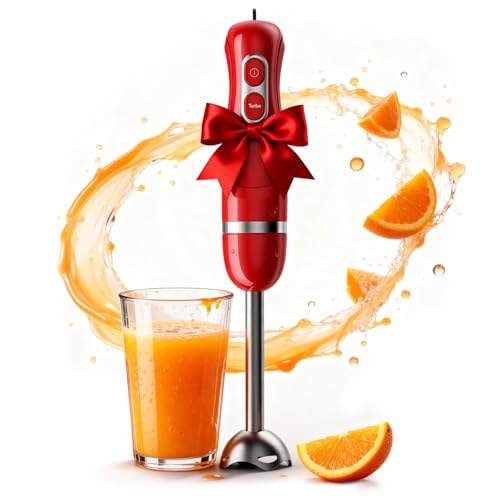
Turelar Immersion Blender Corded 400W

Turelar Immersion Blender Handheld Corded 1100W 5-in-1
Turelar Cordless Immersion Blender with Rechargeable Battery
Inside Each Recommended Option
Vitamix built this stick blender for cooks who treat weeknight cooking like a small production. The 625-watt motor chews through frozen fruit, fibrous greens, and roasted vegetable chunks without slowing down, and the five-speed dial gives you more control than a basic two-button design. The stainless steel blending shaft resists stains from turmeric and tomato better than plastic, which matters if your weekly routine includes curry night.
You can blend a pot of butternut squash soup directly in the cooking pot, which saves washing an extra vessel. The Vitamix is heavier than the budget picks further down this list, so users with wrist fatigue may want to rest the shaft on the pot rim between pulses.
What Stands Out
- Five speed settings cover everything from chunky salsa to silky puree
- 625-watt motor handles frozen berries and ice without bogging down
- Stainless steel shaft wipes clean in seconds and resists staining
- One-handed operation keeps your other hand free to steady the pot
Points To Note
- Heavier than plastic-shaft competitors, which can tire smaller hands
- Corded only, so your reach depends on outlet placement
- No included storage case or extra attachments in the base kit
Feature Snapshot
Made For
Home cooks blending hot soups, frozen smoothies, and dense purees several times a week.
Where Another Pick Suits Better
The Vitamix 3-Piece Bundle makes more sense for shoppers who also want a whisk attachment and a storage case included.
This bundle takes the same core 625-watt motor from the standalone Vitamix and adds a whisk attachment plus a dedicated storage case. For home bakers, the whisk turns this from a soup tool into a cream whipper, which is genuinely useful when you do not want to pull out a stand mixer. The storage case keeps the attachments organized in a drawer, a small but real quality-of-life upgrade.
You get the same blending performance as the base Vitamix 5-Speed model, just with more versatility in the box. It is the right choice if you would otherwise buy a separate hand mixer later.
What Pays Off
- Whisk attachment expands the tool into baking prep
- Storage case keeps all three pieces together in a cabinet
- Same 625-watt motor handles tough blending jobs reliably
- Stainless steel shaft cleans quickly under running water
Trade-Offs To Consider
- Higher cost than the base Vitamix 5-Speed model
- Whisk attachment adds bulk to your storage drawer
Whose Shelf It Belongs On
Home bakers and cooks who want one tool for blending and whipping without buying a separate hand mixer.
Look Elsewhere When
The Turelar 5-in-1 set fits shoppers who want chopper and beaker attachments more than a whisk and a case.
KitchenAid built the KHBV53 around a variable speed trigger, which is a quieter form of control than a dial. The harder you squeeze, the faster it spins, and that lets you ease into a blend instead of splattering tomato across your shirt. The 8-inch removable blending arm reaches comfortably into deeper stockpots, and the four-point stainless steel blade pulls ingredients downward efficiently.
For shoppers comparing this to the Vitamix above, the KitchenAid gives up some raw wattage but trades it for a lighter, more nimble grip. It is the right fit if your kitchen leans on midweek pureed soups and breakfast smoothies rather than all-day production.
Real Benefits
- Variable speed trigger offers intuitive one-handed control
- 4-point stainless steel blade handles smoothies and purees well
- Removable blending arm simplifies cleanup in the sink
- Includes a BPA-free blending jar for small jobs
Honest Caveats
- Lower motor power than the Vitamix, so frozen blocks take longer
- Trigger can fatigue hands during long blending sessions
Key Specs
Best Suited To
Everyday cooks making soups, smoothies, and sauces a few times a week without industrial-level demands.
Skip It When
The Bonsenkitchen 4-in-1 makes more sense for shoppers who want a food processor bowl included for chopping vegetables.
A two-pack of the KitchenAid KHBV53 in Empire Red solves the “who took the stick blender” problem in shared households. One unit lives upstairs, one stays at the in-law suite, or you can gift one and keep one. The variable speed trigger and 8-inch removable arm match the single-unit model exactly, so there is no learning curve.
You get the same blending capability, just doubled. It is the right call for big families, multi-generational homes, or anyone stocking a vacation rental kitchen.
Useful Touches
- Two complete units cover multiple cooking stations
- Empire Red finish adds personality to a utensil crock
- Variable speed trigger works the same on both units
Small Caveats
- Higher upfront cost than buying a single unit
- Both units ship in the same color, no mix-and-match option
- Takes more cabinet space than one blender
Who It Suits Best
Large households, shared kitchens, or shoppers gifting one unit to a family member while keeping the other.
Consider Something Else When
Solo cooks should stick with the single KitchenAid KHBV53 to avoid paying for a duplicate they won’t use.
Bonsenkitchen crammed four tools into one box: a stick blender shaft, an egg whisk, a 24-ounce beaker, and a 17-ounce food chopper bowl. The 500-watt motor pairs with a turbo mode, and 20 speed settings let you nudge textures finely, from a chunky pesto to a smooth hummus. For apartment dwellers with limited cabinet space, the 4-in-1 concept is genuinely useful.
Where the Vitamix above focuses on pure blending muscle, this one trades some raw power for kitchen versatility. It handles nightly dinner prep, weekend baking, and baby food without forcing you to buy a separate small chopper.
Where It Helps
- Four attachments cover blending, whisking, chopping, and measuring
- Turbo mode adds a power burst for stubborn ingredients
- Compact storage footprint suits smaller kitchens
- 20 speed settings allow precise texture control
Points To Keep In Mind
- 500-watt motor is weaker than the Vitamix and high-end Turelar
- More parts to wash and store than a single-shaft design
Quick Facts
Right Fit For
Small-space cooks who want one appliance to replace a whisk, chopper, and stick blender.
A Better Fit Elsewhere
The Vitamix 3-Piece Bundle suits shoppers prioritizing blending power over the food chopper attachment.
The Turelar 400W keeps things simple: two speeds, a copper motor, and a BPA-free shaft. The pulse-activated sensor means you control the action with how hard you press, similar to a paint sprayer. For first-time stick blender owners, that simplicity is the point. There is no dial, no turbo button, and no learning curve.
You give up the higher wattage of the Vitamix and the attachments of the Bonsenkitchen. What you get in return is a lightweight, no-frills tool that handles weeknight soups and morning smoothies without complaint.
The Practical Payoff
- Two-speed design is easy for first-time owners to learn
- Lightweight build reduces wrist strain during longer blending
- Copper motor offers reliable torque for everyday textures
Less-Strong Areas
- 400 watts is modest, so frozen blocks need thawing first
- Only two speed settings limit texture control
- No included accessories beyond the blending shaft
Perfect Match For
Beginners testing whether a stick blender earns a permanent spot in their kitchen drawer.
Another Choice May Suit
The Turelar 1100W 5-in-1 makes more sense for cooks who want attachments and a higher-wattage motor in one kit.
The 1100-watt copper motor in this Turelar set is the highest wattage in this roundup, and it shows. Frozen fruit, ice, and dense root vegetables blend into velvety puree in seconds. The 5-in-1 kit includes a whisk, chopper, beaker, and masher attachments, so it can stand in for several small appliances. For batch cooking and meal prep Sundays, that torque pays off.
The trade-off is weight and noise, both noticeably higher than the 400W sibling earlier in the list. If you blend one soup a week, this is overkill. Blend three large pots on Sunday, and it earns its place.
Everyday Perks
- 1100 watts powers through ice and frozen produce quickly
- Five attachments cover blending, whisking, chopping, mashing, and measuring
- Pulse-activated sensor gives you precise control mid-blend
- Full copper motor is built for frequent, heavy use
Worth Noting
- Heavier and louder than lower-wattage picks
- Corded design requires proximity to an outlet
- More parts to wash and store than simpler units
Who Should Grab It
Meal preppers and large-batch cooks blending several pots or pitchers per session.
Not Your Match When
The Turelar Cordless model fits better for cooks blending in non-traditional spots like a porch or RV without an outlet nearby.
The Turelar cordless breaks the corded-only pattern in this list. A 12V lithium-ion battery powers a copper motor, and USB-C charging means you can top up from a laptop, power bank, or car charger. For dorms, RVs, and outdoor kitchens, that freedom is the selling point. Blend a smoothie by the campsite, an apartment with limited outlets, or a hotel room kitchen without hunting for a free socket.
Battery-powered blending means slightly less sustained power than the corded 1100W model. For short sessions and small batches, you won’t notice. For five minutes straight at full tilt, the corded sibling stays stronger.
What Works In Its Favor
- USB-C rechargeable battery removes the outlet hunt
- Lightweight cordless design improves maneuverability
- Copper motor delivers consistent blending power per charge
- Great for small spaces, travel, and outdoor setups
Things To Consider
- Battery life limits marathon blending sessions
- Lower sustained power than the 1100W corded Turelar
- Must remember to charge between uses
Built With In Mind
Travelers, dorm residents, and small-space cooks who value outlet-free blending over maximum torque.
Swap It Out When
The Turelar 1100W 5-in-1 set is the better pick for cooks doing large weekly batches who need sustained power and attachments.
What Matters Most Before Choosing Hand Immersion Blenders
Wattage And Torque In Real Cooking
Higher wattage does not always mean a better blend, but it usually means the motor can keep spinning under load. For tough jobs like frozen smoothies, nut butter, or fibrous vegetable soup, a 500W or higher motor makes blending faster and reduces the strain on the unit. The Vitamix 5-Speed at 625 watts and the Turelar 1100W model stand out here, while the 400W Turelar handles softer ingredients with no fuss. The honest read is that most home cooks blend soft or pre-cooked food, so a mid-range motor often feels plenty powerful in day-to-day use.
Speed Control And How You Use It
Variable speed triggers, like the KitchenAid KHBV53, let you ease into a blend, which prevents splatter when you start a smoothie. Fixed dials, like the Vitamix 5-Speed, give you repeatable settings for tasks you do the same way every time. For cooks who want a set-it-and-forget-it feel, dials work well. For cooks who improvise, triggers feel more natural. The 20-speed Bonsenkitchen lands in the middle, with a dial that covers more granular textures.
Attachments And The Multi-Tool Question
Multi-piece kits like the Bonsenkitchen 4-in-1 and Turelar 5-in-1 replace a small chopper, whisk, and masher on your countertop. That sounds great until you actually have to wash and store seven pieces after dinner. Bundle buyers tend to be happy when they use three or more attachments weekly. If you only need a stick blender, the Vitamix base model or the Turelar 400W keep your cabinet clutter down.
Corded Versus Cordless In Daily Life
Corded models deliver steady power, which matters for long sessions and thick blends. Cordless models trade some sustained torque for the freedom to blend in any container, anywhere, without outlet proximity. For most stationary kitchens, corded wins on raw performance. For tiny kitchens, outdoor setups, and travel, cordless earns its keep.
Key Considerations Across These Picks
Where Shoppers Go Wrong
The most common mistake is buying on wattage alone. A 1100W stick blender sounds great on paper, but a heavy unit with a stiff grip wears you out long before the motor quits. Test the ergonomics: does the handle fit your hand? Can you rest the shaft on the pot rim to take weight off your wrist? The second mistake is ignoring the attachments you will actually use. A 5-in-1 kit at a low cost looks like a bargain, but if you only blend soups, you paid for chopper and whisk attachments gathering dust in a drawer.
When Paying More Pays Off
Spending up on a premium model like the Vitamix 5-Speed usually means a more durable motor, a stainless steel shaft that resists staining, and a brand that stands behind the product if something fails. For daily cooks blending multiple times a week, that longevity justifies the higher cost. For occasional users making the occasional smoothie or pureed soup, a budget Turelar gets the job done without burning extra cash. The upgrade is worth it when you blend often enough to feel the difference between a flimsy motor and a sturdy one.
Frequently Asked Questions
What Wattage Do I Need In A Hand Immersion Blender?
For most home cooks, 400 to 625 watts covers daily blending of soups, smoothies, and sauces. Higher wattage helps with frozen fruit and ice, but adds weight and cost. If you only blend soft or pre-cooked food, lower-wattage models perform fine.
Can You Use A Hand Immersion Blender For Hot Soup?
Yes, that is actually the primary use case for most stick blenders. Blend directly in the pot to skip the extra step of transferring hot liquid to a countertop blender, which can splash or build up steam pressure. Keep the blade submerged to reduce splatter and protect the motor seal.
How Do You Clean An Immersion Blender Properly?
Most stainless steel shafts detach from the motor body and rinse under running water. A quick blend in a beaker of warm soapy water followed by a rinse cleans the blade without disassembly. Always unplug before washing, and avoid submerging the motor housing.
Are Multi-Attachment Kits Worth The Extra Cost?
Multi-attachment kits are worth it when you genuinely use three or more attachments weekly. If you only blend soups, a single-shaft model keeps your cabinet cleaner and your wash cycle shorter. The honest read is that most people use the whisk occasionally and the chopper even less.
Corded Or Cordless Immersion Blender: Which Is Better?
Corded models deliver more sustained power, which helps during long blending sessions. Cordless models trade some torque for the freedom to blend anywhere without hunting for an outlet. For stationary kitchens with accessible outlets, corded usually wins. For dorms, RVs, and outdoor setups, cordless is the practical choice.



