

There’s a particular kind of fatigue that sets in around minute eight of kneading a stiff bread dough by hand. A capable mixer takes that fatigue off your shoulders and turns bread day into something you look forward to again. Whether you’re a first-time sourdough baker, a weekend pizza maker, or someone tired of babysitting a stand mixer that walks across the counter, the eight options below cover the most common real-world baking setups, from compact tilt-heads to dedicated dough machines with built-in proofing cycles.
How The Shortlist Stacks Up

KitchenAid Classic 4.5 Quart Tilt-Head Stand Mixer K45SS (White)

KitchenAid Artisan Series 5-Qt. Stand Mixer (Tangerine)

KitchenAid Artisan Mini 3.5-Qt Tilt-Head Stand Mixer

KitchenAid KSM180QHSD Queen of Hearts Stand Mixer (Passion Red, 5 Qt)
AIZIYO DoughChief 7.4QT Dough Maker with Ferment Function

Hauswirt 6QT XL Stand Mixer with LED Touch Screen (Silver)
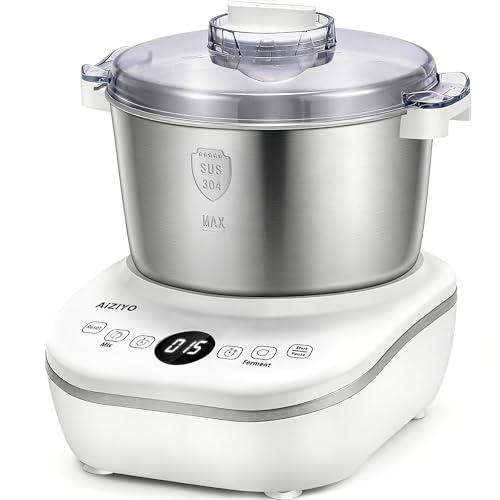
AIZIYO DoughChief 5.3QT Dough Maker with Ferment Function
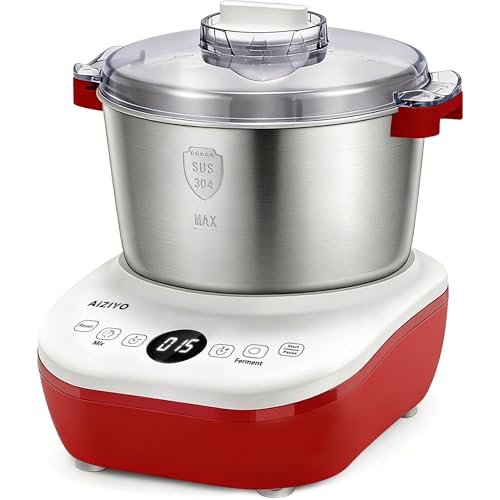
AIZIYO DoughChief 7.4QT Dough Mixer with Ferment Function
Inside Each Recommended Option
The KitchenAid Classic has been the default starting point in this category for a reason, and the K45SS leans into what already works rather than chasing trends. The all-metal body gives it a planted feel on the counter, and the 4.5-quart stainless steel bowl handles a standard double batch of sandwich bread without bogging down. Tilt-head access means scraping the bowl down is quick, and the flat beater, dough hook, and wire whip are all easy to swap between bakes.
For someone baking one or two loaves a week, this is a sensible middle ground. Smaller households and first-time stand mixer owners will appreciate that the bowl capacity supports a single batch of cookies in roughly 28-gram dough portions, and the stainless bowl cleans up in the dishwasher after a quick soak. You won’t get the Artisan’s pouring shield or extra color options, but the core experience is essentially identical.
Good Reasons To Consider
- The 4.5-quart bowl is well matched to typical family recipes without dwarfing a small-batch bake.
- All-metal construction tends to outlast the lighter plastic-cored competitors you’ll see at this size.
- The planetary mixing action, where the beater traces 59 touchpoints around the bowl, reduces the amount of scraping you do by hand.
- Standard attachment hub accepts the full range of KitchenAid accessories if your baking grows later.
Trade Offs
- Lacks the larger 5-quart capacity of the Artisan series, so very large dough batches will push the motor.
- The white finish shows flour dust and dough splatter more than darker colors, which owners commonly report as a small daily annoyance.
Who It Suits Best
Newcomers to stand mixers and small families baking bread, pizza dough, or cookie batches a couple of times a week.
Consider Something Else When
Bakers who want a larger bowl and color options should look at the KitchenAid Artisan Series 5-Qt. Stand Mixer.
Step up from the Classic and the Artisan is what most home bakers end up with. The 5-quart stainless steel bowl with a comfortable handle means fewer batches when you’re cooking for a crowd, and the included pouring shield keeps flour from drifting onto the counter during longer mixes. Ten speeds give you finer control over everything from a slow bread dough knead to a fast whipped-cream finish, and the tangerine finish turns the mixer into a small piece of kitchen personality.
This is the model most generalist bakers land on for good reason. Unlike the Classic’s white plastic-cored shell, the Artisan’s heavier body stays put when you knead stiff dough, and the bowl-lift style feels more stable at higher speeds. If your baking is a mix of bread, cookies, and the occasional cake, the Artisan covers all three without compromise.
Notable Upsides
- The 5-quart bowl handles up to nine dozen cookies in a single batch, which collapses most cookie recipes into one run.
- Over 20 color options let you match a remodeled kitchen or pick a piece that stands out on the counter.
- The pouring shield reduces the white-flour cloud that often comes with adding dry ingredients mid-mix.
- Ten speeds give you a better low-end crawl for sticky enriched doughs than a basic five- or six-speed mixer.
Worth Noting
- Heavier than the Classic, so moving it for counter cleaning is a two-handed job.
- Some owners report the painted finish scratching if you use metal utensils against the bowl rim.
Made For
Versatile home bakers who split their time between bread, cookies, and the occasional cake, and want one mixer to do it all.
Skip It When
Tight counter space or small-batch-only baking points to the KitchenAid Artisan Mini 3.5-Qt Tilt-Head Stand Mixer instead.
The Artisan Mini is the answer to a common apartment-kitchen problem. You want a real stand mixer, not a hand mixer with delusions of grandeur, but the full-size Artisan simply doesn’t fit on the counter or in the cabinet. The 3.5-quart bowl handles up to five dozen cookies in a single batch, which is more than enough for most weeknight bakes, and the lighter overall weight makes it easier to slide in and out of a corner when you need the workspace back.
What surprises people is that the Mini uses the same direct-drive motor as its larger sibling, so it doesn’t feel underpowered for the size. The Candy Apple Red finish is the most common choice, though other colors are available. You trade bowl capacity and a slight reduction in dough capacity per batch, but you keep the planetary mixing action that makes the brand recognizable.
Everyday Wins
- The footprint is roughly 20% smaller than the full Artisan, so it tucks into tighter counters and apartment shelving.
- The same 10-speed range as the larger KitchenAid stand mixers, useful for both slow dough and quick whipping.
- Power hub on top accepts standard attachments, so you don’t lose the KitchenAid ecosystem when you size down.
Honest Caveats
- Smaller bowl means a typical double loaf batch will need to be split, which adds cleanup time.
- Some bakers find the smaller bowl crowds the dough hook on stiffer sourdoughs, so the motor works harder than it would in a 5-quart model.
Right Fit For
Apartment dwellers and small-household bakers who want full stand-mixer performance without sacrificing counter space.
Look Elsewhere When
You routinely bake double loaves of bread or pizza dough for a crowd, in which case the KitchenAid Artisan Series 5-Qt. Stand Mixer is a better match.
The Queen of Hearts edition is functionally a 5-quart Artisan with a celebratory paint job, but that’s underselling what makes it worth a second look. The passion-inspired trim band, miniature red heart detailing, and a custom chrome power hub cover mark this as a 100-year KitchenAid anniversary piece. For a baker who treats their countertop like a small stage, the styling alone justifies the conversation. Underneath, you get the same 5-quart stainless steel bowl, 10-speed motor, and tilt-head design as the standard Artisan.
The 59 touchpoints around the bowl mean the same thorough mixing you’d expect from any other 5-quart KitchenAid, and the attachment hub opens the door to fresh pasta, veggie noodles, and meat grinding if you want to grow beyond baking. Owners who care about kitchen aesthetics as much as function tend to land on this one.
What Pays Off
- The 5-quart bowl can mix up to nine dozen cookies, so it scales to entertaining without splitting batches.
- Tilt-head design gives clear access to add ingredients mid-recipe, useful for layered doughs and toppings.
- Over 14 attachments expand the mixer into a pasta maker, meat grinder, and spiralizer when you want it.
- Limited-edition styling means the mixer reads as a kitchen accent, not just a tool.
Points To Note
- Limited-edition color and trim band means you’ll wait for a restock if your preferred color sells out.
- The decorative chrome band and heart detailing need gentler cleaning than the standard Artisan, so avoid abrasive scrubbers.
Best Suited To
Bakers who want statement countertop styling alongside full 5-quart Artisan performance, and who collect limited-run pieces.
Another Choice May Suit
If the anniversary styling doesn’t speak to you, the standard KitchenAid Artisan Series 5-Qt. Stand Mixer offers the same core performance at a likely lower tier.
The AIZIYO DoughChief is a different kind of machine. Rather than a multi-purpose stand mixer, it’s a dedicated dough maker with a built-in ferment function, designed to take you from flour and water to a proofed, ready-to-shape dough without moving bowls. The 7.4-quart 304 stainless steel bowl is large enough to handle a serious pizza party or weekly bread bake, and the face-up touch panel keeps controls at a comfortable angle when the unit sits on a lower counter.
The trade-off is scope. You won’t be creaming butter or whipping meringue in this machine, because the S-shaped dough blade is built for kneading, not creaming. For someone who bakes bread and pizza dough most weekends and is tired of switching bowls from mixer to proofing box, the all-in-one design is genuinely useful. The removable lid and stainless interior make cleanup straightforward, and the ferment cycle removes the need to find a warm spot in the kitchen during cold months.
Where It Delivers
- Built-in ferment function runs the proofing cycle in a controlled environment, so cold kitchens stop slowing your bake.
- 7.4-quart capacity handles large dough batches that would overwhelm a 4.5-quart stand mixer.
- 304 stainless steel bowl resists corrosion and wipes clean after a sticky dough session.
- Touch panel sits at a natural angle, so you’re not hunching over the unit to read the display.
Possible Compromises
- Single-purpose design means you’ll still want a standard stand mixer for cookies, cakes, and whipped toppings.
- Specialized dough-only builds are sometimes pricier than a generalist 5-quart stand mixer, so the value case depends on how often you bake bread.
Who Should Grab It
Dedicated bread and pizza bakers who run weekly batches and want kneading plus proofing in one unit.
A Better Fit Elsewhere
Generalist bakers who split time between bread, cookies, and cakes will get more use from the KitchenAid Artisan Series 5-Qt. Stand Mixer.
The Hauswirt 6QT XL is a serious stand mixer aimed at the kind of baker who pushes the dough hook hard. The full-metal die-cast aluminum body and metal transmission are designed to handle stiff bagel doughs and heavy rye without the wobble you sometimes see in lighter machines. Eleven speeds give you a finer adjustment than the standard ten, and the 4.5-inch LED touch screen replaces the typical dial control with a flat, wipeable surface that looks modern on the counter.
The 6-quart capacity sits between the KitchenAid Artisan and the larger AIZIYO DoughChief, which makes it a useful middle ground. You get more room for batch baking than a 5-quart stand mixer, with the flexibility to handle cookie dough, whipped cream, and meringues when bread day is over. The widened metal base keeps the unit planted at higher speeds, which is where a lot of lighter mixers tend to walk.
Where It Helps
- Full-metal transmission handles stiff doughs with less motor strain than belt-driven alternatives.
- 11 speeds give finer control at both low-end kneading and high-end whipping.
- Widened metal base keeps the unit stable during long knead cycles on stiff bread.
- LED touch screen is easier to wipe clean than a mechanical dial with crevices.
Where It Is Less Suited
- Heavier overall weight than a 5-quart KitchenAid, so it’s less convenient to move for counter cleaning.
- Fewer color options than the Artisan series, which matters if your kitchen has a specific palette.
Whose Shelf It Belongs On
Bakers who routinely push into stiff bagel, rye, or whole-wheat doughs and want a more planted, metal-bodied workhorse than a typical 5-quart model.
Reach For A Different Pick When
Counter space is the limiting factor, in which case the KitchenAid Artisan Mini 3.5-Qt Tilt-Head Stand Mixer is the smaller-footprint alternative.
The 5.3-quart AIZIYO DoughChief is the smaller sibling of the 7.4-quart model above, designed for the same knead-and-proof workflow but in a footprint that fits a two-person household. The 304 stainless steel bowl and removable lid are unchanged from the larger version, and the face-up touch panel keeps the controls at a comfortable angle regardless of where you place the unit. The ferment cycle runs the proofing environment without needing a separate proofing box on the counter.
For bakers making pizza dough, mochi, and a couple of loaves a week, the 5.3-quart capacity is the practical sweet spot. You get the closed-system workflow, the easier cleanup of a sealed bowl, and the reduced footprint, without the bulk of the 7.4-quart model. The honest read is that you give up some headroom for large-batch baking, but most weeknight bakers don’t need the extra two quarts.
The Good Stuff
- The ferment function consolidates kneading and proofing into one sealed unit, simplifying the bread workflow.
- 5.3-quart bowl is well matched to a single loaf plus pizza dough for two, which is a common weekly pattern.
- 304 stainless steel construction stands up to the wet, sticky conditions of dough work.
- Smaller footprint than the 7.4-quart DoughChief, so it fits on narrower counters.
Less Ideal Details
- Smaller bowl limits batch size, so entertaining-scale pizza nights will need multiple rounds.
- Specialized design means you’ll want a separate hand or stand mixer for non-dough tasks like whipped cream.
Perfect Match For
Couples and small households who bake bread, pizza, or mochi weekly and want a dedicated machine rather than a multi-purpose stand mixer.
Where A Sibling Pick Shines
Bakers who frequently host large pizza nights or batch-cook bread for the freezer should consider the AIZIYO DoughChief 7.4QT Dough Mixer with Ferment Function instead.
The 7.4-quart AIZIYO DoughChief in this listing rounds out the dough-maker trio with the largest bowl and a touch-panel control layout that doubles as a proofing box. The 304 stainless steel interior handles bread, pizza, pasta, and mochi dough, which is the broadest range of any dedicated dough machine on this list. If you’ve been improvising with a heating pad and a towel for proofing, the closed ferment environment is a small but meaningful upgrade in colder kitchens.
The trade-off versus a stand mixer is the same as the other AIZIYO entries: this is a dough specialist, not a creaming-and-whipping generalist. The honest read is that bakers who keep this on the counter tend to also keep a small hand mixer for the non-dough work, which is fine if you have storage. For someone whose weekly bakes split between bread, pizza dough, and a mochi project, the all-in-one workflow pays off quickly.
Where It Excels
- The 7.4-quart bowl handles large loaves, multiple pizza bases, and dense rye without splitting batches.
- Closed proofing environment removes the inconsistency of a drafty counter or cool pantry during winter baking.
- 304 stainless steel bowl resists staining from heavily hydrated doughs and wipes clean after use.
- Removable lid and touch panel simplify cleanup, which is the part of bread baking most people would rather skip.
Some Limits To Know
- Single-purpose design means you need a second mixer for cookies, cakes, and whipped toppings.
- Larger footprint than the 5.3-quart AIZIYO, so make sure your counter can spare the depth before ordering.
Who Will Love This
Bakers who rotate between bread, pizza, and mochi and want a single unit that handles kneading and proofing without switching bowls.
Swap It Out When
You’d rather have one generalist mixer for bread plus everything else, in which case the Hauswirt 6QT XL Stand Mixer with LED Touch Screen is a stronger all-rounder.
Choosing Food Mixers For Bread Dough That Actually Fit Your Kitchen
A bread-dough mixer is one of those purchases where the wrong size wastes counter space and the wrong motor wastes patience. Start with capacity, then weigh it against how often you bake.
Bowl size should match the largest batch you actually make. A 3.5-quart bowl works for a single loaf, while a 5-quart bowl comfortably handles a double batch. Anything beyond 6 quarts is only worth it if you batch-bake for the freezer or feed a crowd weekly.
Motor and transmission matter more than people expect. Direct-drive motors with metal gearing handle stiff doughs without straining, while belt-driven units can complain on heavy rye or bagel doughs. For a quick technical note: planetary mixing action means the beater traces the bowl’s circumference while spinning, so 59 touchpoints around the bowl means fewer stop-and-scrape moments.
Stand mixer vs. dedicated dough maker is the bigger decision. Stand mixers like the KitchenAid and Hauswirt models handle bread, cookies, and cakes in one machine, which suits generalist bakers. Dedicated dough makers like the AIZIYO DoughChief models fold proofing into the workflow but won’t whip cream or cream butter, so they’re best as a second tool or a specialist for bread-only households.
Weight and footprint are the underrated factors. A heavy metal-bodied mixer stays planted but is harder to move, while a lighter model is easier to store but may walk during long knead cycles. Measure your counter depth before ordering anything 14 inches deep or larger.
Key Considerations Across These Picks
Pitfalls Shoppers Hit
The most common mistake is buying by capacity alone. A 7-quart bowl in a single-person kitchen is more bowl than bread, and the unused volume means the dough hook doesn’t catch the ingredients properly. Equally common is overlooking attachment ecosystems: a mixer without a power hub locks you out of the pasta, meat grinding, and spiralizing attachments that turn a stand mixer into a multi-tool.
Another trap is treating “dough mixer” and “stand mixer” as interchangeable. They aren’t, and the proofing function on a dedicated dough maker doesn’t replace the creaming and whipping you get from a tilt-head stand mixer. Match the machine to the workload.
What The Higher Tier Buys
The step up from entry-level to mid-tier mostly buys metal where plastic would otherwise be, plus a direct-drive motor. That’s the difference between a mixer that walks during a stiff dough and one that stays put. The further step up to a 5-quart or 6-quart bowl with a metal transmission buys headroom for larger batches and longer motor life, which matters most if you bake more than twice a week. The top of this list, the Hauswirt, is the clearest example: the die-cast aluminum body and 11 speeds are overkill for a once-a-week baker but a quiet relief for someone running daily doughs.
Frequently Asked Questions
What size mixer bowl do I need for bread dough? A 4.5-quart bowl comfortably handles a single loaf, while a 5-quart bowl takes a double batch without straining the motor. Bakers making multiple loaves weekly will appreciate 6 quarts or more.
Can a stand mixer handle pizza dough? Yes, most stand mixers with a dough hook handle standard hydration pizza dough without issue. Very wet, high-hydration doughs may need a slower speed to keep the motor from climbing the dough hook.
Do I need a dedicated dough maker, or is a stand mixer enough? A stand mixer is enough for most home bakers. A dedicated dough maker earns its place when you want a built-in proofing cycle, prefer the closed-bowl workflow, or bake bread so often that a second specialized machine makes sense.
How important is the motor type in a bread mixer? Direct-drive motors with metal gearing tend to last longer and handle stiff doughs more quietly than belt-driven units. For bagel or rye doughs, the motor and transmission matter more than the bowl size.
Is a tilt-head or bowl-lift design better for bread? Both work for bread dough. Tilt-head designs are quicker to access for adding ingredients, while bowl-lift designs feel more stable at higher speeds and are common in larger-capacity models.



