

Fresh bread at home starts with one stubborn task: developing gluten by hand. A capable mixer turns twenty minutes of pushing and folding into a set-and-watch routine, freeing you to focus on shaping, scoring, and timing the bake. The picks below span classic tilt-head stand mixers that double as cake and cookie workhorses, plus dedicated dough machines built specifically for kneading and proofing. Each fits a different kitchen, family size, and baking rhythm, so the right choice depends less on specs and more on how often you bake and how much counter space you can spare.
The Main Contenders

KitchenAid Artisan 5-Qt Tilt-Head Stand Mixer (Onyx Black)
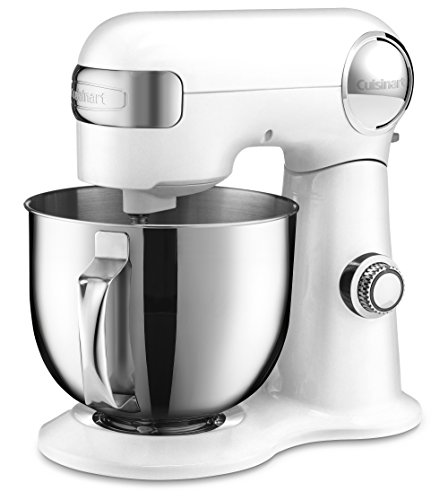
Cuisinart SM-50 5.5-Qt Stand Mixer (White Linen)

KitchenAid Artisan 5-Qt Stand Mixer Renewed (Matte Fog Blue)

KitchenAid KSM150PSCB Artisan 5-Qt Mixer (Cranberry)
AIZIYO DoughChief 7.4-QT Dough Maker with Ferment
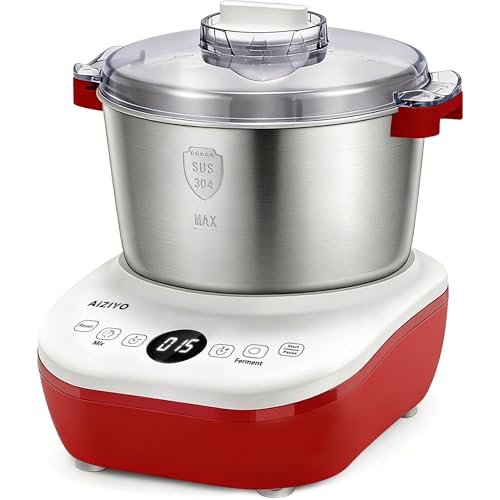
AIZIYO DoughChief 7.4-QT Dough Mixer with Proofing
AIZIYO DoughChief 7.4-Qt Mixer with Microcomputer Control
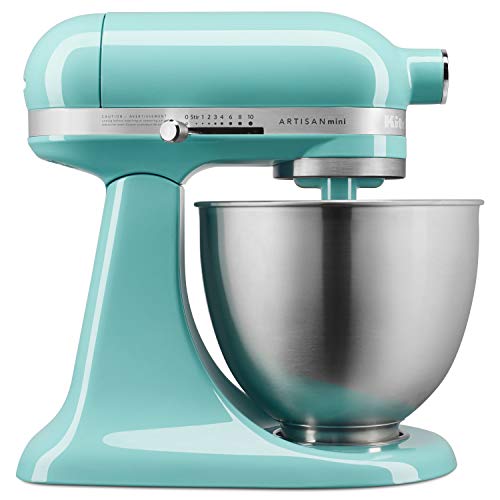
KitchenAid Artisan Mini 3.5-Qt Stand Mixer (Aqua Sky Blue)
Taking A Closer Look At The Options
The Artisan series has earned its reputation for a reason. Its tilt-head design lifts smoothly so you can swap attachments and scrape the bowl without wrestling the machine, and the 5-quart stainless bowl handles a double batch of sandwich loaves or a stiff baguecipe without straining the motor. For home bakers pulling off a Saturday loaf alongside cookies or whipped cream, the same machine covers all three jobs, which matters when counter space is finite.
The zinc-alloy body carries enough heft to stay planted during heavy dough, and the included dough hook, flat beater, and wire whip cover the core rotation. For a household where bread is one of several baking projects, this is the most balanced entry point on the list.
What It Does Well
- The 5-quart bowl fits roughly two loaves of sandwich bread or a thick batch of pizza dough in a single run, enough for most family meals.
- Tilt-head access beats bowl-lift designs for quick scraping and ingredient additions mid-knead.
- 10 speed settings give precise control from a slow stir to a fast whip.
- The hub on the front accepts pasta, meat grinder, and spiralizer attachments, expanding the machine’s role beyond bread.
- A wide color range lets the mixer blend into a specific kitchen palette rather than dominating it.
Things To Consider
- The mixer weighs around 25 pounds, so it tends to stay where you set it up, which can frustrate smaller kitchens that need flexibility.
- No included pouring shield, so flour dust tends to escape at higher speeds during initial mixing.
Feature Snapshot
Who It Suits Best
Home bakers who split their time between bread and other baking projects and want one machine that handles the full rotation reliably.
Consider Something Else When
Solo bakers in a tight apartment may prefer the Cuisinart SM-50, which offers a slightly larger bowl and a more powerful motor for heavier doughs.
Where the KitchenAid leans on heritage, the Cuisinart SM-50 leans on muscle. A 500-watt motor drives a 5.5-quart bowl, which sounds modest on paper but translates to a noticeably easier time with dense whole-grain loaves and stiff pizza dough. The die-cast metal body adds stability, so the machine walks less across the counter during long kneads.
Twelve speeds give finer granularity than most home mixers, which matters when folding in nuts or working through a delicate brioche. The included splash guard with a pour spout solves the flour-dust problem the KitchenAid leaves open, and the tilt-back head keeps the bowl accessible.
Where It Excels
- The 500-watt motor handles heavy whole-wheat and rye loaves without bogging down mid-knead.
- A 5.5-quart bowl edges out the standard 5-quart capacity, useful for larger pizza batches.
- Die-cast metal construction adds stability and reduces walking during long mixes.
- Splash guard with pour spout lets you add ingredients mid-mix without stopping the machine.
Trade Offs
- The white finish shows flour and batter splatter, so daily wipe-downs become part of the routine.
- Heavier than many competitors, which makes relocation a two-handed task.
Right Fit For
Bakers who tackle dense whole-grain breads weekly and want a motor that will not stall when the dough tightens up.
Look Elsewhere When
Anyone working with a smaller kitchen footprint may find the Cuisinart KSM150PS Artisan in Cranberry a better counter-fit, given its more compact base.
Not every household wants to pay full price for a brand-new Artisan. The renewed RRK150MF goes through KitchenAid’s own refurbishment process, so it arrives cleaned, inspected, and tested to perform like a fresh unit, backed by the same core engineering. The matte fog blue finish is a quieter, more modern color than the louder options, which suits understated kitchens.
For a first-time stand mixer owner, this is a low-risk way to step into the Artisan ecosystem without stretching the budget. The 325-watt motor is gentler than the Cuisinart’s, so it’s best suited to standard bread and sweet dough rather than heavy, low-hydration recipes.
Real-World Strengths
- Factory refurbishment from KitchenAid adds a layer of confidence compared to generic used listings.
- Matte fog blue is one of the more versatile finishes, blending into both warm and cool palettes.
- Same 5-quart capacity as the new Artisan, so recipes translate without adjustment.
- Tilt-head design keeps operation familiar for anyone who has used a KitchenAid before.
Minor Gripes
- The 325-watt motor is lighter than the 500W Cuisinart, so dense doughs require more patience and slower speeds.
- Renewed condition means cosmetic variations, though the manufacturer tests for working condition.
Best Suited To
First-time mixer owners who want KitchenAid reliability at a lower cost, baking standard loaves and rolls rather than heavy artisan breads.
Skip It When
You bake weekly and want maximum motor strength, in which case the Cuisinart SM-50 5.5-Qt Stand Mixer serves heavier doughs more confidently.
The KSM150PSCB is essentially the same Artisan platform as the first pick, with two meaningful differences. First, the cranberry finish is a statement piece: a deep, saturated red that anchors a kitchen corner. Second, the included pouring shield addresses the main complaint about the standard Artisan, the flour-dust cloud that escapes during early mixing stages.
For a baker who is choosing a mixer as much for visual presence as for function, this strikes a practical balance. The 5-quart bowl and 10-speed motor are identical to other Artisan models, so you get the same performance wrapped in a more considered package.
The Practical Payoff
- Pouring shield reduces flour cloud during the early dry-to-wet mixing phase, a common pain point in standard Artisan models.
- Cranberry finish works as a deliberate kitchen accent rather than a neutral appliance.
- Same 5-quart capacity and tilt-head ergonomics as the broader Artisan line.
Room For Improvement
- The bold color limits flexibility if you later redesign the kitchen, since the mixer becomes a fixed visual element.
Quick Facts
Who Should Grab It
Home bakers who want a stand mixer that doubles as a countertop design piece and prefer a more polished look with the pouring shield included.
Not Your Match When
You bake a wide variety of doughs and want a dedicated machine, the AIZIYO DoughChief 7.4-QT Dough Maker handles kneading and proofing as a single workflow.
Step away from the stand-mixer category for a moment. The DoughChief is purpose-built for bread, which means it skips the whisk and paddle entirely in favor of a dedicated S-shaped dough blade and a 7.4-quart bowl. The ferment function is the real differentiator: the machine maintains a controlled temperature for proofing, so you load the dough, walk away, and return to a fully risen mass ready to shape.
For someone new to bread baking, this removes the two most error-prone steps: kneading long enough and proofing at the right temperature. The face-up touch panel keeps controls visible and easy to read mid-cycle.
Benefits That Matter
- Built-in ferment function holds dough at a steady temperature, removing the guesswork from proofing.
- 7.4-quart capacity handles a large family loaf or several pizza bases at once.
- Removable lid and 304 stainless steel bowl make cleanup more straightforward than a stand mixer with a fixed head.
Points To Note
- Single-purpose machine, so it does not replace a stand mixer for cookies, cakes, or whipped cream.
- Touch panel control can be less intuitive for first-time users compared to physical knobs.
Perfect Match For
Beginner bakers who want a guided, two-step process (mix then proof) without managing oven lights and covered bowls manually.
A Better Fit Elsewhere
Multi-purpose bakers who also make cakes and cookies will get more use from the KitchenAid Artisan 5-Qt Tilt-Head Stand Mixer in Onyx Black.
The second AIZIYO on the list trims cycle time meaningfully: 15 minutes for kneading and 45 minutes for fermentation, all in one container. That timing makes a real difference on weeknights, since you can start a dough after dinner and have it ready to shape before bed.
The bowl and lid both come off, which simplifies cleaning more than a stand mixer with a non-removable head. If pizza night is a regular event in your household, the 7.4-quart bowl fits enough dough for several personal pies, no batch splitting required.
A Strong Showing
- Compressed timeline (15 min knead, 45 min proof) makes weeknight baking more practical.
- Removable lid and bowl simplify cleanup compared to fixed-head alternatives.
- 304 stainless steel construction feels solid and resists corrosion over years of wet-dough contact.
Softer Spots
- Single-purpose design means it will sit unused on days you bake cookies or cakes.
- The ferment function works best at room-temperature starting dough, so very cold ingredients may slow the cycle.
Feature Card
Whose Shelf It Belongs On
Families who make pizza or bread weekly and want a dedicated machine that handles both kneading and proofing in a single workflow.
Swap It Out When
You bake a wide variety beyond bread, the KitchenAid Artisan 5-Qt Tilt-Head Stand Mixer covers cookies, cakes, and bread in one footprint.
The third AIZIYO on the list leans hardest into automation. The microcomputer controller runs a programmed mix-pause-mix cycle, which mimics the rhythm of hand kneading more closely than a constant-rotation blade. The pause intervals give the flour time to hydrate fully, which tends to produce a more developed gluten network without overworking the dough.
If you have been disappointed by stand mixers that heat the dough through friction, the controlled cycle here is a meaningful shift. The face-up touch panel also keeps the interface easy to read, even on a deep counter where a top-mounted screen would be hidden.
What Works In Its Favor
- Programmed mix-pause-mix cycles reduce dough friction-heat, which matters for long-knead recipes.
- Microcomputer control takes the timing decisions off your hands during the knead phase.
- The 304 stainless bowl resists staining and odor absorption, important for a machine that sits wet for extended periods.
Honest Caveats
- More automation means more reliance on the program running correctly, so a power interruption mid-cycle disrupts the workflow.
Built With In Mind
Tech-comfortable bakers who appreciate hands-off programming and want a more consistent result than a simple on-off machine delivers.
Another Choice May Suit
For pure kneading simplicity without digital programs, the AIZIYO DoughChief 7.4-QT Dough Maker offers a similar bowl with more direct controls.
The Artisan Mini is the same KitchenAid quality, scaled down. At roughly 20% smaller and 25% lighter than the full Artisan, it fits on a narrow counter or in a small apartment where the standard model would dominate. The aqua sky blue finish is a soft, refreshing accent that suits coastal and modern kitchens.
The 3.5-quart bowl handles a single loaf or a small batch of rolls, which matches the portion size of a one- or two-person household. If you bake for yourself or a partner, paying extra for a 5-quart capacity often goes unused.
Positive Points
- 20% smaller footprint than the full Artisan, valuable in apartments and small kitchens.
- 25% lighter body makes it easier to move for cleaning or storage.
- Same attachment ecosystem as the larger Artisan, so expandability is preserved.
Where It Is Less Suited
- 3.5-quart bowl caps batch size, so doubling recipes for gatherings is not realistic.
- Smaller motor handles standard doughs but may strain on heavy whole-grain recipes.
At A Glance
Made For
Couples, singles, or small households who bake modest batch sizes and need a mixer that disappears when not in use.
Where A Sibling Pick Shines
For bigger families or batch bakers, the KitchenAid Artisan 5-Qt Tilt-Head Stand Mixer in Onyx Black offers the same brand in a roomier format.
What Matters Most Before Choosing Dough Mixers For Bread
The first decision is whether you need a stand mixer or a dedicated dough machine. Stand mixers multitask across bread, cookies, cakes, and whipped toppings, which makes them a better value for most households that bake a variety of items. Dedicated dough makers skip the versatility but add built-in proofing, which removes the most common variable in bread baking: dough temperature during the rise.
Bowl capacity matters more than motor wattage for most home bakers. A 5-quart bowl covers two loaves of sandwich bread, while a 3.5-quart bowl tops out at a single loaf plus rolls. If you regularly bake for a household of four or more, lean toward 5 quarts or larger.
Motor strength is the deciding factor for whole-grain, rye, or low-hydration doughs, which resist the blade and strain lighter motors. If your weekly rotation includes dense, seedy loaves, prioritize a 500W-class motor over bowl size.
Tilt-head versus bowl-lift comes down to access. Tilt-head designs let you scrape and add ingredients mid-knead, which matters for brioche and enriched doughs. Bowl-lift designs are more stable during heavy kneads but offer less hands-on access.
If counter space is tight, consider the Artisan Mini for its 20% smaller footprint. If you bake bread almost exclusively, the AIZIYO DoughChief series compresses the full knead-and-proof workflow into a single appliance.
Key Considerations Across These Picks
Where Shoppers Go Wrong
The most common error is buying a stand mixer with a generous bowl but a light motor, then expecting it to handle dense whole-wheat dough at full speed. Motors and bowls work together; a 5-quart bowl with a 325W motor is a mismatch for low-hydration recipes. Match motor strength to your heaviest expected dough.
Another trap is overlooking height clearance. Many stand mixers are too tall to slide under standard kitchen cabinets, so the machine ends up living on the counter permanently. Measure the gap before choosing a full-size model, especially the standard Artisan.
What The Upgrade Pays For
Spending more in this category usually buys a stronger motor, a more stable base, and additional attachments. The Cuisinart SM-50’s 500W motor, for example, runs cooler under load, which extends the life of internal components. Higher tiers also tend to include a pouring shield, a small but meaningful addition that keeps flour off the counter during the early mixing stage.
The AIZIYO DoughChief’s ferment function is the other premium-tier payoff. It trades a higher price for a workflow advantage: the machine handles the rise at a controlled temperature, so you skip the trial-and-error of oven-proofing or countertop timing.
Frequently Asked Questions
What size bowl do most home bakers need for bread? A 5-quart bowl covers roughly two loaves of sandwich bread or a double pizza batch, which suits most families. Solo bakers or couples often find a 3.5-quart bowl sufficient, while larger households should consider 5.5 quarts or more.
Can stand mixers handle whole-wheat dough? Yes, though denser doughs require a more powerful motor. Mixers with 500 watts or more handle whole-wheat and rye with less strain, while lighter motors may slow or stall on low-hydration recipes.
Do I need a dough hook attachment? For bread specifically, yes. A dough hook replaces the flat beater and is shaped to mimic the folding action of hand kneading, which develops gluten without overworking the dough. Most stand mixers include one, but dedicated dough machines build the hook into the design.
How does a proofing function differ from letting dough rise on the counter? A proofing function holds the dough at a steady, warm temperature, which shortens rise time and reduces variables like drafty kitchens or cool overnight temperatures. Counter-top rising works but depends on ambient conditions, so results vary more day to day.
Is a refurbished stand mixer worth considering? A factory-refurbished model from the original manufacturer goes through inspection and testing before resale, which adds confidence compared to a generic used listing. Performance is typically equivalent to new, though cosmetic condition may vary.



