

Mixing concrete by hand gets old fast, and the wrong tool turns a weekend slab into an all-day fight. A drill-mixer handles a bucket of thinset or a small repair. A standalone drum mixer covers a fence post run, a patio, or several bags in a row. Picking between the two, or pairing them, comes down to how much material you move and how often. The five combos below cover the realistic range, from a handheld Bosch drill-mixer to wheelbarrow-style electric drums built for repeat batches.
The Choices Worth Comparing

BOSCH GBM9-16 9 Amp 5/8 Inch Mixer

PHLEX PRO 5.3 Cu. Ft. Portable Cement Mixer
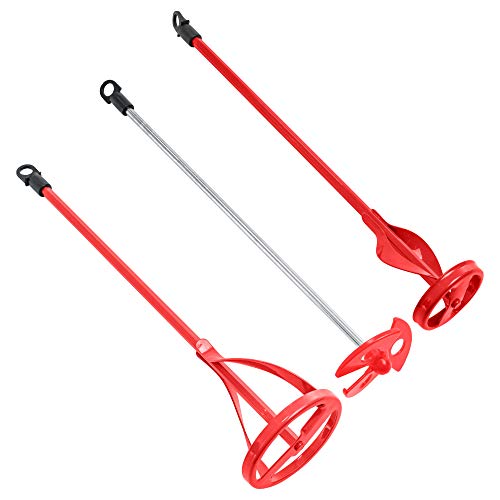
TCP Global Paint Mixer Attachment Set of 3

PHLEX PRO 5.3 Cu. Ft. Portable Concrete Mixer

LDHTHOPI 5.3 Cu.Ft Portable Concrete Mixer
Taking A Closer Look At The Options
The BOSCH GBM9-16 sits at the heavy end of the drill-mixer category, and that weight is the point. It pulls double duty as a high-torque driver and as a paddle mixer for paint, thinset, mortar, and small plaster batches, so you don’t need a separate mixing tool cluttering the shelf.
Where it earns its keep is in a 5-gallon bucket, where a cordless drill usually stalls out. The 9-amp motor and all-ball bearing construction (bearings that use ball-shaped rollers for smoother, longer-lasting rotation) keep the chuck turning when the mix gets thick, and a D-handle on the side gives you leverage to control the torque. For most homeowners patching a step, setting a few posts, or blending a bucket of self-leveling compound, it’s a comfortable everyday tool.
The Upside
- High torque output handles thick, heavy mixes that stall smaller drills
- Variable speed trigger lets you ramp into a load without splashing
- D-handle design reduces wrist strain during longer mixing sessions
- Works as a regular drill for wood and metal when you swap the paddle
- Compatible with standard mixing paddles up to 5/8 inch shank (the round tang that locks into the chuck)
Worth Noting
- Heavier than a standard corded drill, so overhead mixing gets tiring
- No paddle included, so you need to buy one separately (the TCP Global set later in this list pairs well)
Who It Suits Best
Homeowners and trades who already own a paddle and need a drill that won’t bog down in a full bucket of mortar.
Skip It When
A homeowner pouring a patio or setting a long fence line will get more out of the PHLEX PRO 5.3 Cu. Ft. Portable Cement Mixer, since a drum beats a paddle once you’re past two bags.
The PHLEX PRO portable drum is where you graduate from “fix a crack” to “pour a slab.” The 5.3 cubic foot drum holds roughly half a standard 80-pound bag of concrete per batch, and a 1 HP copper-wound motor (the copper wire coil that produces the motor’s magnetic force) keeps the drum turning at a steady 30 RPM even when the mix thickens.
Unlike the handheld BOSCH above, this is a wheelbarrow-style unit you roll to the pour site. It runs on a standard 120V household outlet, so no special wiring, and the drum tilts for controlled discharge into a wheelbarrow or form. The trade-off is real estate: it takes up garage space and isn’t a tool you grab for a single bucket.
What Earns Its Place
- 5.3 cu. ft. drum covers a small patio, a post run, or a footing in a few batches
- Plugs into a standard 120V outlet with no special circuit needed
- Drum tilts for pouring, which is cleaner than scooping from a bucket
- Wheelbarrow frame rolls to where the work is
Points To Note
- Half a bag per batch means several cycles for larger pours
- Drum and frame need a flush-out after every use to keep hardened concrete from building up on the paddles
- Storage footprint is significant in a small garage or shed
Made For
DIYers tackling a backyard patio, a footing, or a multi-post fence who want to skip the wheelbarrow-and-garden-hoe routine.
Consider Something Else When
If your project is a one-time repair that fits in a bucket, the BOSCH GBM9-16 drill-mixer is a more practical fit.
The TCP Global set is the cheapest way to turn any corded drill into a useful mixer, and the three included paddles cover most bucket-scale jobs. You get a 14-inch paddle for paint, a smaller paddle for epoxy and resin, and a mini-mixer for sample cans and touch-up batches.
Both the larger paddles use hex shanks (a six-sided tang that locks into a drill’s chuck without slipping) sized to fit common 3/8-inch and 5/16-inch chucks. Compared to the BOSCH drill-mixer above, this is the attachment half of the equation. The honest read is that the paddles do the mixing work, while the drill in your hand does the heavy lifting.
Good Reasons To Consider
- Three paddles cover paint, epoxy, and small mortar batches in one set
- Hex shanks fit most standard corded drills without an adapter
- 14-inch reach gets to the bottom of a 5-gallon bucket
- Coated steel paddles rinse clean after water-based mixes
Minor Gripes
- Not a substitute for a real mixer motor; a weak drill will stall in thick mortar
- Coating can wear where the paddle scrapes the bucket, so avoid scraping the bottom
Feature Snapshot
Right Fit For
Anyone who already owns a solid corded drill and wants paddles for paint stirring, epoxy blending, or occasional thinset work.
Where Another Pick Suits Better
For pure concrete volume, the LDHTHOPI 5.3 Cu.Ft Portable Concrete Mixer is the better call since a drum handles the workload a paddle setup cannot.
Take the same 5.3 cubic foot drum and 1 HP copper motor as the other PHLEX PRO, and add a spring-loaded tilting wheel that rotates the drum a full 360 degrees. The result is a mixer that empties cleanly into a form without the awkward tipping dance you get on budget drums.
The benefit shows up when you’re pouring repeatedly. Instead of prying the drum up and hoping the mix slides out, you turn the wheel, the drum pivots, and the pour is even. The 750-watt motor runs at 30 RPM, which is slow enough to mix without whipping air into the concrete, and the wheelbarrow frame keeps the unit mobile. For most homeowners doing more than one batch in a session, the tilting wheel earns its keep.
What Stands Out
- Spring-assisted tilting wheel takes the strain out of pouring
- 360-degree rotation lets you control the pour rate precisely
- Same 5.3 cu. ft. capacity as the larger PHLEX PRO for back-to-back batches
- Copper-wound motor is rated for longer mixing cycles
Some Limits To Know
- Still a single-batch-at-a-time drum; plan ahead for larger pours
- Tilting hardware adds maintenance points that need a quick visual check before each use
Best Suited To
Homeowners and small crews doing multiple batches in a row, like a footing plus a slab edge, who want smoother pours and less spillage.
Not Your Match When
For one-off bucket repairs, the BOSCH GBM9-16 drill-mixer is the right-sized tool and easier to store in a closet.
The LDHTHOPI rounds out the drum options with a 750W motor, 5.3 cubic foot drum, and a stand-and-wheels frame designed to live in a shop or be towed to a job site. The integrated stand keeps the drum at a comfortable working height, which matters once you cycle through ten batches in a day.
Like the PHLEX PRO units above, the 30-RPM drum speed is calibrated to mix without aerating the concrete, and the same 360-degree tilting wheel shows up for controlled pours. Where this one leans in is durability framing: the stand, wheels, and drum housing are built for repeat use, and the unit is also marketed for non-concrete tasks like seed treatment and feed blending, so it pulls double duty on a small farm or homestead.
What Helps Most
- Integrated stand and wheels keep the drum at pouring height
- 750W copper motor handles thick mortar and stucco without bogging
- 360-degree tilting wheel makes batch-to-form pours cleaner
- Frame design is suited to both construction and agricultural mixing tasks
Trade-Offs
- Larger frame footprint than a basic wheelbarrow drum
- Stand hardware should be checked periodically since vibration loosens bolts over time
Feature Snapshot
Who Should Grab It
Small contractors, serious DIYers, and homestead operators who want a stand-mounted drum for repeated batches and varied mixing jobs.
Reach For A Different Pick When
For a quick repair that fits in a single bucket, the TCP Global paddle set paired with a corded drill is far easier to store and far cheaper to own.
What Matters Most Before Choosing Concrete Mixer Combos
Match The Mixer To The Batch Size
A drill-mixer makes sense for anything up to a single 5-gallon bucket. Anything past that, especially a full 80-pound bag of concrete, takes noticeably longer with a paddle and wears out your arm. Drum mixers in the 3 to 5 cubic foot range handle about half a bag per batch, which lines up with the most common residential projects: a fence post run, a small patio, or a footing.
Power Source And Circuit Reality
Most residential drum mixers run on a standard 120-volt outlet, which is convenient. Larger 3 HP and up drums may need a 240-volt circuit, which means a dedicated line from your breaker panel. Check what’s in your shop before assuming you can plug in and go.
Drum Speed And Mix Quality
Slower drum speeds around 30 RPM mix concrete without beating air into it, which keeps the cured strength consistent. Faster mixing can introduce air pockets that weaken the final pour. A variable-speed drill-mixer gives you similar control in a bucket.
Portability Versus Storage
Wheelbarrow-style drums roll where you need them but take up real estate in a garage. Drill-mixers and paddle sets store in a drawer. Be honest about how often you’ll use the tool, because a drum that sits for years rarely earns its space.
Key Considerations Across These Picks
Pitfalls Shoppers Hit
Buying a drum mixer for a one-bucket repair is the most common overshoot. The unit sits, the concrete cures in the drum, and the next project costs more in cleanup than the mixer saved in labor. On the other end, using a drill-mixer for a full patio pour burns through drill batteries (or trips breakers) and delivers a less consistent mix than a drum. Match the tool to the project size, and the tool earns its place.
Where The Extra Money Goes
Higher-tier drum mixers usually add a tilting wheel, a sturdier stand, and a copper-wound motor rated for longer cycles. For one weekend a year, the cheaper drum is fine. For repeat use on a job site, the tilting wheel and stronger motor save real time across every batch, and that adds up faster than most shoppers expect.
Frequently Asked Questions
What size concrete mixer do I need for a patio?
A 3 to 5 cubic foot drum covers most residential patios, since each batch holds roughly half an 80-pound bag of concrete. A standard 10-by-10 patio takes several batches, so a tilting drum keeps the pours consistent.
Can a regular drill work as a concrete mixer?
A standard corded drill with a paddle works for paint, thinset, and small mortar batches. For thick concrete or large volumes, you want a high-torque drill like the BOSCH GBM9-16, or a dedicated drum mixer.
How many bags of concrete fit in a 5.3 cu. ft. mixer?
A 5.3 cubic foot drum holds about half of an 80-pound bag per batch. Plan on multiple batches for any pour larger than a single post or small footing.
Do I need a special outlet for an electric concrete mixer?
Most residential drum mixers in this list run on a standard 120-volt outlet. Larger commercial drums often need a 240-volt circuit, so check the spec sheet before buying.
How do I clean a concrete mixer after use?
Add water and a few shovelfuls of gravel to the drum and run it for a minute to scour the inside. Flush thoroughly and tip the drum to drain. Cleaning right after each use prevents hardened concrete from building up on the paddles.



