

A commercial mixer changes the rhythm of a working kitchen. Instead of dividing attention between portioning dough by hand and timing the next proof, you load the bowl, set the speed, and move on to plating, shaping, or prep. The eight picks below cover bakeries, pizzerias, prep kitchens, and serious home cooks who need reliable throughput. Some lean heavy with spiral hooks for tough doughs, others keep things compact with planetary bowls for cakes and fillings. Capacity, voltage, attachment range, and footprint all shape which one earns a place on your counter.
A Quick View Of The Lineup

BOSBAK 30Qt Commercial Spiral Dough Mixer

TECHTONGDA 60L Commercial Food Mixer with Trolley
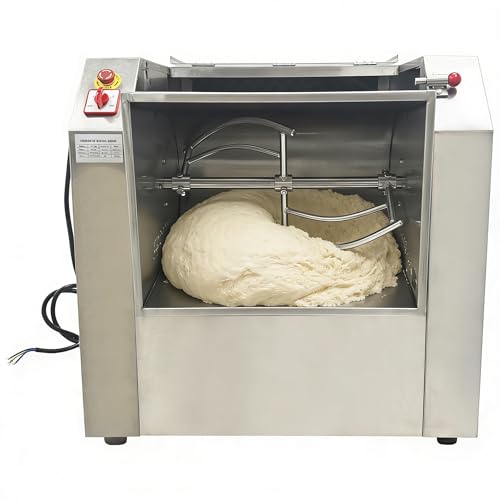
TECHTONGDA Commercial Stainless Steel Pizza Dough Mixer

ZACME 8.4QT Commercial Stand Mixer 800W
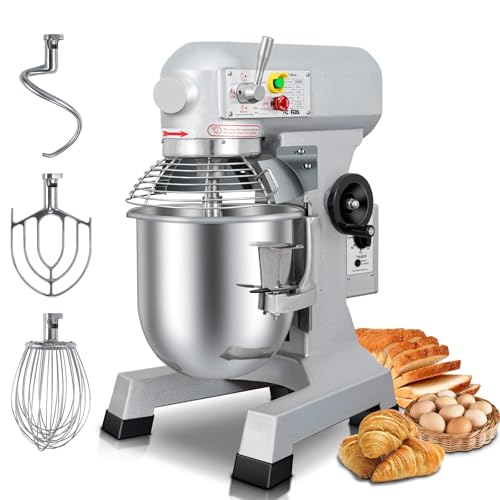
BOSBAK Commercial Food Mixer 15Qt

BOSBAK Commercial Food Mixer 30Qt

Robot Coupe MP 450 Turbo 18-Inch Immersion Blender

TECHTONGDA 30L Commercial Dough Mixer with Timer
Why These Options Stand Out
This BOSBAK unit is built for bakeries running heavy hydration doughs day after day. The dual-speed spiral action pairs a co-rotating hook with a slowly turning bowl, which mimics hand-kneading more closely than a planetary mixer. In practice, that means the bowl clears the hook, the dough develops evenly, and the motor runs cooler on long batches. The 1.8kW drive handles 40 lb dough loads without bogging down.
Compared to the TECHTONGDA 60L later in the lineup, this model takes a smaller floor footprint, which matters in tight back-of-house spaces. You trade a portion of the bowl size for a more focused, bread-first workflow. For a single-product bakery or a pizza shop pulling 80 to 100 dough balls per shift, that balance usually lands well.
Why It Works Well
- Dual-speed spiral design develops gluten evenly on tough doughs
- 40 lb capacity supports steady bakery throughput without mid-shift splits
- Cooler-running action helps long fermentations stay on schedule
- Heavy-duty frame handles daily commercial use across multiple batches
Things To Consider
- Single-purpose design, not ideal for cake batters or whipped egg whites
- Larger footprint than a counter-top planetary mixer, so plan floor space
Key Specs
Made For
Bakeries and high-volume bread programs that prioritize tough dough work over cake and pastry production.
Look Elsewhere When
The ZACME 8.4QT Commercial Stand Mixer fits better when counter space is tight and mixed batters matter as much as bread.
The TECHTONGDA 60L is a planetary-style workhorse with a built-in trolley base, so the whole unit rolls between prep stations. Three attachments ship standard: a dough hook for flour-heavy batches, a flat beater for fillings and batters, and a wire whip for aerated finishes. The 220V supply means you will need a commercial kitchen circuit, but the motor reserves the headroom for sustained mixing without thermal throttling.
Versus the smaller BOSBAK 30Qt later in the article, this mixer nearly doubles the bowl volume and supports a broader recipe range. Owners running a hotel bakery or a catering commissary often gravitate here because one machine covers morning bread, afternoon cake, and evening icing without a swap-out. Depending on your kitchen’s electrical panel, the 220V requirement may be a dealmaker or a dealbreaker.
What It Does Well
- 60L bowl handles large batch recipes for hotels and catering
- Three included attachments cover dough, batters, and whipped finishes
- Adjustable three-speed range fits different mix stages
- Built-in trolley base simplifies floor moves between stations
Worth Noting
- 220V power means professional circuit installation is required
- Footprint is substantial, so plan dedicated floor space
Feature Snapshot
Best Suited To
High-volume bakeries and commissary kitchens that need a single machine covering bread, batters, and aerated finishes.
Consider Something Else When
The TECHTONGDA 30L Commercial Dough Mixer with Timer suits smaller bakeries that want spiral action at a more moderate capacity.
Built specifically for pizzeria lines, this TECHTONGDA features a full stainless steel body, a 50 kg kneading capacity, and a 90-degree tilting bowl that drops finished dough onto the bench. The twisted dragon-shaped mixing bar keeps dough moving without tearing, and the all-stainless construction simplifies end-of-shift cleaning. A note worth flagging: the unit ships without a plug, so a professional electrician is part of the install.
Where the BOSBAK 30Qt earlier in this roundup handles smaller bakery runs, this one aims squarely at high-output pizza operations. Owners commonly report that the tilt-bowl release saves meaningful prep time on busy Friday nights. You may find the heavier frame harder to relocate once installed, so picking a permanent spot early helps.
Positive Points
- 50 kg kneading capacity keeps pace with high-output pizza lines
- 90-degree bowl tilt drops dough cleanly onto the prep surface
- All-stainless body stands up to moisture and frequent wipe-downs
- Dedicated mixing bar shape protects dough structure during kneading
Honest Caveats
- Ships without a plug, professional electrician installation required
- Single-purpose design, not suited for cake batters or whipped egg
- Heavier frame limits relocation after placement
Whose Shelf It Belongs On
Busy pizzerias and schools producing large volumes of pizza dough on a fixed production schedule.
Swap It Out When
The BOSBAK 30Qt Commercial Spiral Dough Mixer fits better when bread and pizza share the same production line.
For a counter-friendly footprint, the ZACME 8.4QT lands well in small cafés, pastry studios, and serious home bakeries. The aluminum die-cast body sheds heat efficiently, and the 800W DC motor supports 11 speed settings with enough torque for bread dough up to about 3 kg. The stainless 8L bowl wipes clean, and an LED display helps with timed mixes.
Compared to the BOSBAK 30Qt that leads the list, this model sacrifices capacity for accessibility. The NSF/ANSI 8-2023 alignment adds credibility in regulated commercial environments, and the lighter frame moves between counters more easily. For shops that bake smaller batches with high variety, this often outperforms a larger dedicated spiral mixer.
A Strong Showing
- 800W DC motor handles up to 3 kg of dough without stalling
- 11 speed settings cover everything from heavy knead to delicate whip
- Aluminum die-cast body cools efficiently under sustained use
- LED display supports timed batch runs
Room For Improvement
- 3 kg dough limit is a real ceiling for bread-heavy bakeries
- Smaller bowl means more frequent reloads on busy days
Quick Facts
Right Fit For
Small cafés, pastry studios, and home bakeries running varied recipes on a countertop-friendly scale.
A Better Fit Elsewhere
The TECHTONGDA Commercial Stainless Steel Pizza Dough Mixer is the better match for dedicated pizza production at higher volumes.
The 15Qt BOSBAK sits comfortably in the middle of the lineup. It offers a 600W motor and three-speed control, paired with the standard trio of dough hook, flat beater, and wire whip. The stainless bowl handles cookie dough, mashed potatoes, cake batter, and bread in roughly 6 to 8 lb batches, which fits a busy café or a small catering operation.
Versus the ZACME 8.4QT reviewed earlier, this unit doubles the bowl volume at a similar attachment count. Where the larger TECHTONGDA 60L later in the article pushes toward industrial volumes, the 15Qt is the most flexible middle ground. You give up the deeper headroom of a 1250W drive, but for mixed cake-and-bread programs the size lands well.
Useful Strengths
- Three-speed control covers heavy dough through delicate aeration
- Versatile attachment set handles batters, doughs, and fillings
- Stainless bowl supports fast wipe-down between batches
Small Caveats
- 600W motor runs warmer than larger 1250W siblings on heavy dough
- Not ideal for very stiff or very large hydration doughs
- Plastic trim on some parts may show wear in high-use kitchens
Who It Suits Best
Cafés and small catering operations running a varied mix of bread, cake, and filling recipes at moderate volume.
Skip It When
The BOSBAK Commercial Food Mixer 30Qt fits better when batch sizes climb past 15 lb on a regular basis.
Stepping up from the 15Qt sibling, this 30Qt BOSBAK doubles the bowl and nearly doubles the motor output at 1250W. The planetary action, three-speed range, and matching attachment trio (hook, beater, whip) stay familiar, but the headroom is where the real difference shows. Heavy bread doughs, dense cookie batches, and large cake volumes all fit comfortably.
Compared to the spiral-design BOSBAK 30Qt that opens this article, this planetary version is more versatile across recipe types. The trade-off is bread quality, where a spiral hook develops gluten more gently on tough doughs. For mixed bakeries and catering kitchens, the planetary flexibility usually wins. For a single-product bread bakery, the spiral option still leads.
Bright Spots
- 1250W motor drives heavy doughs without bogging down
- 30Qt bowl handles large cake, cookie, and bread batches
- Planetary action reaches the bowl sides more evenly than basic mixers
Trade Offs
- Planetary action runs warmer on bread than a dedicated spiral
- Larger footprint demands a dedicated counter or stand
Perfect Match For
Larger bakeries and catering kitchens running heavy, mixed recipe programs that need power and capacity in one unit.
Reach For A Different Pick When
The TECHTONGDA 30L Commercial Dough Mixer with Timer is a better match for timed bread batches on a fixed schedule.
The Robot Coupe MP 450 Turbo takes a different path entirely. Instead of a bowl-bound planetary or spiral mixer, this is an 18-inch handheld immersion blender built for large pots and stock tanks. The fixed-speed power output reaches into deep vessels, and the stainless shaft handles up to roughly 25 gallons of soup, sauce, or purée in a single pass. At 120V, it plugs into a standard outlet.
This is not a dough tool, so it does not compete directly with the rest of the lineup. It earns its place because professional kitchens often need a reach-style blender alongside a stand mixer, especially for soup, sauce, and emulsion work. In most kitchens, it complements rather than replaces a traditional mixer.
Notable Gains
- 18-inch shaft reaches deep into commercial stock pots
- Stainless construction handles heavy sanitation cycles
- 120V plug fits standard commercial kitchen outlets
Worth Bearing In Mind
- Not a dough mixer, so it does not replace any spiral or planetary pick
- Fixed-speed control offers less precision than variable-speed alternatives
Built With In Mind
Catering kitchens, school cafeterias, and prep stations running high-volume soup, sauce, and purée work.
Another Choice May Suit
The ZACME 8.4QT Commercial Stand Mixer fits better when dough and batters are the daily workload.
The 30L TECHTONGDA closes the roundup with a removable bowl and a built-in timer, two small features that meaningfully change the daily rhythm of a bakery. The double-action design uses a spiral hook and a rotating bowl that work together, while the 1500W copper motor drives up to 26 lb of flour per batch. The removable bowl simplifies transfers to proofing racks.
Compared to the earlier TECHTONGDA 60L, this model is more compact and runs on standard 110V. The built-in timer helps keep batches consistent across staff shifts, which matters in training-heavy kitchens. Owners commonly report that the removable bowl saves meaningful time during cleanup.
Everyday Perks
- Removable bowl transfers easily to proofing or storage
- Built-in timer supports consistent batch timing across shifts
- 1500W copper motor handles dense doughs reliably
Less-Strong Areas
- Single-purpose design, not suited for cake batters or whipped egg
- Smaller capacity than the 60L sibling in the same brand
Technical Highlights
Who Should Grab It
Mid-size bakeries and restaurant kitchens running scheduled dough batches on a standard 110V outlet.
Where A Sibling Pick Shines
The TECHTONGDA 60L Commercial Food Mixer with Trolley suits operations that need nearly double the bowl volume and a 220V supply.
What To Weigh Before Choosing A Commercial Mixer
Capacity comes first, and it should match your real batch size rather than the maximum you might one day reach. A 30Qt mixer that runs half-empty wastes energy and underdevelops smaller doughs, while a too-small 8.4QT forces constant reloads on busy days. Match the bowl to your busiest realistic batch.
Power and voltage decide where the machine can actually live. A 1.5kW spiral mixer at 220V needs a commercial circuit, while an 800W planetary at 110V plugs into a standard outlet. In a leased kitchen, the panel may decide the choice for you. Plan electrical work into the budget before ordering a 220V unit.
Spiral versus planetary is the next fork. Spiral mixers (BOSBAK 30Qt, TECHTONGDA stainless pizza unit, TECHTONGDA 30L with timer) handle tough bread and pizza doughs more gently, with cooler-running action and better gluten development. Planetary mixers (TECHTONGDA 60L, ZACME 8.4QT, BOSBAK 15Qt and 30Qt) handle a wider range of recipes, including batters, fillings, and whipped finishes, at the cost of some bread quality. Match the design to your dominant product.
Attachments, footprint, and cleanup round out the practical list. A removable bowl (TECHTONGDA 30L with timer) speeds batch transfers. A trolley base (TECHTONGDA 60L) helps if you rearrange the floor. All-stainless construction (TECHTONGDA pizza mixer) simplifies sanitation but adds weight. The Robot Coupe MP 450 is its own category entirely: a reach-style immersion blender for soups and purées rather than dough.
Key Considerations Across These Picks
Where Shoppers Go Wrong
The most common slip is buying by maximum capacity instead of realistic batch size. A 60L mixer that runs at 20 percent fill wastes energy and undermixes small doughs, while a tightly packed 8.4QT burns out its motor on dense bread. Match the bowl to the daily workload, not the holiday rush.
A second trap is ignoring voltage and circuit requirements until installation day. A 220V commercial mixer may need a dedicated circuit, new outlet, or panel work, which adds cost and lead time. Confirm your kitchen’s electrical capacity before settling on a model.
What Separates Premium From Basic
Higher-tier commercial mixers earn their cost through stronger motors, all-metal gearing, and stainless contact surfaces that survive years of daily use. A premium spiral mixer like the BOSBAK 30Qt runs cooler and lasts longer on tough doughs than a budget planetary of the same bowl size. For operations running multiple batches per day, the upgrade usually pays back in fewer breakdowns and longer service life. For occasional use, a mid-tier planetary often delivers enough performance at a lower entry cost.



