

Pizza dough punishes weak equipment. A 60% hydration dough fought through a wobbly planetary mixer turns tough, overheats fast, and leaves you babysitting a hot bowl when you should be shaping pies. The right commercial mixer handles high-hydration dough calmly, keeps the bowl running cool, and churns out batch after batch without burning out a gearbox.
This lineup spans compact countertop units for small kitchens, mid-range stand mixers that pull double duty on dough and batters, and full-size spiral and fork mixers built for true pizzeria and bakery volume. Every pick below was chosen for a specific use case, so you can match the machine to the dough you actually make, the space you have, and the daily output you need.
A Quick View Of The Lineup

BOSBAK 30Qt Commercial Spiral Dough Mixer 1.8kW

TECHTONGDA 60L Commercial Food Mixer with Trolley
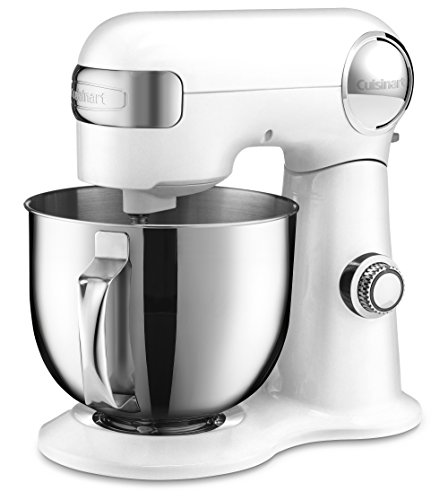
Cuisinart 5.5 Quart Stand Mixer SM-50NAS
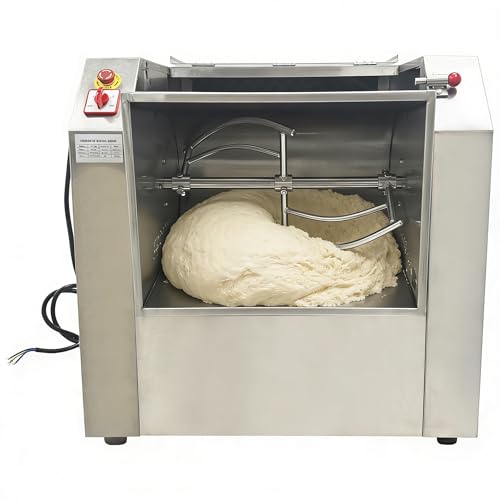
TECHTONGDA All Stainless Steel Pizza Dough Mixer 110V

ZACME 8.4QT Commercial Stand Mixer 800W
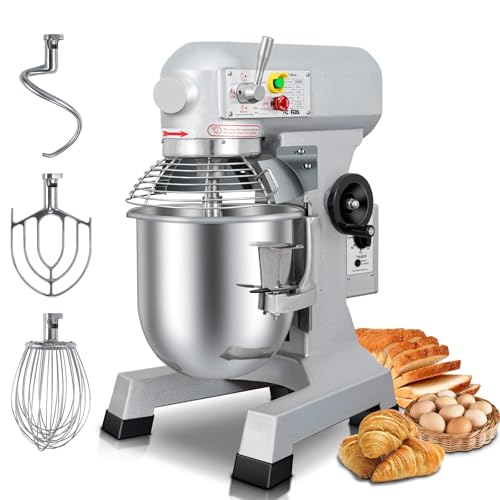
BOSBAK 15Qt Commercial Food Mixer 3-Speed 600W

BOSBAK 30Qt Commercial Food Mixer 1250W

TECHTONGDA 30L Commercial Dough Mixer with Timer
A Closer Look At Each Pick
Spiral mixers behave differently from the planetary units that show up in most home kitchens. A spiral hook turns inside a bowl that rotates in the opposite direction, so the dough is folded and stretched without being dragged against hot metal walls. That gentler motion matters most on high-hydration pizza dough, where a planetary mixer can overheat the mass and stall gluten development. The BOSBAK 30Qt sits in that sweet spot for serious pizzeria work without jumping to a 60-liter floor model.
Running at 157 rpm in low gear and 264 rpm in high (with the bowl turning at 16 or 25 rpm), this unit pushes a 40-pound dough batch through development fast. Owners running 60 to 70% hydration doughs report a windowpane read in roughly 10 minutes with a cool, smooth final mass. For shops mixing multiple batches a day, that timing adds up to real labor savings and more consistent crusts.
Where It Delivers
- Spiral action keeps dough cooler and develops gluten more evenly than planetary mixers, important for 60%+ hydration pies.
- 30-quart bowl handles up to 40 pounds of finished dough, enough for several hundred pizza balls per batch.
- Dual-speed gearing lets you pull a fast, tight mix or a slower, longer ferment-friendly pass.
- Stainless contact surfaces wipe down fast at the end of a busy shift, which is a real ownership perk in a flour-heavy kitchen.
- 1.8 kW motor output is overkill for light work but quiet confidence on stiff, low-hydration doughs.
Things To Consider
- Plan for a dedicated 220V outlet and a stable floor mount, this is not a countertop unit.
- Spilled flour finds its way into the bowl-drive area over time, so weekly cleaning behind the bowl is part of the deal.
Who It Suits Best
High-output pizzerias and artisan bakeries already running 220V service and mixing multiple batches per shift.
Look Elsewhere When
Home cooks making a few pies a week should jump to the Cuisinart 5.5 Quart Stand Mixer SM-50NAS instead.
Where the BOSBAK 30-quart handles a busy shift, the TECHTONGDA 60L steps in when one shift becomes three. Sixty liters of bowl capacity is bakery-line territory, the kind of volume you only need when you are feeding a wholesale account or running a commissary kitchen. Three attachments cover everything from stiff bagel dough to delicate meringue, and the integrated trolley lets one person roll the whole unit to a wash bay.
Powered through a 220V line, the three-speed gearbox is straightforward: low for flour incorporation, mid for fillings and batters, high for creams and aeration. For pizza work, the dough hook paired with the low-speed range is the only attachment you will use ninety percent of the time, but the included whisk and flat beater mean this mixer is not just a dough machine.
What Earns Its Place
- 60L bowl swallows oversized batches, ideal for commissaries, wholesale pizza production, and busy bakeries.
- Three included attachments (dough hook, flat beater, whisk) make it a true multi-purpose workhorse.
- Built-in trolley and rolling base take the strain out of moving a heavy unit for cleaning.
- Heavy-gauge build handles daily multi-batch use without bogging down on dense doughs.
Points To Keep In Mind
- Requires 220V dedicated wiring, and the unit ships without a plug in some configurations, so factor electrician time into the install budget.
- Footprint is significant; measure your doorway and drain area before committing.
- Planetary action, not spiral, so very stiff or very hydrated doughs need more attention to avoid overheating.
Right Fit For
Mid-to-large commercial bakeries, commissary kitchens, and wholesale pizza operations producing 100+ pounds of dough per shift.
Consider Something Else When
The TECHTONGDA All Stainless Steel Pizza Dough Mixer 110V is a smaller, more pizza-focused fit for shops that do not need 60L of bowl.
Plenty of home bakers make excellent pizza dough in a 5-quart tilt-head mixer, and the Cuisinart SM-50NAS is a steady, well-known option. A 500-watt motor and 12 speeds give you enough control to handle a 2- or 3-loaf batch of bread or a single batch of Neapolitan dough for a Friday night. The tilt-back head opens wide, so scraping down a sticky, high-hydration dough is far less of a fight than on bowl-lift designs.
This is not a commercial mixer, and that is the point. People making a few pies a week, or experimenting with sourdough and cold ferment schedules, do not need 220V power or a 30-quart bowl. What you want is something that fits on a counter, runs on a standard 110V kitchen circuit, and stores in a cabinet when the weekend ends. The included splash guard with a pour spout is a thoughtful touch for adding water slowly during a long mix.
A Few Highlights
- Die-cast metal body feels sturdier than the plastic-bodied alternatives in this price range.
- 12 speeds offer more nuance than the typical 6- or 10-step home mixers, useful for slow incorporation of flour.
- Included chef’s whisk, dough hook, flat paddle, and splash guard cover most home baking and pizza work.
- White linen finish and compact footprint blend into a residential kitchen without screaming “commercial equipment.”
Trade Offs
- 5.5-quart bowl caps out at around 2 pounds of dough, fine for a household, slow for a small commercial operation.
- Not designed for continuous multi-batch use, so expect the motor to warm up on back-to-back loaves.
Built With In Mind
Home bakers making a few pizzas or loaves a week, and beginners still learning how gluten develops.
A Better Fit Elsewhere
The BOSBAK 15Qt Commercial Food Mixer 3-Speed 600W makes more sense once pizza night turns into a small catering business.
The TECHTONGDA All Stainless Steel Pizza Dough Mixer 110V is built around a single design choice that shapes everything else: full food-grade stainless steel from bowl to frame. That matters in a school cafeteria, a teaching kitchen, or a pizzeria where the mixer gets wiped down dozens of times a day and surfaces need to shrug off flour, oil, and water without pitting or rusting. The 50 kg (roughly 110 lb) kneading capacity also signals a serious unit, not a dressed-up home machine.
Unlike the TECHTONGDA 60L planetary model reviewed above, this one uses a twisted-arm agitator inside a tilting bowl, a design favored in many traditional European pizzerias. The 90-degree bowl tilt is genuinely useful for portioning: a forklift-sized batch of finished dough slides cleanly into a tub on a sheet pan rack without you fishing it out by hand.
Advantages To Know
- Full stainless steel construction is durable, easy to sanitize, and resists the daily flour-and-water abuse of a busy kitchen.
- 90-degree bowl tilt turns batch dumping into a one-person job rather than a wrestling match.
- 110V power requirement avoids the electrician cost that comes with many 220V commercial units.
- Twisted-arm design is purpose-built for stiff, low-hydration pizza doughs rather than airy cakes.
Honest Caveats
- Some configurations ship without a plug and require a professional electrician to hardwire the power supply.
- Single-purpose design, there is no whisk or paddle included for batters and creams.
Best Suited To
Schools, teaching kitchens, and dedicated pizzerias that want a low-maintenance, all-stainless workhorse on standard 110V power.
Where Another Pick Suits Better
Shops that also make pastries or large batches of cake should look at the TECHTONGDA 60L Commercial Food Mixer for its included flat beater and whisk.
The ZACME 8.4QT sits in an interesting middle ground, sized like a prosumer home unit but built to a commercial standard. The aluminum die-cast body meets NSF/ANSI 8-2023, which is the food-equipment safety standard health inspectors look for in commercial kitchens. For mobile vendors, small pizzerias, or commissary kitchens where a full-size spiral mixer is overkill but a domestic stand mixer feels underbuilt, this hits a real sweet spot.
An 800W DC motor with metal gears is a meaningful upgrade over the plastic-geared motors common in this size class, and 11 speed settings give plenty of room to dial in slow flour hydration. The LED display with a built-in timer is a quiet but useful feature: it removes the guesswork from a 10-minute dough mix so the operator can prep toppings or fire the oven instead of watching the clock.
What Works In Its Favor
- NSF/ANSI 8-2023 compliance matters in regulated commercial environments, and is uncommon at this size.
- 800W DC motor with metal gears holds up to repeated batches better than plastic-geared alternatives.
- 8.4-quart bowl handles up to 3 kg of dough, enough for roughly 8 to 10 medium pizzas per batch.
- LED display with timer lets you step away during long mixes without losing track of the windowpane read.
Soft Spots
- Planetary action, not spiral, so very high hydration doughs need careful bowl temperature management.
- Aluminum die-cast body is durable but heavier than the equivalent home mixer, plan for a fixed counter spot.
Made For
Small pizzerias, food trucks, and serious home bakers who need a commercial-rated unit without a 30-quart footprint.
Skip It When
You produce more than 50 pounds of dough per shift, in which case the BOSBAK 30Qt Commercial Spiral Dough Mixer 1.8kW is the better step up.
Mid-size mixers tend to be the awkward middle child of any kitchen lineup, but the BOSBAK 15Qt 3-Speed 600W finds its place quickly. Fifteen quarts sits above a domestic 5- or 6-quart unit without crossing into the dedicated-floor-model category. For a small cafe doing wood-fired pizza a few nights a week, or a farmer’s market vendor with a serious dough program, that size is a fit.
The included dough hook, flat beater, and wire whip cover the full range of prep work: pizza dough, cake batter, cookie dough, mashed potatoes, even whipped cream. A 600W motor is not going to push through the densest bagel dough, but for typical 55 to 65% hydration pizza doughs it has plenty of reserve. Three speeds keep operation simple and reduce the learning curve for new staff.
Practical Pluses
- 15-quart bowl hits the underused middle size, plenty for a small cafe, not overkill for a serious home cook.
- Three included attachments (dough hook, flat beater, wire whip) make this a true all-purpose prep machine.
- 3-speed gearbox is simple enough for new staff to learn in minutes.
- Stainless steel bowl wipes down quickly, a real ownership perk during a multi-tasking shift.
Points To Note
- Planetary motion, not spiral, so very high hydration doughs need close attention to avoid overheating.
- 600W motor is best for small-batch production; pushing it with back-to-back stiff doughs can shorten its life.
The Right Fit
Small cafes, food trucks, and farmer’s market vendors mixing a few batches of pizza dough a day alongside other prep work.
Reach For A Different Pick When
Pure dough-focused, high-output shops should consider the TECHTONGDA 30L Commercial Dough Mixer with Timer for its spiral action and built-in timer.
Compare this 30-quart planetary to the spiral BOSBAK 30Qt model that opened the list, and the difference comes down to use case. The spiral version is a dough specialist: fast gluten development, cool bowl, no extra attachments. This planetary 1250W version is a generalist. Same 30-quart bowl, similar batch size, but with a dough hook, flat beater, and wire whip that let one machine handle pizza dough in the morning, cake batter in the afternoon, and whipped cream for dessert service.
The 1250W motor output is the meaningful upgrade over the smaller 15-quart BOSBAK reviewed above. That extra power keeps the gearbox from bogging down on stiff, cold-fermented doughs pulled straight from a retarder. For a multi-purpose commercial kitchen that does not want to dedicate a separate mixer to each task, this is a realistic compromise.
Useful Strengths
- 1250W motor output has the reserve to push stiff, cold-fermented doughs without stalling.
- Three included attachments handle dough, batters, and creams, replacing several single-purpose machines.
- 30-quart bowl supports a meaningful batch size for small-to-mid commercial operations.
- 3-speed gearbox is dead simple to operate and easy to train new staff on.
Less Ideal Details
- Planetary action runs warmer than spiral, so very high hydration doughs need cool water and a fast turn-around.
- Larger footprint than a 15-quart unit, measure your counter before committing.
Who Should Grab It
Multi-purpose commercial kitchens that want one machine to cover dough, batters, and creams at mid-volume output.
Swap It Out When
Pure pizza dough production at 30+ quarts is better served by the spiral BOSBAK 30Qt Commercial Spiral Dough Mixer 1.8kW.
The 30L TECHTONGDA brings two features to the spiral-mixer category that are easy to underestimate until you are running a shift. A removable bowl that lifts off for cleaning and storage, and a built-in timer that lets the operator walk away from a 10-minute mix. Both details are small individually, but together they make the daily ownership experience noticeably easier in a busy pizzeria.
Under the hood, a 1500W copper motor drives a double-action system where the spiral hook and the bowl both turn, which is a different geometry than the fixed-bowl spiral on the BOSBAK 30Qt. The bowl rotates while the spiral works, so gluten development happens faster and more evenly on a single batch. The removable bowl also doubles as a dough tub in many operations, lifting straight onto a sheet pan rack for cold fermentation.
Notable Gains
- Built-in timer turns long mixes into a hands-off step, useful during prep-heavy shifts.
- Removable bowl doubles as a fermentation tub, saving the cost of separate dough containers.
- 1500W copper motor output handles stiff and hydrated doughs without strain.
- Double-action spiral and bowl rotation develop gluten faster than single-motion spirals.
- 110V power requirement avoids the dedicated 220V circuit many commercial units demand.
Potential Compromises
- Single-purpose design, no whisk or paddle for non-dough prep work.
- Smaller batch size than the TECHTONGDA 60L reviewed above, so high-volume commissaries may outgrow it.
Whose Shelf It Belongs On
Mid-volume pizzerias that want a spiral mixer’s dough quality without the installation complexity of a 220V floor unit.
Where A Sibling Pick Shines
Operations producing more than 26 pounds of flour per batch should consider the TECHTONGDA 60L Commercial Food Mixer for additional capacity.
What Matters Most Before Choosing Commercial Mixers For Pizza Dough
Mixing Action: Spiral vs Planetary
Spiral mixers use a hook that turns inside a counter-rotating bowl, which keeps friction low and the dough cool. They are the standard for bread and high-hydration pizza dough because the geometry develops gluten quickly without overheating the mass. Planetary mixers use a single hook that orbits a stationary bowl, which is more versatile for batters, creams, and smaller dough batches but tends to run hotter on long pizza dough mixes. Most dedicated pizzerias end up choosing spiral; most multi-purpose kitchens lean planetary.
Capacity and Batch Size
Bowl size is the single easiest number to misread. A 30-quart bowl does not mean 30 quarts of dough; finished dough typically fills 50 to 65% of bowl capacity depending on hydration. Plan for finished batch sizes, not bowl volume, and size up if you want headroom. For a single pizzeria doing 50 to 80 pies on a Saturday, a 20- to 30-quart machine is usually enough. Anything past 100 pies per shift, or a wholesale pizza program, wants 40 quarts or more.
Power, Voltage, and Installation
Mixers at 1500W and above typically want a dedicated 220V circuit, which is fine for a built-out commercial kitchen but a real cost in a converted space. Smaller units and dedicated home models run on standard 110V outlets. Some 110V commercial units ship without a plug and need an electrician to hardwire them, so check the install requirements before you buy, not after.
Build Materials and Cleaning
Stainless steel bowls and contact surfaces are easier to sanitize and resist the daily flour-and-water environment of a pizzeria. Painted steel can pit and rust over time. Removable bowls simplify cleaning and let you use the bowl as a fermentation tub, a quiet productivity win on busy prep days.
Key Considerations Across These Picks
Mistakes Worth Dodging
The most common buying slip in this category is sizing the bowl to “looks about right” instead of finished batch size. A 15-quart bowl that fills up after 8 pounds of dough feels roomy in the showroom and cramped by the second batch of a busy shift. The other recurring mistake is ignoring voltage requirements until install day, when a 220V unit on a 110V circuit becomes a project instead of a purchase. Always confirm the dedicated circuit, the plug type, and the door-width clearance before ordering.
When Paying More Pays Off
The premium tier in pizza-dough mixers typically buys spiral action, heavier motors, and full stainless construction. For a pizzeria mixing 60% hydration dough every day, those upgrades pay back in cooler dough, longer mixer life, and more consistent crusts across batches. For a home cook or a small cafe mixing occasional dough, the lower tier delivers real value without the install cost. The honest read is: pay for spiral when dough is your daily work, pay for size when volume is your daily work, and skip both when neither is the case.
Frequently Asked Questions
What size commercial mixer do you need for pizza dough?
A small pizzeria producing 50 to 80 pies per shift typically needs a 20- to 30-quart machine, while high-volume operations past 100 pies per shift want 40 quarts or more. The number that actually matters is finished dough weight, which is usually 50 to 65% of bowl capacity.
Spiral or planetary mixer for pizza dough?
Spiral mixers are generally better for high-hydration pizza dough because the counter-rotating bowl keeps friction low and dough cool. Planetary mixers are more versatile for batters and creams, so multi-purpose kitchens may accept the trade-off. Dedicated pizzerias usually end up choosing spiral.
Can a home stand mixer handle pizza dough?
Yes, for small batches of 1 to 3 pounds of dough, a quality home stand mixer works well. Once you need more than 4 to 5 pounds per batch, or you mix dough every day, a commercial unit becomes the better fit in both time and consistency.
What voltage do commercial pizza dough mixers use?
Most commercial spiral and large planetary mixers run on 220V dedicated circuits, though some 110V commercial models exist. Always confirm the voltage, the plug type, and whether the unit ships with a plug before installing.
How do you clean a commercial dough mixer?
Wipe down contact surfaces after each shift, remove and wash the bowl and hook separately, and clear flour from behind the bowl or drive area weekly. Stainless steel construction makes this routine much easier, which is one of the quiet ownership perks of all-stainless commercial units.



