

Cold-pressed celery at breakfast, leafy greens on a quiet Sunday, citrus for two on a Wednesday morning. None of that should require a small appliance that costs more than a week of groceries. Budget juicers in 2026 lean hard into wide feed chutes, slow masticating augers, and brushes that make cleanup feel like rinsing a glass, not scrubbing a chemistry set. The picks below cover the two camps you’ll actually choose between: slow masticating juicers that squeeze every drop while keeping heat low, and centrifugal juicers that turn apples into a pitcher before your toast pops up. Both styles earn their place on a counter when they fit the produce, the kitchen footprint, and the cleaning tolerance of the person using them.
The Lineup, Simplified

Anybear 350W Cold Press Juicer (4.9″ Chute)

Cold Press Juicer, Wide Chute (Gray Knob)
Anybear 200W Cold Press Juicer (4.3″ Chute)
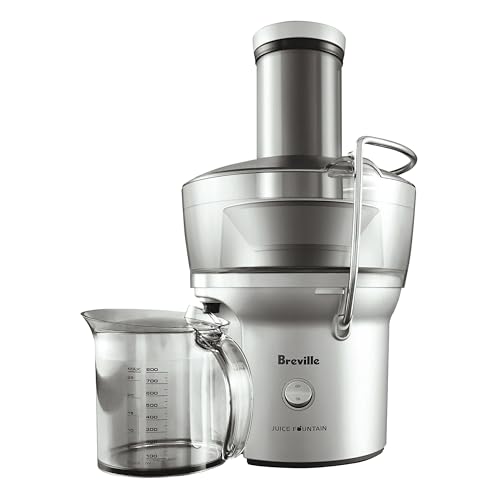
Breville BJE200XL Juice Fountain Compact

LINKChef Cold Press Juicer (4.53″ Auto-Cut Chute)
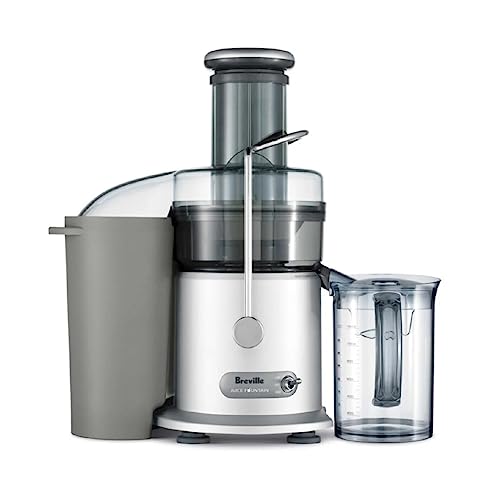
Breville JE98XL Juice Fountain Plus

Airon 500W Centrifugal Juicer (3-Speed)

Hurom H330 Cold Press Juicer (Charcoal)

Airon 800W Centrifugal Juicer (3-Speed, Steel)

Hurom H320 Cold Press Juicer (Coarse Strainer)
What Each Pick Brings To The Table
The Anybear 350W opens the list because its 4.9-inch feed chute is one of the widest you’ll see in a slow masticating juicer at this tier, which means whole apples and medium carrots slide in without a cutting board getting in the way. A “masticating” juicer is the slow-press kind: an auger (a corkscrew-shaped grinder) crushes and squeezes produce at low RPM rather than spinning it at high speed, so heat stays low and nutrients stay more intact.
The 350-watt motor pairs with a high-torque rating that pulls tough skins through without stalling, and the dual-stage extraction design aims to push a second squeeze through the pulp for drier waste. For most people running a daily celery-carrot-apple routine, that translates to a glass in hand with very little pre-chop work.
Real Benefits
- 4.9-inch chute accepts whole apples and whole carrots, trimming prep time on weekday mornings
- Single-auger slow press keeps motor noise low enough for shared apartments
- Dual-stage design aims to leave pulp noticeably drier than single-stage alternatives
- Low-RPM extraction preserves color and flavor in leafy greens like kale and spinach
- BPA-free contact parts make it a sensible choice for families serving juice to kids
Things To Consider
- Masticating juicers always run slower than centrifugal models, so a pitcher of juice takes more patience
- The wider chute adds bulk, so a tiny galley kitchen may need to plan counter placement
Who It Suits Best
Daily juicers who want whole-fruit convenience without paying a premium-tier price for it.
Where Another Pick Suits Better
Households making family-size batches every weekend will find the Hurom H330’s 2-liter self-feeding hopper requires even less babysitting than this Anybear.
The Whuto wide-chute model is the kind of pick that quietly does more than its price tag suggests. Its feed chute accepts whole produce, but the real surprise is that the same machine handles nut milk and even frozen fruit for soft-serve style treats, so it pulls double duty beyond a morning glass. The gray control knob sits up top for adjusting pressure depending on whether you’re feeding in cucumber or something denser like beetroot.
For a small kitchen, the compact frame matters more than people expect. Many budget masticating juicers crowd a counter once assembled, and this one tends to play nicer with a one-wall galley. It’s a genuine everyday driver rather than a Sunday-only gadget.
Useful Highlights
- Wide chute cuts down on knife work, even for carrots and small apples
- Multi-use capability covers nut milk and frozen-fruit treats, not just juice
- Compact footprint suits narrow counters and small apartments
- Slow-press extraction suits ginger and turmeric roots, which lose potency in fast juicers
- Top-mounted knob lets you tweak pressure for soft versus firm produce
Honest Caveats
- Smaller hopper than larger Hurom models, so you’ll reload for batch juicing
- Multi-function attachments mean slightly more pieces to wash after each run
Made For
Solo juicers and couples in compact kitchens who want one machine that handles juice plus nut milk without dominating the counter.
Consider Something Else When
Anyone routinely juicing for three or more people in a single session will find the Anybear 350W’s larger chute and dual-stage press easier to live with.
The second Anybear on this list is the gentler, quieter sibling. Its 200-watt motor runs at around 65 RPM, slow enough that you can have a conversation over it, which is more meaningful than it sounds when you’re juicing at 6 a.m. with a partner still asleep. The 4.3-inch chute is a touch narrower than the 350W model above, but still large enough for whole medium apples and peeled oranges.
The brand also ships recipe guidance with the unit, which helps newcomers figure out ratios for green juice without improvising. For leafy greens especially, slow RPM matters: spinach and wheatgrass hold more color and yield more liquid when the auger doesn’t generate friction heat.
What Stands Out
- 65 RPM operation keeps noise low, suitable for early-morning shared kitchens
- 4.3-inch chute still skips pre-cutting for most common produce
- High-torque 180nm rating pulls through tough celery strings without stalling
- Recipe guidance included, helpful for first-time cold-press owners
- Slow press retains more vibrant color in green juices and wheatgrass shots
Points To Note
- Lower wattage means denser beets may require a slower feed pace
- The chute, while wide, is a step behind the 350W Anybear for whole large apples
Right Fit For
Leafy-green enthusiasts and morning-juice regulars who care more about quiet operation than speed.
Not Your Match When
Someone juicing mostly hard root vegetables in big batches will get faster results from the Breville JE98XL centrifugal design below.
The Breville BJE200XL marks a clear shift in approach. A “centrifugal” juicer works differently from a masticating one: a high-speed spinning blade grates produce and flings juice through a mesh filter using centrifugal force. The trade-off is speed and a smaller footprint, which is exactly why this Breville earns its spot for apartment dwellers.
The 3-inch feed chute accepts whole fruits, and Breville’s titanium-reinforced cutting disc (a metal blade coated with titanium for hardness and corrosion resistance) handles apple after apple without dulling quickly. For someone whose routine is “two oranges and an apple before the door closes,” the speed advantage is hard to beat.
Real-World Strengths
- Compact frame fits on a small counter or stores in a cabinet between uses
- Centrifugal speed means a glass of juice in seconds, useful for rushed mornings
- 3-inch chute skips pre-cutting for most medium apples and oranges
- Titanium-reinforced disc resists dulling through regular use
- Built-in pulp container keeps the mess contained within the unit’s footprint
Trade Offs
- Centrifugal juicers generate heat and foam, which matters for nutrient-sensitive routines
- Less effective on leafy greens compared to slow masticating models like the Whuto above
Who Will Love This
City apartment owners making quick weekday juices from firm fruits rather than soft greens.
Look Elsewhere When
Someone running a wheatgrass-and-kale routine will get noticeably better yield from the Anybear 200W slow juicer.
LINKChef’s entry solves a problem most slow juicers ignore: the push-down chore. The auto-cutting chute pulls produce in and slices as it goes, so you’re not standing over the machine with a pusher for every carrot. That changes the rhythm of morning juicing from active labor to “load, press, walk away.”
The 200-watt motor runs at a quiet 45 RPM, one of the slowest settings in this roundup, which is what you want for greens and citrus. The included recipe guide is genuinely useful rather than a token booklet, with ratios for common blends and instructions for nut milk.
What Earns Its Place
- Auto-cutting chute removes the need for a pusher on most produce
- 45 RPM operation is exceptionally quiet, even by slow-juicer standards
- Wide 4.53-inch chute handles whole apples without slicing
- Recipe guide included with usable ratios for green, root, and citrus blends
- Low-RPM press preserves enzymes and limits oxidation (the browning reaction that degrades fresh juice)
Small Caveats
- Auto-feed mechanism has more parts to clean than a standard chute
- Slower than centrifugal picks, so patience matters on big Sunday batches
Best Suited To
Multi-taskers who want to load produce and step away to pack lunches or sort laundry while juice happens.
Skip It When
Anyone chasing the highest possible yield from dry pulp should compare the Anybear 350W’s dual-stage design first.
The JE98XL is the step up from the compact BJE200XL, and the difference shows in the dual-speed motor. A low setting handles softer produce like grapes and berries without blasting them across the chamber, while a high setting chews through carrots and beets in seconds. That two-mode control solves a real complaint with single-speed centrifugal models, which tend to either underwork or obliterate.
For someone who grew up thinking juicers were temperamental, the JE98XL’s straightforward operation is refreshing. The 3-inch chute is wide, the pulp bin is large enough to skip mid-batch emptying, and the build feels sturdy on the counter.
What Works In Its Favor
- Dual-speed control adapts to soft and hard produce without over-processing
- 3-inch chute accepts whole fruits, reducing prep time noticeably
- Large pulp bin extends batch sessions before emptying
- Centrifugal speed makes it the fastest juicer in this lineup for hard produce
- Sturdy build weight keeps the unit stable during high-speed runs
Worth Noting
- Larger footprint than the BJE200XL, so a small kitchen needs to plan storage
- Centrifugal design is louder than the slow juicers higher on this list
Perfect Match For
Households running weekend batch sessions with mixed hard and soft produce who value speed over silent operation.
A Better Fit Elsewhere
Anyone juicing predominantly leafy greens and citrus will appreciate the quieter, vitamin-preserving LINKChef auto-feed slow press more.
The Airon 500W is the centrifugal pick that punches above its tier. Three speed settings, where the Breville JE98XL has two, give you more nuance: low for berries, medium for citrus and apples, high for carrots and beets. That middle speed is a thoughtful addition for everyday fruits that don’t need full power but get squashed on the lowest setting.
The 3-inch chute handles whole apples and oranges, and the included cleaning brush addresses the most common centrifugal complaint: pulp drying onto the mesh filter. For a household that runs a juice routine most days of the week, this is a balanced choice that doesn’t force trade-offs in either direction.
Noteworthy Benefits
- Three speeds give finer control than typical two-speed centrifugal models
- 500W motor produces a 15 oz cup in seconds with less foaming than weaker units
- 3-inch wide chute accepts whole apples, oranges, and medium carrots
- Included cleaning brush speeds up the least-fun part of centrifugal juicing
- Lower foaming means clearer juice with a more appealing appearance
Points To Keep In Mind
- Still produces more heat than slow masticating picks like the Anybear 200W
- High speed on greens can throw leaves around rather than juicing them fully
Who Should Grab It
Everyday juicers who want centrifugal speed with a little more control than a basic two-speed model offers.
Another Choice May Suit
Green-juice devotees will get cleaner extraction and quieter mornings from the Whuto wide-chute slow juicer earlier on this list.
The H330 is the workhorse of this roundup, and the spec that does the talking is the 2-liter self-feeding hopper. That capacity is large enough to load a morning’s worth of produce, press start, and walk away while the auger handles intake on its own. For households that juice for multiple people in a single sitting, this is the closest thing to a “fill and forget” experience in the slow-press world.
Hurom also builds these in Korea with BPA-free plastics and a focus on long product life, which explains the brand’s 15-year coverage offering. The charcoal finish keeps it looking intentional on the counter rather than apologetic about taking up space.
Strong Points
- 2-liter hopper enables true batch juicing with minimal refilling
- Self-feeding design reduces hands-on time during longer sessions
- Slow masticating extraction preserves color and nutrient content in greens
- BPA-free contact parts suit health-conscious households
- Quiet motor operation makes it usable during early-morning routines
A Few Limitations
- Larger footprint than the compact picks above, so it earns its counter space
- Higher price tier within the slow-juicer category, even at the budget end
Built With In Mind
Families and serious home juicers who batch-prep several days of juice in one session rather than juicing glass by glass.
Reach For A Different Pick When
Solo users in tight kitchens will find the Anybear 350W’s smaller footprint and dual-stage press easier to live with day to day.
The 800W Airon is the high-output sibling to the 500W model. Where the 500W handles most produce fine, the 800W matters when you’re pushing dense beetroot, ginger root, or a continuous run of carrots without letting the motor bog down. Three speed settings keep the soft-to-hard range covered, and the stainless steel exterior earns its place on counters where plastic starts to look tired after a year of use.
The 3-inch extra-wide chute and BPA-free components are consistent with the rest of the Airon centrifugal line, so owners who already trust the brand’s cleaning approach can step up in power without relearning the routine.
Useful Touches
- 800W max power chews through dense root vegetables without stalling
- Stainless steel exterior resists staining and looks more intentional on the counter
- Three speed settings cover soft fruits, citrus, and hard produce
- 3-inch chute accepts whole apples and medium carrots without pre-cutting
- Produces a 15 oz cup in seconds, useful for big-batch family routines
Practical Considerations
- Higher power means more noise than the 500W model at the top setting
- Centrifugal heat trade-off still applies for nutrient-focused routines
Whose Shelf It Belongs On
Heavy-use households that need reliable hard-produce performance daily and prefer a stainless build over plastic.
Swap It Out When
Anyone running a wheatgrass or leafy-green heavy routine will find the Whuto wide-chute slow juicer extracts more from soft produce.
The H320 is the family-oriented Hurom, and the standout detail is the control lever paired with coarse strainers. “Pulp level” is a matter of preference: some people want a clear, smooth juice, others want fiber-rich texture in the glass. The lever adjusts pressure so you decide per batch, and the coarse strainer option keeps more of that fiber in the pour.
The self-feeding hopper accepts whole produce, and the easy-assembly design matters for households where more than one person operates the machine. Less time re-reading the manual before each use means the juicer actually gets used instead of sitting in a cabinet.
Everyday Perks
- Control lever lets you adjust pulp level per batch, smooth or fiber-rich
- Coarse strainer option appeals to households that want more texture
- Self-feeding hopper reduces hands-on time during multi-glass sessions
- Easy assembly means less confusion when multiple people use the machine
- Quiet motor keeps the kitchen calm during morning routines
Where It May Fall Short
- Slower than centrifugal picks, so a single glass takes more patience
- Larger footprint than compact picks like the Breville BJE200XL
The Right Fit
Families who want flexibility between smooth and pulpy juice and share the machine between users without a steep learning curve.
Where A Sibling Pick Shines
Solo juicers who only want clear, smooth juice will find the Anybear 200W’s focused design simpler for a one-person routine.
Picking The Right Slow Press Or Centrifugal Match
Masticating Versus Centrifugal: The Real Fork In The Road
The first decision is the one that shapes everything else. Masticating juicers press produce slowly with an auger, generating minimal heat and pulling more liquid from leafy greens, herbs, and soft fruits. Centrifugal juicers spin a blade at high speed, flinging juice through a mesh filter, which makes them faster with firm produce like apples and carrots but louder and less effective on greens. Pick a slow masticating juicer if your routine leans on kale, spinach, wheatgrass, or ginger, and you don’t mind waiting a few extra minutes. Pick a centrifugal model if you mainly juice apples, oranges, and carrots and want a glass ready before your toast burns.
Feed Chute Width And The Prep Trade-Off
The chute determines how much knife work you do before juicing. A 4-inch or wider chute accepts whole apples and most carrots, while a 3-inch chute still skips most cutting for medium produce. Wider chutes add bulk to the machine, so smaller kitchens may prefer a 3-inch design even with a bit more prep. The honest read is that wider chutes are genuinely useful, but the difference between 3 and 4.5 inches matters less than most product copy suggests.
Motor Power And Noise
Wattage tells you how hard a juicer can push, but RPM (revolutions per minute) tells you how loud and how hot. Centrifugal models run at thousands of RPM, which is why they’re fast and noisy. Masticating models run at 40 to 80 RPM, which is why they’re quiet and slow. For shared walls and early mornings, low RPM is worth more than peak wattage.
Cleaning, Assembly, And Daily Use Reality
The most common reason a juicer ends up in a cabinet is cleanup. Centrifugal machines with fine mesh filters need brushing after every run, and pulp can dry onto the basket if you leave it. Masticating models typically have fewer small parts and rinse clean faster, though some have more pieces to disassemble. Pick the one whose cleanup routine you can sustain on a busy weeknight.
Key Considerations Across These Picks
Pitfalls Shoppers Hit
The most common mistake is choosing by wattage alone, then ending up with a centrifugal that overheats greens and throws leaves around the chamber. A second common trap is underestimating the importance of chute width: a 2.5-inch chute means every carrot needs a knife first, which slowly erodes the habit. Third, ignoring noise level leads to a juicer that wakes the household at 6 a.m. and gets used twice. Match the machine to the produce, the prep tolerance, and the noise tolerance of the kitchen, and the routine actually sticks.
Where The Extra Money Goes
Stepping up to a higher tier in the slow-press category usually buys a larger self-feeding hopper, a longer coverage window, and quieter operation. In the centrifugal category, more money typically buys a stronger motor that handles dense roots without bogging, plus a sturdier build. The upgrade is worth it when the juicer gets used daily, the kitchen has limited noise tolerance, or batch juicing for a household is the actual use case. For occasional weekend juicing, the lower tiers on this list handle the job without the extra spend.



