

A good juice blender changes the rhythm of a kitchen. Instead of hauling out a juicer, washing screens, and scraping pulp, you drop fruit and leafy greens into a pitcher, press a button, and drink. The trick is matching the machine to how you actually blend: a quick morning green juice, a big weekend batch, nut milk on a schedule, or a portable cup for the commute.
This roundup covers ten options across price points and formats, from refurbished personal Ninja blenders to a 64-ounce Vitamix workhorse. Each one earns its spot for a specific reason, and each one has a trade-off worth knowing. Read the full profiles, then jump to the shortlist table if you want a fast scan.
The Shortlist At A Glance

Skitchen 8-in-1 Nut Milk Maker 35oz

Ninja BN401 Nutri Pro Refurbished Blender

Ninja Compact Kitchen System AMZ493BRN

Ninja Professional Plus BN801 Kitchen System

TUECIAO Nut Milk Maker 35oz

Sangcon 1000W Personal Smoothie Blender
Lageich Wireless 24oz Portable Blender
Sangcon 5-in-1 Food Processor Combo

Sangcon 5-in-1 Blender and Processor Combo
What Each Pick Brings To The Table
The Skitchen 8-in-1 sits in a different lane than the other picks on this list. Rather than just spinning cold ingredients, it pairs a 500W heating element with a 150W stirring motor inside a 35oz chamber, so it can cook nut milk, soy milk, and oat milk from raw ingredients while also running cold programs for juice, milkshakes, and baby food. A Silent Shield cover helps cut noise during longer heated cycles, which matters when you set it to run at 6 AM before the household wakes.
For anyone who currently buys shelf-stable plant milk and wants to skip the cartons, the delay-start and keep-warm timers are the real draw. You load soaked almonds or oats the night before, schedule the cycle, and wake up to a warm pitcher of milk ready to strain. A self-clean cycle handles the sticky residue that usually ruins a morning.
Why It Works Well
- Eight presets including nut milk, soy milk, oat milk, juice, and baby food expand what one machine can do
- 12-hour delay start and keep-warm let you schedule a batch to finish when you need it
- Silent Shield cover noticeably quiets extended blending and heating cycles
- 35oz (1L) capacity covers a few days of plant milk for one or two people
- Self-clean program cuts the post-batch scrub that usually discourages daily use
Things To Consider
- Heated cycles take longer than a standard cold blend, so this is a planned-cooking tool, not a grab-and-go one
- Straining through a nut milk bag is still part of the workflow for the smoothest results
- The footprint is taller than a regular pitcher blender, so under-cabinet clearance is worth measuring first
Key Specs
Who It Suits Best
Plant-milk drinkers who want to skip store-bought cartons and don’t mind planning a batch the night before.
Consider Something Else When
You mostly want fast single-serve smoothies, in which case the Ninja BN401 Nutri Pro Refurbished Blender gets you going quicker with a smaller footprint.
The Ninja BN401 Nutri Pro is a compact personal blender, and the refurbished listing undercuts the cost of a new unit while keeping the same 1100-peak-watt motor. Auto-iQ programs handle the pulse-and-pause pattern that breaks down fibrous greens, frozen berries, and protein powder without you needing to babysit the cup. It’s the format that fits on a small counter next to the coffee maker.
Refurbished gear is one of those categories where you weigh the savings against the shorter warranty window. For solo drinkers who run the same green juice every morning, the trade usually makes sense: you spend less, you get a proven motor, and the cup-rather-than-pitcher design means you blend directly into your to-go bottle.
Useful Highlights
- 1100 peak watts crushes ice and frozen fruit without the blade stalling
- Auto-iQ programs run timed blend-and-pause cycles for hands-off juicing
- Direct-to-cup design means one less container to wash on a rushed morning
- Refurbished pricing brings a high-output motor into a tighter budget
Points To Note
- Single-serve capacity is limiting for couples or anyone who likes to meal-prep juice for the week
- Refurbished units may show light cosmetic wear and carry a shorter warranty than a brand-new model
Made For
One-person households who want a strong motor for daily green juice and protein shakes without paying full retail.
Look Elsewhere When
You regularly blend for two or more, in which case the Ninja Compact Kitchen System AMZ493BRN and its 72oz pitcher make better sense.
The Ninja Compact Kitchen System earns its place by doing three jobs in one footprint: a 72oz blender pitcher for big juice batches, a 5-cup processor bowl for chopping and slicing, and a single-serve cup for the morning rush. Auto-iQ takes the timing guesswork out of the blend, so even a first-time user can drop in kale, ginger, apple, and lemon without studying a manual.
Compare that to the single-purpose personal blenders earlier in this list: the AMZ493BRN trades counter minimalism for batch capacity, which is the right call for households where everyone wants a glass at the same time. The 1200W motor handles fibrous greens and frozen fruit without the slow chug you sometimes hear from weaker units.
Positive Takeaways
- 72oz pitcher handles a full family round of juice or smoothies in one run
- Three vessels let you switch between batch blending, chopping, and single-serve without changing machines
- Auto-iQ presets simplify the timing for first-time users
Honest Caveats
- More vessels means more parts to wash and store on a tight counter
- Larger footprint than a single-cup blender, so apartment galleys may feel the squeeze
Right Fit For
Families who blend for three or more people and want one machine to cover juicing, smoothies, and basic food prep.
Skip It When
You mainly want compact single-serve convenience, in which case the Sangcon 1000W Personal Smoothie Blender keeps the footprint smaller and the to-go cups ready.
The Ninja Professional Plus BN801 is the BN800’s older sibling, stepping up to 1400 peak watts and adding a 64oz processor bowl alongside the 72oz blender pitcher. That extra wattage shows up most clearly when you’re crushing ice for frozen fruit smoothies or working through a full head of celery for a green juice. Auto-iQ still runs the timed cycles, so the upgrade doesn’t add complexity.
The trade-off is bulk: two large vessels and two blade assemblies sit on your counter whether you use them or not. For households that actually meal-prep and bake, that storage is justified. For anyone who only blends one morning smoothie, the smaller AMZ493BRN does the same job with less parked equipment.
A Favorable Mix
- 1400 peak watts makes quick work of ice, frozen fruit, and tough root vegetables
- 72oz pitcher plus 64oz processor bowl covers batch juicing and full meal prep
- Includes two 24oz single-serve cups for grab-and-go mornings
- Auto-iQ handles the pulse patterns for smoothies, dough, and chopping
Some Limits To Know
- Real-estate demand is high: two full-size vessels plus cups and blade stacks need a dedicated cabinet
- Heavier than single-function blenders, so moving it for cleaning is a two-hand job
Best Suited To
Households that blend, chop, and bake often enough to justify keeping a full kitchen system on the counter.
Reach For A Different Pick When
You mostly blend green juice and don’t need dough or food processing, in which case the Vitamix VX1 Blender 64 oz delivers serious daily blending in a simpler package.
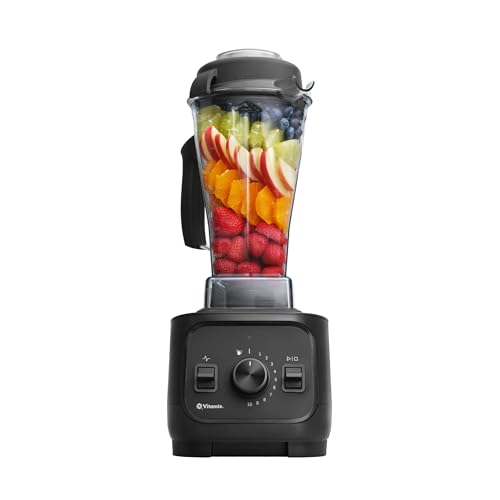
The Vitamix VX1 is the entry point into the brand’s pro-grade lineup, which is a different category of machine than anything else on this list. The 64oz low-profile container fits under most cabinets, the laser-cut stainless-steel blades run through tough produce without slowing, and the motor base is built to last the kind of daily use that wears out cheaper blenders in a year or two.
What you give up for that build is the to-go cup convenience of the Ninja and Sangcon options. The VX1 is a pitcher-and-base machine: you blend, you pour, you wash a 64oz container. Households that drink juice daily and want a tool that survives a decade of use will find that trade more than fair.
Real-World Strengths
- Pro-grade motor and blade assembly handle fibrous greens, nuts, and frozen produce without bogging down
- 64oz capacity covers several days of juice in one batch
- Construction is geared toward years of daily use rather than disposable replacement
Factors To Consider
- Premium pricing puts it well above the mid-range Ninja systems in this roundup
- No single-serve cup means blending and pouring into a separate bottle each morning
Feature Snapshot
Who Will Love This
Daily juicers who want a long-term workhorse and don’t mind paying more for build quality over features.
Another Choice May Suit
You want a personal cup format for commute mornings, in which case the Sangcon 1000W Personal Smoothie Blender serves single-serve needs at a fraction of the cost.
The TUECIAO Nut Milk Maker leans into the same plant-milk niche as the Skitchen pick, but swaps the heated multi-function approach for a glass inner chamber and a ten-blade grinding system. The glass matters more than it sounds: it doesn’t absorb odors or stain the way plastic chambers do, and you can watch the grind happen to know when to stop. The 35oz capacity is the same one-liter sweet spot for a small household’s daily plant-milk needs.
Where the Skitchen 8-in-1 heats and the TUECIAO stays cool, the trade is workflow. You soak nuts ahead of time, blend cold, then strain. It’s a simpler process with fewer automated presets, which suits hobbyist cooks who like to taste and adjust.
What Helps Most
- Ten-blade system breaks down nuts and oats into a finer base with less visible grit
- Glass inner chamber resists staining and odor retention over time
- 35oz capacity suits a couple or a single person making plant milk every couple of days
A Few Limitations
- Glass adds weight, so lifting the chamber for pouring and cleaning takes more care than plastic
- No heating element means you start from soaked nuts and strain afterward
Perfect Match For
Plant-milk hobbyists who want a glass chamber and don’t mind a hands-on soak-and-strain routine.
Swap It Out When
You want automated heating and a delay timer, in which case the Skitchen 8-in-1 Nut Milk Maker 35oz handles the full cycle without supervision.
The Sangcon 1000W Personal Smoothie Blender is the budget-friendly workhorse of this roundup. You get a 1000W peak motor, three BPA-free to-go cups in 37oz, 32oz, and 22oz sizes, and travel lids, so the whole family can blend, twist on a lid, and head out without a container shuffle. The motor base is compact enough to park on a narrow counter next to a coffee maker.
Compare that to the larger Ninja systems earlier: you lose the 72oz pitcher capacity, but you gain cup variety and a much lower price. For a household that lives on individual smoothies rather than shared batches, that swap usually pays off.
What Pays Off
- Three to-go cups cover different drink sizes without buying extras
- 1000W motor is enough for ice, frozen fruit, and protein shakes
- Compact base fits on a smaller counter than full kitchen systems
Points To Keep In Mind
- Cup-based design means small individual batches rather than a big shared pitcher
- Multiple cups and lids create their own cabinet clutter over time
Whose Shelf It Belongs On
Multi-user households on a budget where everyone wants their own cup and the same blend every morning.
Where Another Pick Suits Better
You want a cordless travel format, in which case the Lageich Wireless 24oz Portable Blender runs on battery power for true off-counter use.
The Lageich Wireless Portable Blender is the only cordless pick in this roundup, and that single feature changes the use case. A 6000mAh battery, 24oz cup, and 360W motor let you blend at a desk, in a hotel room, on a picnic, or in a dorm without hunting for an outlet. The six-blade assembly sits in a BPA-free cup that doubles as a travel bottle, and a self-clean cycle handles the rinse between blends.
For commuters and travelers, that’s a meaningful upgrade over a plug-bound personal blender. The catch shows up when you compare output to the Sangcon 1000W: battery-driven motors top out at lower wattage, so dense frozen ingredients need more pulsing and patience than a corded motor delivers.
Benefits That Matter
- Cordless design unlocks blending away from any kitchen counter or outlet
- Six-blade system handles ice and frozen fruit with reasonable texture
- Self-clean cycle keeps the cup sanitary between uses
Worth Bearing In Mind
- Battery-powered motor is weaker than corded 1000W-plus options, so tough blends need extra time
- 24oz single-cup capacity suits one person at a time
- You need to remember to charge the battery, which adds a step to the routine
Feature Card
Built With In Mind
Commuters, travelers, and dorm dwellers who want a true off-counter blending option without sacrificing portability.
Not Your Match When
You mostly blend at home and want the strongest motor for the price, in which case the Sangcon 1000W Personal Smoothie Blender delivers more wattage for less money.
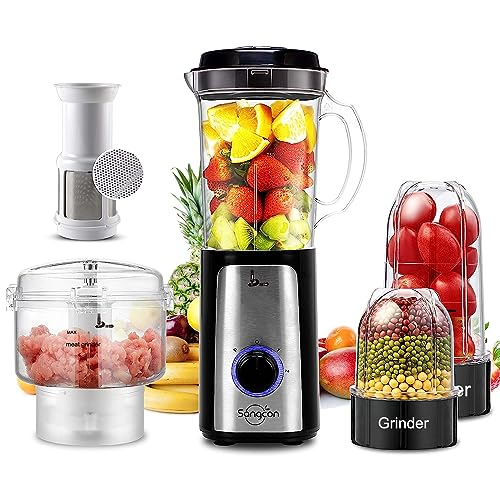
The Sangcon 5-in-1 covers more ground than a standard blender. You get a 47oz pitcher, a 2.5-cup chopper bowl, an 18oz cup, and an 11oz cup, plus three blade types: a cross blade for liquid recipes, a flat blade for grinding coffee and dry spices, and an S-blade for chopping. For a small kitchen that doesn’t have room for a separate blender and food processor, that combination is genuinely useful.
Where the larger Ninja systems sit higher in pure blending power, the Sangcon combo wins on versatility at a tighter budget. The honest read is that the motor isn’t designed for the heaviest frozen loads, so think of it as a daily-driver multi-tool rather than a heavy-duty workhorse.
Real Benefits
- Five functions in one motor base eliminate the need for separate appliances
- Three blade types handle wet blends, dry grinding, and chopping
- Smaller footprint than a full Ninja kitchen system
Potential Compromises
- Less motor power than the dedicated Ninja or Vitamix options in this roundup
- Multiple vessels and blades mean more parts to track in a shared cabinet
The Right Fit
Small-kitchen cooks who want one machine for juicing, chopping, and grinding without buying dedicated units for each task.
A Better Fit Elsewhere
You want a more powerful blender-first system, in which case the Ninja Professional Plus BN801 Kitchen System puts more wattage behind the blending side of the equation.
The Sangcon 5-in-1 Blender and Processor Combo is the apartment-sized answer in this lineup: a 40oz stainless steel jar, a 17oz to-go cup with lid, and enough versatility to handle shakes, smoothies, chopped meat, and ground coffee in the same motor base. The food-grade materials and stainless steel blades add a layer of safety reassurance for households that grind raw meat alongside morning smoothies.
Overheating protection and a suction-cup base anchor the unit during heavier cycles, which is the small detail that separates a bargain combo from a frustrating one. The honest trade-off: the 40oz jar is smaller than the Ninja pitcher options, so batch juicing for a crowd means multiple runs.
The Value In It
- Stainless steel jar and blades hold up better than all-plastic assemblies over time
- Suction-cup base keeps the unit stable during heavy chopping cycles
- Includes a 17oz to-go cup for single-serve mornings
Details To Watch
- 40oz jar is smaller than the 72oz Ninja pitchers for big-batch juicing
- Multi-function design means you accept slightly less blending power than a single-purpose high-end unit
Quick Facts
Who Should Grab It
Apartment dwellers who want a safe, compact, multi-use blender for one to two people without dedicating counter space to a full kitchen system.
Where A Sibling Pick Shines
You need 72oz batch capacity for family juicing sessions, in which case the Ninja Compact Kitchen System AMZ493BRN handles the larger volumes more comfortably.
Matching A Blender To The Way You Actually Juice
A few variables decide whether a blender will quietly earn its counter space or end up in a cabinet after a month. Capacity is the most obvious: one-cup personal blenders are right for solo drinkers who blend and walk out the door, while 64 to 72oz pitcher machines suit families and weekly prep. Motor wattage matters most for frozen fruit and ice, where anything below roughly 800W tends to stall and leave chunks behind.
Blade design and container shape play a quieter role. A wider, lower-profile pitcher pulls ingredients into the blade better than a tall narrow one, which is part of why Vitamix and the larger Ninja systems produce smoother green juices without intervention. For plant-milk makers, glass or stainless chambers avoid the lingering odors that plastic picks up over months of nut residue.
Portability, cleanup, and noise often decide the day-to-day relationship with a machine more than raw specs. Cordless and to-go-cup designs are genuinely freeing for commuters, but their lower-wattage motors ask for more patience. Heavier bases with suction cups stay planted during chopping but are harder to move for cleaning. And a self-clean cycle, which several picks in this roundup include, can be the difference between daily use and a blender that just gathers dust.
Common Shopping Slip Ups In The Blender Aisle
Mistake: Picking By Wattage Alone
Wattage tells you how hard a motor can push, but not how the blade geometry or pitcher shape turns that power into a smooth blend. A 1500W machine with a poor blade path can leave more pulp in your green juice than a well-designed 1000W unit. Look at how the brand describes the blade assembly, and consider the container shape alongside the motor spec.
Mistake: Ignoring Vessel Storage
A 72oz pitcher plus a 64oz processor bowl plus two 24oz cups sounds great on the spec sheet, until you try to find cabinet space for all of it. Smaller households often do better with a single versatile combo than a sprawling kitchen system, and the daily-use rate tends to be higher when the blender is easy to grab.
Where The Money Goes When You Spend More
What Separates Premium From Basic In This Category
The step up to a Vitamix-class machine buys you a motor base and blade assembly engineered for years of daily blending, rather than a few cycles a week. The container is wider and lower so ingredients cycle back to the blade without manual help, and the materials are chosen to resist warping and dulling. For daily juicers, that durability matters more than any single feature on the spec sheet.
When Paying More Pays Off
Spending more makes sense when the blender will run every day, when the household blends fibrous greens and nuts regularly, or when you want one machine that survives a decade of use. Spending less makes sense for occasional smoothies, single-person routines, or households still figuring out whether a juicing habit will stick. Either way, matching the machine to the routine is the decision that pays off longest.
Frequently Asked Questions
Can A Regular Blender Really Make Juice, Or Do I Need A Dedicated Juicer?
A regular blender makes smoothies and blended juices where the whole fruit or vegetable is pulverized and consumed, including the fiber. A dedicated juicer extracts liquid and discards the pulp. For most people looking to drink more produce, a high-quality blender is the more versatile tool and far easier to clean.
What Wattage Handles Frozen Fruit And Ice Without Stalling?
For personal cups, look for at least 700 to 1000 peak watts. For full-size pitchers that will see ice and frozen berries regularly, 1100 to 1400 peak watts is the comfortable range. Below that, you may need to thaw ingredients or run longer cycles.
Are Refurbished Blenders A Safe Bet?
Refurbished units from the manufacturer or authorized refurbishers are typically tested to the same functional standards as new ones and carry a shorter warranty. The trade is savings versus warranty length and sometimes minor cosmetic wear. For a proven model like the Ninja BN401, that trade is usually reasonable.
How Important Is A Self-Clean Cycle?
A self-clean cycle is more useful than it sounds. It runs the motor with a drop of soap and water for 30 to 60 seconds, which is the part of blender ownership that most often gets skipped when cleanup is tedious. If you plan to blend daily, it pays for itself in consistency.
Glass, Plastic, Or Stainless Steel Containers?
Glass resists odor and staining but adds weight. Plastic is light and shatter-resistant but can absorb smells over time. Stainless steel is durable and neutral, though it limits visibility into the blend. The right choice depends on whether weight, visibility, or longevity matters most in your kitchen.
Closing Remarks
A blender that fits your routine ends up earning its counter space, while a mismatched one collects dust regardless of the spec sheet. Match the format to the way you actually drink, choose a wattage range that fits the toughest load you plan to throw at it, and don’t overlook storage and cleanup. The right pick in this list is the one you’ll use on a normal Tuesday morning without thinking twice.



