

A glass blender pitcher isn’t just a jar; it’s the part you touch, pour from, and wash every single day. Plastic scratches, clouds up, and holds odors from yesterday’s garlic. Glass handles hot soup runs better than most budget plastics and stays clear after hundreds of dishwasher cycles, which is why many home cooks keep returning to it. This lineup covers nine countertop blenders with glass jars at different price tiers, motor sizes, and feature sets, so you can match one to your actual cooking style rather than guessing from a spec sheet.
The Lineup, Simplified

Margaritaville Fiji Frozen Concoction Maker with Glass Blending Jar

Oster 1200W Vortex Blender with Glass Jar and Blend-N-Go Cup

ASTRALSHIP 1500W Glass Blender with Tamper and Preset Programs
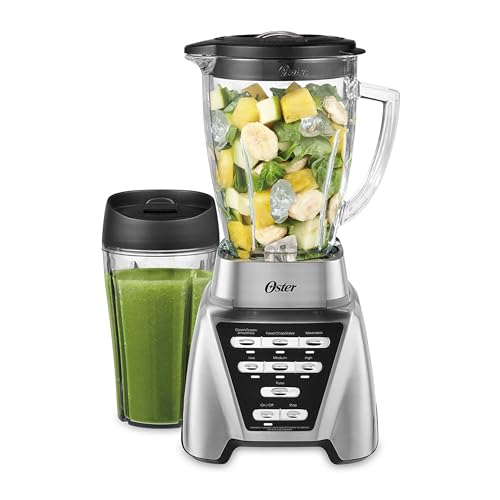
Oster Pro 1200 Smoothie Blender with Glass Jar and 24oz To-Go Cup
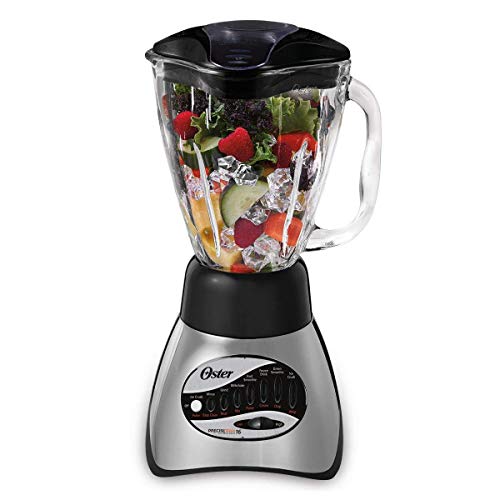
Oster Classic Series 16-Speed Blender with 5-Cup Glass Jar

Oster Classic Series 8-Speed Blender with 6-Cup Glass Jar

GDOR 1200W Glass Blender with 5 Smart Programs
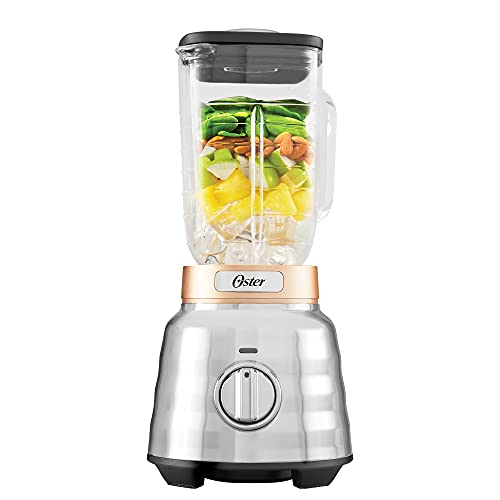
Oster Knob Button Blender with Glass Jar

GDOR 1200W Glass Blender with To-Go Cup Combo
The Details Behind The Selections
The Margaritaville Fiji does one thing, and it does it with conviction: turning a bag of ice and a bottle of mixer into restaurant-style frozen drinks for a crowd. The 36-ounce glass blending jar sits at the heart of the unit, and a separate top reservoir handles ice, which the machine shaves automatically before the blend cycle begins. You pour, press a button, and the machine meters the ice for you.
Where this differs from a standard blender like the Oster Classic covered later is the auto-shave step. A traditional blender needs you to feed ice cubes into a spinning blade, and small cubes can bounce around instead of crushing evenly. The Fiji’s hopper pre-shaves the ice first, which produces a smoother, more consistent frozen drink. For backyard parties that is a meaningful upgrade, though you will pay for the specialty format.
Strengths Worth Knowing
- Auto-shave and auto-mix cycles reduce the guessing around ice-to-liquid ratios.
- 36-ounce glass jar handles a round of drinks for several people in one batch.
- Commercially rated construction and grounded three-prong plug suggest a sturdy build.
- Manual shave-and-blend override gives experienced hosts a hands-on option.
Honest Caveats
- Specialized for frozen drinks, so it will not earn its counter space in a kitchen that never makes them.
- Bulkier than a standard countertop blender, which matters in galley kitchens.
Key Specs
Whose Counter It Belongs On
Hosts who throw regular backyard parties and want frozen drinks without babysitting a blender will get the most out of this machine.
A Better Fit Elsewhere
Daily smoothie drinkers will find the Oster Pro 1200 covered later a more practical everyday match.
The Oster Vortex 1200W is the workhorse slot in this list, pairing a high-torque motor with a shatter-resistant glass jar that handles daily use. Reversing blade technology is the headline feature, and the practical effect is that food gets pulled back down toward the blades rather than riding up the walls of the jar. That keeps thicker blends, like nut butter or frozen berry mixes, circulating properly.
Unlike the Margaritaville above, this is a traditional multi-purpose blender, so you can pivot from a protein shake to a batch of salsa in the same jar. The included Blend-N-Go travel cup is a useful extra for commuters who blend at home and head out the door. It is not as specialized as a frozen drink machine, but it covers the broader category well.
The Case For It
- 1200W motor crushes ice and fibrous greens without bogging down.
- Shatter-resistant glass jar offers the feel of glass with better drop tolerance than older designs.
- Travel cup included for grab-and-go mornings.
Points To Keep In Mind
- Glass jar is heavier than plastic, so loading it one-handed takes some practice.
- Motor is loud at the highest settings, which matters in open-plan homes.
Best Suited To
Busy households that blend several times a week and want a single machine for smoothies, sauces, and ice crushing will be well served here.
Look Elsewhere When
Home cooks who frequently make hot soup in a blender will want the ASTRALSHIP covered next for its heating capability.
The ASTRALSHIP lands at the top of the power scale in this list with a 1500W motor, and it adds a tamper, which is a long plastic tool that pushes ingredients down into the blades without removing the lid. That detail matters for thick blends like hummus, frozen fruit sorbets, and nut butters, where air pockets stop the blades from reaching everything.
This is also the only model in the roundup with a heating function, so it can take raw ingredients and produce hot soup in the jar. Where the Oster Vortex above is built for cold and room-temperature work, the ASTRALSHIP stretches into cooked applications. The 14 preset programs and 9 manual speeds give you plenty of control if you like to tweak.
Advantages To Know
- 1500W motor is the most powerful in the lineup, and it handles ice and tough skins with ease.
- Heating function means you can blend and cook in one container.
- Tamper included for thick blends that stall under the blade.
- Multiple presets reduce the need to memorize time and speed settings.
Trade Offs
- Larger footprint than the classic Oster models, so it demands counter real estate.
- Glass jar with heating cycles requires careful handling, and owners commonly report that the jar runs hot to the touch during soup programs.
Quick Facts
Right Fit For
Cooks who want one machine for smoothies, nut milk, and hot soup will get the most versatility from this pick.
Skip It When
Casual users making the occasional protein shake may find the GDOR models later in the list more appropriately sized.
The Oster Pro 1200 sits in a comfortable middle ground, and it has earned that spot by being a competent everyday machine rather than a specialist. The 1200W motor is the same class as the Vortex covered above, but the Pro trims the feature set down to 7 speeds, which keeps the controls simple. For most home cooks, 7 speeds is plenty of range.
What separates this from the older Classic Series covered next is the brushed nickel finish, the stronger drive system, and the inclusion of a 24oz to-go cup. That cup is a practical addition for the smoothie crowd, since you can blend, swap lids, and head out the door. Compare that to the Classic 16-Speed below, which sticks to a single jar.
Everyday Advantages
- 1200W handles frozen fruit, ice, and fibrous greens with consistent results.
- 7-speed dial is approachable for people who do not want a digital panel.
- To-go cup adds portability for commuters.
- Glass jar resists staining and odor retention from strong ingredients like turmeric.
Small Caveats
- Fewer speed settings than the 16-speed Classic, so very precise purées may require more manual monitoring.
Made For
Home cooks with a daily smoothie habit who want a reliable mid-power machine without a steep learning curve.
Swap It Out When
Cooks who want preset one-touch programs should consider the GDOR 5 Smart Programs model covered later.
The Oster Classic 16-Speed is the entry-level slot, with a 700W motor that handles everyday blending without the price tag of the 1200W models. The 16-speed dial is genuinely useful for cooks who like to dial in exactly the right texture, from a chunky salsa at low speed to a smooth purée at the top of the range. That granularity is rare at this tier.
Where this differs from the Pro 1200 covered above is mainly motor strength. For soft fruits, ice in moderate amounts, and milk-based smoothies, the 700W motor does the job. For large batches of ice or nut butter, you may find it stalls. The 5-cup glass jar is a touch smaller than the 6-cup on the Classic 8-Speed covered next, which matters for family-sized recipes.
Noteworthy Benefits
- 16-speed dial gives you fine control at a low price.
- Glass jar is easier to clean and resists odor retention better than plastic.
- Compact base fits on small countertops or in apartment kitchens.
Factors To Consider
- 700W motor struggles with heavy ice loads compared to the 1200W models above.
- 5-cup jar limits batch size for family meal prep.
- Smaller jar capacity means more batches when cooking for groups.
Who Should Grab It
Solo cooks, couples, and first-time blender shoppers will find this an approachable starting point without a big investment.
Consider Something Else When
Families who cook for four or more should consider the Oster Classic 8-Speed 6-Cup below for a larger jar.
The Oster Classic 8-Speed trades fine-grained control for a larger 6-cup jar, which means fewer batches when making soup for a family or a pitcher of smoothies for the morning rush. The 700W motor matches the 16-Speed above, but the 4-point Crush Pro blade and the all-metal drive system are built to handle repeated heavy cycles.
Where this differs from the 16-Speed covered above is mostly batch size and control philosophy. Eight speeds covers the practical range most cooks use, and the larger jar reduces the number of times you need to stop and refill. For a household that blends daily, that convenience is meaningful.
Everyday Wins
- 6-cup jar handles family-sized recipes in a single cycle.
- All-metal drive system is rated for heavy long-term use.
- Crush Pro 4-point blade pulverizes ice and frozen fruit efficiently.
Worth Noting
- 8 speeds give less precise texture tuning than the 16-speed model above.
- Glass jar is heavier to lift one-handed when full, so take care when pouring.
Built With In Mind
Families and home cooks who batch-blend soups, sauces, and smoothies will appreciate the larger jar capacity.
Another Choice May Suit
Solo users or couples who do not need a 6-cup jar will get the same motor performance in a smaller footprint from the Oster Classic 16-Speed covered above.
The GDOR 5 Smart Programs blender leans into automation. You press a button labeled Smoothie, Milkshake, Ice Crush, Extract, or Pulse, and the machine runs a preset cycle optimized for that task. For cooks who do not want to fiddle with manual time and speed, that one-touch approach is the main appeal.
Under the hood, it carries a 1200W motor and a 52-ounce glass jar, which is one of the largest standard jars in this roundup. Compare that to the Oster Classic 8-Speed above, which has a 6-cup jar and a 700W motor, and the GDOR has a clear power and capacity advantage. Where it falls short of the ASTRALSHIP covered earlier is the absence of a heating function, so it is a cold-and-room-temp machine only.
Positive Takeaways
- 1200W motor handles tough blends with consistent results.
- 5 preset programs simplify operation for less experienced cooks.
- 52-ounce glass jar is large enough for group servings.
Practical Considerations
- Preset cycles are fixed, so cooks who like to fine-tune texture may feel constrained.
- Large jar requires more storage space in cabinets between uses.
Perfect Match For
Set-and-walk-away cooks who want a button press rather than a dial turn will find the preset programs useful.
Reach For A Different Pick When
Manual-control fans will be happier with the Oster Pro 1200 covered earlier.
The Oster BLSTPBRG is the minimalist’s slot: a glass jar, a knob, a few buttons, no presets, no smart programs. You turn the dial to the speed you want, push the button, and the machine runs. That simplicity is the entire pitch, and for cooks who find digital panels over-engineered, it lands well.
Compared to the GDOR 5 Smart Programs covered above, this Oster is intentionally stripped down. It does not try to be a multi-function kitchen hub; it tries to be a blender, and only a blender. Where the ASTRALSHIP adds heating and 14 presets, this one stays in its lane. If you want fewer features you have to learn and fewer things that can break, the BLSTPBRG is worth a look.
Practical Advantages
- Knob controls are intuitive and require no learning curve.
- Glass jar avoids the staining and odor retention of plastic alternatives.
- Compact footprint suits smaller counters.
A Few Limitations
- No preset cycles, so you set time and speed manually for every task.
- Smaller motor than the 1200W models in this list, so heavy ice loads may require prep work.
Who Will Love This
Minimalist home cooks who want a straightforward blender without extra programs will appreciate the no-fuss design.
Not Your Match When
Cooks who batch-blend hot soups will find the ASTRALSHIP covered earlier a better functional fit.
The GDOR To-Go Cup Combo pairs the same 1200W motor and 52-ounce glass jar as the preset program model above, but it swaps the smart programs for a 22-ounce travel cup and a focus on grab-and-go use. You blend in the glass jar at home, pour into the travel cup, swap the lid, and head out. That workflow is the entire value proposition.
Where this differs from the Oster Pro 1200 covered earlier is the larger 52-ounce jar and the 22-ounce travel cup versus the Pro’s 24-ounce cup. The 52-ounce jar is meaningfully larger, so it handles a household’s worth of breakfast smoothies in a single cycle. The trade-off is no preset programs, so you set speed and time manually.
Real Benefits
- 1200W motor delivers strong blending for the price tier.
- 52-ounce glass jar is among the largest in this roundup.
- Travel cup is sized for typical commuter bags and gym bottles.
Things To Weigh Up
- No preset cycles, so you stop the machine manually.
- Glass jar is heavier than plastic alternatives, which can be tiring to lift for some users.
Who It Suits Best
Commuters, gym-goers, and busy parents who blend at home and take the drink on the road will get daily value from the travel cup.
Where A Sibling Pick Shines
Cooks who want preset one-touch programs should consider the GDOR 5 Smart Programs model covered just above.
Matching Glass Pitchers To Real Cooking Habits
Choosing a blender glass pitcher comes down to how you actually cook, not how often you think you will use the machine. Glass jars handle hot liquids better than most plastics, hold up to dishwasher cycles, and resist the smell-transfer issues that frustrate many home cooks. The trade-off is weight: a full 52-ounce glass jar is heavy to lift one-handed, and that matters if you blend often and have wrist or grip issues.
Motor wattage tells you about torque, which is the rotational force that keeps the blade spinning through thick mixtures. A 700W motor handles soft fruits and ice in moderate amounts, while a 1200W or 1500W motor keeps moving through frozen berries, fibrous greens, and nut butters. For most home cooks, 1200W is a comfortable middle, and anything above that is for heavier specialty tasks.
Jar capacity should match household size. Solo cooks and couples do fine with a 5-cup jar, while families of three or more benefit from a 6-cup jar or larger. The 36-ounce and 40-ounce jars in this list sit between those two zones, which works for two-person households with occasional guests.
Speed controls and presets are about how you prefer to cook. A manual dial appeals to cooks who want control, while preset programs suit those who want one-touch convenience. Neither is objectively better, and the right answer depends on how much you enjoy tweaking time and speed for each task.
Cleaning And Maintenance Realities
Glass jars are easier to clean than plastic, but they are also heavier and more likely to chip if dropped on a hard floor. Most models in this list are dishwasher-safe on the top rack, though hand-washing the blade assembly extends its life. Owners commonly report that rubber gaskets around the blade base hold odors over time, so removing and rinsing that gasket after strong-ingredient blends (garlic, turmeric, fish) keeps the machine smelling neutral.
Build Quality And Long-Term Use
Metal drive systems, where the motor connects to the blade through an all-metal coupling rather than a plastic one, tend to outlast plastic drives. Several Oster models in this list advertise all-metal drives, and that detail matters if you blend daily for years. Glass jars are also more resistant to staining than plastic, which is why many cooks prefer them for turmeric-based recipes and berry-heavy smoothies.
What To Watch For Before You Commit
Common Slip Ups Shoppers Make
The most frequent mistake is buying for capacity alone and ending up with a jar too large for daily use. A 52-ounce jar in a one-person household means half-full blends that do not circulate well around the blade, and you end up with uneven textures. Match the jar to your typical batch size, not your biggest occasional one.
Another trap is overlooking the weight of glass. A full 6-cup glass jar can weigh 8 to 10 pounds, and pouring it requires a secure grip. Older shoppers and anyone with wrist issues should test a similar jar in a store before committing to a large-capacity model. The lighter plastic alternative is genuinely easier to handle, even if it does not feel as premium.
Where The Higher Price Goes
Stepping up from a 700W to a 1200W or 1500W model brings more than raw power. You also get stronger drive systems, more durable blade assemblies, and often longer manufacturer commitments to parts availability. The ASTRALSHIP covered earlier adds a heating element, which is a meaningful engineering step beyond a standard motor upgrade.
The price jump also covers extras like tamper tools, multiple jar sizes, and preset programs. Whether those are worth the money depends on whether you will use them. A tamper is a daily-use item for anyone who blends thick mixtures, while preset programs are nice-to-have for cooks who prefer manual control. Spend up when the extras match your actual cooking routine, and skip them when they do not.
Frequently Asked Questions
Are glass blender pitchers safer than plastic?
Glass pitchers do not absorb odors or stains the way some plastics do, and they handle hot liquids without the warping risk that budget plastics can show. The trade-off is weight and breakability on hard surfaces, so they need a bit more care during pouring and washing.
Can you put hot liquids in a glass blender jar?
Most glass jars in this list are rated for warm and hot liquids, though you should check the venting design before blending very hot soup. Always remove the center cap from the lid to release steam, and start at low speed to avoid pressure buildup.
How long do glass blender jars typically last?
With reasonable care, a glass jar can last many years, often outliving the motor. The most common failure point is the blade assembly or the gasket, both of which are usually replaceable parts.
Do glass jars affect blending performance?
Glass is denser than plastic, so the jar adds weight to the base, which reduces walking during heavy cycles. Beyond that, blending performance comes down to motor torque, blade design, and jar shape, not the jar material itself.
Is a higher wattage always better?
Higher wattage gives you more torque for tough ingredients, but it also costs more and runs louder. For soft fruits, milk-based smoothies, and ice in moderate amounts, a 700W motor is genuinely sufficient, and you can save money by skipping the 1500W tier.
Final Verdict
The right blender glass pitcher depends on what you cook and how often. Daily smoothie households get the most from the Oster Pro 1200 or the GDOR To-Go Combo. Entertaining hosts get more out of the Margaritaville Fiji. Heavy cooks and soup makers get the most versatility from the ASTRALSHIP. Match the jar size to your household, the motor to your toughest blend, and the controls to how you like to cook, and you will be set for years of confident blending.



