

Behind every great frozen margarita and silky smoothie is a bar blender doing the heavy lifting. The right one crushes ice cleanly, runs all night without burning out, and survives the kind of abuse a home kitchen never dishes out. The wrong one leaves you with chunky drinks and a motor on the fritz after a season.
This roundup focuses on bar blenders built for serious drink work, from compact two-speed classics to high-powered commercial units with sound-dampening shields. You’ll find options tailored to coffee shops, home bars, juice counters, and busy cafés. Every pick here earns its place on a list because it solves a real problem, not because a marketing team says it’s the best.
The Essentials At A Glance

Hamilton Beach Commercial HBB255 Rio Bar Blender

WantJoin Quiet Blender 80oz Commercial

XQSHUNFUN Silent Commercial Blender 68oz

WantJoin Commercial Blender 80oz Quiet

Bleou Commercial Blender 2200W Quiet

Waring MX1200XTX Variable-Speed Blender 64oz

Waring Torq Blender 48oz Copolyester
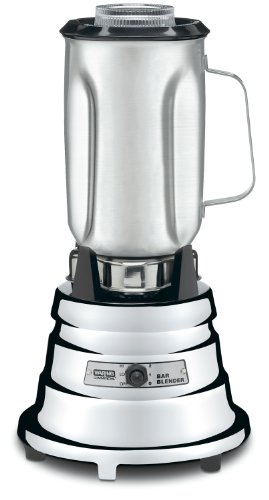
Waring Commercial BB900S Chrome Bar Blender
A Deeper Look At The Lineup
The Hamilton Beach Commercial HBB255 Rio Bar Blender sits in that comfortable middle ground where home enthusiasts and small shop owners both land. Its 1.6 horsepower motor (1 hp equals roughly 746 watts of mechanical output) drives a 48-ounce BPA-free container (BPA-free means the plastic is made without bisphenol A, a chemical some prefer to avoid) through ice and frozen fruit without complaint. The Wave Action System keeps pulling ingredients down into the blade, which means you don’t have to stop mid-blend to scrape the sides.
Compared to the heavy-duty commercial picks below, the Rio trades raw power for simplicity. Two speeds plus pulse cover the basics, and the sealed switches hold up well to splash-heavy bar service. For someone running a low-volume weekend brunch spot or mixing evening cocktails at home, that balance tends to be the right call.
What Stands Out
- The 48-ounce jar hits a sweet spot for two to four drinks at a time, and the BPA-free plastic stays light enough to pour single-handed.
- Wave Action System reduces the need to shake or stir mid-cycle, saving you time when orders stack up.
- NSF certification (an independent sanitation standard for food service equipment) makes it a defensible pick for inspected commercial spaces.
- Sealed toggle controls shrug off sticky splashes that would gum up exposed switches on cheaper models.
Honest Caveats
- At 1.6 hp it can stall on extra-thick nut butter or repeated back-to-back frozen drinks, so busy bars may feel the limit.
- The plastic jar, while practical, tends to cloud and scratch over years of daily dishwasher cycles.
Made For
Small cafés, food trucks, and home cocktail fans who want commercial-grade sanitation credentials without paying for motors built for stadium concessions.
Skip It When
The Waring Torq Blender suits you better when you need a bigger 48-ounce copolyester jar (a tougher, shatter-resistant plastic blend) and a 2 hp motor that won’t flinch at marathon service.
Where the Hamilton Beach Rio keeps things simple, the WantJoin Quiet Blender goes the other direction. The transparent soundproof enclosure is the headline feature here, and it earns that name by noticeably reducing the banshee scream most blenders make when crushing ice. The 80-ounce jar (the largest on this list) handles catering batches without constant refilling.
A 2200W motor sits under the hood, paired with 15 speed settings plus a pulse function. The included 15-ounce to-go cup is a small but useful touch for cafés that want grab-and-go smoothies alongside sit-down service. For open-concept spaces where customers sit ten feet from the bar, that sound shield moves from nice-to-have to essential.
What Earns Its Place
- The sound enclosure genuinely tones down the worst of the noise, which matters in open layouts and residential setups.
- 80-ounce capacity means fewer refill stops during a Saturday morning rush.
- 15 speed settings give you room to dial in a precise texture for purées, frozen cocktails, or nut milks.
- The to-go cup accessory adds flexibility for shops that want retail smoothies alongside bar service.
Soft Spots
- The sound shield adds bulk to the footprint, so cramped counters feel the squeeze.
- Cleaning the lid and gasket takes more attention than a standard jar because of the extra sealing surfaces.
- At 2200W you may need a dedicated circuit in older buildings, depending on your panel.
Right Fit For
Open-kitchen cafés, hotel bars, and home users who entertain often and refuse to shout over the blender.
Swap It Out When
The WantJoin Commercial Blender 80oz Quiet makes more sense when self-cleaning cycles matter more to your workflow than a removable to-go cup.
The XQSHUNFUN Silent Commercial Blender leans hard into the “quiet professional” identity with a sound shield that wraps the full jar. Where the WantJoin above uses a transparent enclosure, this one seals tighter with a full-coverage strip, which keeps splatter inside the shield during long frozen-drink cycles. The 1800W pure copper motor (copper windings tend to run cooler and last longer than aluminum alternatives) handles ice and frozen fruit without bogging down.
The 68-ounce jar splits the difference between the Hamilton Beach Rio and the 80-ounce WantJoin models. It works well for mid-volume counters that don’t need catering capacity but want more room than a standard 48-ounce pitcher. For staff who run the same frozen drink recipe dozens of times a shift, the repeatable results tend to justify the price.
Features That Help
- The full-coverage sealing strip keeps noise down and contains splatter, which your cleanup crew will appreciate.
- 1800W pure copper motor delivers consistent torque on repeated frozen drink batches.
- The 68-ounce jar fits comfortably under most bar shelves and standard counter cutouts.
Factors To Consider
- Brand recognition is lighter than the WantJoin or Waring nameplates, so replacement parts may take longer to source.
- The sealed shield design can fog up during hot purées, briefly obscuring your view of the blend.
Best Suited To
Independent coffee shops and juice bars that want a quieter, splash-controlled workflow without stepping up to 80-ounce capacity.
Another Choice May Suit
The WantJoin Quiet Blender 80oz Commercial serves you better when larger batch sizes and a transparent enclosure for visual monitoring matter to your service style.
The second WantJoin on this list earns its slot by tackling the cleanup problem. Where the other WantJoin focuses on noise reduction and a to-go cup accessory, this model adds a self-cleaning cycle that runs water and detergent through the blade assembly. For shops blending dozens of smoothies a day, that single feature saves meaningful labor over a year.
The 80-ounce capacity matches its sibling, and the 1800W high-torque pure copper motor is built for continuous high-volume use. The soundproof shield keeps noise reasonable during the longer cycles self-cleaning requires. For restaurant and café environments where staff turnover is constant, the self-cleaning routine reduces the training burden too.
Real-World Strengths
- Self-cleaning cycle cuts the deepest maintenance chore down to a button press.
- 80-ounce jar handles high-volume rushes without mid-shift refills.
- 110V standard plug fits typical commercial kitchen outlets without rewiring.
- Soundproof shield softens the noise of the high-torque motor during extended runs.
Points To Keep In Mind
- At 80 ounces, the jar height may not fit under standard 18-inch upper shelves, depending on your cabinetry.
- The 1800W motor pulls enough current that running it alongside other heavy appliances on one circuit can trip breakers.
Who It Suits Best
High-volume smoothie shops and restaurant bars that need fast turnaround between batches and minimal cleanup labor.
Consider Something Else When
The Bleou Commercial Blender 2200W makes more sense when precise speed control and a built-in timer matter more to your bar workflow than self-cleaning.
The Bleou Commercial Blender packs a 2200W motor behind a thick soundproof cover and silicone cushion, and adds the rare combination of 15 speeds and a smart timer. That timer matters more than it sounds. Set it for 30 seconds, walk away to plate a dessert, and the blender stops on its own instead of over-processing the ice into slush.
Compared to the WantJoin models earlier, the Bleou trades some of the raw capacity for finer-grained control. You can ramp up gradually for nut butters, hold a slow speed for salad dressings, or punch into pulse mode for crushed ice. For bar managers training new staff, the preset timer reduces the guesswork that often leads to inconsistent drinks.
What Makes Sense
- 15 speed settings cover a broader range of textures than the two or three speeds on most competitors.
- Smart timer lets staff multitask without babysitting the cycle.
- 2200W output handles ice, frozen fruit, and tough nuts without bogging down.
- Silicone cushion dampens vibration, which your neighboring espresso machine will appreciate.
Less Ideal Details
- The control panel has more buttons to learn, which slows down casual or first-time users.
- Soundproof cover and silicone cushion add weight, making the unit harder to relocate for cleaning.
Perfect Match For
Multi-tasking bar teams that prep diverse menus from smoothies to purées and want repeatable results without constant supervision.
Look Elsewhere When
The Waring MX1200XTX Variable-Speed Blender serves you better when you want a nameplate brand with a 64-ounce copolyester jar and proven long-term parts availability.
Waring has been in the commercial blender game for decades, and the MX1200XTX shows why that reputation sticks. The 3.5 horsepower motor pushes the blade through variable speeds from 1500 to 20000 RPM (revolutions per minute, a measure of how fast the blade spins), with a pulse function that briefly hits 30000 RPM for the kind of ice-crushing burst that turns cubes into snow. The 64-ounce copolyester jar holds enough for a full round of drinks without refill.
Where the Chinese-brand picks on this list focus on value-packed features like sound shields and to-go cups, the Waring leans into raw, proven muscle. For pro kitchens, test kitchens, and lab applications where recipe consistency matters more than novelty features, that trade-off makes sense. Replacement parts and authorized service tend to be easier to find too, which matters for shops planning to run the unit for years.
Strong Points
- 3.5 hp motor tops this list and handles everything from purées to nut butters without strain.
- Variable speed range from 1500 to 20000 RPM gives precise control over texture development.
- 64-ounce copolyester jar balances capacity with manageable weight when full.
- Pulse function peaks at 30000 RPM for clean ice crushing in seconds.
A Few Limitations
- It runs loud without a sound shield, so open-concept spaces may find it disruptive.
- The control panel has more settings than a typical two-speed bar blender, requiring a short learning curve.
Who Should Grab It
Pro kitchens, culinary schools, and recipe developers who need precision variable speeds and a nameplate they can service for years.
Reach For A Different Pick When
The WantJoin Quiet Blender 80oz Commercial fits better when noise control and larger capacity matter more than a 3.5 hp peak motor.
The Waring Torq 2 horsepower blender splits the difference between the Rio and the MX1200XTX. The 2 hp motor reaches up to 24000 RPM, which is plenty of muscle for the typical bar workload of frozen margaritas, daiquiris, and smoothie rounds. The 48-ounce copolyester jar matches the Hamilton Beach Rio’s capacity, but with tougher material that holds up better to years of dishwasher cycles.
The toggle switch keeps operation simple, which makes the Torq a strong training-wheel pick for newer staff. There’s no timer to set, no speed dial to dial in, just on or off. For a busy bar manager who wants a blender that any team member can run without instruction, that simplicity pays off over time.
Where It Excels
- 2 hp motor delivers enough power for typical bar service without overpaying for higher-end models.
- 48-ounce copolyester jar resists cracks and clouding better than standard plastic alternatives.
- Toggle switch design makes the unit approachable for new hires and part-timers.
- Waring’s service network means replacement parts are widely available.
Practical Considerations
- The basic toggle control offers no speed variation, so texture precision is limited.
- At 48 ounces, the jar is smaller than the 68 to 80-ounce options from the WantJoin and XQSHUNFUN models.
- No sound shield, so it runs at typical loud-blender volume.
Whose Shelf It Belongs On
Restaurant and bar operations that want Waring reliability with a simple interface any staff member can run during a rush.
Where Another Pick Suits Better
The XQSHUNFUN Silent Commercial Blender 68oz serves you better when you need a quieter operation and larger batch capacity for juice bar service.
The Waring Commercial BB900S closes out this list the same way it has anchored bar counters for years. The 1/2 horsepower motor and 32-ounce stainless steel container don’t try to compete with the high-volume monsters earlier in this roundup. Instead, the BB900S does one job and does it well: turn out classic bar drinks in single-serving batches, night after night.
The chrome-plated zinc die-cast housing (a process where molten zinc is forced into a mold, creating a denser and more durable base than stamped metal) gives the BB900S the kind of heft you feel when you set it on the counter. The two-speed toggle and compact footprint suit small home bars, break rooms, and low-volume venues where big-batch capacity would just sit unused. Compared to the Rio’s 48-ounce plastic jar, the stainless container here is smaller but virtually indestructible.
Everyday Wins
- Stainless steel container outlasts plastic jars and handles hot liquids without warping.
- Compact 32-ounce size fits small counters and under-cabinet storage with room to spare.
- Zinc die-cast housing dampens vibration and noise better than lighter stamped bases.
- Two-speed toggle is about as simple as bar equipment gets, requiring zero training.
Small Caveats
- The 1/2 hp motor and 32-ounce jar limit you to single or double drinks at a time, so larger groups wait their turn.
- Stainless steel container fogs up when blending warm ingredients, briefly hiding the contents from view.
Built With In Mind
Home bartenders, small venue operators, and anyone who values a compact, no-nonsense blender that will outlast trendier alternatives.
Not Your Match When
The Hamilton Beach Commercial HBB255 Rio Bar Blender suits you better when you need NSF certification and a larger 48-ounce BPA-free container for small café service.
What Matters Most When Choosing Bar Blenders
Motor Power Versus Real Workload
Motor power gets pitched in horsepower and watts, but the number that matters is how the unit performs under load. A 1.6 hp motor handles a few drinks at a time, while 2 to 3.5 hp commercial motors run all night. For home bars and small shops, mid-power picks tend to hit the sweet spot. For catering or stadium-level service, you’ll want at least 2 hp and ideally the 3.5 hp range.
Jar Material And Capacity
Plastic jars (including copolyester, a durable plastic blend) are lighter and cheaper, while stainless steel lasts longer and handles hot ingredients. Capacity matters more than most people expect. A 32-ounce jar suits one or two drinks; 48 to 64 ounces handles small batches; 68 to 80 ounces fits catering runs. Picking the right size prevents constant refills or wasted leftovers.
Noise And The Sound Shield Question
Bar blenders are loud by nature, but soundproof enclosures with silicone cushions can take the edge off. Open-concept spaces, hotel bars, and home kitchens benefit most. Enclosed bars, restaurant back-of-house, and dedicated bar rooms can usually tolerate standard volume. The trade-off is footprint and the extra sealing surfaces you need to clean.
Controls And Daily Usability
Two-speed toggles are easy to train staff on, but variable speed controls and smart timers open up more recipe options. Pulse functions matter for ice crushing and texture control. Self-cleaning cycles save labor but add a sealed lid you need to maintain. Match the controls to your team and menu, not the marketing brochure.
Key Considerations Across These Picks
Where Shoppers Go Wrong
Most people overbuy on motor power and underbuy on jar size. A 3.5 hp monster in a 32-ounce jar makes no sense for a smoothie shop that needs 80-ounce batches. Measure your typical drink volume first, then match the motor to that workload, not the other way around.
Another common trap is ignoring the power circuit. 2200W commercial blenders pull real current, and running them on a shared circuit with other appliances can trip breakers mid-service. Check your panel before you commit.
When Paying More Pays Off
Higher-tier models earn their premium through longer motor life, better parts availability, and tougher jar materials. A Waring nameplate costs more upfront but tends to last years longer than no-name alternatives. For commercial use, that longevity typically justifies the price gap within the first year of service.
Frequently Asked Questions
How loud is a typical bar blender?
Most standard bar blenders run in the 80 to 100 decibel range, which is roughly the volume of heavy city traffic. Sound-shielded models cut that down by 10 to 20 decibels, which sounds small but feels much quieter in person.
What is the difference between a bar blender and a regular blender?
Bar blenders are built for repeated short cycles of ice-heavy drinks, with stronger motors and more durable jars than typical home countertop models. They’re also designed for fast cleaning between drinks during a service rush.
Can a bar blender handle hot liquids?
Only models with stainless steel or specifically rated copolyester jars can safely blend hot ingredients. Plastic jars not designed for heat can warp or crack. Always check the manufacturer’s rating before pouring in hot soup or sauces.
How often should I replace the blade assembly?
Under typical bar use, expect the blade assembly to last two to three years before dulling noticeably. Heavy commercial use can shorten that to a year. Replacement parts are widely available for major brands like Waring, Hamilton Beach, and WantJoin.
Is NSF certification important for home use?
NSF certification matters most in commercial kitchens that undergo health inspections. For home use, it signals above-average sanitation standards but isn’t required. Commercial-grade construction tends to last longer regardless of where you use it.
Closing Remarks
Choosing the right bar blender comes down to matching motor power, jar size, and noise control to your specific workload. Home cocktail fans and small shop owners will find solid middle-ground picks like the Hamilton Beach Rio and Waring Torq more than capable. For high-volume cafés and restaurant bars, the WantJoin models and Waring MX1200XTX deliver the muscle and features that justify stepping up. Take stock of your typical drink volume, your counter space, and your tolerance for noise, and the right pick tends to reveal itself.



