

A stand mixer changes the rhythm of a home kitchen. Bread dough that once demanded fifteen minutes of arm work finishes while you measure the next ingredient. Meringue whips to glossy peaks without burning out your wrist. Cookies become a quick weeknight project instead of a weekend commitment.
Bakers shopping for a new stand mixer face a crowded field, though. Capacity ranges from compact 3.5-quart bowls to commercial-sized 8.4-quart tanks. Motors vary in real torque. Build quality shifts from lightweight plastic housings to die-cast metal frames. The lineup below spans compact home models, large-capacity workhorses, and a few picks that punch above their size class, so you can match the right machine to your baking style.
A Closer Look At The Lineup

KitchenAid Artisan 5-Qt Tilt-Head Stand Mixer (Feather Pink)
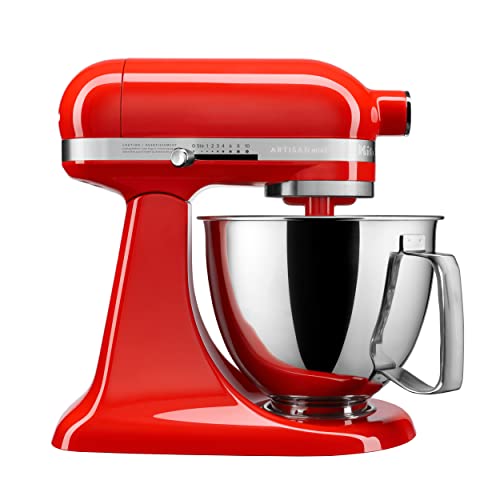
KitchenAid Artisan Mini 3.5-Qt Tilt-Head Stand Mixer

Honinst 6.5-QT 10-Speed Tilt-Head Stand Mixer

8.4QT Commercial Stand Mixer 800W with Aluminum Die Casting

ZACME 8.4QT Commercial Stand Mixer 800W Aluminum Die Casting

8.4QT Commercial Stand Mixer 800W (Black)
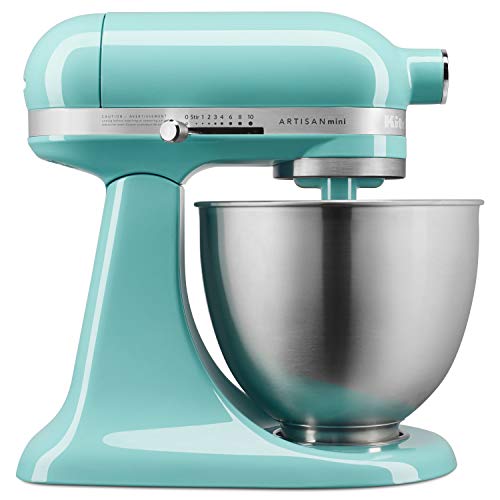
KitchenAid KSM3311XAQ Artisan Mini 3.5-Qt Stand Mixer (Aqua Sky Blue)
A Deeper Look At The Lineup
The KitchenAid Artisan has earned its reputation through decades of home kitchens, and the 5-quart tilt-head configuration remains the default recommendation for most bakers. The bowl handles a standard batch of cookies with room to spare, and the 10-speed range covers gentle folding of flour through heavy bread dough. Tilt-head access means scraping the bowl sides is straightforward, and the included flat beater, dough hook, and wire whip cover the core toolkit most recipes call for.
Compared to the Mini in spot two, this Artisan trades counter space for noticeably more capacity, a worthwhile trade if you bake in volume or want room to double a recipe. Feather Pink is a soft, warm tone that reads neutral on most counters, and the metal construction gives the mixer a planted feel during extended kneading cycles.
What Earns Its Place
- 5-quart bowl covers standard batch sizes for cookies, breads, and double-layer cakes
- Tilt-head design gives clear access to add ingredients mid-mix
- 10-speed range handles delicate whipped cream through stiff bread dough
- Metal body stays planted on the counter during longer kneading runs
- Wide accessory ecosystem means future upgrades are easy to find
Things To Consider
- Heavier than the Mini model, so moving it for storage takes some effort
- Bowl is hand-wash recommended for longest coating life
Key Specs
Best Suited To
Weekly home bakers who want a single mixer that handles cookies, cakes, and bread without compromise.
Look Elsewhere When
Counter space is genuinely tight, in which case the KitchenAid Artisan Mini 3.5-Qt Tilt-Head Stand Mixer gives up capacity for a smaller footprint.
The Artisan Mini shrinks the standard KitchenAid platform into a footprint that fits studio apartments and galley kitchens without surrendering core function. The 3.5-quart stainless steel bowl is rated for roughly five dozen cookies in a single batch, which covers most weeknight baking. Tilt-head access is identical in feel to the full-size Artisan, and the build stays metal rather than plastic, so it does not feel like a compromise the moment you unbox it.
You give up batch size compared to the 5-quart Artisan in spot one, and you also give up the option to fit some of the larger附件. For solo bakers, couples, and small households, though, the trade lands well.
Reasons It Performs
- 67 touchpoints around the bowl for thorough ingredient incorporation
- Stainless steel bowl is dishwasher safe, easing cleanup after sticky doughs
- 10 speeds mirror the full-size Artisan, so recipe adjustments stay simple
- Significantly lighter and smaller than the 5-quart sibling
Honest Caveats
- 3.5-quart bowl cannot double larger bread recipes without splitting batches
- Some full-size KitchenAid附件 do not fit the Mini shaft
Feature Snapshot
Made For
Small-space bakers who want KitchenAid power without the full-size footprint.
Consider Something Else When
You regularly bake for a crowd, in which case the Honinst 6.5-QT 10-Speed Tilt-Head Stand Mixer offers more bowl room at a friendlier price.
The Honinst 6.5-quart mixer lands in the middle of this lineup as a budget-friendly step up from compact home models. The pure copper motor and 10-speed control give the machine enough range to handle standard bread doughs and large cookie batches without bogging down. The 3D planetary mixing action is a planetary gear system where the beater rotates while orbiting the bowl, mimicking hand mixing from multiple angles, and the splash guard helps keep flour where it belongs during longer runs.
Where the KitchenAid models lean on brand heritage and a deep accessory catalog, the Honinst leans on raw capacity per dollar. The trade is a less refined fit and finish, which becomes obvious when you compare the two side by side.
Points In Its Favor
- 6.5-quart bowl covers family-size baking without splitting batches
- 10-speed range mirrors more expensive competitors
- Pure copper motor is rated for steady kneading workloads
- Splash guard keeps counters cleaner during flour-heavy recipes
Where It May Fall Short
- Fit and finish do not match the KitchenAid Artisan line
- Accessory ecosystem is more limited than established brands
- Bowl-handle ergonomics feel less refined during heavy pours
Right Fit For
Family bakers who want large capacity and full speed control without the brand-name premium.
A Better Fit Elsewhere
Brand-name resale and a deep accessory library matter most, in which case the KitchenAid Artisan 5-Qt Tilt-Head Stand Mixer in spot one is the safer long-term pick.
Step into commercial territory and the rules change. The 8.4-quart bowl here holds roughly 3 kg of dough, which is enough for two large loaves of bread plus rolls in a single batch. The aluminum die-cast body, a process where molten aluminum is forced into a steel mold under high pressure to create a dense, rigid housing, gives the machine a planted feel that lighter home mixers cannot match. An 800W DC motor drives metal gears through 11 speed settings, and the build aims at NSF/ANSI 8 food equipment standards.
This is a different category of appliance than spots one through three. Counter footprint, weight, and noise all climb. Bakers running a home bakery, a small café, or large family gatherings will find the headroom valuable, while casual bakers will likely leave capacity unused.
Good Reasons To Consider
- 8.4-quart bowl handles 3 kg of dough in a single batch
- Aluminum die-cast body resists flex during heavy kneading
- 11 speed settings offer fine control across mixing tasks
- Built to meet NSF/ANSI 8 food equipment standards for commercial use
- LED display simplifies speed tracking and timer use
Worth Noting
- Significantly heavier and larger than any home-tier mixer
- Excess capacity for a small household of casual bakers
At A Glance
Whose Shelf It Belongs On
Bakers running small commercial operations or regularly feeding large groups who need batch capacity beyond home-tier limits.
Swap It Out When
You only bake for a family of four, in which case the Honinst 6.5-QT 10-Speed Tilt-Head Stand Mixer offers a more proportionate fit.
The ZACME shares most of the bones with the commercial mixer in spot four, but positions itself slightly more toward the bread baker. The 11-speed control gives finer gradation at the low end, which matters when developing a tight, well-kneaded dough without overworking the gluten. Metal gear construction, the 800W DC motor, and the aluminum die-cast body all carry over, and the LED display remains a useful touch during longer mixing cycles.
Bakers already considering spot four will land here for similar reasons. The practical difference comes down to branding, current availability, and minor accessory packaging, since the core specifications are nearly identical.
Well-Handled Touches
- 11 speed settings give finer low-end control for bread doughs
- Metal gear train handles repeated kneading cycles
- NSF/ANSI 8 alignment supports light commercial use
Small Caveats
- Very similar spec sheet to the mixer in spot four, so brand preference drives the call
- Size and weight make it a poor fit for casual bakers
Who It Suits Best
Bread bakers who want finer low-speed control for long, slow kneading.
Reach For A Different Pick When
A different finish suits your kitchen better, in which case the 8.4QT Commercial Stand Mixer 800W (Black) in spot six covers the same core specs.
The black-finish variant of the 8.4-quart commercial mixer lands in spot six for shoppers who want the same workhorse performance with a darker visual profile. Stainless steel 8L bowl, 800W DC motor, aluminum die-cast body, and 11-speed control all match the spec sheet of its silver siblings. The included dough hook, whisk, and beater cover the standard bakery toolkit.
If your kitchen runs black stainless or matte appliances, this variant blends in where the silver finishes in spots four and five might stand out. Functionally, the choice is largely cosmetic once you have committed to the commercial class.
Positive Takeaways
- Same 8.4-quart capacity and 800W motor as sibling commercial picks
- Black finish matches modern dark-appliance kitchens
- 11-speed range supports fine control across mixing tasks
Where It Is Less Suited
- Size and weight exceed what most home bakers need
- Core specs duplicate earlier commercial picks, so finish is the main differentiator
Quick Facts
Perfect Match For
Bakers who want commercial capacity and a black finish that pairs with dark-appliance kitchens.
Not Your Match When
You rarely bake for more than a family, in which case the KitchenAid Artisan 5-Qt Tilt-Head Stand Mixer covers everyday needs without the bulk.
The Aqua Sky Blue Artisan Mini closes the lineup on a colorful note. Mechanically, it shares the same 3.5-quart tilt-head platform as the Mini in spot two, so the same small-kitchen strengths apply: lighter weight, smaller footprint, and enough bowl capacity for roughly five dozen cookies in a single batch. The color is the headline, a soft blue that brightens a counter without shouting.
Bakers who want KitchenAid power in a compact shell and care about the visual line of their appliances will find this a natural match. As with the other Mini, give up some batch size and the option to use larger附件 in exchange for counter real estate.
Where It Excels
- Aqua Sky Blue finish adds a soft pop of color to neutral kitchens
- Compact footprint fits apartments, RVs, and small countertops
- 3.5-quart bowl handles typical small-batch recipes with ease
- Same KitchenAid build quality as larger siblings
Factors To Consider
- Bowl capacity tops out at smaller recipes
- Accessory compatibility is limited to Mini-sized attachments
Who Should Grab It
Color-conscious bakers in small spaces who want KitchenAid performance and a softer finish than standard white.
Where A Sibling Pick Shines
Capacity matters more than color, in which case the KitchenAid Artisan 5-Qt Tilt-Head Stand Mixer in spot one is the roomier choice.
What To Weigh Before Choosing A Stand Mixer
Bowl Capacity And Batch Size
Bowl size sets the ceiling for what you can mix in a single run. A 3.5-quart bowl, like the ones on the KitchenAid Artisan Mini models, covers five dozen cookies or a small loaf of bread. A 5-quart bowl, like the KitchenAid Artisan, handles most family recipes plus a doubled batch on occasion. The 6.5-quart Honinst and 8.4-quart commercial ZACME models step into feeding-crowd territory. Match bowl size to your real weekly output rather than the largest recipe you might try once a year.
Motor Strength And Gear Build
A motor’s wattage tells you how much power it can draw, but torque, the rotational force that keeps the beater turning under a heavy load, matters more during bread kneading. DC motors in commercial models like the ZACME 8.4QT and its variants maintain torque more consistently than many AC motors in compact home mixers. Metal gear trains outlast plastic gears under repeated use, and they tend to run quieter during long kneading cycles.
Head Style And Bowl Access
Tilt-head designs, found on every KitchenAid in this lineup and the Honinst, swing the top back for full bowl access. This makes scraping the sides and adding ingredients simpler. Bowl-lift designs, common on some commercial machines, keep the head fixed and raise the bowl instead. Both work, but tilt-head access tends to feel more natural for casual bakers working from written recipes.
Size, Weight, And Counter Real Estate
A stand mixer lives on the counter for most home bakers. A 3.5-quart Mini weighs noticeably less and parks in a corner when not in use. The 8.4-quart commercial models, in contrast, can approach 30 pounds and demand a dedicated footprint. Honest measurement of your counter space prevents the regret of unboxing a machine that does not fit.
Accessory Ecosystem
KitchenAid’s attachment catalog is the deepest in the category, covering pasta makers, meat grinders, spiralizers, and more. Honinst and ZACME accessories exist but the selection is narrower. If you anticipate moving beyond baking into fresh pasta or sausage making, the ecosystem advantage matters.
Key Considerations Across These Picks
Pitfalls Shoppers Hit
Choosing by bowl size alone is a common miss, since a bowl that is too large encourages under-mixing small batches, and a bowl that is too small forces you to split recipes. Match the machine to your typical recipe, not your dream recipe. Ignoring weight and footprint is the second trap: an 8.4-quart commercial mixer in a galley kitchen is a frustration you will feel every day. Finally, assuming every mixer handles dense bread dough equally well is wrong. Plastic gear trains bog down and wear faster under heavy kneading, so the motor and gear material deserve as much attention as bowl size.
Where The Extra Money Goes
Higher-tier commercial mixers cost more because the components are built for repeated, heavy use. Die-cast aluminum bodies resist flex and vibration, which protects the motor mounts and keeps the machine quieter. Metal gear trains last through thousands of kneading cycles where plastic gears degrade. NSF/ANSI 8 alignment adds a third-party food-safety standard relevant to anyone running a small business. For home bakers who bake once a week, the extra cost is harder to justify. For daily bakers and small commercial operators, the upgrade pays back through years of reliable service.
Frequently Asked Questions
How Much Bowl Capacity Do Most Home Bakers Actually Need?
For one to four people, a 5-quart bowl covers the vast majority of recipes with room to spare. Smaller households often do fine with a 3.5-quart Mini, while families of five or more benefit from 6.5 quarts or larger.
What Is The Difference Between Tilt-Head And Bowl-Lift Mixers?
A tilt-head mixer swings the top back so you can reach the bowl from above. A bowl-lift mixer keeps the head fixed and raises the bowl into position. Tilt-head designs feel more intuitive for casual bakers, while bowl-lift designs are common on commercial machines because the rigid head supports heavier loads.
Can Stand Mixers Handle Bread Dough?
Yes, but motor torque and gear material determine how well. Compact home mixers handle one loaf at a time. Commercial machines with metal gears and DC motors handle repeated, dense doughs without bogging down or wearing prematurely.
How Important Is The Accessory Ecosystem?
Very important if you anticipate expanding beyond baking. KitchenAid’s attachment catalog is the deepest, with pasta rollers, meat grinders, and spiralizers that turn the mixer into a multi-purpose kitchen station. Other brands offer fewer options.
Do Larger Mixers Take Longer To Clean?
Not necessarily, since the bowl and附件 wash the same way regardless of size. The difference is storage and counter footprint, where larger mixers demand more dedicated space in your kitchen.



