

Mixing boards have quietly grown up. An 8 channel mixer today can mean a pocket-sized streaming hub, a touring-grade digital rack, or anything between. The right pick depends entirely on what you actually need: live gigs, home recording, podcasting, or karaoke nights that need a real volume knob. This roundup covers eight options that cover the spread, from budget streaming units to a rackmount workhorse that can handle a full band. Each one is sized for a specific use, so spend a minute thinking about the rooms you actually mix in before chasing specs.
A Side-By-Side Look

Mackie DL16S 16-Channel Digital Rack Mixer

TF600 6-Channel Powered Mixer with Bluetooth
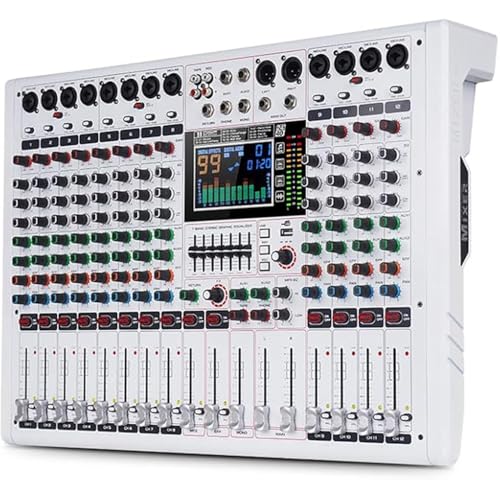
GF12 PRO 12-Channel Stage Performance Mixer

SIKUING 12-Channel Audio Mixer with Bluetooth

SIKUING 8-Channel Audio Mixer with Bluetooth

Yamaha MG10 10-Input Stereo Mixer (Black)
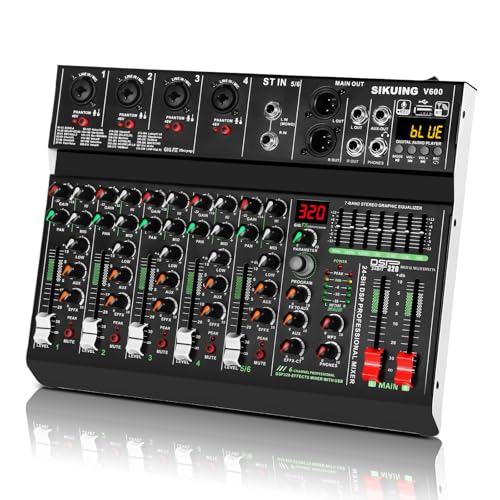
SIKUING 6-Channel DJ Mixer with 320 DSP Effects

Yamnweo MW-6 6-Channel Portable DJ Mixer (White)
More Details On Our Top Picks
The Mackie DL16S sits in a different weight class than the rest of this list. It is a full 16-channel digital rack unit with built-in Wi-Fi, which means you can walk the room with a tablet and tweak the mix from anywhere in the venue. Sixteen Onyx+ recallable preamps (mic preamps, the circuits that amplify a microphone’s signal cleanly) feed 16×16 USB I/O, so the same board that runs your show can double as a recording rig for virtual sound checks.
Compared to the compact streaming units further down, the DL16S is overkill for casual use, but for working bands, small venues, and houses of worship it is the right kind of overkill. The 13 busses and four onboard FX processors give you dedicated mixes for monitors, front-of-house, and effects without resorting to outboard gear. You may find the learning curve steeper than the analog boards below, especially if the Master Fader app is new territory for you.
Real Benefits
- Wireless tablet mixing means you stand where the audience stands and tune the room to taste
- Sixteen recallable preamps retain settings across sessions, useful for touring acts that reload the same show file nightly
- 16×16 USB recording captures multitrack shows directly to a laptop, no interface required
- Four onboard FX engines cover reverb and delay duties without extra rack space
Honest Caveats
- Tablet-driven workflow means no physical faders on the front panel, a deal-breaker for engineers who like hands-on control
- Rack form factor needs a dedicated 3U slot and proper ventilation in hot venues
Feature Card
Right Fit For
Working bands, small-to-mid venues, and worship techs who want a digital workflow without a wall of physical faders.
Where Another Pick Suits Better
Streamers and podcasters should look at the SIKUING 12-Channel Audio Mixer with Bluetooth instead, since you do not need sixteen mic inputs or rackmount depth for a desk setup.
The TF600 is the only powered mixer in this roundup, which changes what it does for you. Two 450W amplifier channels are built in, so you connect passive speakers directly and skip the separate power amp that every other pick on this list requires. For mobile DJs, school events, and pop-up presentations, that single-cabinet approach is genuinely useful.
Six input channels handle the common gig: a couple of mics, a laptop, a phone over Bluetooth, and a spare for whatever shows up. A 7-stage equalizer shapes the overall tone, and 99 DSP effects cover reverb and echo for vocals. Compared to the rackmount Mackie above, the TF600 trades digital flexibility for portability and built-in power, a fair trade if you haul gear in and out of venues every weekend.
The Good Stuff
- Integrated 2x450W amp removes a rack unit and a power cable from your setup
- Bluetooth input for quick phone or tablet playback at events
- 99 DSP presets add polish to spoken word and vocal-heavy programs
Worth Noting
- Only six channels limits larger bands or multi-instrument setups
- Powered mixers run hot, so leave clearance around vents for reliable operation
Made For
Mobile DJs, fitness instructors, and presenters who want speakers and mixer in one trip from the car.
Consider Something Else When
Anyone running more than six simultaneous sources should jump to the GF12 PRO 12-Channel Stage Performance Mixer, which has double the inputs without the built-in amp.
The GF12 PRO leans hard into the visual side of stage work. A large color LCD replaces the rows of tiny LEDs you usually get at this price, which makes navigating presets and channel settings far less annoying under low stage lighting. Twelve channels cover a full band setup: drums, bass, keys, a few vocals, and still have room for backing tracks.
Isolated independent mutes per channel let you silence a problem mic without fumbling for the right knob, a small but real benefit during live shows. The 7-stage equalizer and 99 reverb effects give the GF12 PRO the same polish as bigger consoles, minus the rack depth of the Mackie DL16S. For bands that need a dozen inputs in a tabletop footprint, this one hits a sweet spot the smaller 6-channel and 8-channel boards cannot match.
Notable Gains
- Color LCD makes menu navigation far easier than text-only displays
- Twelve inputs handle full band lineups without creative channel juggling
- Per-channel mutes help silence feedback or stage noise in real time
- 99 reverb presets polish vocals and instruments for live performance
Trade Offs
- Tabletop form factor and screen add weight, so it is less grab-and-go than the Yamnweo MW-6 below
- More channels means more menu diving when adjusting effect parameters
Who It Suits Best
Mid-size bands, house-of-worship teams, and stage performers who want a balance of inputs and visual feedback without going full digital rack.
Not Your Match When
Solo podcasters will be better served by the SIKUING 8-Channel Audio Mixer with Bluetooth, which delivers the DSP and Bluetooth the GF12 offers but in a smaller, simpler layout.
The SIKUING 12-Channel targets the streaming and karaoke crowd, where the mixer doubles as a USB interface for a computer. Twelve mic-capable inputs are generous for podcast panels, small worship teams, or karaoke nights with a real queue. The +48V phantom power (the voltage that condenser microphones need to operate) means you can plug in studio condensers, not just dynamic mics.
Bluetooth pairing covers wireless phone playback, and a 16-bit DSP engine handles echo and reverb for vocals. Compared to the analog simplicity of the Yamaha MG10 below, this board trades hands-on purity for digital effects and USB connectivity, a fair exchange if you are routing audio into OBS or a DAW (digital audio workstation, the software used to record and edit audio on a computer). Owners commonly report that the Bluetooth range is best kept within line of sight.
A Favorable Mix
- 12 mic inputs with phantom power accommodate condenser mics for studio-quality vocals
- USB audio interface routes audio to streaming and recording software without extra hardware
- Bluetooth input saves a cable for casual phone playback
Points To Keep In Mind
- 12 channels in this price range tend to mean lighter preamps than the Yamaha MG10’s D-PRE circuits
- Bluetooth audio adds latency, so it is best for playback, not live monitoring
Best Suited To
Podcasters, livestreamers, and karaoke hosts who route audio to a computer and need real mic headroom.
Look Elsewhere When
If pure analog preamp quality matters more than USB routing, the Yamaha MG10 10-Input Stereo Mixer remains a better fit, though you give up the Bluetooth and DSP.
For shoppers who want an honest 8-channel count without paying for features they will never use, the SIKUING 8-Channel hits the target. Eight independent inputs cover the common home studio and small-gig setup: a few mics, a guitar or two, a laptop, and a phone over Bluetooth. High-precision gain adjustment (gain is the amount of amplification applied to a signal before it reaches the main mix) and balance control on each channel give you the trim you need to keep levels clean.
Where the heavier boards above offer a dozen inputs and rack features, this one stays compact and approachable. The 99 DSP effects handle reverb and delay for vocals without menu-diving, assuming you keep the effect list straightforward. For home recording, livestreaming, and small rehearsal spaces, it covers the essentials without the bulk.
What Works In Its Favor
- True 8-channel design matches the common small-band and podcast-panel setup
- 99 DSP effects add vocal polish without buying outboard gear
- Bluetooth input for quick phone or tablet playback during breaks
Some Limits To Know
- Smaller channel count than the 12-channel SIKUING and GF12 PRO options above
- Effect parameters are less tweakable than the higher-tier boards
Who Should Grab It
Home recording enthusiasts, rehearsal-room bands, and livestreamers who want a real 8-channel layout at a friendly entry cost.
Skip It When
Live bands needing more headroom and stage polish will find the GF12 PRO 12-Channel Stage Performance Mixer a more capable alternative for the same general workflow.
The Yamaha MG10 is the analog throwback of the group, and that is exactly why it earns a spot. Its D-PRE preamps (Yamaha’s discrete Class-A mic preamp design, prized for clean, musical amplification) have a reputation for transparent, articulate sound that digital boards at this tier struggle to match. Ten inputs split between mono mic/line and stereo line channels handle small bands, solo performers, and project studios with room to spare.
Switchable phantom power, a one-knob compressor on selected channels, and a pad switch for hot signals cover the day-to-day needs of a working musician. Compared to the SIKUING 12-Channel above, you sacrifice Bluetooth and USB routing, but you gain preamp quality that makes vocals and acoustic instruments sound more natural. Owners commonly note that the MG10’s metal chassis holds up to years of gigging.
Real-World Strengths
- D-PRE preamps deliver clean, musical sound on vocals and acoustic instruments
- Metal chassis and knob layout stand up to regular transport and gig use
- One-knob compressor simplifies dynamic control on vocals and bass
Honest Caveats
- No USB or Bluetooth, so computer-based streamers need an additional interface
- Analog layout means no recallable settings between sessions
Perfect Match For
Solo singer-songwriters, small acoustic duos, and home recordists who prioritize preamp quality over digital features.
Swap It Out When
Streamers and podcasters routing audio into a computer will find the SIKUING 12-Channel Audio Mixer with Bluetooth a more direct path, trading preamp refinement for built-in USB and Bluetooth.
The SIKUING 6-Channel DJ Mixer is built for people who want a deep effect library without dragging around a rack. A 7-band equalizer (seven frequency sliders that let you shape specific parts of the audio spectrum) per channel is unusual at this size, and 320 DSP effects give you everything from subtle plate reverb to more aggressive vocal treatments. Mono channels one through four handle mics and instruments, while stereo channels five and six cover phones and laptops.
+48V phantom power on the mono channels means condenser mics are fair game, a real plus for streamers and creators with broadcast-style setups. Compared to the heavier GF12 PRO above, the 6-channel DJ Mixer keeps the footprint small, which matters on crowded desks. You may find that navigating 320 effects takes some experimentation before you build a go-to list.
What Helps Most
- 320 DSP effects provide creative range for vocal and instrument processing
- 7-band EQ per channel allows precise tone shaping without an outboard graphic EQ
- Phantom power supports condenser mics for studio-quality capture
Where It May Fall Short
- Six channels limits full band use, so it works best for solo creators and small groups
- Effect menu depth adds a learning curve for first-time users
Feature Card
Whose Shelf It Belongs On
Content creators, bedroom DJs, and home vocalists who want a deep effect library in a desk-friendly size.
Another Choice May Suit
Anyone needing true 8-channel input should consider the SIKUING 8-Channel Audio Mixer with Bluetooth, which offers similar DSP at the cost of some effect variety.
The Yamnweo MW-6 is the lightest option in this roundup, and that is its reason for existing. Six channels, 99 DSP presets, and a USB-B connection for computer recording fit into a portable chassis that travels well to karaoke nights, family parties, and small livestreams. The white finish stands out on a desk cluttered with darker gear.
Plug-and-play functionality means you do not need a manual to get sound moving through it, which matters for casual users. A built-in recording sound card routes audio to a computer or phone without an extra interface. Compared to the SIKUING 6-Channel DJ Mixer above, the MW-6 trades effect library depth for a smaller footprint and simpler controls, a sensible trade if portability matters more than preset variety.
A Strong Showing
- Lightweight, portable chassis fits carry bags and small setups
- USB-B connection links the mixer to computers and phones for recording
- Plug-and-play operation suits users without audio engineering experience
Potential Compromises
- Only six channels caps how many mics or instruments you can run at once
- Lighter build means it needs a stable surface to avoid sliding during use
Built With In Mind
Casual streamers, family-party DJs, and home karaoke hosts who want a grab-and-go board with minimal setup.
Reach For A Different Pick When
Anyone wanting more than six inputs and deeper effect control should look at the GF12 PRO 12-Channel Stage Performance Mixer, which trades portability for stage-grade capability.
What Matters Most When Choosing 8 Channel Mixers
Channel Count vs Real Use
An “8 channel” label can mean eight mono mic inputs, or four mono plus two stereo pairs, or something in between. Count the microphones, instruments, and stereo sources you actually run at once, then add one or two for headroom. Beginners tend to undercount, then add gear later, so a 12-channel board often ages better than a tight 6-channel one.
Analog Preamps vs Digital Effects
The Yamaha MG10 represents the analog argument: clean D-PRE preamps, transparent signal path, no menus. The SIKUING and Yamnweo boards lean digital with DSP effects (Digital Signal Processing, onboard circuitry that applies reverb, delay, EQ, and other effects) and Bluetooth. Neither approach is universally better, so match the board to the room: a coffeehouse singer-songwriter wants preamp quality, a karaoke host wants effects and Bluetooth.
Connectivity and Routing
USB audio interface functionality matters the moment you start recording or streaming. The SIKUING 12-Channel and the Yamnweo MW-6 both connect to a computer without extra hardware. If you never plug into a computer, you can skip this consideration and save on features you will not touch.
Form Factor and Portability
Rack units like the Mackie DL16S stay in one place, while tabletop boards travel. Powered mixers like the TF600 save trips because the amp is built in. Pick the form factor that matches how often you move the gear, not the spec sheet.
Key Considerations Across These Picks
Pitfalls Shoppers Hit
Chasing channel count without checking preamp quality leaves you with a noisy board and thin vocals. Confirming phantom power for condenser mics is easy to forget, and so is verifying that USB routing actually matches your streaming software. Buyers sometimes overlook Bluetooth latency, which is fine for playback but disruptive for live monitoring.
Where The Extra Money Goes
Higher-tier models like the Mackie DL16S invest the budget in better preamps, recallable settings, and wireless tablet control. Mid-tier boards spend on DSP depth and connectivity. Budget boards cut corners on chassis build and preamp refinement. The right spend depends on whether you value longevity, polish, or features that you will actually use week to week.



