

Cold-press juice on a Sunday morning, a thick protein shake on the way to the gym, frozen sorbet for the kids after dinner. Many home cooks want all three from a single lineup of appliances, and that is exactly the gap this roundup fills. You will find a mix of dedicated masticating juicers (slow juicers that crush produce rather than spinning it at high speed, preserving more nutrients and yielding drier pulp), personal blenders, and a few hybrid systems that stretch across tasks. Each pick below fits a different kitchen, budget, and daily routine, so you can match the right tool to the way you actually cook.
A Quick View Of The Lineup

Nama J3 Compact Cold Press Juicer (White)

Nama Large Pitcher Set 100oz

Nama Sorbet Attachment for J2

SJ-068 Cold Press Juicer 400W 3-in-1
Anybear Cold Press Juicer 200W

Nama Citrus Attachment for J2

Nama J2 Cold Press Juicer (Black)

Sangcon 1000W Personal Smoothie Blender
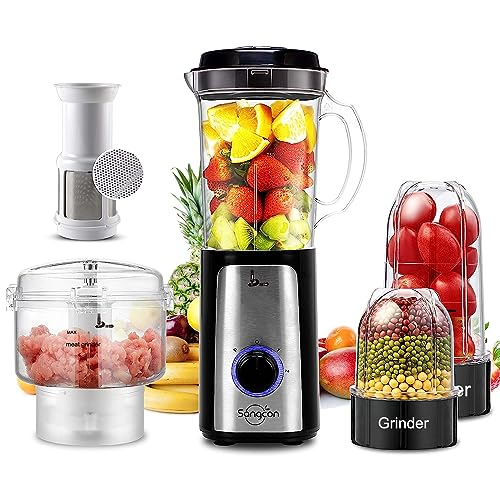
Sangcon 5-in-1 Food Processor Combo

Sangcon 5-in-1 Blender Food Processor Combo
The Picks, Examined More Closely
The Nama J3 targets a problem most juicers ignore: usable countertop real estate. Built around a single-auger (a single slow-turning screw that crushes produce against a screen) masticating design, it processes fruit and vegetables at low rpm to keep heat and oxidation down, which helps juice stay vibrant in the glass. The hands-free hopper is the headline feature, since you can drop in a full recipe and walk away while it feeds itself.
For apartment dwellers, RV owners, and anyone who treats juicing as a daily habit rather than a weekend project, the J3 makes a compelling case. Cleanup is straightforward because the parts are limited and the chute is wide enough to skip much of the pre-chopping. The trade-off is throughput: a large batch for guests will take longer than a centrifugal machine would manage.
Well-Handled Touches
- Compact body that genuinely fits a small kitchen or a tight shelf
- Self-feeding hopper saves real time during a busy morning
- Masticating action produces drier pulp, so you extract more from leafy greens and ginger
- Lightweight enough to move between counter and storage between uses
Points To Keep In Mind
- Slower output means a large family batch can stretch past twenty minutes
- Single-purpose design, so smoothies require a separate blender
Key Attributes
Who It Suits Best
Solo juicers and small-household cooks with limited counter space who want a daily glass without a bulky machine.
Consider Something Else When
The Sangcon 5-in-1 Food Processor Combo suits you better if you want a single unit that handles both smoothies and basic chopping.
This 100-ounce pitcher set is the kind of accessory that quietly changes your weekly rhythm. The strainer and pulp catcher slot into a Nama cold-press workflow, so once the juice exits the machine it lands in a vessel built to hold it. A freshness-sealing lid keeps oxygen out between pours, and the pour spout stays tidy even when you serve into smaller bottles.
If you batch juice for the week, host brunch, or split juices with a partner, the capacity removes the constant “empty the cup” interruption. The trade-off is purely accessory-level: this only delivers value when paired with a compatible juicer.
What Works In Its Favor
- 100-ounce capacity covers a week’s worth of servings for one or two people
- Sealing lid limits oxidation between pours
- Balanced handle and spout keep counters clean
- Strainer and pulp catcher included in the set
Worth Noting
- Only useful if you already own a Nama J-series juicer
- Large footprint in the fridge requires a dedicated shelf
Right Fit For
Weekly batch juicers who want fewer mid-prep pauses and cleaner storage in the fridge.
Skip It When
The Nama J2 Cold Press Juicer fits your kitchen better if you do not yet own a juicer and need the main appliance first.
The sorbet attachment turns a J2 juicer into a small-batch frozen dessert maker. Drop in frozen fruit, dairy, or non-dairy yogurt, and the same auger that juices your carrots now churns a soft-serve style treat. It feels almost like a magic trick the first time you use it, especially for households that already own the J2.
The honest read: this is a niche add-on that pays off only if you reach for the J2 often and want more from it. For J3 owners or anyone starting fresh, the value drops sharply since the attachment is built around the J2 specifically.
What Stands Out
- Expands a J2 into a multi-purpose tool without buying a second appliance
- Handles dairy-free and traditional recipes with the same setup
- Quick output, usually a portion in a few minutes
Trade Offs
- Only compatible with the J2 chassis, not the J3 or other brands
- Frozen fruit prep adds planning time
- An extra part to wash and store after each use
Whose Shelf It Belongs On
J2 owners who already juice daily and want dessert options from the same appliance.
A Better Fit Elsewhere
The SJ-068 Cold Press Juicer suits you better if you do not yet own a Nama machine and want juice plus sorbet from one base unit.
The SJ-068 markets itself as a three-in-one cold press: fresh juice, creamy nut milk, and frozen-fruit sorbet, all from a single-auger base. A 400W motor and an 80-ounce hopper sit behind that promise, which is meaningful if you make plant milk weekly. The reverse function helps clear clogs when dense greens stall the auger, a small detail that becomes a daily convenience.
For someone who already buys almond milk and frozen berry packs, the SJ-068 collapses three tools into one footprint. The trade-off is that the unit is wider than a single-purpose juicer, and you will notice the motor working harder on tougher roots than you would on a larger commercial machine.
What Pays Off
- Three distinct functions without swapping out the main body
- 80-ounce hopper reduces refill trips for big batches
- Reverse function saves time when fibrous produce stalls the auger
- BPA-free food-contact parts for everyday prep
Less Ideal Details
- Wider countertop footprint than single-function juicers
- Heavier body makes storage between uses a real consideration
- More parts to disassemble for a full clean cycle
Feature Snapshot
Best Suited To
Plant-milk makers and frozen-treat households who want one workhorse instead of three single-purpose machines.
Look Elsewhere When
The Anybear Cold Press Juicer fits you better if a compact daily-driver juicer matters more than multi-function versatility.
The Anybear is a slow-turning, single-auger juicer aimed squarely at people who want a daily glass without ceremony. The 4.3-inch feed chute is wide enough to drop in whole apples and large carrots, and the 200W motor keeps things quiet enough for early-morning runs. A bundle of juice recipes comes in the box, which is genuinely helpful for first-time cold-press owners.
Where this juicer earns its place is in the middle: enough capacity for a couple, simple enough for a beginner, and priced below the headline Nama tier. The trade-off is that you do not get the hands-free hopper of the J2, so you do need to feed it steadily.
Useful Touches
- Wide 4.3-inch feed chute cuts down pre-chopping
- Slow 65-rpm operation keeps noise down and heat minimal
- Included recipe guide helps new cold-press owners get started
- Masticating action extracts well from leafy greens
Where It Is Less Suited
- No hands-free hopper, so you stay near the machine during a run
- Single-purpose design, smoothies need a separate tool
Who Will Love This
Couples and beginners who want quiet daily juicing without the hands-free price tier.
Not Your Match When
The Nama J2 Cold Press Juicer suits you better if you want to load produce and walk away from the machine.
The citrus attachment swaps into a J2 juicer and turns it into a dedicated citrus press. Cut a grapefruit or lemon in half, press it down, and the reamer pulls out juice without the peels ever entering the main auger path. For a household that goes through oranges, limes, and lemons each week, this attachment saves the hassle of peeling before juicing.
The honest caveat: it is another specialized part in an already specialized lineup. If you rarely buy fresh citrus, the attachment will sit in a drawer. For those who do, it earns its shelf space quickly.
Everyday Advantages
- No peeling required, which speeds up morning juice prep
- Keeps bitter peel oils out of the juice
- Slot-in design avoids extra appliances on the counter
A Few Limitations
- Only works with the J2 base, so it is a non-starter for J3 owners
- Half a lemon or lime produces a small volume, so multiple loads add up
Made For
J2 owners who buy citrus weekly and want to skip the peeling step entirely.
Reach For A Different Pick When
The Sangcon 1000W Personal Smoothie Blender fits you better if your priority is a morning smoothie, not a glass of fresh juice.
The Nama J2 is the juicer that built the brand’s reputation, and the hands-free hopper is the reason. Load whole produce into the top, close the lid, and the machine feeds itself while you chop the next round or rinse the cups. The 2026 model retains the same low-rpm masticating core, which keeps foam down and color bright in the glass.
For dedicated home juicers, the J2 sits in a sweet spot. The catch is that the body is heavier and the price higher than the J3, so a solo user in a small kitchen may not need the full hands-free experience the J2 provides.
Bright Spots
- Hands-free self-feeding hopper is genuinely useful for batch prep
- Quiet low-rpm operation compared to centrifugal alternatives
- Compatible with citrus and sorbet attachments for added versatility
Practical Considerations
- Heavier than the compact J3, which matters in small kitchens
- Higher price tier, so the upgrade needs to match your usage
- More parts to clean than a simple centrifugal machine
Product Snapshot
Who Should Grab It
Home juicers running multi-recipe batches several times a week who value the walk-away workflow.
Swap It Out When
The Nama J3 Compact Cold Press Juicer fits you better if a smaller, lighter body matters more than hands-free feeding.
The Sangcon 1000W is a personal blender built for the grab-and-go crowd. Three BPA-free to-go cups (37, 32, and 22 ounces) come in the box, each with a travel lid, so you blend, twist, and walk out the door. The motor is strong enough to crush ice and frozen fruit, which is what most people want from a breakfast smoothie.
This is the kind of blender a gym regular or a parent packing school lunches actually uses daily. The trade-off is blade size: it makes smoothies well, but it will not grind a full meal-prep batch like the larger Sangcon units below.
Reasons It Performs
- 1000W motor handles ice and frozen fruit without stalling
- Three cup sizes fit different drink volumes and lunchbox needs
- BPA-free plastic keeps the kit light for daily transport
- Compact base stores easily in a cabinet or under a shelf
Possible Compromises
- Not designed for larger batch blending or hot soups
- Cups stain over time from turmeric, carrot, and berry-heavy recipes
Perfect Match For
Active commuters and gym-goers who want one blended drink a day, fast and portable.
Where Another Pick Suits Better
The Sangcon 5-in-1 Food Processor Combo fits you better if you want a blender that also chops, grinds, and processes larger meals.
The 5-in-1 combo aims at the family cook who needs more than a smoothie. A 47-ounce pitcher handles shakes and sauces, a 2.5-cup chopper bowl minces meat and nuts, and an 18-ounce plus 11-ounce cup cover individual drinks. Three blade types let you switch from liquid blends to dry grinds without owning a separate coffee grinder.
This is the unit a busy parent gravitates toward, since breakfast smoothies, salsa, and ground spices all happen on the same base. The honest read: the extra blades and cups mean more parts to wash and store, which is the real cost of the multi-function design.
What Makes Sense
- Five functions across one base unit, including coffee and spice grinding
- Multiple vessel sizes cover both family batches and single servings
- Three blade types for liquids, dry grinds, and chopping
- BPA-free plastic across all food-contact parts
What To Weigh
- More parts to wash and store than a single-purpose blender
- Plastic base and cups show wear faster than stainless steel options
Feature Card
Right Fit For
Family kitchens that need one machine to cover breakfast, dinner prep, and small grinding jobs.
Another Choice May Suit
The Sangcon 1000W Personal Smoothie Blender fits you better if portability matters more than cooking versatility.
The 5-in-1 stainless steel version builds on the same Sangcon platform but swaps the plastic pitcher for a 40-ounce stainless jar, plus a 17-ounce to-go cup with a travel lid. Stainless steel blades and a food-grade build make it the sturdier option for households that push a blender hard: protein shakes, ice, coffee beans, nuts, and even meat processing on the same base.
For meal-prep households and small restaurants, this is the one that holds up to repeated daily use. The trade-off is weight and footprint, since the stainless jar and heavier base take more counter space than the lighter personal blender.
Advantages To Know
- Stainless steel jar resists stains and odors over time
- Handles meat, nuts, and coffee beans beyond typical blender tasks
- 17-ounce to-go cup supports a portable routine
- Overheating protection adds a layer of safety during long runs
Some Limits To Know
- Heavier than plastic personal blenders, so it is less travel-friendly
- Stainless jar is opaque, so you cannot monitor blending through the side
Built With In Mind
Home cooks who batch-prep proteins, nut butters, and frozen drinks on a single sturdy base.
Not Your Match When
The Sangcon 1000W Personal Smoothie Blender fits you better if your daily routine centers on one or two smoothies and you value portability.
What Matters Most Before Choosing Juicer And Blender Comboes
Decide Between a Juicer and a Blender First
Cold-press juicers and high-speed blenders are different tools, even when sold as “combos.” A masticating juicer extracts liquid from produce and leaves dry pulp behind, while a blender liquefies everything you put in. If your real goal is a daily green juice, a juicer is the better anchor purchase. If your goal is a thick smoothie with protein powder, oats, and frozen fruit, a blender is what you need. Several of the picks above pair across categories, so the right mix depends on which glass you pour more often.
Match the Chute, Capacity, and Hopper to Your Routine
Feed chute size, hopper volume, and cup capacity decide how often you stop mid-prep. A wide 4-inch chute on the Anybear or the J2 hopper means less chopping, while a 40-ounce stainless jar covers family-size smoothie batches. For a single user, a 22-ounce to-go cup may be more useful than a 47-ounce pitcher that just sits on the counter.
Check the Parts, Cleaning, and Storage Footprint
Every juicer and most multi-function blenders disassemble for cleaning, and the part count varies widely. A simple centrifugal-style juicer has fewer pieces than a multi-auger setup like the SJ-068, but a 5-in-1 blender with three blade types demands more cabinet space. If you live in a small apartment or plan to store the appliance between uses, weight and disassembled footprint matter as much as the on-counter performance.
Key Considerations Across These Picks
Pitfalls Shoppers Hit
A common misstep is buying a juicer for a household that mostly wants smoothies, or a smoothie blender for someone who actually wants clean, pulp-free juice. Another is underestimating counter and fridge space: a 100-ounce pitcher set or a 5-in-1 blender takes real room, and the disappointment tends to show up a week after the box is opened. Match the tool to the recipe you make most often, not the one that sounds aspirational.
Where The Extra Money Goes
The jump from a basic personal blender to a hands-free cold-press juicer usually buys quieter operation, drier pulp, and accessory compatibility (like the Nama citrus and sorbet attachments). The jump from a plastic 5-in-1 to the stainless steel version buys durability under heavy daily use and resistance to stains and odors. Spend up when you will use the upgrade daily; save when a single-purpose tool will do the job.
Frequently Asked Questions
What is the real difference between a cold press juicer and a regular juicer?
A cold press or masticating juicer turns a single auger slowly, which keeps heat low and extracts more liquid with drier pulp. A regular centrifugal juicer spins a blade at high rpm, which is faster but introduces more heat and foam. Cold press typically yields brighter-tasting juice with more nutrients preserved.
Can a blender really replace a juicer for green drinks?
A blender can pulverize greens, but the result is a thick smoothie with all the fiber intact. A juicer separates the liquid from the pulp, so the glass feels lighter and the flavor more concentrated. If you want pulp-free green juice, a juicer is the right tool; a blender makes a satisfying smoothie but a different drink.
How loud are masticating juicers compared to high-speed blenders?
Masticating juicers run at roughly 40 to 80 rpm, so they sound more like a low hum than a roar. High-speed blenders often run at thousands of rpm and are noticeably louder, especially when crushing ice. If early-morning juicing matters, a slow juicer tends to be the more considerate option.
How often do juicer and blender parts need replacing?
Augers, screens, and rubber seals take the most wear, and many owners replace them every 6 to 12 months with daily use. Blades on personal blenders last longer but dull with heavy frozen-fruit loads. Accessories like the Nama citrus and sorbet attachments extend the life of the main base rather than wear it down.
Is a 5-in-1 combo actually useful or just marketing?
For a household that blends, chops, grinds, and processes weekly, a 5-in-1 combo genuinely replaces several single-purpose tools. For someone who only blends smoothies, the extra blades and bowls become clutter. The honest read: it earns its space in a busy kitchen, and sits unused in a one-recipe household.
Closing Remarks
A juicer and blender combo only works when both pieces fit how you cook. Match the daily recipe first, the chassis second, and the accessories last. The picks above cover small-kitchen juicers, batch pitchers, sorbet and citrus add-ons, and a range of blenders from personal to heavy-duty. Pick the one that lines up with the glass in your hand each morning, and the rest of the routine tends to follow.



