

A quiet, gear-driven press on the counter beats the noise and waste of an electric juicer on most mornings. Manual hand press juicers run without power, cost less than motorized models, and put you in direct control of pressure. The trade-off is your arm doing the work, and the right tool depends heavily on whether you press oranges, grapes, herbs, or curds.
The Main Contenders
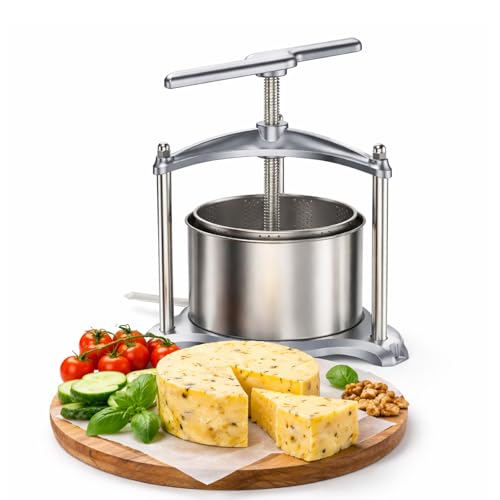
EJWOX 1.6 Gallon Manual Cheese Press

Tupperware Lemon Lime Squeezer (Green)
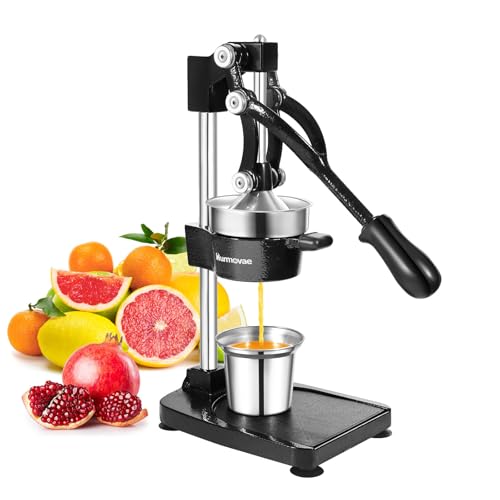
Hurmovae Cast Iron Manual Citrus Juicer

EJWOX Manual Fruit & Cheese Press

EJWOX 1.6 Gallon Pro Fruit Press 6L
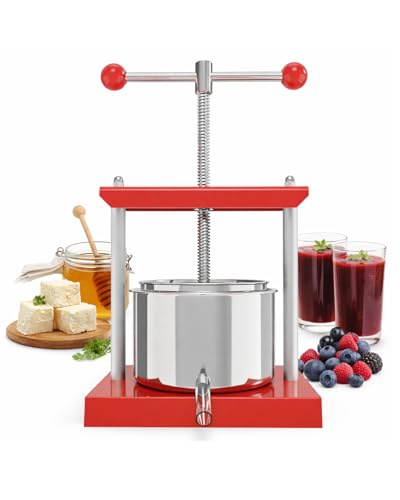
EJWOX 0.53 Gallon Soft Fruit Press

Tocualvoss Aluminum Hand Citrus Juicer
Taking A Closer Look At The Options
The EJWOX 1.6-gallon press leans into its role as a working kitchen tool, not a countertop showpiece. Its screw-driven mechanism delivers even, steady pressure that turns curds into firm cheese and soft tofu into dense blocks without guesswork. Unlike the squeeze-style picks further down this list, this one handles a real batch size, enough for a weekend of paneer or a few blocks of pressed tofu.
It works equally well as an herb and tincture press when you swap in the filter bag. The stainless steel basket is food-safe, and the geometry keeps liquid flowing into the catch container without pooling. Cheesemakers who run small batches at home tend to gravitate toward this kind of rig for the consistency it brings to the pressing stage.
Real-World Strengths
- Screw mechanism produces steady, even pressure for consistent curds
- 1.6-gallon basket handles meaningful batches, not single-block quantities
- Stainless steel basket resists staining and cleans up without harsh scrubbing
- Filter bags extend the use case into herbal pressing and tinctures
- Sturdy frame stays put on the counter under heavy torque
Worth Noting
- Not designed for hard fruits, so apple and pear cider is off the table
- Takes up a fair amount of storage space compared with lever-style juicers
- The screw takes a few rotations per press, so speed is moderate
Key Specs
Who Will Love This
Home cheesemakers and tofu crafters who want reliable, repeatable pressure and don’t mind a slightly larger footprint on the counter or in a pantry.
Consider Something Else When
You mostly juice citrus and want something lighter, in which case the Tupperware Lemon Lime Squeezer covers daily use in a fraction of the space.
The Tupperware Lemon Lime Squeezer is the smallest tool on this list, and that’s the whole point. It’s a single hinged plastic press built for half a lime over a glass, not a pitcher for the whole brunch crowd. Where the EJWOX cheese press above is built for batch work, this one is built to live in a drawer and appear twice a week.
The press works for both limes and lemons, and the plastic body holds up to regular use. Cleanup is straightforward because there is very little surface area, and the whole unit tucks into a kitchen drawer or sits in a small bowl on the counter without dominating it.
The Practical Payoff
- Squeezes a usable amount from a single citrus half in seconds
- Plastic construction makes it lightweight and quiet to use
- Dishwasher safe, so cleanup adds almost no time to the task
- Tiny footprint fits any kitchen drawer or small counter
Points To Keep In Mind
- Not built for oranges or larger citrus, the hinge geometry is too tight
- Plastic body may stain over time with heavy turmeric or beet use nearby
- Yield drops off if the fruit is slightly under-ripe, since you cannot apply huge force
Right Fit For
Anyone who squeezes a lemon or lime a few times a week and wants a no-fuss tool that does not crowd the counter or require a learning curve.
Look Elsewhere When
You regularly juice oranges or want leverage for tougher rinds, in which case the Hurmovae Cast Iron Manual Juicer gives you far more mechanical advantage.
The Hurmovae is a different animal from the squeezers above. It is a tall, cast-iron lever press with a 17-inch handle and a wide 5-inch funnel that accepts half an orange or a pomegranate section. The longer the lever, the more mechanical advantage, and you can feel the difference the first time you press a thick-skinned orange.
Manual operation has a side benefit here: no motor heat, no oxidation from spinning blades, so the juice tastes closer to the fruit. For anyone who has noticed that electric juicers warm up citrus juice, that detail alone can justify a switch.
A Strong Showing
- Long lever arm multiplies hand force, easing thick citrus rinds
- Wide funnel accepts oranges, grapefruits, and pomegranate arils
- Cast iron body resists tipping and stays anchored during use
- No heat or fast-spinning blades, so flavor stays bright and fresh
- Pulls more juice per fruit than most handheld reamers, depending on rind thickness
Small Caveats
- Cast iron weight makes it less appealing for small kitchens or RV use
- Cleaning the funnel and screen takes more attention than a simple squeezer
- Larger footprint on the counter than a wedge-style juicer
Feature Snapshot
Built With In Mind
Serious citrus fans and home bar hosts who press oranges, grapefruits, and pomegranates regularly and want a tool that holds up to years of service.
Skip It When
You press only small limes a few times a week, since the Tupperware Lemon Lime Squeezer handles that scenario with far less counter space.
This EJWOX entry is the more flexible cousin of the 1.6-gallon cheese press reviewed earlier. It carries the same stainless steel basket and screw mechanism, but the design language is geared toward people who wander between projects. One weekend it is a cider run, the next it is honey extraction from a small frame.
For homesteaders and DIY tinkerers, that kind of cross-task usefulness is worth more than a specialist tool. The body and basket are food-grade stainless, so you can move from sweet fruit to a savory cheese press without worrying about flavor carryover after a wash.
What It Does Well
- Handles a wide range of tasks, from soft berries to curds and honey
- Stainless steel build keeps flavors neutral and resists corrosion
- Screw pressure stays consistent across different batch sizes
- Reasonable price for a multi-purpose manual press
Practical Considerations
- Soft berries can clog the basket perforations without a filter bag layered in
- Not as fast as a dedicated citrus juicer for daily lime-and-lemon work
Whose Shelf It Belongs On
DIY homesteaders who switch between cider, cheese, and small honey runs and want one press that covers most of the rotation.
A Better Fit Elsewhere
You mostly press soft fruit and want a smaller, more nimble tool, in which case the EJWOX 0.53 Gallon Soft Fruit Press handles the same kind of work in a tighter footprint.
The 6-liter EJWOX is the press to look at when “small batch” stops being accurate. This is the size that home cider makers and small-scale beekeepers reach for once they have outgrown countertop tools. The basket holds a meaningful amount of crushed fruit or comb, and the included filter bag keeps solids where they belong during the squeeze.
It runs on the same hand-powered screw system as the smaller EJWOX picks, just with a wider, deeper basket. For a family orchard or a weekend cider project, the difference between this and a smaller press is a handful of press cycles, not a full afternoon.
Features That Help
- 6-liter capacity handles cider, wine must, and small honey harvests in one load
- Filter bag traps pulp and fine solids for clearer juice
- Stainless steel basket and frame tolerate acidic juice without corrosion
- Sturdy base keeps the press steady under repeated cycles
Where It May Fall Short
- Bigger and heavier than the 0.53-gallon EJWOX, so storage matters
- Hard fruits must be crushed first, since this press extracts, it does not grind
Key Attributes
Best Suited To
Home cider and wine makers, plus small-scale beekeepers, who run real volumes and want fewer press cycles per session.
Reach For A Different Pick When
You only press a few pounds of fruit per season, since the EJWOX 0.53 Gallon Soft Fruit Press will do that job without the larger footprint.
Soft fruit is the trickiest category for any press, and the 0.53-gallon EJWOX is built specifically for it. Grapes, berries, cherries, and currants tend to clog coarse baskets, but the included filter bag gives the pulp somewhere to go while letting the juice through. The top-handle design keeps the press compact enough for a small kitchen or a herb-lover’s pantry.
It is also a friendly tool for herbalists who want to press plant material for tinctures and infusions. The smaller capacity means you are not committing to a big batch, which is helpful when working with seasonal herbs or experimental blends.
Why It Works Well
- Filter bag prevents soft pulp from clogging the basket
- Compact top-handle saves counter and shelf space
- Stainless steel parts clean up quickly between herb and fruit batches
- Reasonable capacity for trial runs and small seasonal harvests
Honest Caveats
- Limited volume means more cycles for any serious cider or wine run
- Best results require pre-crushing the fruit, the press extracts rather than grinds
Perfect Match For
Herb growers, small-plot gardeners, and anyone running modest seasonal batches of berries or soft fruit who values a compact footprint.
Not Your Match When
You process full crates of apples for cider each fall, in which case the EJWOX 1.6 Gallon Pro Fruit Press 6L handles the volume in fewer cycles.
The Tocualvoss squeezer sits in the gap between the tiny Tupperware wedge and the heavy Hurmovae lever press. Its aluminum body and ergonomic handle are aimed at people who press citrus often enough to want a comfortable grip, but not so much that they need a full bench-mounted rig. The finish is silver, which suits most modern kitchens and stays neutral against other countertop tools.
Compared with the cast iron Hurmovae above, this one is lighter and easier to move, which can matter in a small kitchen or a shared workspace. The trade-off is leverage, and you can expect to work a little harder on the thickest grapefruit rinds.
What Stands Out
- Ergonomic grip reduces hand fatigue during repeated pressing
- Aluminum body is light enough to move without rearranging the counter
- Works across citrus sizes, from lime to grapefruit
- Simple shape rinses clean in seconds
Some Limits To Know
- Less leverage than the cast iron Hurmovae on very thick rinds
- Aluminum is softer than cast iron, so it can dent if dropped
Who Should Grab It
Anyone who wants a comfortable, attractive citrus press for daily use and values easy handling over maximum leverage.
Where A Sibling Pick Shines
You mostly tackle thick-skinned oranges and pomegranates and want more mechanical advantage, in which case the Hurmovae Cast Iron Manual Juicer pulls harder with less effort.
Picking The Right Press For Your Counter
Match The Press To The Fruit
Citrus lovers tend to be well served by lever-style presses, because the long handle multiplies force against a thick rind. Soft fruit and berry growers are better off with a basket press that uses a filter bag, since pulp clogs coarse screens fast. Cheese and tofu makers want a screw-driven design that applies slow, even pressure rather than a single sharp squeeze, and anyone running honey needs a press with a filter bag and enough basket depth for comb and wax.
Capacity Versus Storage
Bigger baskets mean fewer cycles, but they also mean more counter or shelf space committed to the tool. A 0.5-gallon press is enough for a small garden harvest and tucks into a pantry. A 1.6-gallon press earns its space when you process a real orchard harvest or run weekly batches. The honest read is that most home users overestimate the capacity they need and then store a giant press for most of the year.
Material And Cleaning
Stainless steel baskets and bodies tolerate acidic juice, salt brines, and the dishwasher. Cast iron is rugged but heavier and needs drying care. Aluminum is light and attractive, though softer than the alternatives. Plastic presses like the Tupperware option are simple to clean, but stain over time and are limited in what they can squeeze.
Effort And Ergonomics
Lever length, handle shape, and screw pitch all change how much your arm works. A 17-inch lever on the Hurmovae means you can press a thick orange without bracing the body. A short-handled squeezer asks for grip strength more than leverage. You may find a long lever is worth the storage cost if you press daily, and a smaller squeezer is fine for occasional limes.
Spotting The Real Trade-Offs
Common Shopping Slip Ups
The easiest mistake is buying a lever press for soft berries and wondering why the pulp keeps clogging the screen. Soft fruit wants a basket press with a filter bag, not a citrus lever. Another trap is assuming a 6-liter press is always better than a smaller one, when in practice an oversized press just takes up storage space for most households. Finally, shoppers sometimes pick a press rated for hard fruit and then run soft tofu through it, only to find the perforations are too coarse and the curd escapes into the juice.
Why Top Tier Costs More
A larger basket, thicker stainless steel, and a sturdier screw mechanism all add material and machining cost, and that shows up in the price. Premium tier presses also tend to include filter bags and food-grade certification, which cheaper models sometimes skip. The upgrade pays off when you press often, run real volumes, or share the tool with others and need it to hold up. For occasional use, a compact mid-size press tends to do the job without the extra spend.



