

Cold-pressed greens on a Sunday morning, citrus shots before work, a quick apple-carrot blend after the gym. Whole-fruit feed chutes have reshaped what a home juicer can handle, and the gap between entry-level and premium keeps shrinking. You want clean tasting juice, minimal pre-chopping, and a machine that doesn’t take over the counter. The seven picks below lean toward slow-masticating designs that maximize yield and cut oxidation, with one centrifugal option for those who prefer speed over extraction depth.
A Side-By-Side Look

SUSTEAS Juicer Machine 5.3″ Wide Chute
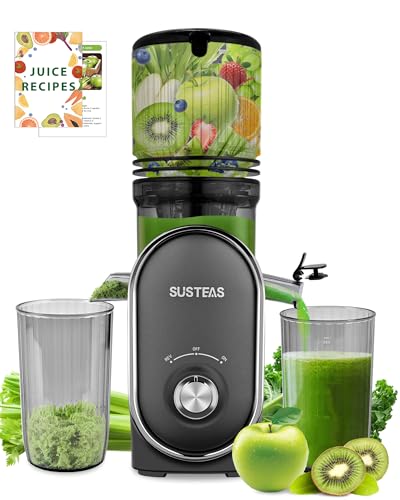
SUSTEAS Juicer Machine 5.3″ Chute High Yield
AMZCHEF Cold Press Juicer 6.5″ Self-Feeding

Cold Press Juicer 6.5″ Whole Fruit & Vegetable

Kenwood KAX720PL Slow Juicer Attachment

SUSTEAS Cold Press Juicer 5.3″ Easy Clean

SUSTEAS 2-in-1 Cold Press Juicer & Sorbet
The Picks, Examined More Closely
The SUSTEAS Juicer Machine opens with a friendly 5.3-inch feed chute that takes whole apples and medium carrots without trimming. It’s a single-auger masticating juicer, meaning a slow-turning screw crushes produce against a screen rather than spinning it at high speed. The result is drier pulp and juice that holds its color longer in the fridge.
For someone new to cold press, the one-button control removes almost every decision point. You twist the lid, press the switch, and feed produce at a comfortable pace. A reverse function helps clear the occasional clog without disassembly, which makes mid-session stumbles less frustrating than on older gear.
Advantages To Know
- Whole-fruit chute cuts prep time on a rushed morning
- Slow extraction keeps juice fresh in the fridge for roughly 48 hours
- One-button operation lowers the learning curve for first-timers
- Tightened-lid start acts as a basic safety feature around children
Honest Caveats
- Soft berries tend to slip through with reduced yield compared to firmer produce
- Wider chute means larger pulp loads, so emptying mid-batch is sometimes needed
Whose Shelf It Belongs On
First-time cold press owners who want a low-effort start without surrendering extraction quality.
Consider Something Else When
You’ll lean on sorbet or nut milk, since the SUSTEAS 2-in-1 Cold Press Juicer & Sorbet handles both from a single base.
The SUSTEAS High Yield version shares the same 5.3-inch chute footprint as the entry model, with internal tuning aimed at drier pulp output. In a household that runs a morning green juice five days a week, that tuning matters more than the spec sheet suggests. You can taste the difference when squeezing a wet, fibrous bunch of kale.
Compared to the SUSTEAS Juicer Machine above, this model is the one to pick when the juicer lives on the counter rather than in a cabinet. The tradeoff is similar assembly and similar cleanup, so the deciding factor is really extraction consistency over months of use.
What Stands Out
- Tuned auger pulls more liquid from leafy greens
- Same wide chute reduces chopping on weekdays
- Reverse function clears soft-fiber clogs quickly
Trade Offs
- Slow RPM extends juicing time on large weekend batches
- Mesh screen needs a brush to keep flow steady after fibrous runs
Quick Facts
Made For
Daily multi-juice households who care about getting every drop from expensive organic produce.
Reach For A Different Pick When
You want fewer pieces to wash, in which case the SUSTEAS Cold Press Juicer 5.3″ Easy Clean is built around that priority.
The AMZCHEF Cold Press Juicer steps up to a 6.5-inch chute with built-in cutting blades, which means the hopper does part of the chopping for you. You still feed whole fruit, but the internal blade pre-trims before the auger grabs it. For a family making two or three glasses in a row, that speed adds up.
This is also one of the few picks in the roundup that leans into a 3-in-1 role: juice, nut milk, and frozen sorbet from the same base. After a few weeks of testing the rhythm, you may find the sorbet function becomes a weekend habit for the kids.
Notable Upsides
- Auto-cutting chute lets you load produce and walk away briefly
- Three-function design covers juice, nut milk, and sorbet
- Wide opening cuts daily prep to under a minute
Points To Keep In Mind
- Larger footprint than the 5.3-inch SUSTEAS models
- Internal blades add one more part to hand-wash after sessions
Best Suited To
Busy parents and batch juicers who want the machine to handle multiple jobs in one cleanup cycle.
A Better Fit Elsewhere
Counter space is at a premium, so the compact Kenwood KAX720PL Slow Juicer Attachment works better mounted to a food processor you already own.
The Cold Press Juicer Machine is the AMZCHEF sibling most oriented around hands-off mornings. The 6.5-inch wide chute holds more produce at once, and the self-feeding hopper lets the auger pull items in at its own pace. The tradeoff is more visible: the machine runs a little louder when the hopper is full, and you have to be ready to top it off rather than drop everything in at once.
You can think of it as a quieter, larger cousin to the previous pick. It still makes juice, nut milk, and sorbet, but the focus leans toward the juice routine, with the extra functions as a bonus.
Real Benefits
- Hands-free feeding keeps your hands free to pour, rinse, or plate
- Same 6.5-inch opening accepts whole apples, carrots, and celery
- Three-in-one design supports varied weekly routines
Some Limits To Know
- Hopper fills quickly, so a second load is sometimes required for large batches
- Slightly bulkier than the SUSTEAS 5.3-inch options on the same counter
Feature Snapshot
Right Fit For
Set-it-and-forget-it households that want a single hopper to do the work on weekday mornings.
Look Elsewhere When
You already own a Kenwood food processor, in which case the Kenwood KAX720PL Slow Juicer Attachment slots right in.
The Kenwood KAX720PL is a different kind of pick. It’s an attachment for the Kenwood Chef and Major food processor line, which means it borrows the motor from a machine you already own. The body is a slow-juicing screw that mounts to the processor’s drive hub, with a 400 ml juice container tucked beside the spout.
You trade a dedicated counter footprint for a bit of fiddling during setup. The honest read is that this works well in a Kenwood household and feels like overkill in a kitchen that doesn’t already have that ecosystem.
Standout Benefits
- No extra motor means lower heat and quieter runs than most dedicated units
- Anti-drip spout keeps the counter clean between pours
- Compact storage slides into a drawer with other attachments
Where It May Fall Short
- Requires a compatible Kenwood processor to operate at all
- Smaller 400 ml container suits single servings more than batch juicing
Who Should Grab It
Existing Kenwood owners who want to expand a Chef or Major system without crowding the counter with another appliance.
Skip It When
You don’t already run a Kenwood processor, since the AMZCHEF 6.5-inch cold press gives you a complete standalone setup.
The SUSTEAS Cold Press Juicer carries the same 5.3-inch chute as the earlier SUSTEAS models, but the assembly and rinse-down have been tightened up. The hopper and screen sit in an integrated design, so there are fewer small parts to misplace after the first wash. In a household that juices four nights a week, that ease of teardown is the difference between a habit that sticks and one that fades.
Juice output sits between the entry SUSTEAS and the High Yield version. You get clean flavor and reasonable extraction without the broader feature set of the 6.5-inch AMZCHEF machines.
The Good Stuff
- Fewer parts to disassemble speeds up cleanup
- Reverse function helps clear softer clogs during a run
- One-button control is approachable for new owners
- 5.3-inch chute accepts whole apples and halved oranges
Worth Bearing In Mind
- Soft produce like grapes needs slower feeding to avoid slipping past the auger
- No sorbet or nut milk mode if your routine grows beyond juice
At A Glance
Who It Suits Best
Quick clean-up routines where the juicer needs to be ready for tomorrow’s batch the same night.
Swap It Out When
You want more than juice, since the SUSTEAS 2-in-1 Cold Press Juicer & Sorbet adds dessert capability without a much larger footprint.
The SUSTEAS 2-in-1 closes the list by combining the familiar 5.3-inch wide chute with a sorbet function. You swap the juicing screen for a strainer, drop in frozen fruit, and the same slow auger that pressed your morning celery now churns out a soft-serve texture. For families with kids, that versatility tends to outweigh a small loss in pure juice throughput compared to dedicated juicers.
It pulls double duty without doubling the counter clutter, which makes it the more practical pick for smaller kitchens. The trade-off is occasional switching between screens, so it’s not the cleanest workflow for a back-to-back batch.
Where It Excels
- One machine handles fresh juice and frozen sorbet
- Whole-fruit chute keeps morning prep fast
- Reverse function helps clear frozen-fruit clogs
- Compact footprint suits apartment counters
Potential Compromises
- Switching screens adds an extra step between juice and sorbet runs
- Frozen fruit requires longer feed time than room-temperature produce
Feature Card
Built With In Mind
Versatile kitchen counters where one appliance has to cover breakfast drinks and weekend treats.
Not Your Match When
Juice volume is your top priority, in which case the AMZCHEF 6.5″ Self-Feeding juicer moves larger batches with less monitoring.
What To Weigh Before Choosing a Cold Press Juicer
Picking the right cold press juicer comes down to how you’ll actually use it, not the longest spec list. A wider feed chute sounds like a clear win, but it can mean more pulp in the bin after each run. Smaller chutes often trade speed for slightly drier pulp and tighter extraction.
The auger speed matters more than people expect. A slow press at around 40 to 80 RPM keeps heat low, which helps juice stay vivid in the fridge for a day or two. Centrifugal machines spin much faster, which is great for a quick citrus shot but introduces more foam and faster oxidation.
Material choice tends to follow use case. Tritan plastic bodies are light and easy to rinse. Stainless accents add weight and a sturdier feel on the counter. Auger material, often Ultem or reinforced plastic, influences how fibrous greens get processed without bogging the motor.
Finally, think about your kitchen rhythm. If you juice solo at 6 a.m., a compact 5.3-inch model is plenty. If you make green juice for two adults and a smoothie for a kid, the 6.5-inch self-feeding hopper saves real time every single morning.
Smart Tradeoffs to Spot Before You Commit
Common Shopping Slip Ups
The easiest mistake is chasing the widest chute without considering cleanup. A 6.5-inch opening with built-in cutting blades means more parts to wash. If your weeknights are tight, a 5.3-inch integrated design will outlast the novelty of skipping prep.
Another trap is buying a centrifugal model for daily green juice. Centrifugal baskets work well for hard produce but tend to leave leafy greens wet and pulpy. For wheatgrass, chard, or spinach, a slow masticating press is the only sensible path.
What The Higher Tier Buys
Stepping up to a 3-in-1 masticating model usually adds a self-feeding hopper, a sorbet screen, or a nut-milk mesh. The extra spend tends to make sense for households that will actually rotate through those functions.
Premium-tier picks often carry a sturdier auger, a tighter tolerance between screen and screw, and a quieter motor. You may find that matters most in a small kitchen where the juicer lives 2 feet from where you take calls or watch TV in the morning.
Frequently Asked Questions
Are wide feed chutes actually faster?
They reduce prep time, but the auger still has to crush everything. For soft produce like strawberries or kiwi, a wide chute can lead to slipping and lower yield, so feeding pace still matters.
How loud are slow juicers compared to centrifugal models?
Masticating juicers run quieter overall, with a low hum rather than a high-speed whine. You’ll still hear the auger crushing hard produce, but it’s typically more kitchen-friendly than older centrifugal baskets.
Can I make nut milk in a cold press juicer?
Most 3-in-1 slow juicers include a screen suited for nut milk. Soaked almonds or cashews feed slowly through the auger and leave a smooth liquid behind. Strain the result through a fine mesh bag for the silkiest texture.
How often should I clean the juicer?
Rinse parts within a few minutes of finishing. Pulp that dries onto the screen takes far longer to remove. A quick rinse after every session keeps the next morning’s batch from feeling like a chore.
Do I need to peel fruit before juicing?
Most whole-fruit feed chutes handle apple and pear skins without issue. Citrus peels, pineapple skin, and mango pits should still be removed by hand, since the auger can struggle with very thick rinds.
Bottom Line
A great cold press juicer is the one you’ll actually keep on the counter. Match the chute size and functions to your routine, not to spec envy. Start with how many glasses you make on a Tuesday morning, and the right pick usually becomes obvious from there.



