

A good mixer doesn’t have to drain your wallet. Whether you’re setting up a home recording corner, streaming on weekends, or running a small live rig, today’s entry-level boards pack surprising capability into compact, affordable chassis. The challenge is sorting genuine value from underpowered toys. This roundup focuses on mixers that earn their place through real-world usability: clean preamps, enough headroom for vocals, and the right I/O count for the way you actually work.
A Fast Comparison Of The Options

YAMAHA MG06X 6-Input Compact Stereo Mixer
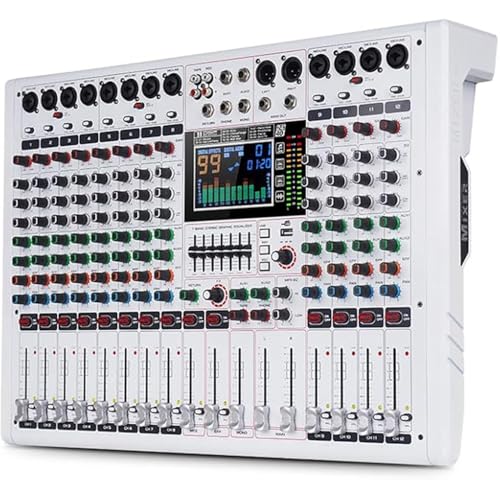
GF12 PRO Multi-Function 12-Channel Audio Mixer

Behringer XENYX X1204USB Premium Mixer

Behringer XENYX 1204USB 12-Input Mixer

Yamaha MG10 10-Input Stereo Mixer

KENBAIDIO 4-Channel Digital DJ Mixer

Depusheng PA6 6-Channel DJ Audio Mixer

Pyle PMXU46BT 4-Channel Bluetooth Mixer
A Closer Look At Each Pick
The YAMAHA MG06X is the kind of board that disappears into your desk and still does the job. With six inputs in a metal chassis barely larger than a paperback, it fits where bulkier mixers simply won’t go, like beside a laptop stand or under a monitor arm. For solo songwriters sketching demos, it offers just enough headroom and clarity without burying you in unused channels.
Compared to the larger Behringer XENYX models later in this list, the MG06X trades channel count for build polish and Yamaha’s well-regarded preamp character. You may find its two combo mic inputs limiting the moment a duo shows up to record, but for one-vocal-plus-guitar sessions, the layout feels deliberate rather than sparse.
Useful Strengths
- Six inputs including combo XLR/TRS jacks cover typical solo and small duo setups.
- SPX-derived digital effects add usable reverb and delay without external gear.
- Compact metal chassis travels well for mobile recording or small gigs.
- Clean preamp performance at this size category is uncommon.
Things To Consider
- No USB output means recording requires a separate audio interface.
- Two mic inputs cap session size for interviews or bands.
- Knobs sit close together, so fat-fingered adjustments can creep in during live play.
Key Specs
Who It Suits Best
Solo creators working at a small desk who care more about clean preamps than channel count.
Where Another Pick Suits Better
Streamers who need direct USB recording should consider the Behringer XENYX X1204USB instead.
Step up from the YAMAHA MG06X and you land in 12-channel territory, where the GF12 PRO makes a strong case for small-stage work. A color LCD screen shows effect selection and levels at a glance, and the 99 onboard reverb presets let vocalists dial in a sound without patching external effects. For a worship team, wedding band, or school auditorium gig, this much I/O in one box is a relief.
Independent mute switches on each channel speed up soundcheck, and the seven-band EQ on the main out helps tame a boomy room. You may find the interface takes a few sessions to learn if you’ve only used simpler boards, but the workflow rewards patience.
Notable Upsides
- 12 channels give breathing room for full band setups and stage use.
- 99 DSP reverb presets cover most vocal and instrument needs.
- Color LCD readout speeds navigation in low-light venues.
- Per-channel mutes cut noise during instrument changes.
Points To Keep In Mind
- Menu diving for effects can slow fast-paced soundchecks.
- 48V phantom power is global, so you can’t mix condenser and ribbon mics casually.
- Documentation is thin, so expect some forum time for advanced routing.
Right Fit For
Small bands and venue performers who need many inputs and built-in effects without paying for a touring-grade console.
Consider Something Else When
Home studio recorders wanting a streamlined USB path should look at the Behringer XENYX X1204USB.
Behringer’s XENYX X1204USB is the workhorse of budget recording setups. Four mono channels with XENYX preamps and one-knob compressors sit alongside stereo inputs, a British-style three-band EQ, and a 24-bit multi-FX engine. The USB output streams your mix straight into a DAW, your digital audio workstation, which is the software used to record and edit audio on a computer.
That USB path is the real headline feature for podcasters and home producers. Where the smaller YAMAHA MG06X forces you to buy a separate interface, this board folds recording into the mixer itself. Two aux sends add flexibility for monitors or outboard reverb, making the X1204USB a genuine hybrid live-and-studio tool.
Real-World Strengths
- Built-in USB audio interface removes the need for a separate recording device.
- One-knob compressors tame vocal dynamics without menu diving.
- 24-bit FX engine offers studio-style polish on a budget.
- British-style EQ adds warmth that flatter digital alternatives often miss.
Honest Caveats
- Documentation assumes some prior mixing knowledge, so beginners may need a tutorial.
- USB latency can creep up with buffer-heavy DAW projects.
Feature Snapshot
Best Suited To
Home studio owners and podcasters who want a single box that handles both live mixing and computer recording.
Not Your Match When
Stage performers needing more than four mic inputs should look at the GF12 PRO 12-Channel Audio Mixer.
The XENYX 1204USB is the more affordable sibling to the X1204USB reviewed above. It keeps the same XENYX preamps, British-style EQ, and USB interface, but skips the onboard multi-FX processor. For shoppers who already own a software effects suite or simply don’t need hardware reverb, the savings are meaningful.
This board makes sense as a first proper mixer for someone moving up from an all-in-one interface. Owners commonly pair it with free DAW plug-ins to fill the gap left by the missing FX. The trade-off is real though: for live use where you want hardware reverb on tap, the X1204USB is the better fit.
Well-Handled Touches
- Lower cost than its FX-equipped sibling, with the same preamp quality.
- USB interface streamlines home recording without extra boxes.
- British-style three-band EQ shapes tone musically on every channel.
Worth Noting
- No onboard FX means you’ll lean on software for reverb and delay.
- Knob labels can wear with heavy gigging, so a felt-tip touch-up helps long term.
Quick Facts
Perfect Match For
First-time mixer shoppers on a tight budget who already plan to use software effects.
Look Elsewhere When
Live performers wanting hardware reverb should reach for the Behringer XENYX X1204USB instead.
Slotting between the MG06X and the larger 12-channel options, the YAMAHA MG10 offers a smart middle ground. Four D-PRE mic preamps handle vocals and acoustic instruments with the kind of clarity Yamaha is known for, and switchable phantom power covers condenser mics. The op-amp design aims for transparent, articulate sound that doesn’t editorialize your source.
For vocal-forward home recordings, the MG10 earns its place. There’s no USB output and no built-in FX, so this is a routing and preamp board first. If your workflow already centers on a computer interface and software processing, the MG10’s strengths land where they count.
Positive Takeaways
- Four D-PRE mic preamps deliver clean, musical gain on vocals and acoustic sources.
- Switchable phantom power accommodates condenser microphones.
- Solid build quality suggests long-term durability for regular transport.
Trade Offs
- No USB output means a separate interface is required for computer recording.
- Effects-free design pushes all processing to outboard gear or software.
Whose Shelf It Belongs On
Vocalists and small-ensemble recorders who prioritize clean preamp character over built-in effects.
A Better Fit Elsewhere
Creators wanting an all-in-one USB path should consider the Behringer XENYX X1204USB instead.
Where the Yamaha MG10 is a serious preamp board, the KENBAIDIO 4-Channel Digital Mixer leans into convenience. Bluetooth streaming, USB playback, and 99 DSP presets make it a friend to karaoke nights, small parties, and home entertainment setups. The metal chassis is a nice touch in this price range, where plastic housings are more typical.
Four channels cover a couple of mics and a stereo source without fuss, and the seven-band EQ helps tame a boomy living room. You may find the DSP presets overlapping in character, but for casual use, that redundancy is more feature than flaw.
What Pays Off
- Bluetooth input streams backing tracks without cables.
- 99 DSP presets add reverb and ambience for vocal-heavy setups.
- 48V phantom power supports condenser microphones for recording.
Less Ideal Details
- DSP presets sound similar, so fine distinctions take work to find.
- Only four channels limit larger group use.
Spec Overview
Who Should Grab It
Karaoke hosts and home entertainers who want Bluetooth streaming and effects in a small footprint.
Swap It Out When
Mobile DJs running larger rigs should consider the Depusheng PA6 6-Channel DJ Audio Mixer.
The Depusheng PA6 stretches the multi-function concept further with 256 DSP effects, Bluetooth input, MP3 playback from USB, and six channels of mixing. It’s pitched at stage performances, live broadcasts, weddings, and conference work, basically anywhere a single operator needs to cover multiple roles.
Compared to the KENBAIDIO 4-Channel reviewed earlier, the PA6 buys you two extra channels and a deeper effects library. Owners commonly use it as an all-in-one front end for small PA systems. The trade-off is interface density: more features mean more buttons to learn before a gig feels smooth.
Features That Help
- Six channels accommodate small bands, duos, or panel discussions.
- 256 DSP effects offer wider creative range than typical 99-preset boards.
- Bluetooth and USB MP3 playback simplify backing-track setups.
- 48V phantom power supports professional condenser mics.
Where It May Fall Short
- Menu structure takes practice, so first-time users may need a learning session.
- Build feels light compared to metal-chassis competitors in the same bracket.
Built With In Mind
Mobile DJs, wedding hosts, and AV volunteers who need maximum flexibility in a single rack-friendly box.
Another Choice May Suit
Studio-focused creators wanting cleaner preamps should consider the YAMAHA MG10 10-Input Stereo Mixer.
The Pyle PMXU46BT rounds out this list as an entry-level mixer that prioritizes approachability. Bluetooth streaming, USB recording, and an XLR mic jack with 48V phantom power cover the basics a beginner or content creator needs without overwhelming them with options. Four channels are enough for a vocal, a guitar, and a stereo source from a phone.
Where the Depusheng PA6 above offers 256 effects and deep routing, the PMXU46BT keeps things simple. For someone recording their first podcast or streaming their first gig, that simplicity is a feature. Once the basics feel comfortable, moving up to a 12-channel board becomes a natural next step.
What Helps Most
- Bluetooth input pairs quickly with phones and tablets.
- USB connectivity allows direct computer recording.
- 48V phantom power supports studio condenser microphones.
- Straightforward layout shortens the learning curve.
Some Limits To Know
- Preamp noise floor is higher than the Yamaha and Behringer options above.
- Plastic chassis feels less rugged for frequent transport.
Who Will Love This
Beginners and content creators stepping into mixing for the first time who want the shortest path to a working setup.
Reach For A Different Pick When
Anyone recording music seriously should consider the Behringer XENYX X1204USB for cleaner preamps and onboard FX.
What Matters Most Before Choosing Inexpensive Audio Mixers
Input Count And Mic Preamp Quality
The most useful spec is the one you keep bumping into. Solo creators can live with two to four mic inputs, while small bands and podcast panels need six or more. Mic preamps vary widely at this price tier, and the difference shows up as hiss on quiet vocal passages and harshness on loud sources. Boards like the Yamaha MG10 lean on clean, transparent preamps, while more feature-heavy models prioritize convenience over absolute clarity.
Connectivity And Workflow Fit
USB audio interfaces built into a mixer save you from buying a separate recording device, which is why boards like the Behringer XENYX X1204USB are so popular with home studios. Bluetooth, on the other hand, is a convenience feature that matters most for entertainment setups rather than serious music work. Match the connectivity to how you’ll actually use the board.
Onboard Effects Versus Outboard Processing
Built-in DSP, or digital signal processing, covers reverb, delay, and modulation without extra gear, which speeds up live soundchecks. The trade-off is preset depth: budget DSP often repeats similar character across “different” presets. If you already use software effects, the Behringer XENYX 1204USB’s lack of onboard FX isn’t a real loss.
Key Considerations Across These Picks
Mistakes Worth Dodging
The most common slip is buying on channel count alone. A 12-channel board with noisy preamps will frustrate you faster than a six-channel board with clean gain. Equally worth avoiding is ignoring your actual routing. If you record to a computer, USB matters more than DSP presets. Match the mixer to the workflow you’ll use most often, not the spec sheet that looks most impressive on paper.
Where The Extra Money Goes
Stepping up to a higher tier typically buys cleaner preamps, more durable construction, and quieter signal paths. For live performance, that upgrade pays off in reduced hiss and fewer surprises. For home recording where the signal passes through software processing anyway, the gain is smaller, and a mid-tier board often delivers everything you actually need.
Frequently Asked Questions
How Many Inputs Do I Really Need On A Budget Mixer?
Count your active sources: microphones, instruments, stereo playback devices. Add one or two spare channels for growth. Most home users land comfortably at four to six, while small bands benefit from ten or more.
Do Inexpensive Audio Mixers Have Good Enough Preamps For Vocals?
For spoken word and casual singing, yes. For professional vocal recording, you may find the noise floor higher than on dedicated interfaces, though boards like the Yamaha MG10 and the Behringer XENYX X1204USB come surprisingly close for the price.
Can I Use A Budget Mixer As A USB Audio Interface?
Only models with built-in USB audio output work this way. The Behringer XENYX X1204USB and Behringer XENYX 1204USB both record directly to a computer, while analog-only boards like the YAMAHA MG06X require a separate interface.
Is Bluetooth On A Mixer Useful For Music Production?
For casual playback and rehearsal backing tracks, Bluetooth is a convenience. For serious recording, the compression and latency of wireless audio make it unsuitable as a primary source.
How Important Is Phantom Power On A Cheap Mixer?
If you plan to use condenser microphones, which require external power to operate, phantom power at 48V is essential. Dynamic microphones work without it, so the feature matters most for studio-leaning setups.



