

Running a bakery out of a small commercial space, or just tired of babysitting dough for thirty minutes, both point to the same answer: a stand mixer built for serious volume. The picks below cover everything from restaurant-grade spiral dough machines to approachable home models with enough muscle for batch baking. Each one was evaluated on bowl size, motor strength, attachment versatility, and how it fits a specific kind of cook or workspace.
A Closer Look At The Lineup

BOSBAK 30Qt Commercial Spiral Dough Mixer

KitchenAid Classic Series 4.5 Quart Tilt-Head Stand Mixer K45SS

Cuisinart SM-50FR 5.5-Quart Stand Mixer (Renewed)

VIVOHOME Stand Mixer with Dough Proofing, 6-Quart Tilt-Head
BOSBAK 15Qt Commercial Food Mixer 3-Speed 600W

BOSBAK 30Qt Commercial Food Mixer 3-Speed 1250W

VIVOHOME 6-Quart Tilt-Head Kitchen Mixer with Bowl

VIVOHOME 3-in-1 6-Quart Tilt-Head Mixer 10-Speed
Meet The Standout Selections
This is the kind of mixer that lives on a baker’s production floor, not on a kitchen counter. The 30-quart bowl and 1.8 kW motor are sized for restaurant dough output, while the spiral action (where a single hook orbits both the bowl and itself) runs cooler than a planetary design, which protects delicate gluten networks in long-fermentation breads. The dual-speed setup moves the hook at 157 or 264 rpm, paired with a slowly rotating bowl, so flour hydrates evenly without tearing the dough. You can realistically go from flour to a windowpane-ready dough in roughly ten minutes.
Compared with the home tilt-heads later in this list, this machine is not decorative. It weighs several hundred pounds once crated, requires a dedicated 110V outlet, and is meant to stay put. Wood-fired pizzerias, high-end bread programs, and bagel shops will appreciate how the spiral motion pulls dough down into the hook rather than pushing it against the bowl wall. The honest read is that this is overkill for cookies, but for crusty hearth loaves it is exactly the right tool.
The Practical Payoff
- 30-quart bowl handles roughly 40 pounds of finished dough in one batch, enough for hundreds of rolls.
- Spiral action develops gluten in a fraction of the time of hand kneading, freeing you to focus on shaping and scoring.
- Lower friction means cooler dough, which supports long, slow ferments without overheating the yeast.
- Stainless steel construction stands up to daily commercial cleaning routines.
- Safety guards and a bowl-lift frame keep the operator clear of moving parts during heavy loads.
Trade Offs
- Single-purpose design: it excels at dough but is not built for creaming butter or whipping meringue like a planetary unit.
- Significant footprint and weight mean you need a permanent station and likely a helper for delivery and setup.
- Cleaning the hook and bowl guard takes a few extra minutes given the size.
Key Specs
Whose Kitchen It Belongs On
Bakeries, pizzerias, and serious bread programs producing multiple tray loads a day will get the most out of this spiral design.
Where Another Pick Suits Better
Home bakers baking two loaves a week should look at the KitchenAid K45SS instead, which handles a fraction of the volume without the industrial footprint.
The K45SS has been a kitchen counter fixture for decades, and that longevity is itself a feature. The all-metal body and 59 touchpoints around the bowl (the small ridges inside the bowl that push ingredients into the beater) translate into reliably even mixing, whether you are creaming butter for a layer cake or kneading pizza dough for a Friday night. The tilt-head design swings back to give you a clear view of the bowl, so scraping the sides with a spatula is actually possible, a small but appreciated detail in everyday baking.
This is a very different machine from the BOSBAK spiral that leads the list. Where that one is built for a bakery floor, the KitchenAid is sized for a home cook making two dozen cookies or a single loaf of bread. The 4.5-quart stainless bowl can handle up to eight dozen cookies in a single batch, which is more than enough for most households. In our view, it strikes the right balance between capability and footprint for a serious home baker who does not want to commit to a 200-pound machine.
Positive Takeaways
- Proven metal construction that owners commonly report lasting a decade or more of regular use.
- Tilt-head access makes ingredient additions and scraping straightforward.
- Wide ecosystem of attachments extends the mixer well beyond baking into pasta, meat grinding, and more.
- Compact counter footprint for a stand mixer in this class.
Worth Noting
- 4.5-quart bowl is tight for recipes that yield more than three loaves of bread at once.
- The flat beater can leave a small ring of unmixed flour at the very bottom of the bowl, so scraping down matters.
Right Fit For
Home bakers and weekend cookie makers who want a long-lasting workhorse without committing to commercial size or weight.
Consider Something Else When
Cooks regularly baking for a large household may prefer the 6-quart VIVOHOME Stand Mixer (pick 7), which fits a few more loaves per batch in roughly the same counter area.
The Cuisinart SM-50FR lands in a useful middle ground, and the “renewed” part is doing real work here. This is a refurbished unit that has been professionally inspected and tested, which means you get a 5.5-quart brushed-chrome mixer for noticeably less than a new model. The 500-watt motor handles cookie dough, mashed potatoes, and moderate bread batches without bogging down, and the die-cast metal body gives it the kind of heft you want on a counter when the machine is running at full tilt.
You trade the brand-new packaging for a meaningfully lower entry point. Compared with the VIVOHOME 6-Quart Tilt-Head that appears later, the Cuisinart has a slightly smaller bowl but a sturdier feel. For shoppers who want a serious 5-quart-plus mixer and are comfortable with a refurbished purchase, the value case is strong. Just know that renewed units vary cosmetically, and you may see light surface marks on the chrome.
Good Reasons To Consider
- 5.5-quart bowl is roomy enough for most mid-size household baking projects.
- Die-cast metal construction resists the wobble common in lighter plastic-bodied mixers.
- Refurbished pricing opens up a higher tier of mixer for shoppers on a tighter budget.
Honest Caveats
- Renewed status means cosmetic imperfections are possible and warranty terms differ from new units.
- Attachment ecosystem is narrower than what KitchenAid offers, limiting future expansion.
Who Should Grab It
Shoppers willing to go the refurbished route to get a 5.5-quart mixer with a metal body at a friendlier price than new.
Swap It Out When
If a brand-new unopened box matters to you, the KitchenAid K45SS (pick 2) is a more conventional alternative with a deep attachment ecosystem.
Most home mixers ask you to find a warm, draft-free spot for dough to rise. This VIVOHOME skips that step with a built-in fermentation setting that holds the bowl at a steady, dough-friendly temperature, a real convenience in a cold kitchen or for bakers who do not want to baby a bowl wrapped in towels. Three one-touch presets handle kneading, whisking, and stirring, and eleven manual speeds give you room to dial in delicate tasks like folding whipped egg whites into a batter.
The 6-quart bowl fits a small bakery’s worth of dough for a family of four, and the 360-degree planetary mixing (where the head stays still while the attachment sweeps the entire bowl) keeps ingredients moving against the sides and bottom. The trade-off is that the proofing feature works best on moderate batches, and you still need a thermometer to verify dough temperature in very cold rooms. The honest read is that this is a smart pick for sourdough and enriched-dough bakers who want fewer moving parts in their routine.
What Makes Sense
- Built-in proofing mode removes a real step from cold-weather or winter baking.
- Eleven speeds plus three presets cover everything from slow kneading to fast whipping.
- 6-quart bowl handles three loaves of bread or a big cookie batch with room to spare.
Points To Keep In Mind
- Preset cycles are opinionated, so you give up some fine control compared to manual mixing.
- The proofing function heats gently rather than aggressively, so very cold garages still slow fermentation.
Best Suited To
Yeast bakers in cooler climates who want a mixer that handles the rise as well as the knead.
Look Elsewhere When
Cooks who mostly make cookies, frostings, and quick breads may not need the proofing feature and could opt for the simpler VIVOHOME 3-in-1 (pick 8) instead.
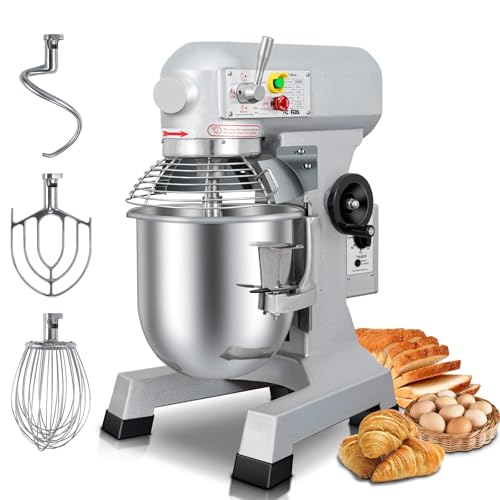
The 15-quart BOSBAK sits in a useful sweet spot for small food businesses. It is large enough to handle a serious catering batch of dough, mashed potatoes, or filling, but small enough to fit on a rolling prep table. The 600-watt motor drives three speeds and accepts the standard trio of attachments: a dough hook for heavy kneading, a flat beater for creaming and folding, and a wire whip for aeration. The bowl and attachments are stainless steel, which simplifies cleanup after a long shift.
Compared with the bigger 30-quart BOSBAK (pick 6), this unit asks for less counter real estate and draws less power, so it works in a standard 15-amp kitchen circuit. The 3-speed control is less granular than the eleven speeds on home units, but for a working kitchen that simplifies training. You may find the wire whip a touch small for very large batches of meringue, but for cake batter, buttercream, and bread dough at this scale, it is well matched.
The Case For It
- Right-sized for small cafés, food trucks, and weekend catering operations.
- Stainless bowl and attachments handle dishwasher cleaning and resist corrosion.
- Three straightforward speeds are easy to teach to new staff.
Room For Improvement
- Three fixed speeds are limiting for tasks that benefit from a slow start and gradual ramp.
- Body is sturdy but lighter than 30-quart commercial models, so it can creep on a smooth counter under heavy loads.
Made For
Small food businesses that need a real commercial mixer without the full footprint and electrical demand of a 30-quart unit.
A Better Fit Elsewhere
For very high-volume bakeries, the BOSBAK 30Qt Commercial Spiral (pick 1) is the more capable long-term choice.
The 30-quart BOSBAK with 1250W and a planetary mixing head is the workhorse option for restaurants that need to run dough, batters, and fillings in the same shift. Where the spiral BOSBAK (pick 1) is a specialist that focuses exclusively on dough, this planetary design (a setup where the beater orbits the bowl while spinning on its own axis) handles buttercream, whipped cream, and large cake batters with the same attachments. The 1250-watt motor delivers enough torque to push through dense cookie dough without stalling.
The catch is that a planetary head is rougher on developing gluten than a spiral hook, so for very high-hydration artisan breads you may see slightly less open crumb than the spiral model. For a general-purpose restaurant or institutional kitchen, though, the versatility wins. The 3-speed transmission is simple and dependable, though less nuanced than a variable-speed drive. Operators commonly report that the stainless bowl-lift frame makes swapping bowls faster mid-service.
Useful Strengths
- Planetary mixing handles dough, batters, and aerated mixtures in one machine.
- 1250W motor sustains output under heavy, stiff dough loads without bogging down.
- Stainless steel bowl and attachments support high-heat dishwasher sanitation cycles.
Where It May Fall Short
- Three fixed speeds are less precise than variable-speed control for delicate folding work.
- Planetary action can overwork very wet doughs if left unattended.
Key Specs
Who It Suits Best
Restaurant prep lines and institutional kitchens that need a single machine to cover dough and batter production throughout service.
Reach For A Different Pick When
Bakeries focused solely on bread should pick the BOSBAK 30Qt Spiral (pick 1) for cooler, gentler dough handling.
For households that bake for a small crowd, the VIVOHOME 6-Quart lands in a comfortable middle. The 660-watt motor is enough muscle to knead dough for three loaves or whip a generous bowl of cream, while the 10-speed dial gives you room to ease into mixing without throwing flour across the kitchen. The tilt-head design clears the bowl for adding chips, fruit, or extra flour mid-recipe, which is the kind of small convenience that matters on busy baking days.
This is a step up in capacity from the KitchenAid K45SS (pick 2) without taking on commercial weight. Owners commonly report that the planetary mixing action handles thick cookie dough evenly, though very stiff bread doughs may need an extra scrape-down. The included stainless bowl is durable, and the splash guard keeps flour from drifting onto the counter. For most home kitchens, this is a sensible volume upgrade that does not crowd the counter.
Strengths Worth Knowing
- 6-quart bowl fits up to three loaves of bread or a large cookie batch.
- 10-speed range gives you enough nuance for delicate whipping and slow kneading.
- Tilt-head access simplifies mid-recipe ingredient additions.
Some Limits To Know
- Stiff, low-hydration doughs can challenge the motor, so work in smaller batches if pushing the limits.
- Plastic internal gears can wear faster than all-metal drivetrains under heavy daily use.
Who Will Love This
Families of two to four who bake regularly and want room to scale up from a smaller starter mixer.
Not Your Match When
Bakers who run a proofing-heavy sourdough routine will get more out of the VIVOHOME with Dough Proofing (pick 4).
The 3-in-1 VIVOHOME aims to replace several small appliances at once. The mixer head drives the standard dough hook, beater, and wire whip, while the included attachments swap in a juicer and a meat grinder, turning the base into a multi-station setup. The 650W copper motor handles a regular baking load without strain, and the 6-quart stainless bowl matches the capacity of the other VIVOHOME home units in this list.
The honest read is that combination machines trade peak performance for versatility. The juicer and grinder are convenient for occasional use, but they do not match a dedicated machine running at full speed. For a small apartment kitchen where counter space is at a premium, that tradeoff is worth it. Compared with the KitchenAid K45SS, this VIVOHOME has a slightly larger bowl and more speeds, but a less robust attachment ecosystem. It is a sensible pick for compact kitchens that want one base to do several jobs.
Everyday Wins
- Three functions in one base free up valuable counter and cabinet space.
- 10-speed range supports both heavy dough and delicate whipping.
- 6-quart bowl fits most household baking recipes comfortably.
Points To Note
- Juicing and grinding add cleanup steps compared to dedicated appliances.
- Switching between mixer and juicer/grinder modes takes a couple of minutes of reconfiguration.
Perfect Match For
Apartment dwellers and small kitchens that need one base to handle baking, juicing, and light food prep.
Skip It When
Cooks focused primarily on heavy bread production should look at the BOSBAK 15Qt Commercial Food Mixer (pick 5) for sturdier, dedicated dough work.
Choosing The Right Commercial Stand Mixer For Your Kitchen
A stand mixer is one of the few kitchen tools where the gap between home and commercial is unusually wide. Picking the right one means matching bowl capacity, mixing action, and motor power to the volume and types of recipes you actually run. The wrong match either sits idle because it is overkill, or struggles because it was never built for the workload.
Bowl Capacity vs. Real Output
Quart ratings can mislead. A 30-quart spiral mixer (pick 1) outputs roughly 40 pounds of dough, while a 30-quart planetary model (pick 6) outputs slightly less because the action is different. For home use, 4.5 to 6 quarts covers most weekly baking; for small commercial work, 15 quarts hits a practical balance; for full production, step up to 30 quarts.
Spiral vs. Planetary Mixing
Spiral mixers (a single hook that orbits the bowl while spinning) keep dough cool and develop gluten gently, which is why artisan bakeries prefer them. Planetary mixers (the beater orbits while spinning) are generalists that handle batters, frostings, and doughs in one machine. The trade-off is dough quality on the spiral side versus versatility on the planetary side. Pick based on what you bake most.
Motor Power and Duty Cycle
Wattage tells you how a mixer handles stiff, sustained loads. A 600W commercial unit is fine for moderate catering work, while 1250W and up is more appropriate for restaurant production. Home models in the 500 to 700W range suit weekend bakers. Higher power does not always mean better results; it means better endurance under heavy loads.
Attachments, Cleaning, and Footprint
A mixer you cannot easily clean will not last. Look for stainless bowls and dishwasher-safe attachments. Also consider weight and counter footprint: a 30-quart machine is a permanent installation, while a 6-quart tilt-head can slide into a cabinet corner. If counter space is tight, a 3-in-1 design (pick 8) can replace several appliances.
Key Considerations Across These Picks
Wrong Turns To Avoid
One common slip is buying for maximum capacity rather than realistic use. A 30-quart spiral mixer in a home kitchen is money tied up in idle metal. Another is assuming that more speeds always means more capability, when most baking needs just three or four well-chosen speeds. Finally, do not skip verifying your kitchen’s electrical capacity; commercial 30-quart units often draw more than a standard home circuit can safely deliver.
What The Higher Tier Buys
Stepping up from a home tilt-head to a commercial planetary or spiral mixer buys you motor endurance, larger batch capacity, and a more robust drivetrain designed for daily operation. The upgrade pays off when you run multiple batches per day or push stiff doughs regularly. For occasional weekend baking, the extra cost sits unused, and a well-built home mixer will serve you better.
Frequently Asked Questions
What size commercial stand mixer do I need for a small bakery?
For a small bakery producing a few dozen loaves or trays of pastries per day, a 15-quart model like the BOSBAK 15Qt (pick 5) is often enough. Step up to a 30-quart unit only if you regularly push past that volume or want a single machine to handle every recipe.
Can a home stand mixer handle bread dough?
Yes, in moderate quantities. Models like the KitchenAid K45SS (pick 2) and the VIVOHOME 6-Quart (pick 7) can knead one to three loaves at a time. Very stiff, low-hydration doughs or large batches will strain a home motor, so work in smaller portions for best results.
How does a spiral mixer differ from a planetary mixer?
A spiral mixer uses a single hook that orbits the bowl while spinning, keeping dough cool and developing gluten gently. A planetary mixer has a beater that orbits the bowl on its own axis, making it more versatile for batters and frostings but rougher on delicate doughs.
Is a refurbished stand mixer worth considering?
A refurbished unit like the Cuisinart SM-50FR (pick 3) can offer meaningful savings on a higher-tier mixer. The trade-off is potential cosmetic wear and a different warranty than a new model, so it makes sense for shoppers comfortable with those conditions.
How important is motor wattage in a stand mixer?
Wattage indicates how well a mixer sustains output under stiff, heavy loads. Higher wattage matters most for dense doughs and frequent daily use; for light, occasional baking, mid-range wattage is plenty.



