

A reliable mixer used to mean a serious chunk of change, but that has shifted. Plenty of capable stand and hand mixers now land well below the $100 mark, and you no longer have to settle for flimsy gears or a wobbling bowl just to stay on budget. This lineup covers eight current options spanning compact tilt-heads, classic stand workhorses, and quick-grab handhelds. Every pick here earns its place for a specific reason, and the trade-offs are spelled out so you can match the right machine to your kitchen, your recipes, and the counter space you actually have.
A Quick View Of The Lineup
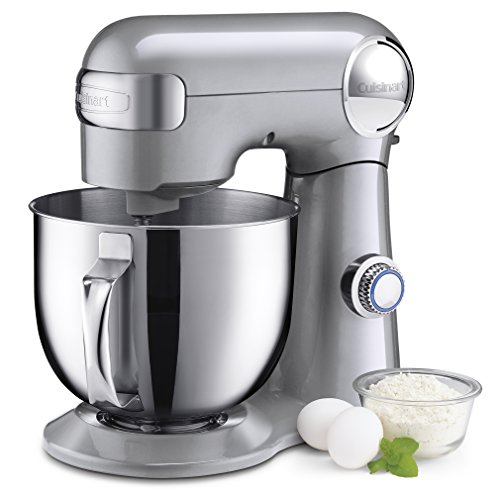
Cuisinart 5.5-Quart 12-Speed Stand Mixer

KitchenAid Artisan Mini 3.5-Qt Tilt-Head Stand Mixer

Aucma 6.5-Qt 660W 6-Speed Tilt-Head Stand Mixer

Hamilton Beach 6-Speed Hand Mixer with QuickBurst

Bella 3.5 Qt 2-in-1 Hand and Stand Mixer

Hamilton Beach Professional 5-Speed Hand Mixer (Mint)

Hamilton Beach Die-Cast Metal 12-Speed Stand Mixer

BLACK+DECKER 5-Speed Hand Mixer with Turbo Boost
A Breakdown Of The Leading Choices
The Cuisinart SM-50 brings a reassuringly heavy feel to a price point that usually means lightweight plastic. Its die-cast metal housing (a cast-metal casing that resists flexing during kneading) gives the base real planted weight, and the 5.5-quart bowl swallows double batches of cookies or a couple of loaves of bread dough without crowding.
Twelve speeds give you finer control than the usual 3-to-6 found on cheaper stands. Tilt-back head access makes swapping the chef’s whisk, flat paddle, or dough hook straightforward, and the included splash guard with a pour spout keeps flour from staging a counter invasion. For most kitchens, this hits the sweet spot between capability and footprint.
Positive Takeaways
- Die-cast metal body stays planted during heavy kneading, reducing counter creep and vibration.
- 500-watt motor with 12 speeds handles everything from stiff bread dough to delicate whipped cream.
- 5.5-quart capacity fits a typical family batch of cookies or a modest bread recipe with room to spare.
- Full attachment set plus a splash guard with pour spout, so you start baking the day it arrives.
Things To Consider
- Heavier than most budget stands, so dragging it out of a deep cabinet may bother some shoppers.
- White-painted finish on the Silver Lining version can show smudges from greasy hands during butter-heavy bakes.
Key Specs
Who It Suits Best
Home bakers who make weekly bread or cookie batches and want a stand that feels solid rather than wobbly.
Where Another Pick Suits Better
Counter-cramped apartment cooks may prefer the lighter KitchenAid Artisan Mini, which trades bowl size for a much smaller footprint.
Where the Cuisinart above feels like a workshop tool, the KitchenAid Artisan Mini feels like a piece of kitchen jewelry. It carries the same tilt-head DNA as the full-size Artisan, but the body is roughly 20 percent smaller and noticeably lighter, which matters when your counter space does double duty as a laptop desk or breakfast bar.
You get 10 speeds and the standard KitchenAid hub for attachments, though most users will stick with the included coated flat beater, wire whip, and dough hook. The 3.5-quart bowl handles a single loaf or a small batch of cookies just fine. For solo bakers or couples, the capacity is rarely the limiting factor; the counter space saved is the real win.
Where It Excels
- Compact tilt-head design fits counters, islands, and even deep cabinets where full-size stands won’t go.
- 10-speed range gives gentle folds and fast whips without jumping between extremes.
- Attachment hub accepts a wide range of KitchenAid accessories for pasta, meat grinding, and more.
- Coated beaters wipe clean fast, which matters when frosting and dough share the same tool.
Honest Caveats
- 3.5-quart bowl means doubled cookie or bread recipes call for two batches.
- Plastic gear housing inside feels less robust than the metal-bodied Cuisinart SM-50 above.
Made For
Apartment dwellers, small-household bakers, and anyone whose counter space runs tight but who still wants the KitchenAid name on the machine.
Look Elsewhere When
Large-family bakers running double recipes weekly will get more mileage out of the Aucma 6.5-Qt, which trades footprint for raw capacity.
The Aucma tilts hard into capacity, and 6.5 quarts is more than many premium stands offer at three times the price. That oversized stainless bowl fits double batches of muffins, holiday cookie sheets’ worth of dough, or a tall brioche recipe without forcing you to split work across two rounds.
Power comes from a 660-watt pure copper motor (a motor with copper windings, valued for durability and heat tolerance), paired with six speeds and a pulse function. The ABS housing is lighter than the Cuisinart’s metal build, so the mixer walks a bit on slick counters during long kneads. Owners commonly lay a damp towel underneath to keep it planted.
Advantages To Know
- 6.5-quart bowl covers family and small-event recipes in one round, no batch-splitting required.
- 660W motor handles stiff doughs and thick cookie batters without stalling.
- Tilt-head design and included splash guard keep ingredient additions cleaner than bowl-lift stands.
- Operation noise tends to stay under 76 dB, quieter than many stand mixers in this bracket.
Trade Offs
- ABS plastic body is lighter than metal stands, so the mixer may scoot on slick countertops during heavy kneading.
- Six speeds offer less nuance than the Cuisinart SM-50’s twelve.
Feature Snapshot
Best Suited To
Families, holiday bakers, and anyone who regularly pulls off a dozen cookies or more in a single session.
Swap It Out When
Smaller households that rarely push past a single recipe will find the Bella 2-in-1 more flexible and far easier to store.
Hand mixers tend to get overlooked once stand mixers enter the chat, but the Hamilton Beach 6-Speed earns its spot here on price and practicality. It is light enough to grab for a quick pancake batter and disappears into a drawer when you are done. A snap-on storage case keeps the beaters and cord together, which is a small touch that makes daily use less annoying.
The QuickBurst button adds a short burst of extra power at any speed, useful for breaking through a stubborn lump of butter mid-creaming. Six speeds with a slow first setting help keep flour from blooming out of the bowl. The bowl rest is a clever feature for keeping the messy beater end off your countertop while you add ingredients.
Everyday Perks
- Lightweight body reduces arm fatigue during longer mixing tasks like whipping cream.
- Snap-on storage case keeps beaters and cord together in a single drawer-friendly package.
- Slow first speed and QuickBurst button give real control over both gentle folds and tough mixes.
- Traditional beaters and a whisk handle the typical everyday baking workload without complaint.
Points To Note
- Handheld design means you hold the weight for the entire mixing time, so longer recipes tire the arm.
- Not built for stiff bread dough; you’ll want a stand mixer for that workload.
Perfect Match For
Occasional bakers, dorm cooks, and anyone who wants one simple tool for cookies, cakes, and quick weeknight batters.
Reach For A Different Pick When
Regular bread bakers should step up to the Hamilton Beach Die-Cast Metal Stand Mixer below, which handles dough hands-free.
The Bella 2-in-1 solves the “do I get a hand mixer or a stand mixer” debate by simply being both. The motorized base detaches from the bowl stand for handheld tasks, then locks back in when you want a hands-free mix. For renters and small kitchens, that single device covers what would otherwise be two drawer hogs.
The 3.5-quart stainless bowl suits a single cake or a modest cookie batch, and the Oatmilk finish adds a warmer look than the typical black or white small appliance. Switching modes takes only a couple of seconds, and the whole unit weighs less than a typical stand mixer, so it moves between cabinet and counter without a wrestling match.
What Stands Out
- Convertible design replaces two appliances in a single footprint, freeing up cabinet space.
- Stainless 3.5-quart bowl handles typical family recipes without needing batch splits.
- Soft Oatmilk finish blends with warmer kitchen color schemes better than typical black or chrome.
- Lightweight build means the mixer stores on a shelf or in a deep drawer with minimal effort.
Where It Is Less Suited
- Stand mode is best for thin batters and lighter doughs; stiff bread can strain the motor.
- Fewer included attachments than a dedicated stand mixer, so the price-per-feature is a trade-off.
Whose Shelf It Belongs On
Small-space cooks who want flexibility without owning two mixers, particularly renters and first apartments.
Consider Something Else When
Bakers focused heavily on bread and dense doughs will prefer the Cuisinart SM-50, which has a stronger motor and dedicated dough hook.
The Hamilton Beach Professional skips past the basics and lands somewhere closer to prosumer handheld territory. A DC motor (a brushless-style motor that delivers higher torque at lower speeds, common in higher-end tools) drives the stainless twisted-wire beaters, which whip noticeably faster and smoother than standard stamped beaters.
Five speeds and a QuickBurst button keep things simple, while the slow-start feature ramps up gradually to cut splatter. The Mint color is unusual for small appliances and adds personality to a countertop lineup. It comes with a snap-on case and a chef’s whisk alongside the beaters, which is a step up from the basic hand mixer bundle.
Where It Helps
- DC motor delivers higher torque at lower speeds, helping with thicker batters and dense cookie doughs.
- Stainless twisted-wire beaters whip cream and egg whites faster than standard attachments.
- Slow-start feature reduces the flour-cloud effect common with cheaper handhelds.
- Snap-on case keeps all attachments and the cord together, ideal for small kitchens with limited drawer space.
Minor Gripes
- Higher price than the entry-level Hamilton Beach 6-Speed above, so the premium is the question.
- Heavier than basic handhelds, which can matter during longer mixing sessions.
Technical Highlights
Who Should Grab It
Handheld loyalists who bake often enough to feel the limits of basic handhelds and want a more capable tool without jumping to a stand mixer.
A Better Fit Elsewhere
Shoppers set on a hands-free setup will get more out of the Hamilton Beach Die-Cast Metal Stand Mixer, which tackles dough and batch mixing on its own.
Hamilton Beach has a reputation for value, and the Die-Cast Metal Classic pushes that reputation further. A die-cast housing gives the mixer the same kind of planted, vibration-resistant feel you usually find on more expensive machines. The 4.5-quart bowl is a sensible middle size for couples and small families.
Twelve speeds let you fold, mix, and whip without jumping between coarse settings. A flat beater, whisk, dough hook, and pour shield all come in the box, so the first batch of brownies happens the same day. Owners tend to note that the pour shield and slow-start speed make the early “add the flour” stage far less messy than older stand mixers.
Real Benefits
- Die-cast metal body resists flexing and stays put on the counter during longer kneads.
- 12 speeds give finer control than typical 6-speed stands in this price range.
- 4.5-quart stainless bowl with handle makes pouring batter into a pan far easier.
- Pour shield reduces flour mess during ingredient additions, a small but real daily benefit.
Points To Keep In Mind
- Smaller bowl than the Aucma 6.5-Qt, so big holiday recipes may still need batching.
- Classic styling won’t win design awards next to the Bella Oatmilk finish, though that is purely a taste call.
Right Fit For
Cooks who want a sturdy, full-featured stand mixer without moving into the higher tier, especially bread and cookie hobbyists.
Skip It When
Bigger households baking for a crowd should look at the Aucma 6.5-Qt, which offers meaningfully more bowl capacity for similar money.
The BLACK+DECKER 5-Speed is the most approachable pick in this lineup. A 250-watt motor sounds modest next to the 660W Aucma, but it handles standard batters, cookie dough, and even basic bread recipes without strain. The five-speed layout, plus a turbo boost button for tougher moments, makes the controls easy to learn.
The attachment bundle is generous for the price: two professional beaters, two dough hooks, and a chef’s whisk. The mixer starts at a controlled speed to keep flour from jumping out, and dishwasher-safe attachments make cleanup quick. A snap-on storage case keeps the whole kit together in a single drawer.
Useful Strengths
- Five speeds with a turbo boost cover typical everyday baking without overwhelming new users.
- Generous attachment bundle, including dough hooks and a chef’s whisk at this price point.
- Dishwasher-safe beaters cut cleanup time after buttery or sticky mixes.
- Snap-on storage case keeps every part and the cord together, which helps in shared kitchens.
Some Limits To Know
- 250-watt motor is fine for everyday batters, though it may slow under heavy, repeated bread dough batches.
- Lightweight feel means you hold the workload; expect some arm fatigue during longer mixing sessions.
Built With In Mind
First-time mixer owners, students, and anyone who bakes a few times a month and just needs a friendly, capable tool.
Another Choice May Suit
Bakers ready to commit to regular bread or batch baking will outgrow this quickly and benefit more from the Cuisinart SM-50 stand mixer.
What To Weigh Before Choosing A Budget Mixer
Budget mixers come in two main shapes, and the right call depends on how you actually bake.
Stand vs. handheld. A stand mixer frees your hands, kneads bread without supervision, and handles larger batches. A handheld mixer is cheaper, easier to store, and perfect for quick tasks. Many home cooks eventually own both.
Bowl capacity. Match capacity to your household. A 3.5-quart bowl covers one or two people, 4.5 to 5.5 quarts suits a family, and 6.5+ quarts handles holiday-level batches.
Motor strength. Wattage is a rough guide, but the real test is whether the mixer stalls on stiff dough. Under 300W usually means light batters only.
Speed range. More speeds give finer control. Twelve is plenty; six covers most recipes. A slow first speed matters more than people expect, because it keeps flour from dusting your kitchen.
Attachments and storage. Check what comes in the box. Dough hooks, whisks, splash guards, and storage cases vary widely. A snap-on case is a small detail that makes daily use easier.
Build quality. Die-cast metal housings feel more stable than plastic. Lighter stands sometimes walk during kneading, so a damp towel underneath is a common workaround.
Key Considerations Across These Picks
Where Shoppers Go Wrong
The most common mistake is choosing by wattage alone. A 660W motor in a wobbling plastic housing can feel weaker than a 400W motor in a die-cast frame, because the body absorbs vibration before it reaches the gears. Build quality often matters more than raw power.
Another trap is ignoring bowl clearance. A 5-quart bowl with a tall-head stand mixer can leave a lot of unused vertical space, which is fine for thin batters but annoying when a small cookie recipe barely reaches the beaters. Tilt-head designs with smaller bowls often mix more effectively than larger bowl-lift stands at similar prices.
The Upgrade Payoff
Stepping into a higher tier usually means a stronger motor, a metal body, and a longer-lived gear assembly. For occasional bakers, that gap is hard to justify. For weekly bread makers and family-size bakers, the upgrade saves time and the mixer tends to last years longer. The honest read is that budget mixers cover most needs, and the higher tier earns its keep only with serious frequency.



