

A clean mix starts long before the master fader. Whether you’re tracking a band in your home studio, running sound for a live venue, or laying down voice-over work between Zoom calls, the mixer you choose shapes every decision that follows. The eight picks below span analog workhorses, digital rack units, and creator-focused bundles with bundled mics. There’s also a clutch of road cases to keep that gear safe on the move. Each option earns its slot for a specific reason, so start by matching your workflow, then your budget, and let the shortlist narrow itself.
The Shortlist At A Glance

Yamaha MG12 12-Input 4-Bus Mixer

Behringer X32 RACK 40-Input Digital Rack Mixer

Sound Town 12U PA DJ Rack/Road ATA Case (MR-DR12UT)

Sound Town Lightweight 10U Rack/Road Case (STRC-A10UT)

Sound Town 10U Plywood Rack/Road ATA Case (STMR-10UW)

TENLAMP G10 Creator Audio Mixer Bundle with Microphone
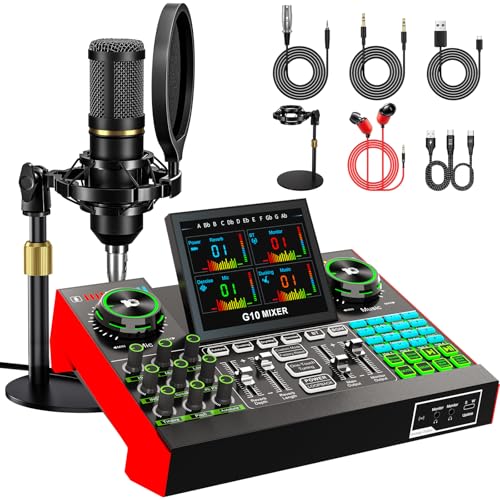
TENLAMP G10 Creator Podcast Equipment Bundle with Microphone
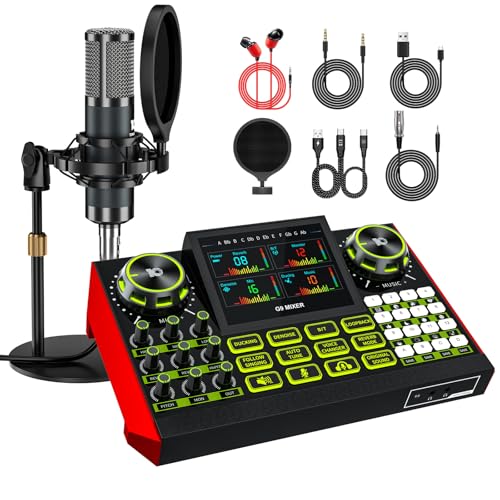
TENLAMP G9 Audio Mixer Bundle with Microphone for Streaming & Karaoke
Inside Each Recommended Option
Analog purists tend to circle back to Yamaha’s MG series, and the MG12 is the 12-input sweet spot in the lineup. In a home project room or a small venue, four bus groups (sub-mixes that let you route several channels together) give you real flexibility without menu diving, and the built-in effects engine saves a separate outboard unit. Owners commonly reach for it when they want hands-on control rather than touchscreen navigation.
Compared with the digital complexity of the Behringer X32 RACK later in this list, the MG12 stays refreshingly direct. Each knob does one thing, the layout mirrors what you see in countless live rigs, and the mic preamps handle vocals and acoustic instruments with clean headroom. For most small studios and weekend gigs, it’s hard to overstate how much that simplicity speeds up setup.
Useful Touches
- Built-in digital effects eliminate the need to haul a separate reverb unit to small gigs.
- USB interface streams the main mix straight to a laptop for quick capture of rehearsals or podcast sessions.
- Switchable phantom power (the +48V that condenser mics need to operate) supports serious studio condensers alongside dynamic mics.
- Analog layout means you can mix under stage lights without staring at a screen.
Things To Consider
- At 12 inputs, larger bands may run short on channels during a full live set.
- No motorized faders, so recall between sessions is purely manual.
Key Specs
Right Fit For
Home studio owners and small-venue engineers who want tactile analog control and reliable preamp quality without a digital learning curve.
Consider Something Else When
Engineers running larger touring rigs with complex monitor mixes should look at the Behringer X32 RACK, which scales into far more sophisticated routing.
Where the Yamaha MG12 keeps things simple, the Behringer X32 RACK swings the opposite direction: a 3U rack chassis (about 5.25 inches of vertical rack space) packing 40 input channels and 25 mix buses (independent signal paths you can route to outputs, monitors, or effects). It’s built for venues, houses of worship, and touring engineers who need real scene recall and remote control from an iPad.
The 16 Midas-designed preamps (named after the long-running Midas brand) are a meaningful upgrade over entry-level digital mixers, and you may find the difference shows up most on vocal channels. Pairs beautifully with the Sound Town 12U ATA case below if the plan is to roll the whole rig between venues.
Notable Upsides
- Scene recall stores every setting for instant changeover between bands or service segments.
- iPad remote control lets a single engineer roam the room while tweaking monitors.
- Dedicated talkback section streamlines communication with performers on stage.
Worth Noting
- Steeper learning curve than the analog MG12, especially for first-time digital users.
- Rack-only form factor means no top-panel faders, so a tablet or external controller is almost required.
- Routing depth can overwhelm small studios that don’t need 40 channels.
Feature Snapshot
Built With In Mind
Touring engineers, mid-sized venues, and installed sound operators who need deep routing and reliable scene memory.
Skip It When
Solo podcasters and bedroom producers will be happier with the TENLAMP G10 bundle, which strips out the complexity for a faster creative setup.
The MR-DR12UT is a rolling fortress for serious PA work. A 12U rack frame, an 11U slant mixer top (the angled top section where your mixer sits at a comfortable viewing angle), a 2U drawer for cables and small accessories, and industrial casters turn a complex setup into one rolling load-in. ATA-rated (Air Transport Association) construction means it’s built to airline freight standards for repeated shipping.
For mobile DJs and small touring acts, this case earns its keep the first time a venue has a long ramp or a tight elevator. Compared with the lighter Sound Town 10U cases later in this roundup, the MR-DR12UT trades portability for raw capacity.
Reasons It Performs
- 11U slant mixer top doubles as a work surface, removing the need for a separate table at gigs.
- Dedicated 2U drawer keeps XLR cables and adapters organized instead of rattling loose.
- Industrial casters handle venue ramps and loading docks without drama.
Trade Offs
- Heavy plywood shell can be a real workout to lift into a van solo.
- Bulkier than necessary for anyone running a single-mic setup.
Whose Shelf It Belongs On
Mobile DJs, small touring bands, and AV rental houses that need a single, durable rolling rig for the full PA stack.
Look Elsewhere When
Solo performers who only need to protect a compact mixer should consider the lighter Sound Town 10U ABS case instead.
Where the MR-DR12UT is a tank, the STRC-A10UT is a travel companion. ABS plastic construction (the same tough copolymer used in hard-shell luggage) keeps the case noticeably lighter, and the retractable handle plus built-in wheels make it feel like rolling a suitcase through an airport rather than wrestling a road case.
The 9U usable rack space is plenty for a compact digital mixer like the Behringer X32 RACK plus a wireless unit or two. If your gigs stay small and your back appreciates mercy, this is the case you’ll actually want to load in at 9 p.m.
Why It Works Well
- ABS shell shrugs off scuffs that would scar a plywood case.
- Retractable handle converts it into airport-style rolling luggage.
- Removable front and rear covers give full access to gear without unmounting anything.
Minor Gripes
- 9U of rack space caps the size of gear stack you can bring.
- Lighter shell feels less reassuring under heavy shipping abuse than the plywood alternatives.
Made For
Solo performers and mobile podcasters who need a manageable, rolling case they can lift alone.
Not Your Match When
Anyone hauling a full PA rack with amps and processing should step up to the Sound Town MR-DR12UT for the extra capacity and durability.
The STMR-10UW slots between the lightweight 10U ABS case and the bigger 12U plywood case. Half-inch plywood with aluminum-reinforced edges, a 20-inch rackable depth, and 7 tilt positions on the slant mixer top make it a versatile middle ground for bands and AV teams on the move.
The tilt mechanism is a small detail that matters more than it sounds: it lets you angle the mixer toward you whether you’re standing, seated, or tucked behind a low front-of-house position.
A Few Highlights
- 20-inch rack depth fits wider digital mixers without forcing shallow mounting.
- 7-position tilt adjusts the mixer for standing or seated mixing positions.
- Plywood and metal corner protection stand up to repeated truck loads.
Points To Note
- Heavier than the ABS case, so a second pair of hands helps for stairs.
- 10U capacity may be tight if your rack already includes wireless, effects, and amp monitoring.
Quick Facts
Best Suited To
Touring bands and AV production crews who need a balance of capacity, road durability, and adjustable mixer positioning.
A Better Fit Elsewhere
Anyone running a single compact mixer in a car trunk will find the Sound Town STRC-A10UT easier to live with day to day.
Creators building a streaming or podcast setup from scratch get a turnkey path with the TENLAMP G10 bundle. The mixer ships with a condenser microphone and the accessories needed to plug straight into a laptop, so the learning curve shrinks to one box instead of three shopping carts.
Built-in noise reduction, voice effects, and Bluetooth input cut out a stack of extras. The auto-tune function leans into the karaoke angle and is genuinely fun for casual sessions. Where the Yamaha MG12 is a workhorse, the G10 is a content tool, and that distinction matters.
What Works In Its Favor
- All-in-one bundle removes the guesswork of matching a separate mic and interface.
- Bluetooth input accepts phone audio for interviews or music beds without extra cables.
- Voice effects add personality to streams without post-production effort.
Honest Caveats
- Condenser mic requires the included 48V phantom power, so cable runs and USB hub placement need planning.
- Effects-heavy feature set is overkill for users chasing a clean, neutral studio tone.
Who Should Grab It
New streamers, podcasters, and casual karaoke hosts who want one box that covers the basics without a learning curve.
Reach For A Different Pick When
Engineers prioritizing transparent studio capture should step up to the Yamaha MG12, which offers cleaner analog signal paths for serious recording.
The podcast-focused G10 bundle keeps the same mixer architecture as the streaming version but trims toward a 3.5mm condenser mic and a streamlined accessory kit. For first-time podcasters, the smaller footprint and simpler cabling keep the desk from looking like a recording studio exploded across it.
Where the streaming G10 leans into effects and Bluetooth, this version keeps the focus on vocal clarity. Gamers who chat during streams and podcasters who prefer minimal post-production will both appreciate the pared-back approach.
Bright Spots
- Compact mic and mixer combo suits a small desk or shared home office.
- 3.5mm mic support offers flexibility for users who already own headphones with that connection.
- Lower complexity than the streaming G10 makes it approachable for true beginners.
Potential Drawbacks
- 3.5mm condenser mic is more limited than XLR options for future upgrades.
- Lacks the Bluetooth and voice effects of the streaming G10 sibling.
Feature Card
Who It Suits Best
New podcasters, students, and casual gamers who want a tidy starter kit that doesn’t require a separate audio interface.
Swap It Out When
Streamers wanting Bluetooth and vocal effects should look at the TENLAMP G10 streaming bundle instead.
The G9 slots below the G10 as the fun-first pick in the TENLAMP family. A 3.5mm condenser mic, smart noise reduction, and a stack of vocal effects land it squarely in the home karaoke and casual streaming lane. It’s a kit built to make any living room feel like a small stage.
For households where the mixer doubles as weekend entertainment, the G9 pulls double duty. Serious studio work still belongs on the Yamaha MG12, but for game nights and family sing-alongs, this is the one that gets plugged in.
Useful Strengths
- Voice effects library turns a regular microphone into a karaoke-ready tool in seconds.
- Noise reduction keeps voices clear in rooms without acoustic treatment.
- Compact kit fits on a side table or small desk.
Smaller Limitations
- 3.5mm mic cable limits upgrade paths compared with XLR-based systems.
- Effect-heavy design isn’t aimed at transparent vocal recording.
Perfect Match For
Home karaoke fans, casual streamers, and families who want an easy all-in-one setup for entertainment use.
Where A Sibling Pick Shines
Podcasters chasing cleaner vocal capture should consider the TENLAMP G10 podcast bundle, which targets vocal clarity more directly.
What Matters Most Before Choosing Audio Mixers For Professional Recording Quality
Match Mixer Type To Workflow
Analog mixers like the Yamaha MG12 reward hands-on workflows and resist menu diving, which makes them a natural fit for small studios and live rigs. Digital rack mixers like the Behringer X32 RACK trade tactile immediacy for scene recall, deep routing, and remote control. The honest read is that the right answer depends on whether you mix with knobs or prefer to save and recall settings between shows.
For podcasters and streamers, creator bundles with bundled mics (like the TENLAMP family) collapse several shopping decisions into one box. They’re a smarter starting point than assembling a separate interface, mic, and software chain if the goal is simply getting a clean vocal into a stream.
Inputs, Outputs, and Phantom Power
Count your mics, instruments, and stereo sources before falling in love with a spec sheet. Condenser microphones require +48V phantom power to operate, so any mixer running them needs that switch per channel or globally. Band setups and small worship teams often overflow 12-input boards, while a two-host podcast stays well within reach.
Output count matters more than people expect. Monitor sends, main outs, and recording feeds each demand a physical output. The Behringer X32 RACK’s extensive I/O is overkill for a streamer but a relief for an engineer running separate monitor mixes.
Portability and Road Protection
Mobile setups live or die by the case. A Sound Town 12U plywood case like the MR-DR12UT handles full PA rigs, while the 10U ABS or plywood options suit compact rigs. Wheels, retractable handles, and slant mixer tops turn a heavy load into a manageable one, which compounds over years of weekly load-ins.
Studio-only setups can skip the road case entirely and spend that budget on acoustic treatment instead. Garage bands and traveling podcasters, on the other hand, learn to value a well-built case after one bad drop.
Key Considerations Across These Picks
Common Buying Traps
Choosing by channel count alone is the most common slip-up. A 40-input digital mixer is wasted on a two-mic podcast, and a 12-input analog board will frustrate a full band. Match the mixer to your real source list rather than the spec sheet ceiling.
Phantom power gets overlooked until the first condenser mic refuses to work. Confirm the mixer supplies +48V before counting on a studio-grade condenser. Cable quality matters too, since long unbalanced runs pick up hum that no mixer can fully erase.
Why Top Tier Costs More
Higher-tier digital mixers earn their price through preamp quality, scene recall, and routing depth. The Midas-designed preamps in the Behringer X32 RACK are a meaningful step up, and the remote control workflow saves setup time on every show. For a touring engineer billing clients, that time savings pays for itself quickly.
Road cases with plywood construction cost more than ABS plastic because they survive years of airline freight and truck loading. Plywood also dampens vibration better, which protects sensitive gear during transport. A budget case works for occasional use, while touring rigs reward the plywood investment.
Frequently Asked Questions
How many inputs do I really need in an audio mixer?
Count every mic, instrument, and stereo source you expect to run at once, then add two extras for growth. Most home studios land in the 8 to 12 input range, while full bands and venues need 16 or more.
Remember that stereo sources consume two channels each, and you may want a dedicated channel for talkback or playback devices.
Do I need phantom power for a home studio mixer?
Condenser microphones require +48V phantom power to operate, so any mixer paired with one needs that feature. Most modern mixers include it globally or per channel.
Dynamic microphones and ribbon mics do not need phantom power, and the supply should be switched off when using ribbon mics to avoid damage.
What is a bus on a mixer?
A bus is an internal signal path that combines multiple channels and routes them to a single output. Sub-group buses let you control several channels with one fader, while aux sends feed monitors and effects.
More buses mean more flexibility for monitor mixes, recording feeds, and effects routing, which matters most in live and multi-room studio environments.
Are creator mixer bundles good for music recording?
Creator bundles with vocal effects and Bluetooth prioritize streaming and casual use over transparent music capture. They handle voice-over and podcast work well, but music recording benefits from cleaner analog signal paths.
For music recording, an analog mixer like the Yamaha MG12 or a digital rack unit offers the headroom and preamp quality that serious tracking demands.
How important is a road case for studio gear?
Studio gear that never leaves the house does not need a road case, but any equipment transported to gigs should be protected. ATA-rated cases handle airline shipping, while lighter cases work for car-based local gigs.
Plywood cases survive repeated truck loading better than ABS plastic, though the lighter weight of ABS cases suits solo performers who value easy lifting.



