

Cold press juicers (also called masticating juicers, which slowly crush produce rather than spinning at high speed) have a reputation for being expensive. That’s partly fair: the high-end models from legacy brands can run steep. But the category has quietly opened up, and you no longer need to spend big to get a slow, nutrient-friendly glass of juice at home. These nine picks sit in the affordable tier, and each handles the core job of extracting juice from whole fruits and vegetables without burning a hole in your grocery-adjacent budget.
The Essentials At A Glance

Anybear 350W Cold Press Juicer 4.9″ Feed Chute

Whuto Wide Feed Chute Masticating Juicer (Gray Knob)

Anybear Cold Press Juicer 3.5″ Chute 5-Speed Silver

SJ-068 400W 3-in-1 Masticating Juicer
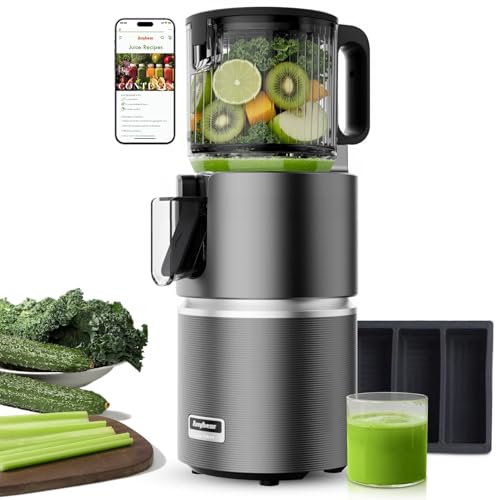
Anybear 350W Cold Press Juicer Juice Sorbet Nut Milk
Anybear 200W Slow Juicer 4.3″ Feed Chute
Anybear 200W Cold Press Juicer 4.3″ Whole Fruit Chute

LINKChef Cold Press Juicer 4.53″ Auto Cutting

Hurom H330 Self-Feeding Masticating Slow Juicer
The Picks, Examined More Closely
The 4.9-inch feed chute is the headline here, and for most mornings it pays off: you can drop a whole apple in without slicing, which shortens prep from a small chore into a non-event. The dual-stage auger setup (meaning produce gets crushed twice, once to break it down and once to squeeze out the remaining liquid) aims to squeeze more juice from the same amount of fruit, so your pulp comes out drier than you’d expect from a budget pick.
Under the hood sits a 350W motor with 230Nm of torque (rotational force, the higher the number, the easier it pushes through tough produce). That matters when you’re running carrots or beets through a slow juicer, because weaker motors stall and overheat. Owners commonly report that it handles dense roots without bogging down, and the low-RPM operation keeps noise closer to a quiet hum than a blender roar.
A Favorable Mix
- Whole-fruit chute cuts prep time nearly to zero for most produce
- Dual-stage extraction tends to leave drier pulp, meaning more juice per grocery run
- 350W motor with high torque handles carrots and beets without stalling
- Low-RPM design helps preserve color and flavor in green juices
Things To Consider
- Bulkier footprint than compact picks like the Whuto, so it needs counter or cabinet space
- Several parts require disassembly for cleaning, which adds a few minutes to the routine
Who Will Love This
Households that juice daily and want to skip the chopping step will get the most out of this one.
Look Elsewhere When
The Hurom H330 suits you better if you want a true self-feeding hopper and don’t mind stepping up in price.
If counter space is tight, this Whuto earns its spot. The compact body fits under most upper cabinets, and the wide feed chute still accepts whole apples and pears, so you don’t trade convenience for footprint. A gray knob on the front toggles between functions, which keeps the control layout minimal for first-time users.
Beyond juice, the unit supports sorbet and nut milk, which stretches its usefulness past a single-purpose appliance. For someone curious about plant milks but not ready to commit to a dedicated machine, that versatility matters. In most kitchens, it pulls double duty without taking over the counter.
Everyday Perks
- Compact form slides into small kitchens and apartment counters
- Wide chute handles whole fruits despite the smaller body
- Multi-function output covers juice, sorbet, and nut milk
- Single-knob control keeps operation simple for new users
Worth Noting
- Smaller motor than higher-wattage picks like the SJ-068, so very dense root vegetables may require more patience
- Cleaning the mesh strainer takes some effort and a small brush
Right Fit For
Apartment dwellers and casual juicers who want versatility without a bulky machine will appreciate this one.
Skip It When
Pick the Anybear 4.9″ Feed Chute model instead if you regularly process large volumes and want a wider opening for whole produce.
Five speeds on a budget juicer is unusual, and that alone makes this Anybear worth a closer look. The variable speed control lets you match the rotation to the ingredient, so soft berries get a gentler pass while hard carrots spin faster. The result is less foam and more usable juice from delicate produce that usually turns to mush in single-speed machines.
The silver housing and slimmer chute (3.5 inches) signal a more design-conscious approach. It’s not the smallest pick here, but the visual footprint reads lighter than chunkier models. For someone who keeps appliances on the counter, the look matters.
What It Does Well
- Five speeds let you tune extraction to each produce type
- Lower speed setting protects delicate fruits from over-processing
- Silver finish suits modern kitchen aesthetics
- 200W motor runs efficiently at lower RPMs
Trade Offs
- 3.5-inch chute means more pre-cutting than the 4.9-inch Anybear
- Speed dial adds a small learning curve for beginners
Quick Facts
Best Suited To
Home cooks who rotate between soft and hard produce throughout the week will find the speed control genuinely useful.
A Better Fit Elsewhere
The Anybear 350W 4.9″ Feed Chute suits you better if you want fewer decisions and a larger chute to skip prep entirely.
The 400W motor puts this SJ-068 near the top of the wattage range in this roundup, and that translates to real work capacity. A reverse function helps clear clogs when fibrous greens wrap around the auger, which is a common headache in slow juicers. For families running large Sunday batches, the extra power pays off in fewer stops and shorter sessions.
Beyond juice, the 3-in-1 setup covers nut milk and sorbet, so it earns its counter space across multiple uses. The build leans toward utility over minimalism, which fits the “heavy duty” framing. It’s the kind of machine that sits in a serious home kitchen rather than a studio apartment.
Features That Help
- 400W motor handles high-volume juicing without strain
- Reverse function clears clogs from fibrous greens
- 3-in-1 capability covers juice, nut milk, and sorbet
- Suited for batch processing on weekends
Points To Keep In Mind
- Larger body demands more counter or shelf space than compact picks
- Higher wattage may draw more from the outlet during extended runs
Who Should Grab It
Families or households that juice in larger batches and want a workhorse rather than a daily-light option.
Consider Something Else When
The Whuto Wide Feed Chute model fits better if you want a smaller footprint for a one-or-two-person household.
This is the recipe-toting sibling of the 4.9-inch Anybear, and the included recipe guide makes a real difference for new owners. Cold press machines can feel intimidating the first time you fire one up, so a printed guide with sorbet and nut milk ratios removes a layer of guesswork. The 350W motor matches the larger-chute model, so you give up nothing in extraction power.
Three functions in one unit means this pulls duty as a breakfast juicer, a weekend sorbet maker, and a Sunday almond milk station. For someone who doesn’t want a separate appliance for each task, the consolidation is the selling point.
Why It Works Well
- Recipe guide lowers the learning curve for first-time juicers
- Triple function covers juice, sorbet, and nut milk in one machine
- 350W motor matches the higher-end Anybear model
- Good for households that want one appliance instead of three
Less Ideal Details
- Chute is narrower than the 4.9-inch Anybear, so some prep remains
- More parts to clean when switching between functions
Perfect Match For
Home cooks who want to experiment with juices, sorbets, and nut milks without buying a dedicated machine for each.
Reach For A Different Pick When
The Anybear 4.9″ Feed Chute fits better if your priority is whole-fruit convenience over multi-function versatility.
A 5-year extended warranty is rare at this price point, and it tells you something about how the brand positions this model. The 4.3-inch feed chute fits most whole apples and large carrots, and the 200W motor runs at a slow 65 RPM, which is gentler on enzymes and color than faster centrifugal machines (which spin at high speed and generate heat).
For long-term ownership, the warranty length adds confidence that you won’t be replacing the unit in year two. Recipe guidance comes included, so the first few sessions feel less experimental. In most kitchens, this lands as the safe, low-fuss option.
Where It Delivers
- 5-year warranty signals durable construction
- 4.3-inch chute handles whole produce with minimal cutting
- 65 RPM extraction preserves nutrients and color
- Recipe guide included for guided first sessions
Some Limits To Know
- Lower wattage means denser vegetables take longer to process
- Recipe orientation focuses mostly on juices, not sorbets
Feature Snapshot
Built With In Mind
Long-term owners who want a low-maintenance daily juicer with warranty backing will appreciate this one.
Not Your Match When
The SJ-068 400W model suits you better if you process large volumes of tough root vegetables and want extra wattage.
The recipe bundle sets this Anybear apart for anyone new to slow juicing. You get a starting lineup of juice combinations that take the trial-and-error out of the first month. The 4.3-inch chute means you still drop whole apples in, so the prep work stays minimal even without experience.
The 200W motor runs at slow RPMs, which keeps the unit quieter than higher-wattage alternatives. For a first machine, the combination of guided recipes and a forgiving chute size removes two common barriers: knowing what to make and how to feed the produce.
What Makes Sense
- Recipe bundle gives first-timers a guided start
- 4.3-inch chute accepts whole apples and large carrots
- Low-RPM operation runs quieter than higher-wattage juicers
- Simple control layout with no speed dial to learn
Honest Caveats
- 200W motor struggles with very dense vegetables in large batches
- Fewer advanced features than the 5-speed Anybear model
Whose Shelf It Belongs On
First-time juicers who want clear starting guidance and a forgiving machine will get the most from this pick.
Where A Sibling Pick Shines
The Anybear 350W 4.9″ Feed Chute suits you better once you outgrow the starter recipes and want more power.
The auto-cutting chute is the differentiator here: it slices produce as it enters, so you skip chopping even harder items like large carrots or beets. That hands-off angle makes it appealing for rushed mornings, when the last thing you want is a cutting board between you and a glass of juice.
At 200W, the motor prioritizes quiet operation over raw power, and the 45 RPM extraction rate is among the slowest in this roundup. The trade-off shows up with very dense root vegetables, which take longer to process, but the noise reduction is noticeable compared to faster-spinning models.
Key Advantages
- Auto-cutting chute reduces prep to a single step
- 45 RPM extraction is the slowest here, preserving nutrients and color
- Quiet motor suits early-morning households without waking others
- Recipe guide included for guided first sessions
Practical Considerations
- Auto-cutting mechanism adds parts that need periodic cleaning
- Lower wattage means dense vegetables take longer than on the SJ-068
At A Glance
Made For
Busy households that want minimal prep and quiet operation, especially during early-morning routines.
Swap It Out When
The Anybear 350W 4.9″ model is a better call if you want higher wattage and don’t need the auto-cutting feature.
The H330 sits at the top of this list in price, and the 2-liter self-feeding hopper is the reason. You load whole apples, carrots, celery, and leafy greens into the top, press start, and walk away. For a household that juices in real volume, that “set and forget” workflow is the selling point that no entry-level model matches.
The charcoal housing and quiet motor signal a more refined build than the budget picks. Assembly and disassembly tend to be straightforward, which matters when you clean after every batch. The longer warranty period also indicates a brand standing behind a higher-tier machine.
A Few Highlights
- 2L self-feeding hopper processes large batches unattended
- Quiet motor suits open-plan living spaces
- Charcoal finish and refined build quality for premium kitchens
- Long warranty period covers extended ownership
Points To Weigh
- Higher price than the Anybear and Whuto models, so it stretches the budget framing
- Larger hopper size demands more storage space when not in use
Quick Facts
Perfect Match For
Set-and-forget juicers who want a true self-feeding experience and are willing to step up in price.
Where Another Pick Suits Better
The Anybear 4.9″ Feed Chute is the smarter call if you want to stay in the budget tier and don’t need unattended operation.
What To Weigh Before Choosing a Budget Cold Press Juicer
Feed Chute Size and Prep Time
The wider the chute, the less time you spend chopping. A 4.5-inch or larger opening accepts whole apples and large carrots, which shaves minutes off each session. Narrower 3.5-inch chutes require halving most produce, so prep adds up over a week of daily juicing.
Motor Power and Produce Type
Wattage matters most when you run dense root vegetables like carrots, beets, or ginger. A 200W motor handles soft and medium produce fine, but 350W to 400W models push through tough ingredients with less stalling. If your shopping list skews leafy and fruity, lower wattage is usually enough.
Speed Settings and Extraction Quality
Single-speed slow juicers keep things simple, but variable-speed models let you match rotation to ingredient hardness. Softer fruits benefit from slower speeds, which reduce foam and oxidation (the browning that happens when juice meets air). For a household that rotates between berries, citrus, and roots, speed control earns its place.
Cleaning, Storage, and Daily Routine
Masticating juicers have more parts than centrifugal models, so cleaning takes longer. Look for units with fewer small components and brushes included. Storage footprint matters too: compact picks like the Whuto tuck into smaller cabinets, while self-feeding models like the Hurom H330 need a dedicated spot on the counter or in a pantry.
Key Considerations Across These Picks
Where Shoppers Go Wrong
A common mistake is choosing the widest chute without checking the motor. A large opening with a weak motor stalls on dense produce, and the convenience advantage disappears. Another trap is overlooking cleaning complexity: a juicer you dread disassembling tends to sit unused. Match chute size, motor power, and part count to how often you’ll actually juice.
Where The Extra Money Goes
Stepping up to the Hurom H330 buys a self-feeding hopper and a longer warranty, which translates to less hands-on time and longer ownership. Higher-tier picks also tend to use sturdier auger materials, which matter for daily use over several years. The upgrade pays off when you juice often and want the routine to feel effortless rather than chore-like.
Frequently Asked Questions
What makes a cold press juicer different from a regular juicer?
Cold press juicers use a slow rotating auger to crush produce, which generates less heat and oxidation than high-speed centrifugal machines. The result is juice that holds its color and flavor longer, with more nutrients preserved in the glass.
Can these affordable juicers handle leafy greens?
Most masticating juicers in this roundup process leafy greens, though denser greens like kale and chard benefit from bundling before feeding. Lower-wattage models may require smaller batches, while higher-wattage picks push through greens with less pausing.
How long does cold press juice last compared to regular juice?
Because cold press extraction limits oxidation, the juice typically stays fresh in the refrigerator for about 48 to 72 hours, longer than juice from centrifugal machines. Storing it in an airtight glass container helps preserve color and taste.
Are cheaper cold press juicers loud?
Most slow juicers in this price range run quieter than centrifugal models, but noise varies. Units with lower RPMs, like the LINKChef at 45 RPM, tend to be among the quietest, while higher-wattage models produce more audible hum under load.
Do I need a recipe guide to start juicing?
A recipe guide helps, especially for beginners exploring combinations beyond basic apple-carrot. Several picks in this roundup include one, which removes the trial-and-error phase. You can also start with simple two-ingredient recipes and build from there.
Bottom Line
Cheap cold press juicers have grown up. The picks above cover everyday juicers, multi-function machines, and self-feeding premium options, all without the legacy price tags. Start with your produce habits, pick a chute and motor that match them, and the rest falls into place. A glass of fresh juice in the morning shouldn’t require a luxury budget, and these nine prove it.



