

Cold-press or centrifugal, compact or full-size, hands-free or citrus-only: the juicer world has expanded well beyond a single brand. This roundup pulls together nine Breville juicers and compatible Nama picks that show up on the same shopping lists, because many shoppers who land on a Breville listing also compare it against newer cold-press alternatives. The goal here is to help you match a machine to the way you actually juice, whether that’s a weekday celery shot or a Sunday batch for two.
The Shortlist At A Glance

Nama J3 Compact Cold Press Juicer (White)

Nama Large Pitcher Set 100oz with Strainer

Nama Sorbet Attachment for J2 Juicer

Nama Citrus Attachment for J2 Juicer

Nama J2 Cold Press Juicer (Black)
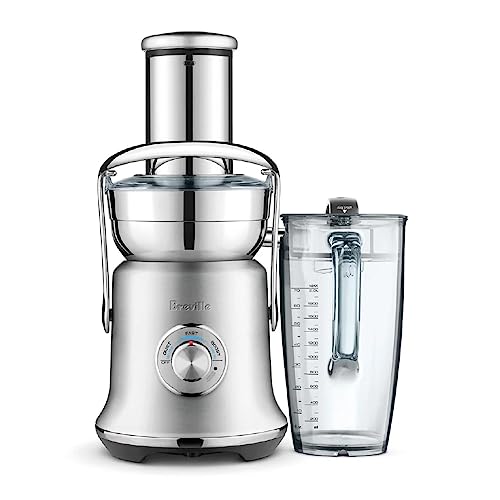
Breville BJE830BSS Juice Fountain Cold XL
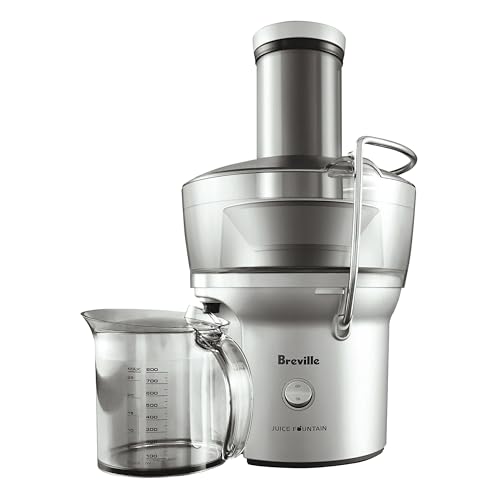
Breville BJE200XL Juice Fountain Compact
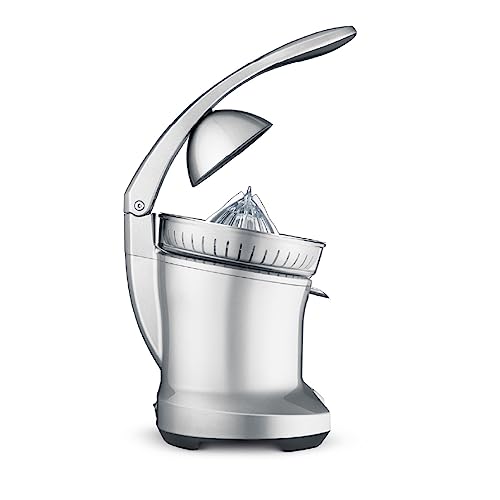
Breville BCP600SIL Citrus Press

Breville 3X Bluicer Pro BJB815BSS
More On The Choices That Made The List
The Nama J3 trims a cold-press setup down to apartment-counter size without dropping the slow-auger approach that defines this category. A self-feeding hopper, the kind that accepts a full recipe in one load, lets you walk away while it processes, which matters in a tiny kitchen where you’re juggling other tasks.
It runs as a single-auger masticating juicer, meaning produce is crushed and pressed at low RPM rather than spun at high speed. That slower pace tends to keep heat down and oxidation lower, useful if you care about color and nutrient stability in a green-heavy juice. For travelers or short-term renters, the compact shell and lighter body make storage realistic between uses.
The Practical Payoff
- Self-feeding hopper means you load produce once and reclaim prep time.
- Single-auger slow press supports longer shelf life in the fridge for many recipes.
- Compact footprint suits galley kitchens, RVs, and vacation rentals.
- Lighter body helps when you stash it in a cabinet between weekend juicing sessions.
Points To Keep In Mind
- Smaller parts can demand more careful hand-washing than a bulkier machine.
- Batch size is naturally limited compared with the full-size J2 covered later.
Whose Counter It Belongs On
A solo juicer in a small apartment or anyone who wants a low-bulk cold-press they can tuck away between uses.
Look Elsewhere When
You’re juicing for a household of four: the Nama J2 below handles the larger weekly batch with less reloading.
Not every juicing upgrade is a motor. The 100-ounce Nama pitcher is the kind of accessory that quietly changes your weekly rhythm because you stop babysitting the juice jug mid-batch. A balanced handle and a controlled pour spout keep refills into bottles and glasses clean, while the matching strainer and pulp catcher mean one container does the filtering, not three.
Compared to the smaller pitcher that ships with most juicers, this one targets a Sunday-prep mindset. You can run a full recipe into it, seal it, and fridge it for the workweek. The trade-off is storage space: a 100-ounce vessel takes real fridge real estate, and you’ll want to plan around that.
Noteworthy Benefits
- 100-ounce capacity covers a full week of single-serve juices in one batch.
- Sealing lid supports fridge storage without transferring to another container.
- Spout-and-handle design reduces spills when decanting into narrow bottles.
- Strainer and pulp catcher combine filtering and collection in the same footprint.
Honest Caveats
- Full pitcher needs a dedicated fridge shelf, which can be tight in apartment-size fridges.
- Glass-like weight, assuming a sturdy build, may be heavier to carry when fully loaded.
Feature Snapshot
Who Will Love This
Weekly batch juicers, families meal-prepping juices, and anyone who hosts brunches with fresh-served drinks.
Reach For A Different Pick When
Your fridge runs full most of the time: the Breville BJE200XL’s smaller footprint might be a better fit if storage is tight.
If you already own a Nama J2 and the sorbet idea has been sitting in your cart, this is the piece that unlocks it. The attachment swaps onto the J2 chassis, and from there frozen fruit, dairy, or non-dairy yogurt feeds through the same auger system that juices your morning greens.
The honest read is that this only makes sense for J2 owners. For everyone else, it’s an accessory without a host machine. Within that group, the win is versatility: one appliance, two very different outputs, no second motor on the counter.
Everyday Wins
- Turns an existing J2 into a sorbet maker without adding a second appliance.
- Works with dairy and non-dairy bases, useful for allergy households.
- Quick processing means frozen fruit goes from bag to bowl in minutes.
- One cleanup path for both juice and frozen treats simplifies the dish routine.
Small Caveats
- Requires a Nama J2 to function, not a standalone machine.
- Very hard frozen items may need a thaw pause to feed smoothly.
Made For
J2 owners who want a dessert function without giving up counter space to a separate ice cream machine.
Where Another Pick Suits Better
You don’t yet own a J2: skip ahead to the Breville 3X Bluicer Pro, which blends and juices in one body.
Citrus is its own animal, and a slow-auger cold-press isn’t always the best tool for oranges or grapefruits. This attachment acknowledges that reality by adding a dedicated citrus head to the J2. You cut a fruit in half, press it down, and the J2 chassis does the spinning work for you.
No peeling required is the practical hook, especially if you juice a lot of lemons for dressings or oranges for weekend brunches. The trade-off is the same as the sorbet piece: it’s a J2-only accessory, so value depends entirely on whether you already own the base machine.
Key Advantages
- No peeling step, which saves real time on a large citrus batch.
- Reuses the J2 motor, so there’s no second appliance to plug in or store.
- Handles everything from limes to grapefruits with one cone setup.
- Great for cocktails and dressings that need a quick citrus hit.
Less Ideal Details
- J2 ownership is required, no standalone use here.
- Cleaning the cone and strainer adds a small step to the citrus routine.
Best Suited To
J2 owners who juice citrus often and want to skip the hand-squeezing step entirely.
Swap It Out When
Citrus is your entire juicing world: the Breville BCP600SIL is a dedicated citrus press that needs no host machine.
The Nama J2 is the machine that defined a hands-free cold-press workflow. The self-feeding hopper takes a full recipe at once, the auger cuts and presses at low speed, and you step away. For households that want cold-press juice every day without it feeling like a chore, this is the most natural fit in the Nama lineup.
Compared with the J3 above, the J2 is bulkier but takes a bigger batch in stride. The black finish also plays well on counters where stainless appliances dominate. The honest catch is that you’ll be feeding it real estate on the counter, and the slow press does take more time per ounce than a centrifugal like the Breville BJE830BSS covered below.
Features That Help
- Self-feeding hopper means one load, then walk-away juicing.
- Cold-press extraction supports longer fridge life for many recipes.
- Modular attachments (citrus, sorbet) expand what one machine can do.
- Daily-use build for households that treat juice as part of the routine.
Trade-Offs
- Slow-press timing means more minutes per ounce than a centrifugal machine.
- Larger footprint than the J3, so plan counter or cabinet space for it.
Quick Facts
Right Fit For
Daily cold-press drinkers, small families, and anyone who wants one machine that handles morning juice plus weekend citrus and sorbet with add-ons.
Consider Something Else When
Speed tops your list: the Breville BJE830BSS below delivers centrifugal speed and a wide chute, at the cost of some oxidation.
Breville’s Juice Fountain Cold XL takes the opposite approach from the Nama machines: it spins fast, accepts a 3.5-inch feed chute, and is built for high-volume output. Whole apples, bunches of kale, and dense roots all go in without much chopping first.
The trade-off shows up in juice character. Centrifugal juicers introduce more air and heat than slow augers do, and that can shorten fridge life for delicate greens. For a household that wants a lot of juice, fast, with minimal prep, this is the right kind of trade.
What Earns Its Place
- 3.5-inch feed chute cuts prep time by accepting whole produce.
- High-throughput motor handles large daily batches without long runs.
- Brushed stainless finish fits kitchens with other Breville small appliances.
- Centrifugal design is well suited to hard produce like carrots and beets.
Potential Drawbacks
- Centrifugal action shortens fridge life compared to cold-press output.
- Louder operation than a slow auger, which can matter in open layouts.
Feature Card
Who Should Grab It
Big-volume households and entertainers who want a fast, wide-chute centrifugal that keeps up with weekend batch prep.
Skip It When
Slow-press quality matters more than throughput: the Nama J2 above keeps oxidation lower on green-heavy recipes.
The BJE200XL has been around long enough to qualify as a kitchen classic. It packs a centrifugal motor and a titanium-reinforced disc into a body that takes up about as much counter as a small coffee maker, which makes it a comfortable first juicer.
It is also the entry point for many Breville households. If you want a familiar, repairable-feeling machine for weekday use without committing to a larger Cold XL, the BJE200XL is the more accessible option. The honest read: smaller chute than the Cold XL means more chopping, and the pulp container is integrated, so you empty it more often.
The Value In It
- Compact body fits small kitchens and apartment counters easily.
- Titanium-reinforced cutting disc supports long-term daily use.
- Lower entry cost than larger Breville juicers on the list.
- 3-inch chute handles a wide range of produce with light prep.
Where It May Fall Short
- Smaller chute than the BJE830BSS, so chopping time adds up.
- Centrifugal design shares the same oxidation trade-off as other fast juicers.
Perfect Match For
Beginners, solo drinkers, and anyone who wants a Breville centrifugal without giving up half the counter to it.
Not Your Match When
You entertain often or run a weekly batch: step up to the Breville BJE830BSS for bigger chute and faster output.
The BCP600SIL is a purpose-built citrus press, and that’s the whole pitch. A finned cone pulls juice from limes, lemons, oranges, and grapefruits with one-handed operation, no peeling required. The motorized action means no elbow grease on a Sunday brunch prep.
For households that juice mostly citrus, this is the right tool. The trade-off: it doesn’t juice greens, apples, or roots, so it’s an addition, not a replacement, for general juicing. If you want a dedicated press that handles one job well, the design is well-tuned to that role.
A Few Strong Suits
- Motorized cone saves effort on large citrus batches.
- One-handed press simplifies cocktail and dressing prep.
- Adjusts from small limes to large grapefruits on one cone.
- Brushed stainless finish pairs with the rest of the Breville line.
Some Limits To Know
- Citrus only, no leafy greens, apples, or roots.
- Bowl-style catch can splash on heavy oranges if filled too fast.
Built With In Mind
Citrus-heavy households, home bartenders, and anyone who wants fresh-squeezed juice without the arm workout.
A Better Fit Elsewhere
Citrus is just part of your routine: the Nama Citrus Attachment on a J2 covers citrus plus full juicing in one machine.
The 3X Bluicer Pro is the most ambitious pick on the list, because it’s two machines in one footprint. On one side, a centrifugal juicer with a 3.5-inch chute. On the other, a 50-ounce blender pitcher. Five one-touch programs and 10 speed settings make switching between juice and smoothie a one-button move.
The hybrid approach suits households that can’t quite justify two separate appliances. The honest catch: it asks more of your counter and your budget, and it doesn’t slow-press. For someone who wants both functions in one brushed-stainless package, however, the trade is usually worth it.
Good Reasons To Consider
- Blender and juicer in one footprint, no second motor needed.
- 3.5-inch chute keeps prep time down on the juicer side.
- Five one-touch programs simplify common drinks and blends.
- 50-ounce blender jug covers family-size smoothie and cocktail batches.
Worth Bearing In Mind
- Centrifugal juicing section shares the same oxidation trade-off as the Cold XL.
- More parts to clean than a single-purpose juicer or blender.
Key Product Details
Made For
Households that want fresh juice and smoothies in one appliance and have the counter space for a larger all-in-one.
Consider Something Else When
You’re a cold-press purist: the Nama J2 above focuses the workflow on slow extraction and the hands-free hopper.
What To Weigh Before Choosing A Juicer
Masticating and centrifugal juicers work very differently. A masticating juicer uses a single slow-turning auger to crush and press produce, which keeps heat low and supports longer fridge life. A centrifugal juicer spins a cutting disc at high speed to separate juice from pulp, which is faster but introduces more air.
Chute size quietly shapes your routine. A 3.5-inch feed chute accepts whole apples and dense roots, while a smaller chute means more chopping. For daily single-serve juicers, chopping adds up faster than you’d expect.
Batch volume matters as much as speed. A 70-ounce output target is common in the centrifugal range, while slow-press juicers trade volume for stability. If you batch for the week, lean toward bigger pitchers and self-feeding hoppers. If you juice a single glass each morning, a compact centrifugal is plenty.
Accessory ecosystems change long-term value. A machine with supported attachments (citrus, sorbet) tends to earn its place longer than a single-purpose unit, especially for households that enjoy experimenting.
Key Considerations Across These Picks
Common Shopping Slip Ups
Many shoppers buy on speed alone and overlook that a centrifugal can shorten fridge life on green-heavy recipes. Slow-press drinkers looking for stability on wheatgrass or kale usually end up trading up within a year anyway, so the apparent savings on a fast juicer can evaporate in a replacement.
Another trap is ignoring chute size until after the first batch. Smaller chutes mean real prep time every morning, and over a year of daily juicing that adds hours. Match the chute to the produce you actually use, not the marketing photo.
Where The Extra Money Goes
Higher-tier models in this category tend to fund wider chutes, larger pulp containers, and self-feeding hoppers. For households that juice daily, those features pay back in saved time more than they do in raw build quality. For occasional users, the upgrade case is thinner, and a compact centrifugal often delivers everything needed at a lower entry cost.
Frequently Asked Questions
What is the difference between a masticating and a centrifugal juicer? A masticating juicer uses a slow-turning auger to crush and press produce, which keeps heat low and supports longer fridge life. A centrifugal juicer spins a disc at high speed, which is faster but introduces more air and oxidation.
Are Breville juicers good for leafy greens? Breville’s centrifugal models can handle leafy greens in moderate amounts, but cold-press machines like the Nama J2 tend to extract more juice from wheatgrass and kale with less waste.
How wide is the feed chute on Breville juicers? The Breville Juice Fountain Compact uses a 3-inch chute, while the Cold XL and 3X Bluicer Pro use 3.5-inch chutes that accept whole apples and dense roots with little prep.
Do I need a separate juicer and blender? Not necessarily. The Breville 3X Bluicer Pro combines both functions in one footprint, which works well for households that want fresh juice and smoothies without a second appliance on the counter.
How do I clean a Nama J2 cold press juicer? Disassemble the auger and strainer, rinse under warm water, and use the included brush to clear pulp from the mesh. Cleaning right after a batch, before pulp dries, makes the routine noticeably easier.
Wrap Up
The right juicer is the one that matches your produce, your pace, and your counter. Match a slow-press to a green-heavy daily habit, a centrifugal to a fast weekend batch, and a citrus press to a cocktail-and-dressing routine. Any of the picks here will serve that goal well, so the decision is really about which trade-off fits your kitchen best.



