

Cold press juicers earn their keep at the breakfast counter, the post-workout window, and the Sunday prep marathon. The right machine turns dense celery, fibrous greens, and hard roots into clean, vibrant juice without the foam and heat that come from high-speed centrifugal work. You’re shopping for a tool that should last years, and the category rewards a careful match between motor type, footprint, and how you actually cook.
This lineup of 10 Omega juicers (with a couple of Nama hands-free alternatives for comparison) covers compact travel-ready designs, full nutrition systems for nut butters and sorbets, and quiet vertical workhorses for shared kitchens.
The Essentials At A Glance

Nama J3 Compact Cold Press Juicer (White)

Nama J2 Cold Press Juicer (Black)

Omega All-in-One Nutrition System (Black)

Omega VSJ843QS Vertical Cold Press Juicer (Silver)
Omega Celery Juicer and Nutrition System (Blue)

Omega NC900HD Nutrition Center (Silver)

Omega Triple-Stage Nutrition System (Gray)
Omega VRT350X Vertical Juicer (Renewed, Silver)
Omega VRT350 Vertical Juicer (Silver)

Nama J2 Cold Press Juicer (White)
More Details On Our Top Picks
Small kitchens and tight counters punish bulky machines, which is where the Nama J3 earns its place. A masticating juicer, meaning it slowly crushes and presses produce rather than spinning at high speed, runs cool and quiet, protecting enzymes and flavor. The hands-free hopper loads whole recipes in a single pass, freeing you to slice the next round of fruit while the previous batch finishes.
For a studio apartment, a vacation home, or anyone who travels with their wellness routine, the J3 is the lightest entry in this guide. In our view, it fits best when produce variety stays modest: leafy greens, soft fruits, and the occasional celery bunch.
Notable Gains
- Compact footprint suits tight counters and travel bags, leaving cabinet space for accessories
- Self-feeding hopper loads full recipes at once, a real benefit during rushed weekday mornings
- Single-auger slow press reduces foam and oxidation, keeping juice vibrant for hours in the fridge
- Quiet enough for early use without waking light sleepers in the next room
Things To Consider
- The smaller chute means longer produce goes in cut, adding a minute of prep for big batches
- Cleaning the fine mesh screen takes patience, so you may find the post-juice rinse adds 5-7 minutes
Who It Suits Best
Solo juicers in apartments, frequent travelers, and anyone with a small counter who wants a set-and-walk-away routine.
Where Another Pick Suits Better
For larger households juicing for four or more, the Omega NC900HD Nutrition Center handles higher volumes with less reload pressure.
The Nama J2 takes the hands-free concept and scales it up from the J3. A self-feeding hopper takes a full recipe’s worth of produce, and the single-auger masticating system crushes and presses while you chop tomorrow’s lunch. That multitasking window is the real value, because the machine runs long enough that you can clean as you go.
Where the J3 leans toward small-batch simplicity, the J2 stretches into weekend meal prep. Black housing reads modern on most counters, and the wider chute shortens prep time compared to its compact sibling.
What Makes Sense
- Larger hopper means fewer reloads during big Sunday prep sessions, saving real minutes
- Masticating extraction runs cool, so nutrients and color hold up through a long batch
- Walk-away design lets you prep the next round of produce while juicing continues
- Wide chute accepts whole apples and carrots, cutting down knife time
Trade Offs
- Counter footprint grows compared to the J3, so apartment dwellers should measure first
- Wider chamber means more parts to rinse, and owners commonly report a thorough rinse is needed to keep pulp from drying on the screen
Feature Snapshot
Made For
Busy home juicers who batch-prep on weekends and want to set the machine, walk away, and return to a full pitcher.
Look Elsewhere When
If you want a built-in celery specialty mode, the Omega Celery Juicer and Nutrition System is purpose-built for that single ingredient.
The Omega All-in-One Nutrition System is the workbench of the category. Triple-stage masticating extraction at 80 RPM pulls more liquid from dense produce, and the included attachments open the door to nut butter, baby food, pasta, and sorbet. One machine, four jobs, and a single-auger design that simplifies cleaning compared to multi-auger rivals.
For families where one appliance has to do breakfast, snacks, and dinner prep, this model justifies the counter real estate. The trade-off shows up in weight, so plan a permanent spot rather than daily storage.
Bright Spots
- Triple-stage extraction squeezes noticeably more juice from kale, ginger, and carrots than single-stage designs
- Multi-function attachments replace a separate pasta machine and nut butter grinder, a quiet savings for small kitchens
- 200W motor handles dense root vegetables without stalling, a real help on hard beet and ginger runs
Honest Caveats
- Heavier than compact rivals, so you’ll want a dedicated counter spot to avoid daily lifting
- Swapping nozzles for pasta or sorbet takes practice, and the first few runs feel slower than the manual suggests
Technical Sheet
Best Suited To
Home cooks who want one tool for juices, nut butters, and pasta dough, and who don’t mind a permanent counter placement.
Skip It When
You mostly juice soft fruits and want something lighter. The Nama J3 Compact Cold Press Juicer is easier to store in a cabinet between uses.
Quiet kitchens are rare, and the VSJ843QS delivers one of the lowest profiles in the vertical category. At 43 RPM with a 150W motor and a dual-edge auger, this slow masticating juicer crushes and presses with twice the force of most vertical rivals, which translates to drier pulp and more juice in the pitcher.
The vertical footprint suits narrow counters, and the no-drip tap keeps the mess contained. For early risers sharing walls with sleeping family members, the silence is the headline feature.
Key Advantages
- 43 RPM operation is quieter than most horizontal and vertical rivals, a benefit in shared spaces
- Auto pulp ejection reduces mid-batch stops, so a full celery bunch runs without manual clearing
- No-drip tap keeps counters clean between pitchers, helpful when juice goes straight to storage jars
Room For Improvement
- Vertical orientation means a taller build, so it may not fit under standard upper cabinets with a low trim
- Hard produce still needs cutting to fit the chute, adding prep time for whole carrots and large beets
Feature Card
Right Fit For
Early risers in shared homes, apartment dwellers, and anyone who values a quiet machine over maximum throughput.
Swap It Out When
You want a horizontal unit for nut butter and sorbet work. The Omega All-in-One Nutrition System handles those jobs in one body.
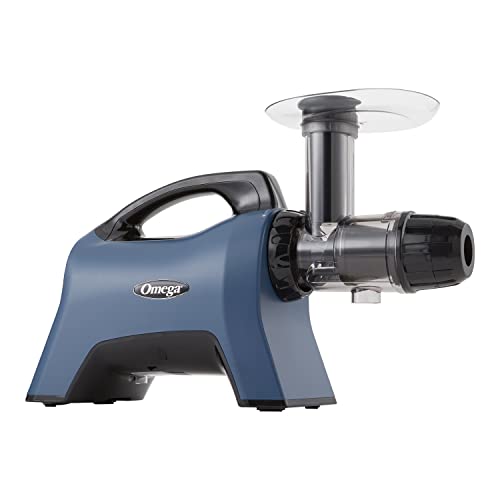
Celery juice routines ask more of a juicer than a general fruit blend. The Omega Celery Juicer and Nutrition System leans into that single ingredient with a specialized celery endcap and an adjustable dial that lets you tune pressure to the stalk. A 200W motor and slow masticating extraction keep the run cool, which matters when you’re juicing a pound of celery at a time.
The same chassis also handles fruits, vegetables, nut butters, sorbets, and baby food, so it pulls double duty on weeks when celery isn’t the headline. The blue housing stands out on a stainless counter, easy to spot during a tired-morning reach.
Why It Works Well
- Specialized celery endcap improves yield from long fibrous stalks, the part most home juicers struggle with
- Adjustable dial lets you tune pressure to soft fruits or hard roots, a flexible feature across produce types
- 200W motor keeps a full celery bunch moving without stalling, a real help on long Sunday prep
Some Limits To Know
- The wellness positioning drives a higher price than a general-purpose Omega, so pure fruit juicers may not need the extra
- Endcap and dial add parts to clean, and owners commonly report the small components need a dedicated brush to clear stuck fibers
Quick Facts
Perfect Match For
Anyone running a daily celery routine who also wants a flexible nutrition system for nut milks and sorbets on the side.
Another Choice May Suit
For general produce variety without a celery focus, the Omega NC900HD Nutrition Center delivers similar versatility at a friendlier entry point.
The NC900HD sits in the sweet spot of the Omega lineup. An 80 RPM masticating extraction, where produce is slowly crushed and pressed rather than spun, runs cool and quiet, while adjustable pressure settings let you tune output to soft berries or hard carrots. The chassis doubles as a nutrition center, with attachments for nut milks, baby food, and sorbets.
For most daily juicers, this is the model that earns its shelf space year after year. It’s not flashy, and the design has stayed close to the same form for years, which tells you the formula works.
What It Does Well
- Adjustable pressure settings cover soft fruit, leafy greens, and hard roots in one chassis
- 150W motor paired with 80 RPM slow extraction protects juice color and flavor, especially in leafy runs
- Nutrition system attachments handle nut milks and sorbets, a quiet money saver over single-purpose gadgets
Worth Noting
- Horizontal body has a wider footprint than vertical rivals, so you may need a clear counter zone before placing it
- Pressure dial takes a few batches to dial in, and the first run of soft strawberries may run wetter than expected
Spec Overview
Whose Shelf It Belongs On
Daily juicers, home chefs who also make nut milks, and anyone who wants a versatile centerpiece for the kitchen counter.
Reach For A Different Pick When
Counter space is the bottleneck. The Omega VRT350 Vertical Juicer takes up a smaller floor footprint for tight kitchens.
Wheatgrass, kale, and fibrous herbs punish a weak motor and a single-stage auger. The Omega Triple-Stage Nutrition System answers with a 200W motor, 80 RPM slow masticating extraction, and a tight grinding chamber that squeezes more out of the same handful of greens. Triple-stage means the produce passes through the auger three times for higher yield.
The gray housing and horizontal body look understated, which suits a kitchen where the appliance shouldn’t dominate. For wheatgrass routines and leafy-heavy blends, this is the engine to look at.
Strengths Worth Knowing
- Triple-stage extraction pulls noticeably more from wheatgrass and leafy greens, the categories where most home juicers fall short
- 200W motor handles dense root vegetables without bogging down, a benefit on beet-heavy blends
- Slow 80 RPM run keeps juice cool, helping flavor hold up in the fridge for a day or two
Potential Compromises
- Heavier than the 150W Omega models, so daily cabinet storage is a chore without a permanent counter spot
- Triple-stage screens demand a thorough rinse, and owners commonly report a missed mesh session shows up as a clog in the next run
Who Will Love This
Juicers running wheatgrass routines, leafy-heavy blends, or anyone who wants the highest yield in a single-auger chassis.
Consider Something Else When
You want a vertical form for a narrow counter. The Omega VSJ843QS Vertical Cold Press Juicer takes up a smaller footprint and runs at 43 RPM.
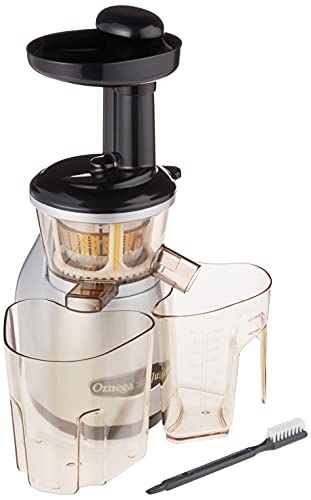
The VRT350X brings the vertical low-speed format to a friendlier entry point. Factory certified and reconditioned, this model runs the same auger geometry as a new VRT but with a lower ticket. A masticating juicer that slowly crushes and presses, it works well for fruit, leafy greens, and soft vegetable blends.
For a first-time cold press shopper who wants the vertical footprint without paying full price, a renewed unit is a reasonable path. The honest read is that cosmetic marks are possible, and warranty terms are shorter than a new unit, so weigh those trade-offs against the savings.
Benefits That Matter
- Vertical orientation takes up less counter width than horizontal models, helpful in galley kitchens
- Low-speed masticating extraction produces drier pulp than centrifugal alternatives, so you get more juice per carrot
- Factory-certified renewal process typically replaces worn parts before resale, a quiet reassurance for the category
Smaller Caveats
- Renewed units may show light cosmetic wear, so inspect the listing photos before committing
- Warranty length on renewed stock is typically shorter than on a new unit, so factor that into long-term plans
Built With In Mind
First-time cold press shoppers who want vertical form and a friendlier entry ticket, and who are comfortable with a renewed unit.
A Better Fit Elsewhere
For a brand-new unit with a full warranty at a similar tier, the Omega VRT350 Vertical Juicer is the new-stock sibling on this list.
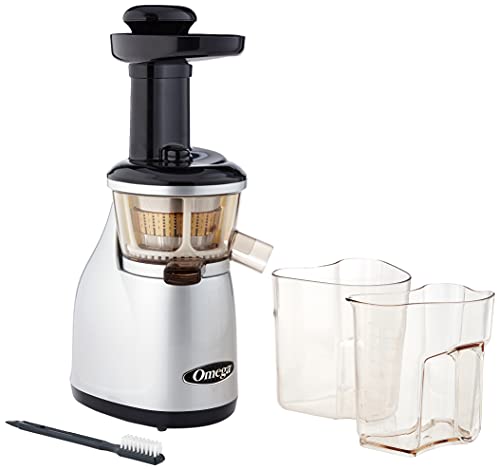
The VRT350 has been on counters for years, which is the strongest endorsement a small appliance can earn. A vertical body, a top-mounted hopper, and a patented auger geometry combine to deliver slow masticating extraction in a small floor footprint. Two 64-ounce containers catch juice and pulp separately, so the run finishes cleanly.
For tight kitchens and shared spaces, the VRT350 stays useful year after year. The trade-off is the older design language, which trades LED indicators and modern plastics for proven mechanics.
What Helps Most
- Two included 64-ounce containers let you juice a full session without swapping pitchers mid-run
- Patented auger geometry improves extraction efficiency over a generic single-stage design, a quiet benefit in juice yield
- Vertical body takes up less counter width than horizontal rivals, which matters in galley layouts
Factors To Consider
- Older design means fewer modern touches like digital timers or app connectivity, so you’ll manage run time by feel
- Single-auger system processes fibrous greens slower than a triple-stage, so heavy wheatgrass runs take patience
Who Should Grab It
Small-space juicers, longtime Omega fans, and shoppers who want proven mechanics over modern conveniences.
Not Your Match When
You want the highest yield from wheatgrass and tough greens. The Omega Triple-Stage Nutrition System pulls ahead in those categories.
The Nama J2 in white finishes the lineup as the lighter, family-friendly counterpart to the black model reviewed earlier. The hands-free hopper loads a full recipe, the single-auger masticating system crushes and presses without heat, and the lighter color reads clean against most kitchen palettes. For shared counters where multiple people run the machine, the bright finish also hides the occasional splash less obviously than black, which is worth considering before you commit.
Same core, different look. If you already favor the J2 platform and want a color that pops on a white counter, this is the version to consider.
A Few Highlights
- Self-feeding hopper supports walk-away juicing, useful when kids are finishing breakfast and you need both hands free
- White finish reads bright and clean, a fit for light-counter kitchens where black feels heavy
- Masticating slow press keeps juice color and flavor intact for fridge storage overnight
Soft Spots
- Light color shows turmeric and beet stains more readily than the black version, so wipe the housing after beet-heavy runs
- Wider chamber means a few extra parts to rinse compared to the J3 compact, a real difference during quick morning sessions
Right Fit For
Family kitchens, light-counter designs, and shoppers who want the J2 platform in a brighter finish.
Where A Sibling Pick Shines
For a darker finish that hides beet and turmeric stains, the Nama J2 Cold Press Juicer in Black is the same machine with a more forgiving color.
What Matters Most Before Choosing Omega Juicers
Masticating vs. Centrifugal
Masticating juicers crush and press produce slowly, which keeps heat low, reduces foam, and protects enzymes. Centrifugal models spin at high speed, which can introduce heat and air. If juice quality and storage life matter to you, masticating is the format to focus on. The whole lineup above runs on slow masticating extraction.
Motor Power and RPM
Motor wattage (50W to 200W in this category) and auger speed work together. Lower RPM with adequate wattage means high torque, which handles dense roots and fibrous greens without stalling. The 43 RPM vertical, 80 RPM nutrition systems, and 200W triple-stage options each address different priorities, so match motor strength to your typical produce basket.
Footprint and Form Factor
Vertical juicers save counter width but stand taller, so they may not fit under upper cabinets. Horizontal models take more width but sit lower and often include more attachments. Measure your available space before settling on form, and remember that heavier units (like the 200W nutrition systems) work best with a permanent counter spot.
Multi-Function vs. Dedicated
Some chassis pull double duty as nut butter, sorbet, and pasta machines. Others are dedicated to juice with no extra attachments. Decide early whether you want a full nutrition system or a focused juicer, because the chassis and cleaning workflow differ significantly between the two paths.
Key Considerations Across These Picks
Mistakes Worth Dodging
Picking a 200W triple-stage system for a tight counter often ends in frustration, because the heavy chassis is awkward to lift daily. On the other side, choosing a compact Nama J3 for a family of four means longer batch times and frequent reloads. The honest match is between form factor, motor strength, and your typical produce volume.
Where The Extra Money Goes
Premium tiers like the 200W triple-stage or the dedicated celery system pay for higher torque motors, multi-stage extraction, and specialized endcaps. For wheatgrass routines or celery-heavy weeks, the upgrade is worth it. For mixed-fruit and leafy-green basics, a mid-tier 80 RPM model covers the same ground at a friendlier price.
Frequently Asked Questions
How Loud Are Slow Juicers Compared to Centrifugal Models?
Slow masticating juicers run much quieter than high-speed centrifugal models, especially vertical units at 43 RPM. You can comfortably run one early in the morning without disturbing a nearby room, which is one of the quiet advantages of the format.
Can These Juicers Handle Leafy Greens Like Kale and Spinach?
Yes, though yield varies by motor strength and auger design. Triple-stage and high-torque models pull more from leafy greens than entry-tier single-stage designs, and the Omega All-in-One Nutrition System is particularly strong on kale, chard, and similar produce.
How Long Does Cold Pressed Juice Stay Fresh?
Cold pressed juice from a masticating juicer typically stays vibrant for 24 to 72 hours in a sealed container, longer than centrifugal juice because of the lower oxidation. Exact storage life depends on the produce mix, so citrus and apple blends last longer than delicate greens.
What Maintenance Do These Juicers Need?
Daily rinsing of the mesh screen and auger is the baseline, and a deeper brush of the screen once a week keeps fiber from building up. Most owners commonly report a quick rinse right after the run is the single most effective habit for long-term performance.
Are Renewed Juicers a Smart Choice?
Factory-certified renewed juicers, like the VRT350X, often go through part replacement before resale and can be a smart way to access the vertical format at a lower price. The trade-off is a typically shorter warranty, so factor that into your long-term plans.
Bottom Line
The best Omega juicer for your kitchen is the one that fits your counter, matches your produce volume, and aligns with how often you’ll actually run it. Compact Nama J3 and Omega vertical models suit small spaces and solo routines, while the 200W triple-stage and nutrition center models serve families and produce-heavy weeks. Pick the form factor first, then match motor strength to your typical basket, and you’ll end up with a machine that earns its shelf space for years.



