

Fresh juice at home doesn’t require a motor, a cord, or a countertop machine that hums for ten minutes before giving up. The right manual setup gets you citrus, soft fruit, cheese curds, and even herb tinctures with nothing more than your own two hands. This roundup looks at presses and hand juicers across very different jobs, from a one-handed lime squeezer to a 6-liter basket press built for small-batch winemaking. You will see which tool fits your kitchen, your fruit bowl, and your weekend projects.
The Choices Worth Comparing
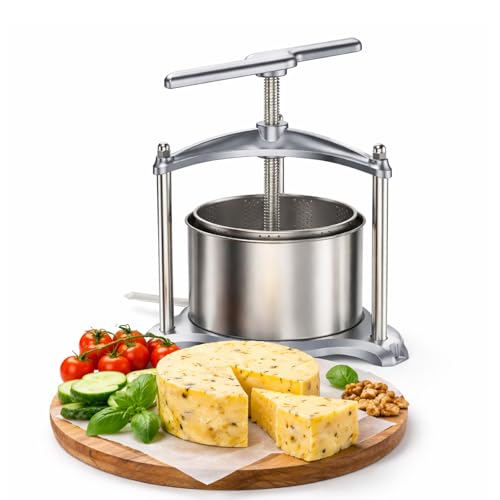
EJWOX 1.6 Gallon Manual Cheese Press

Tupperware Lemon Lime Squeezer (Green)
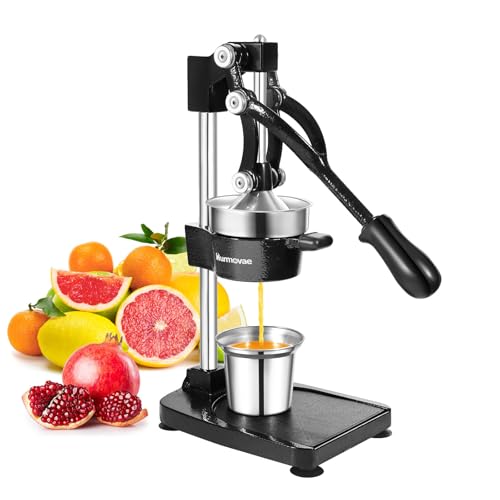
Hurmovae Cast Iron Manual Citrus Press

Dreamfarm Fluicer Fold-Flat Lime Juicer

Dreamfarm Fluicer Fold-Flat Lemon Juicer

EJWOX Manual Fruit & Cheese Press

EJWOX 1.6 Gallon Professional Press
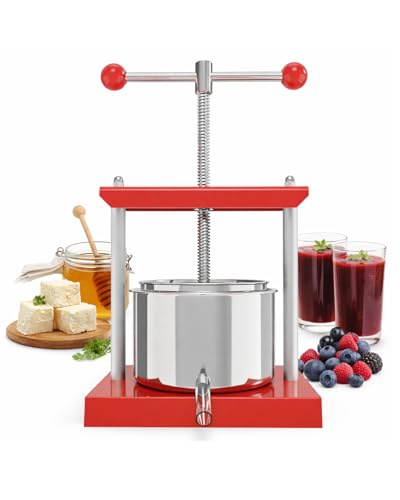
EJWOX 0.53 Gallon Compact Press
The Strengths Of Each Pick
The EJWOX 1.6-gallon press earns its spot first because it is the only tool here that turns muscle and threads into something you would actually call a cheesemaker’s setup. A stainless steel basket holds curds while a heavy screw mechanism drives a plate downward in steady, repeatable strokes. You get consistent pressure without electric motors, timers, or guesswork, which matters when a half-pound of fresh curds can swing from creamy to chalky based on how long you hold the press.
Where it really helps is in the texture of the finished wheel. A steady, even squeeze pulls whey away without shocking the curds, and the included filter bags catch small particles that would otherwise cloud a press. Compared with the smaller EJWOX 0.53-gallon option further down, this 6-liter basket handles a meaningful batch in one go, so you spend less time loading and more time aging. The body uses food-grade stainless steel throughout, which is the right call for anything touching raw milk or fresh tofu.
Reasons It Performs
- The 1.6-gallon basket is large enough for a small home wheel of cheddar, gouda, or a full block of extra-firm tofu in one pressing.
- Food-grade stainless steel resists corrosion from whey, salt brines, and acidic tofu pressing, so longevity looks solid for serious hobbyists.
- Filter bags trap fine curds and sediment, leaving cleaner whey runoff and a tighter finished texture in the cheese.
- The screw-driven design delivers the kind of gradual, even force that home cheesemakers rely on for predictable results.
Worth Noting
- Not built for hard fruits, so this is a curds-and-tincture tool rather than a cider or grape press.
- The basket size and screw mechanism mean it takes up real counter or shelf space compared with a hand juicer.
Made For
Home cheesemakers and tofu crafters who want steady, repeatable pressure in a press that holds up to weekly use.
Skip It When
You mostly squeeze soft fruit for winemaking; the Hurmovae cast iron lever press or the EJWOX 1.6-gallon Professional Press handles that workload with more appropriate basket geometry.
There is a reason this little hinged tool has been in kitchens for decades. The Tupperware Lemon Lime Squeezer takes one hand, a halved citrus, and about three seconds of squeezing, then sits in a drawer without complaining. Its plastic body is light enough to grab mid-recipe, and the ridged cone presses juice out while holding seeds back from the flow. It is the kind of tool you reach for when a recipe calls for a tablespoon of lime and you do not want to haul out a cutting board and a fork.
Think of this as the opposite end of the spectrum from the EJWOX 1.6-gallon cheese press. Where that press is a project, this is a utensil. The trade-off is scale: it will not help you bottle a batch of anything, and it is not designed for oranges or any fruit larger than a small lime. The hinged design does most of the work for you, though, which matters if your hands are sticky, full, or holding a measuring spoon at the same time.
Everyday Perks
- Single-handed operation leaves your other hand free to hold a glass, spoon, or measuring cup while squeezing.
- Compact plastic body tucks into a drawer or a small kitchen caddy without adding clutter.
- Internal ridges do a respectable job catching seeds and pulp, so the juice that lands in your pan is cleaner.
Points To Keep In Mind
- Limited to small citrus like limes and small lemons; oranges and grapefruits will not fit the cone.
- Plastic construction is fine for casual use, but it can stain or hold citrus oils over years of daily squeezing.
Right Fit For
Cooks and home bartenders who need a quick squeeze of lime or lemon without dragging out a full countertop juicer.
Consider Something Else When
You press oranges, grapefruits, or pomegranates regularly; the Hurmovae cast iron lever press handles larger citrus with far more leverage.
If the Tupperware squeezer is a fork, the Hurmovae cast iron press is a vise. The body is solid cast iron with a tall 17-inch lever arm and a 5-inch stainless steel funnel that holds a halved orange, lemon, lime, or pomegranate section. Pull the handle down and gravity does the heavy lifting, pressing every last bit of juice out of the pulp without the rind tearing and spraying oil everywhere.
That lever design is the headline. A long arm multiplies your hand pressure, so a half-orange that would take thirty seconds of hand squeezing collapses in one pull. The trade-off is footprint: this is a counter or tabletop tool, not a drawer item, and the cast iron body has real weight to it. For anyone with a backyard citrus tree, a weekend brunch habit, or a small bar setup, the time saved per glass adds up fast.
Strengths Worth Knowing
- Cast iron body stays planted on the counter during heavy pulls, so there is no chasing it across the surface mid-squeeze.
- The 17-inch lever arm gives you strong mechanical advantage, meaning less hand fatigue across a full pitcher of juice.
- Manual operation produces no heat and no motor oxidation, which helps preserve the bright, fresh flavor of just-squeezed juice.
Practical Considerations
- The cast iron body is heavy, so this is a stationary tool, not something you stow between uses.
- Larger citrus fits well, but very small limes may sit awkwardly in the wide funnel without centering properly.
Best Suited To
Homeowners with steady citrus demands: families pressing a pitcher for breakfast, small bars batching cocktails, or anyone with a backyard orange or grapefruit tree.
Where Another Pick Suits Better
Casual cooks who only squeeze one lime a week will find the Tupperware Lemon Lime Squeezer a more practical everyday tool.
Feature Snapshot
The Dreamfarm Fluicer exists because someone, somewhere, opened a junk drawer, sighed, and asked why every juicer has a hump. This tool collapses flat, so it slides into a drawer like a ruler, and it stands up like a small pitcher when you are using it. The lime version has a built-in pip catcher that strains seeds while doubling as a pour funnel, which is a clever bit of dual-purpose engineering for something that costs very little drawer real estate.
Compared with the Tupperware squeezer earlier in the list, the Fluicer is a step up in engineering and a step down in storage footprint. The funnel-pip design means you can juice directly into a glass without fishing seeds out afterward, and the hinged ribs grip the lime half firmly so a quick twist extracts most of the juice. The honest read is that this is a small upgrade worth making if you juice limes more than once a month.
Useful Touches
- The fold-flat design slides into narrow kitchen drawers where a typical juicer’s hump would never fit.
- Built-in pip catcher doubles as a pour spout, reducing the number of dishes you dirty per glass.
- The hinged ribs grip lime halves securely, so you can twist and pull without the fruit sliding around.
Honest Caveats
- Limited to small limes, since the funnel size is tuned for that specific fruit.
- Lightweight construction is great for storage but can shift on the counter if you press too aggressively.
Who Should Grab It
Apartment dwellers, studio cooks, and anyone who values a clean drawer over maximum juice yield per squeeze.
A Better Fit Elsewhere
Anyone batching margaritas for a group will want the Hurmovae cast iron press for the higher volume.
Same fold-flat DNA as its lime sibling, but tuned for lemons. The Fluicer lemon version opens to roughly 10 inches, with ribs sized for a halved lemon rather than a thumb-sized lime, and the built-in pip catcher still acts as a spout so juice flows cleanly into your pan or glass. For a baker pulling a lemon drizzle cake together on a Sunday, that means one fewer strainer and one less dish to wash.
You will notice the difference most in the way the ribs grip. Lemons have a thicker rind and a wider profile, so the funnel shape matters; the citrus half sits flat instead of wobbling. For most backyards and small kitchens, the design is the kind of quiet upgrade that does not announce itself, but you reach for the tool instinctively once it lives in the drawer.
Everyday Advantages
- Funnel ribs are sized specifically for halved lemons, which gives you a cleaner, more thorough squeeze.
- Pip catcher doubles as a spout, so you can juice straight into a batter bowl without a separate strain.
- Compact folded profile keeps it from cluttering the counter in a small galley or studio setup.
Trade-Offs
- Built for lemons, so it will not accommodate oranges or larger grapefruit halves.
- Lightweight build means you may want to brace the base against a cutting board for very firm lemons.
Perfect Match For
Bakers, tea drinkers, and anyone who cooks with lemons often enough to want a tool that does not waste counter space.
Reach For A Different Pick When
You mostly work with limes; the lime-tuned Fluicer will grip small citrus more reliably than this lemon-focused version.
The EJWOX Manual Fruit & Cheese Press is the crossover model in the lineup. It uses the same stainless steel basket platform as the 1.6-gallon cheese press, but the design language leans more toward soft fruit, herbal tinctures, and the kind of cross-category work that hobby homesteaders tend to collect. Press berries, juice soft fruit, squeeze honeycomb, or pull whey from a small cheese batch, all with one tool.
The trade-off versus the 1.6-gallon cheese press is capacity. This basket is smaller, so it will not churn out a full wheel of cheddar in a single load, but it stores more easily in a pantry or on a shelf. Compared with the 0.53-gallon press further down, you get a little more room to work, which means fewer reloads during a cider or tincture session. The stainless steel build is also easier to rinse and dry between uses, especially when switching from honey pressing to berry juice.
Everyday Wins
- Versatile enough to handle cheese, soft fruit, honey, and herb infusions, so you can consolidate tools.
- Stainless steel basket rinses clean and resists flavor carryover when switching between projects.
- Smaller footprint than the full 1.6-gallon press, so it fits on a pantry shelf rather than a counter.
Where It Is Less Suited
- Basket size sits between the smallest and largest EJWOX presses, so it is not a specialist at any one job.
- For very large cheesemaking batches, the bigger 6-liter press will save you multiple reloads.
Whose Shelf It Belongs On
DIY homesteaders and kitchen tinkerers who want a single press that can pivot between cheese, fruit, and herbal work without buying three separate tools.
Not Your Match When
You focus almost entirely on hard cheese wheels; the EJWOX 1.6-gallon cheese press gives you a deeper basket and more consistent pressure for that specific craft.
Where the 1.6-gallon cheese press is built around curds, this Professional Press is built around volume. The 6-liter basket takes a serious load of soft fruit, grape mash, or honeycomb, and the included filter bag strains out solids during the press so the liquid that comes out the bottom is closer to ready-to-bottle cider than cloudy must. For a home winemaker or a small beekeeper, that single step saves an hour of secondary filtering later.
This is also the most project-oriented tool in the list, so plan your space accordingly. The 6-liter basket, screw mechanism, and frame need a real footprint, and you will want a table or sturdy stand to catch the runoff. For most people, it lands as a weekend project tool rather than an everyday kitchen helper, but the time it saves during a pressing session is meaningful.
Bright Spots
- 6-liter capacity lets you process a meaningful batch of grapes, berries, or honeycomb in a single load.
- Filter bag captures solids during the press, which cuts down on later filtering steps for cider and wine.
- Stainless steel construction is food-safe and stands up to acidic fruit without corrosion concerns.
Less Ideal Details
- Full size and screw mechanism make it a project tool, not something you leave on the counter between uses.
- For small herb or tincture work, the 0.53-gallon EJWOX press is a better match for the scale of the job.
Quick Facts
Who Will Love This
Home winemakers, cider makers, and small-scale beekeepers who process real batches a few times a year and want a press that handles the volume.
Where A Sibling Pick Shines
Herbalists doing small tincture batches will get more useful results from the EJWOX 0.53-gallon Compact Press, which matches a smaller basket to a smaller workload.
Closing the list is the smallest EJWOX in the family, and a good reminder that bigger is not always the right answer. The 0.53-gallon basket is sized for a quart or two of soft fruit, a few ounces of dried herbs, or a small cheese trial, and the top-handle design keeps the press compact enough for a kitchen cabinet. For a hobby herbalist or someone experimenting with homemade tinctures, that scale is exactly right.
The top-handle geometry is the detail that sets this apart from the larger EJWOX presses. You press straight down rather than turning a long screw, which makes a quick batch less of an event. The included filter bag still catches sediment, so your finished tincture or berry juice comes out cleaner than it would through a sieve. Compared with the 1.6-gallon Professional Press, this is a low-fuss tool for small, frequent projects rather than a once-a-season production run.
Key Advantages
- Compact 0.53-gallon basket fits a quart of soft fruit or a small herbal batch without waste.
- Top-handle design is intuitive, so beginners can use it without studying the mechanics first.
- Stainless steel build with a filter bag keeps the output clean enough to skip a secondary strain.
Soft Spots
- Small basket means multiple reloads for anyone pressing more than a few pounds of fruit at a time.
- Lightweight frame can tip if you press unevenly or overload the basket, so a stable base matters.
Built With In Mind
Home herbalists, experimenters, and casual soft-fruit juicers who want a small-footprint press for weekly or monthly use.
Swap It Out When
You are running a real cider or winemaking session; the EJWOX 1.6-gallon Professional Press will save you reloads and produce more juice per pass.
What Matters Most Before Choosing Manual Juicer Presses
Picking a manual press starts with a single honest question: what are you actually pressing? Citrus juicers and basket presses look like cousins, but they do completely different jobs, and choosing the wrong one leads to a tool that sits in a drawer.
Citrus vs Soft Fruit vs Cheese
Citrus juicers use a ridged cone or lever to crush a halved fruit and let the juice drip out. Soft fruit presses use a basket and a descending plate to squeeze liquid from grapes, berries, or other fragile produce. Cheese and tofu presses use a screw-driven plate to apply hours of consistent pressure. Buying a citrus juicer for cheese will leave you frustrated, and buying a basket press for daily limes will waste your time.
Capacity and Batch Size
The 6-liter EJWOX presses handle a real batch in one go, the 0.53-gallon Compact Press is sized for a quart of soft fruit, and a hand juicer is sized for a single lime. Match the basket or funnel to the volume you actually process, not the volume you imagine yourself processing someday.
Material and Cleaning
Stainless steel is the standard for any press that touches food, and it is easy to rinse and dry between uses. Plastic hand juicers are fine for casual citrus but can stain and hold oils over time. For anything sticky, sugary, or acidic, stainless is the easier long-term partner.
Storage Footprint
A cast iron lever press lives on the counter. A basket press lives on a shelf or in a pantry. A fold-flat hand juicer lives in a drawer. Be realistic about where the tool will actually live, since a press that lives on the floor is one you stop using.
Key Considerations Across These Picks
Where Shoppers Go Wrong
The most common mistake is buying a press for the job you wish you had, not the job you actually do. A 6-liter basket press sounds exciting until you realize you only juice a few limes a week. Equally common is underestimating the cleanup for soft-fruit work. Pulp sticks, stains, and attracts fruit flies, so a press that is awkward to disassemble will quickly become a press that you avoid.
Where The Extra Money Goes
Higher-end models in this category tend to spend their budget on stainless steel construction, larger baskets, and included filter bags. The first two pay off in durability, and the third saves real time during cleanup and downstream filtering. For occasional use, the basic version is fine, but for a hobby you will repeat monthly, the upgrades are worth the difference.



