

Leafy greens like kale, chard, and spinach test a juicer harder than almost any other produce. A slow, gentle squeeze pulls the most liquid from fibrous cell walls, and a wide enough chute to skip the chopping marathon. You want a machine that handles a week of greens without clogging, heating, or sounding like a small engine. The ten options below span compact solo machines, family-sized workhorses, and a few clever add-ons that round out a juicing setup for everyday use.
The Lineup, Simplified

Nama J3 Compact Cold Press Juicer (White)

Nama Large Pitcher Set 100oz

Nama Sorbet Attachment for J2

Whuto Wide Chute Slow Masticating Juicer
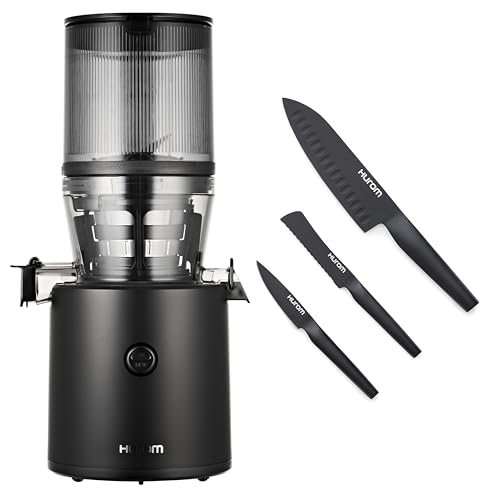
Hurom H320 Slow Juicer with Knife Set

SJ-068 3-in-1 Masticating Juicer
Anybear 200W Slow Juicer 4.3″ Chute

Nama Citrus Attachment for J2

Nama J2 Cold Press Juicer (Black)

Anybear 350W Cold Press Juicer 4.9″ Chute
The Nama J3 shrinks the cold-press experience into a footprint that fits on a small counter or a tight RV galley. It runs on a single-auger masticating design, which means produce gets crushed and pressed at low RPM rather than spun at high speed. That slower motion matters for leafy greens, where fast centrifugal blades can leave half the liquid behind in the pulp.
The hands-free hopper is the headline feature. You load your recipe, walk away, and return to a finished glass. For solo juicers in a studio apartment, the J3 is a thoughtful fit. Compared to the larger Nama J2 reviewed later, the J3 trades some capacity for portability, so it suits light daily use over heavy batch runs.
Useful Highlights
- Compact body fits cramped counters, small kitchens, and travel setups without dominating the workspace.
- Hands-free self-feeding hopper frees you to prep other ingredients or clean as it runs.
- Slow masticating action pulls more liquid from kale, chard, and wheatgrass than a high-speed spin.
- Single-auger setup is straightforward to rinse and reassemble after each use.
Worth Noting
- The smaller hopper means more frequent refills when juicing a full bag of greens at once.
- Plastic components tend to need a hand wash rather than the dishwasher, depending on cycle intensity.
Key Product Details
Right Fit For
Solo juicers in apartments, dorms, or anyone who wants a portable machine for travel and small countertops.
Swap It Out When
The Nama J2 Cold Press Juicer makes more sense for households juicing multiple full bunches of greens every day.
Not every juicing upgrade is a machine. The Nama Large Pitcher Set is a 100-ounce serving and storage pitcher with a built-in strainer and pulp catcher, designed to sit underneath your juicer spout and catch a full batch in one go. The cap helps keep air out so cold-pressed juice holds onto its color and flavor longer in the fridge.
For anyone already running a Nama J2 or J3, this is the matching pitcher that turns a single glass into a week of prep. The balanced handle and controlled spout aim to make pour-over into bottles and glasses less messy. It is a quieter kind of upgrade, but one that smooths out the daily juicing ritual considerably.
What Works In Its Favor
- 100-ounce capacity covers a full week of single-serving juices for one or two people.
- Integrated strainer and pulp catcher cut down on extra dishes during prep.
- Sealing lid helps protect juice from oxidation between batch and glass.
Points To Keep In Mind
- It is an accessory, not a juicer, so it adds value only alongside a compatible Nama machine.
- 100 ounces is a lot of juice, and solo juicers may not finish it before flavor starts to drift.
Who It Suits Best
Batch juicers who prep a few days of green drinks at once and want a single container to hold everything.
Look Elsewhere When
The Nama Sorbet Attachment for J2 fits a household that wants a new function, not a new container, from their setup.
The Nama Sorbet Attachment is a swappable front end for the J2 juicer that lets the same machine turn frozen fruit into soft-serve style sorbet. The auger that normally crushes greens for juice is the same mechanism that whips frozen banana, mango, or berries into a creamy dessert.
It is a small accessory with a real second life. Families with kids can run a morning kale juice and an evening strawberry sorbet without pulling out a second appliance. The honest read is that you only get value from this if you already own the J2, so think of it as a multiplier, not a standalone buy.
Standout Benefits
- Adds a frozen-dessert function to a juicer you already use, no extra counter space required.
- Works with dairy or non-dairy yogurt, which broadens the recipe list beyond plain fruit.
- Cleaning is similar to the standard juicing components, so the routine stays familiar.
Honest Caveats
- Requires the Nama J2 base, so it is not a standalone purchase for new juicers.
- Only handles frozen ingredients well; softer fresh fruit may need extra chill time before processing.
Made For
Existing J2 owners who want a second use for their machine without buying another appliance.
Reach For A Different Pick When
The SJ-068 3-in-1 Masticating Juicer is a better fit for someone who wants juice, nut milk, and sorbet in a single standalone machine.
The Whuto slow juicer leans into two features that matter for daily green juicing: a wide feed chute and a stainless steel body. A wide chute means you drop in whole kale leaves and apple quarters without pre-chopping, which removes the most tedious part of the routine. Stainless steel gives the machine a sturdier feel on the counter and tends to handle repeated wash cycles well.
For someone juicing every morning, the reduced prep time is the real win. Compared to the Anybear 200W covered later, the Whuto has a slightly more substantial build, which may appeal to those who want a machine that feels planted during use.
Benefits That Matter
- Wide feed chute accepts whole leaves and chunks, cutting prep time before each run.
- Stainless steel housing adds durability and a premium feel to the countertop.
- Slow masticating design supports high yield from tough greens like kale and chard.
- Titanium-color knob gives a clear visual indicator of mode changes.
Possible Compromises
- The wider chute and steel body add weight, so this is not a machine you move around often.
- Cleaning the screen mesh still requires a brush, which is the common trade-off on most masticating juicers.
Feature Card
Best Suited To
Daily juicers who want minimal chopping, a sturdy build, and straightforward cleanup between runs.
Not Your Match When
The compact Nama J3 fits a small-apartment setup where counter space matters more than chute width.
The Hurom H320 is the family-sized workhorse of the slow juicing world, paired here with a three-piece German steel knife set. The juicer itself uses Hurom’s slow squeeze technology, which works at very low RPM to minimize oxidation and keep juice fresh in the fridge for up to 72 hours. The self-feeding hopper is large enough to drop whole produce in without babysitting.
The knife bundle is a small but real bonus for anyone serious about fresh prep. You get a 7-inch Santoku, a 4-inch citrus knife, and a 3.5-inch paring knife, all with a corrosion-resistant non-stick coating. Compared to the Anybear 350W reviewed later, the H320 leans more toward refined build and finish than raw motor power.
Real-World Strengths
- Self-feeding hopper with a wide opening lets you add produce while the machine runs.
- Slow squeeze tech keeps juice fresh in the fridge noticeably longer than faster methods.
- BPA-free construction throughout the food-contact parts.
- Included German steel knife set covers daily prep from slicing fruit to trimming stems.
- 500ml chamber suits a family breakfast routine rather than a single serving.
Some Limits To Know
- Larger footprint than compact picks, so it needs a dedicated counter spot.
- Premium positioning shows up in the build, which may be more than a casual juicer wants to invest.
- Several parts to rinse after each use, so cleanup takes a few minutes either way.
At A Glance
Who Should Grab It
Committed home juicers and families who want a premium build, longer fridge life, and prep knives in one bundle.
Where Another Pick Suits Better
The Anybear 350W Cold Press Juicer is a better fit for households that prioritize a bigger chute and higher-torque output on a tighter budget.
The SJ-068 earns its “3-in-1” name by handling juice, nut milk, and frozen sorbet from a single 400W base. The 80-ounce hopper is generous for a home machine, which means fewer pauses to refill when you are juicing for a few people at once. The reverse function helps clear clogs when fibrous greens stack up inside the auger.
For anyone who wants a do-it-all appliance without buying separate juicer, milk maker, and sorbet machine, this is a strong consolidation play. Compared to the Nama J2, the SJ-068 is bigger and more feature-heavy, which can feel like overkill for a solo juicer but pays off in a shared household.
Where It Excels
- 400W motor handles dense greens and frozen fruit without stalling.
- 80-ounce hopper supports larger batches with fewer refills mid-run.
- Reverse function clears pulp clogs quickly during heavier greens sessions.
- BPA-free food-contact parts for safer everyday use.
Trade Offs
- Multi-function design means more parts to disassemble and clean between modes.
- The larger body demands a real slice of counter space.
Quick Facts
Perfect Match For
Multi-recipe households that want juice, plant milk, and frozen treats without three separate machines.
Skip It When
The Nama J2 Cold Press Juicer is a calmer choice for a single user who mostly wants hands-free greens and simple cleanup.
The Anybear 200W is built to lower the entry barrier for first-time juicers. The 4.3-inch feed chute accepts whole apples and small bunches of greens without prep, and the included juice recipes help new users learn what combinations actually taste good. The 200W motor runs at about 65 RPM, which is slow enough to keep heat low and yield high on leafy greens.
The honest read is that this is the friendly, no-fuss option on the list. Compared to the Whuto covered earlier, the Anybear is a touch simpler in build but a touch easier to approach if you have never owned a masticating juicer before.
Strong Points
- 4.3-inch chute fits whole small fruit and rolled greens without pre-chopping.
- 200W motor and 65 RPM operation protect nutrients and reduce foam in the glass.
- Included recipe guide helps new juicers build a rotation without guesswork.
Points To Note
- The 200W motor is gentle, so very dense produce may need slower feeding.
- Plastic components tend to require a hand wash rather than a long dishwasher cycle.
Whose Shelf It Belongs On
First-time juicers and budget-minded shoppers who want a simple slow juicer that handles greens well out of the box.
Another Choice May Suit
The Anybear 350W Cold Press Juicer is the better upgrade for someone who already knows they will juice daily and wants more power under the hood.
The Nama Citrus Attachment swaps the J2’s standard juicing end for a citrus-focused cone. You cut a lemon, lime, or orange in half, press it down on the reamer, and let the slow auger pull every drop of juice without peeling first. The pulp stays separate, and the juice collects in the same pitcher system as your regular J2 setup.
This is a niche buy, but a smart one if you regularly add a squeeze of citrus to your green juices or cook with fresh juice. Compared to a standalone countertop citrus press, the attachment keeps the workflow on one machine.
What Makes Sense
- No peeling required, so citrus prep drops to a quick halving.
- Uses the same Nama J2 base, no extra appliance on the counter.
- Pulp stays separate from the juice, which keeps flavors clean.
Room For Improvement
- Only works with the Nama J2, so the value depends on owning that base.
- Smaller citrus halves fit best, and very large grapefruit may need a careful hand.
Built With In Mind
J2 owners who regularly add citrus to their juices and want to skip the peeling step entirely.
Consider Something Else When
The Nama Large Pitcher Set is the better add-on for someone who wants to store and serve more juice per session rather than add a new function.
The Nama J2 is the workhorse version of the J3 covered earlier, and the model that built Nama’s reputation in the slow juicing space. The hands-free self-feeding hopper takes your full recipe at once, and the auger does the cutting and pressing while you prep the next batch, wash parts, or walk away entirely.
For a household running a serious green juice routine, the J2 is the most balanced pick on this list. It sits between the compact J3 and the family-sized Hurom H320 in capacity, and it does the hands-free routine very well. Compared to the Anybear 350W, the J2 has a quieter, more refined feel, though less raw power.
The Good Stuff
- Hands-free hopper lets you load once and skip the constant feeding chore.
- Single-auger masticating design pulls high yield from tough greens like kale and chard.
- Compatible with the Nama sorbet and citrus attachments, which extends its usefulness.
- Black finish hides minor splashes between full cleanings.
- Compact enough for most counters while still supporting a week’s worth of juice.
Where It Is Less Suited
- Pulp screen needs a proper brush rinse after each use, which is the standard masticating trade-off.
- Not as travel-friendly as the smaller J3 if you want a machine that moves with you.
Technical Highlights
Who Will Love This
Active home juicers who want hands-free operation, reliable greens performance, and room to grow with attachments.
A Better Fit Elsewhere
The Hurom H320 Slow Juicer is the better choice for larger families who want a bigger chamber and a knife bundle included.
The Anybear 350W sits at the high-output end of the line. The 350W motor paired with a dual-stage auger system is built to extract more juice per pound of greens while keeping the temperature low. The 4.9-inch feed chute is wide enough for whole apples and large handfuls of greens, which keeps prep time close to zero.
For households running multiple juices a day, the higher torque pays off in fewer stalls and a faster pour. Compared to the SJ-068 covered earlier, the Anybear 350W trades a three-function setup for a more focused, high-yield greens performance.
Real Benefits
- 350W motor with a high-torque rating handles dense, fibrous greens without bogging down.
- Dual-stage auger squeezes more liquid from the same weight of produce.
- 4.9-inch feed chute accepts whole fruit and large bunches with no pre-chopping.
- Low-temperature extraction protects color, flavor, and nutrients in the glass.
Practical Considerations
- More powerful motor means more parts to keep clean after each heavy run.
- Larger footprint than compact picks, so a dedicated counter spot helps.
The Right Fit
High-output juicers and families who run a serious daily green juice routine and want a powerful, low-prep machine.
Where A Sibling Pick Shines
The Anybear 200W Slow Juicer is a calmer, lower-cost option for someone who juices a few times a week rather than daily.
## What Matters Most Before Choosing Juicers For Leafy Greens Masticating juicers work by slowly crushing produce between an auger and a screen, which pulls more liquid from fibrous leaves than high-speed centrifugal blades. The trade-off is that they run at lower RPM, so a single bunch of kale takes longer, but the juice comes out denser and less foamy. Chute width changes your daily routine more than almost any other spec. A narrow chute means chopping every leaf; a 4-inch or wider chute lets you drop in whole greens and small fruit with almost no prep. For heavy greens use, a wider chute pays off quickly. Yield depends on auger design and motor torque. Higher-torque motors tend to push through dense bunches without stalling, while dual-stage augers squeeze a second pass out of the pulp before ejecting it. Both matter if you juice a full bag of greens every session. Cleaning is the most common reason people stop using their juicer. Single-auger designs with fewer parts come apart faster, and pulp screens need a dedicated brush rather than a sponge. Plan on two to three minutes of cleanup after each use, and a deeper weekly rinse. Build and materials affect longevity. Stainless steel housings handle daily wash cycles well, and BPA-free components matter for any machine that touches food every morning. If a juicer feels light or plasticky, it may not survive a year of daily use. ## Key Considerations Across These Picks ### Wrong Turns To Avoid One common slip is buying a centrifugal juicer because it costs less, then wondering why leafy greens come out dry and foamy. Centrifugal designs spin fast, which heats the juice and leaves moisture behind in tough greens, so a slow masticating model is worth the trade for green-heavy routines. Another trap is chasing the largest hopper without checking the motor. A wide chute with a weak motor stalls on dense produce, which adds frustration rather than saving time. Match chute width to motor strength. ### What Separates Premium From Basic Higher-tier juicers in this category tend to add longer fridge life for stored juice, more refined build quality, and useful extras like a knife set or attachments. The upgrade is worth it for households who juice daily and want the routine to feel smooth rather than like a chore. For occasional use, a simpler mid-range model covers the basics without overspending. ## Frequently Asked Questions ### Are masticating juicers better for leafy greens than centrifugal ones? Yes, masticating juicers crush and press at low RPM, which extracts more liquid from fibrous greens like kale and chard while keeping heat low and protecting nutrients. Centrifugal models spin at high speed, which can leave moisture behind in tough leaves. ### How wide should a feed chute be for whole greens? A chute of around 4 inches or wider accepts most whole leaves and small fruit without chopping. Anything narrower typically means pre-cutting every bunch, which adds noticeable prep time during a daily routine. ### Can a slow juicer also make nut milk and sorbet? Many modern masticating juicers, like the SJ-068, handle nut milk and frozen sorbet in addition to juice, though performance varies. Dedicated attachments, like the Nama sorbet piece, also extend a single machine’s reach for non-juice recipes. ### How long does cold-pressed juice stay fresh in the fridge? Cold-pressed juice from a slow juicer typically stays fresh in the fridge for up to about 72 hours when stored in a sealed container, longer than juice from a centrifugal machine. Using a pitcher with a sealing lid, like the Nama Large Pitcher Set, helps extend that window. ### What is the easiest way to clean a masticating juicer? Disassemble the parts right after juicing, rinse the auger and screen under running water, and use the included brush to clear pulp from the mesh. A quick daily rinse plus a deeper weekly wash keeps the machine running well without buildup. ## Closing Remarks A juicer that handles leafy greens well turns a chore into a habit, and the right match depends more on your kitchen and routine than on any single spec. A solo cook in a small apartment gets the most from a compact, hands-free machine, while a household of daily juicers benefits from a higher-torque base with a wider chute. Pick the option that matches the way you actually cook, give yourself a week to settle into the cleanup routine, and the rest tends to follow.


