

Fresh juice at home sounds simple until you actually try to make it happen on a Tuesday morning. Whole apples clog a narrow chute, leafy greens come out half-chewed, and a hard-to-clean machine ends up back in the box. The right home juicer solves those friction points in different ways, whether you care most about a wide feed opening, quiet slow extraction, or the ability to switch from juice to sorbet. This lineup covers ten of the most practical options, with notes on who each one actually suits.
A Closer Look At The Lineup

Anybear 350W Cold Press Juicer 4.9″ Feed Chute

Whuto Wide Feed Chute Masticating Juicer (Gray Knob)

SJ-068 400W 3-in-1 Cold Press Juicer
Anybear 200W Cold Press Juicer 4.3″ Feed Chute
ECOSELF Wide Mouth Cold Press Juicer

SUSTEAS Juicer Machine 5.3″ Extra Wide Chute
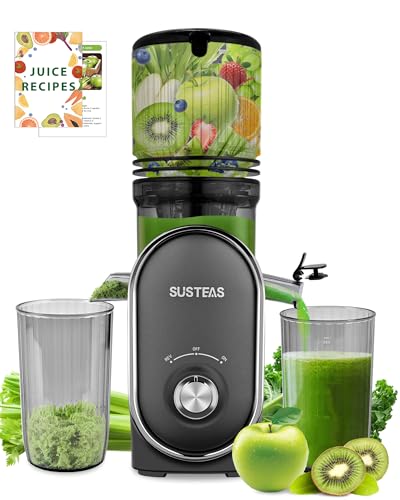
SUSTEAS Juicer Machine 5.3″ Extra Large Chute

Airon 500W Centrifugal Juicer 3″ Chute

SUSTEAS Cold Press Juicer 5.3″ Easy Clean

SUSTEAS 2-in-1 Cold Press Juicer & Sorbet
Why These Options Stand Out
The Anybear 350W is the kind of cold press that changes your morning flow. A “cold press juicer” (also called a “masticating” or “slow juicer”) crushes produce at low RPM rather than spinning it at high speed, which is meant to limit heat and oxidation. This model backs that idea with a dual-stage auger system and a high-torque motor rated at 350 watts, so dense produce like carrots and beets get processed without much fuss.
The 4.9-inch feed chute is the real headline. You can drop in whole apples and large carrot pieces without standing there chopping, which makes the routine feel less like prep work. Versus the more compact Whuto pick later in this list, this Anybear prioritizes capacity and throughput, and that tradeoff will matter most to anyone juicing for two or more people most mornings.
Real-World Strengths
- 4.9-inch feed chute accepts whole fruits, cutting prep time noticeably.
- Dual-stage auger aims to extract more juice from the same amount of produce.
- 350W motor handles harder roots that stall smaller slow juicers.
- Cold-press design suits anyone trying to retain color and flavor longer.
- Reverse function (run the auger backward) helps clear occasional clogs.
Things To Consider
- Slow juicers like this take longer per glass than a centrifugal unit, so batch sessions will run longer.
- The chute size cuts prep, but the pulp container still needs emptying between large runs.
- Owners commonly report that the screen and auger benefit from a quick rinse right after use to prevent residue drying on.
Key Product Details
Who It Suits Best
Anyone juicing for a household of two or more, especially if you want a cold press that doesn’t demand constant chopping before each load.
Where Another Pick Suits Better
Shoppers working with a very tight counter footprint may find the more compact Whuto wide-chute masticating juicer easier to park and store.
The Whuto slow juicer makes a quiet case for itself in small kitchens. Where the Anybear 350W leads with capacity, this one leans into a smaller footprint and a wide chute that still takes whole produce. The “gray knob” in the title refers to a control dial, not a color option, and that dial anchors a one-touch operation most beginners will appreciate.
It also stretches past straight juice. The same auger that handles carrots and kale can churn out nut milk and a soft, ice-cream-style dessert, so it earns a place on the counter for more than one morning task. Versus the Anybear 200W pick further down, Whuto’s design keeps the extra functions without a noticeable jump in footprint.
Points In Its Favor
- Wide chute accepts whole fruits, so prep time stays short.
- Compact body fits on tighter counters and stores in smaller cabinets.
- Multi-use capability covers juice, nut milk, and frozen treats in one machine.
- Slow extraction keeps noise low enough for early-morning use.
Worth Noting
- The smaller body means a smaller pulp bin, so larger batches require mid-session emptying.
- Multi-use functions like sorbet need firmer frozen fruit, which means more planning ahead.
- Cleaning the screen after leafy greens tends to take a little more attention than after hard produce.
Made For
Solo juicers and couples in apartments or galley kitchens who want a slow juicer that disappears into a cabinet between uses.
Consider Something Else When
Anyone running large multi-person batches every morning will get more out of the Anybear 350W with its larger feed chute and dual-stage extraction.
The SJ-068 leans into versatility, and the 80-ounce hopper is a genuine differentiator. Most cold presses top out at smaller capacities, so the roomier hopper here means fewer refills during a Sunday meal-prep session. The 400W motor sits comfortably above many slow juicers, which helps when leafy greens or ginger come up in rotation.
The “3-in-1” label covers juice, nut milk, and frozen-fruit sorbet, similar in concept to the Whuto but with a notably larger hopper. A reverse function (a motor direction that clears jams) helps recover from a clog without disassembly, which can be a small but meaningful quality-of-life win mid-batch.
Everyday Perks
- 80-ounce hopper means fewer reload stops during bigger prep sessions.
- Three functions in one unit (juice, nut milk, sorbet) cut down on extra appliances.
- BPA-free food-contact parts address a common concern with reusable plastic juicing parts.
- Reverse function makes most clogs a 2-second fix instead of a disassembly job.
Trade Offs
- The bigger hopper adds bulk, so it needs a dedicated corner on the counter.
- Switching between juice and sorbet means swapping parts and a full rinse, which adds time on busy days.
Feature Snapshot
Right Fit For
Home cooks who treat Sunday as a prep day and want one machine that handles juice, nut milk, and frozen desserts across the week.
Look Elsewhere When
If the goal is fast, in-and-out daily juicing with the smallest possible footprint, the Whuto wide-chute masticating juicer is a more counter-friendly alternative.
The Anybear 200W is the quieter, more energy-miser sibling to the 350W Anybear reviewed earlier. The “200W” is the motor power, and the trade-off is real: lower wattage means slightly slower throughput, but it also means lower energy draw and a calmer sound on the counter. For one or two glasses a day, that math usually works out.
The 4.3-inch feed chute still accepts whole apples and most whole produce, just a step down from the larger 4.9-inch version. A slow, gentle extraction rate (around 65 RPM, or revolutions per minute, which is a measure of how fast the auger spins) is well-suited to celery, cucumbers, and softer fruits that bruise easily.
The Value In It
- Lower wattage means lower energy draw per session.
- Slow 65 RPM extraction suits soft produce and greens.
- Wide enough chute to skip most chopping for everyday produce.
- Quieter operation fits shared walls and early-morning routines.
Room For Improvement
- Lower torque means longer runs on dense produce like carrots and beets.
- The included recipe guide is a nice touch, but new users may still need a few sessions to dial in a routine.
Quick Facts
Best Suited To
Solo juicers and couples who juice for variety, not volume, and want a calmer, energy-friendlier machine on the counter.
A Better Fit Elsewhere
Anyone running large daily batches will be happier with the Anybear 350W, which has a bigger chute and a stronger motor for the same routine.
The ECOSELF cold press is built around a simple idea: load it and let it feed itself. The wide-mouth chute, paired with a self-feeding design, reduces the need to push produce down with a pusher every few seconds. For anyone who has juggled a kid, a school lunch, and a juicer at the same time, that hands-off workflow reads as a meaningful feature.
The slow masticating approach helps preserve color and flavor in leafy greens, which are often the hardest produce to juice cleanly. A cleaning brush ships in the box, which is the kind of small detail that genuinely changes how often the machine gets used.
What Helps Most
- Self-feeding chute means less tamping and more walking away during a run.
- Wide mouth accepts whole fruits and bunches of greens.
- Slow extraction is well-matched to leafy greens and herbs.
- Included cleaning brush cuts cleanup time after each session.
Points To Note
- Self-feeding works best with evenly cut, similar-size pieces; very long celery stalks can still need a nudge.
- The slow pace rewards patience, so this isn’t the pick for someone who wants a glass in 30 seconds.
Who Will Love This
Busy families and parents who want a juicer that runs itself while they handle the rest of the morning.
Skip It When
Hard-produce power users may want the Airon centrifugal model further down, which chews through carrots and apples much faster.
The first of three SUSTEAS models on this list, this one leans hard into whole-fruit convenience. The 5.3-inch chute is the largest opening in the lineup, so whole apples and oranges drop in without slicing. For families, that “no prep” angle is often the difference between using a juicer every day and letting it collect dust in a cabinet.
The one-button operation doubles as a safety feature: the lid has to be locked into place for the motor to start, and lifting it cuts power. For households with curious kids, that auto-stop behavior is worth more than any number of marketing claims.
What Makes Sense
- 5.3-inch chute fits whole apples and oranges, eliminating most prep work.
- Safety lock prevents the motor from running with the lid open.
- One-button design keeps the learning curve short for new users.
- Reverse function helps clear occasional clogs without disassembly.
Honest Caveats
- The integrated hopper and screen design is convenient, but those parts still benefit from a quick rinse right after each run.
- Larger chute openings mean slightly more whole produce per run, so the pulp bin fills faster on big sessions.
Feature Card
The Right Fit
Families with kids, or anyone who wants a juicer that needs almost no prep and almost no thinking to use.
Not Your Match When
Hard-core green-juice fans may prefer the ECOSELF wide-mouth cold press, which treats leafy greens with a more dedicated slow press.
The SUSTEAS 5.3″ “High Juice Yield” model is the workhorse in this trio. It shares the wide chute and one-button safety design with the previous SUSTEAS pick, but it’s tuned for extracting more juice from every load. For someone who juices daily, that “more juice per apple” math adds up across a week.
The integrated hopper and screen design, the same architecture that simplifies the previous SUSTEAS, makes the assembly process less of a puzzle. Owners commonly report that the routine gets faster after the first few uses, which matters more than any spec sheet.
A Favorable Mix
- Higher-yield tuning compared to the entry-level SUSTEAS chute model.
- 5.3-inch feed chute handles whole produce with no chopping.
- Lid-lock safety and one-button operation keep things simple.
- Reverse function rescues most clogs without disassembly.
Points To Keep In Mind
- Higher yield can mean slightly drier pulp, which can build up faster on the screen if you let it sit.
- The motor runs warm on back-to-back large batches, so a short pause between sessions is a good habit.
Built With In Mind
Daily juicers who run the same routine each morning and want a higher return from every piece of produce they prep.
Another Choice May Suit
For someone who mostly juices soft fruits and leafy greens, the Anybear 200W slow juicer offers a gentler extraction with a smaller footprint.
The Airon is the only centrifugal juicer in this lineup, and that distinction matters. A “centrifugal juicer” spins produce against a cutting blade at high speed, using centrifugal force to push juice through a mesh filter. Compared to the slow masticating picks reviewed above, a centrifugal is louder, but a glass of apple juice is realistically a 15- to 30-second job, and for busy mornings that speed is the whole pitch.
The 500W motor is the strongest in the lineup, and the 3-speed control (low, high, and a pulse for soft produce) gives a bit of tuning for different fruits and vegetables. The 3-inch chute is narrower than the SUSTEAS models, so you will still need to halve apples, but prep is faster than the typical 1.5-inch entry-level centrifugal.
The Practical Payoff
- 500W motor produces a glass of juice in seconds rather than minutes.
- Three speed settings allow some tuning for soft versus hard produce.
- 3-inch chute is wider than most entry-level centrifugals, reducing chop time.
- Included cleaning brush addresses the mesh filter, which is the usual pain point.
Small Caveats
- Centrifugal juicers are louder than slow presses, and the high RPM generates more heat, which is a consideration for nutrient-sensitive juicers.
- The mesh filter is the slowest part to clean, even with the included brush.
- Wider than entry-level, but the 3-inch chute still requires halving whole apples.
Technical Sheet
Whose Shelf It Belongs On
Anyone who values speed above all else, and doesn’t mind a louder, more powerful machine on the counter.
Reach For A Different Pick When
For quieter operation and slower, gentler extraction, the SUSTEAS 5.3″ “High Juice Yield” slow press is a more counter-friendly match.
The third SUSTEAS on the list is built around a simple promise: easier cleanup. The integrated hopper-and-screen design reduces the number of loose parts to rinse, and the wider 5.3-inch opening still handles whole apples and oranges. For anyone who has ever skipped a juicing day because of cleanup dread, the design choices here target that exact pain point.
The cold-press extraction is slower than a centrifugal, but the trade-off is lower oxidation and a quieter session. One-button operation, lid-lock safety, and a reverse function round out a feature set aimed at making the routine something you actually keep.
Real Benefits
- Integrated hopper and screen reduce the number of parts to clean.
- 5.3-inch chute accepts whole apples, oranges, and celery stalks.
- Cold-press design keeps noise and oxidation down versus centrifugal options.
- Lid-lock safety and one-button operation suit new users.
Possible Compromises
- Fewer parts is convenient, but the integrated screen still needs a brush on heavier produce days.
- Slow extraction rewards patience, so a glass of juice is more of a 2-minute project than a 20-second one.
Perfect Match For
People who want a juicer they will actually use five days a week, where cleanup time often decides whether the machine comes out at all.
Swap It Out When
Speed-focused households may prefer the Airon 500W centrifugal, which trades slow-press benefits for a much faster glass.
The SUSTEAS 2-in-1 closes the list by doing two things that usually require two different machines. The same auger that presses fresh juice can churn out a creamy frozen sorbet when you swap in a different strainer. The 5.3-inch chute is identical to the other SUSTEAS models, so the no-chop convenience carries over.
Versus the SJ-068 reviewed earlier, this SUSTEAS skips nut milk but keeps the sorbet function, and the trade shows up in a slightly simpler assembly. For a household that mostly wants juice and an occasional frozen treat, the simpler feature set is often the better fit.
Where It Delivers
- 2-in-1 design covers fresh juice and frozen sorbet with one motor and one chute.
- 5.3-inch chute accepts whole apples, oranges, and celery.
- Cold-press extraction suits a wide range of produce, including leafy greens.
- One-button operation keeps the learning curve short for new users.
Where It May Fall Short
- Sorbet requires firmer frozen fruit, which calls for some planning ahead.
- Switching between juice and sorbet means swapping a strainer and a quick rinse between modes.
Who Should Grab It
Home cooks who want one machine that handles both morning juice and an after-dinner frozen treat, without crowding the counter with two appliances.
Where A Sibling Pick Shines
Anyone who juices nut milk weekly will be better served by the SJ-068 3-in-1 cold press, which adds that third function.
What To Weigh Before Picking A Home Juicer
Masticating and centrifugal machines serve different priorities, and a clear sense of what you actually want on the counter makes the decision easier. A “masticating” juicer (sometimes called “cold press” or “slow”) uses a low-RPM auger to crush produce, and a “centrifugal” juicer spins at high speed against a cutting disc. Each approach has real trade-offs in noise, time, and how the juice looks and tastes.
Chute Width And Prep Time
A wider chute means less chopping before each load. Anything 4 inches or larger can usually accept a whole apple, while a 3-inch chute requires halving. For busy mornings, that difference often decides whether the machine comes out at all.
Extraction Type And Daily Use
Slow presses run quieter and produce less foam, which keeps juice fresher in the fridge. Centrifugal juicers are louder and faster, with a glass of juice in seconds, and that speed matters when one person is making juice for a family before work.
Cleanup And Assembly
Most juicers require a few minutes of rinsing and a brush run across the screen after each session. Integrated hopper and screen designs reduce loose parts, and a wide chute usually pairs with a larger pulp bin that runs longer between emptyings.
Key Considerations Across These Picks
Mistakes Worth Dodging
A common misstep is choosing a centrifugal for nutrient-focused juicing. The higher RPM generates more heat and oxidation, which is exactly what cold-press buyers are usually trying to avoid. Another easy miss is ignoring chute size. A 1.5-inch opening turns even the best motor into a chopping chore, and 4 inches or more is the practical floor for whole-fruit convenience.
Where The Extra Money Goes
The step up to higher-tier cold presses usually buys a stronger motor, a dual-stage auger, and a more durable screen. The honest read is that for one or two daily glasses, a mid-tier 200W to 350W model is enough. For multi-person households or hard-produce-heavy routines, the 400W+ tier pays off in fewer jams, faster runs, and longer motor life.
Frequently Asked Questions
What is the difference between a masticating and a centrifugal juicer?
A masticating juicer uses a slow-turning auger to press juice out at low RPM, producing less heat and foam. A centrifugal juicer spins produce at high speed against a cutting disc, which is faster but louder and produces more oxidation.
How wide should a home juicer feed chute be?
For most people, 4 inches or wider means whole apples and oranges go in without chopping. A 3-inch chute still requires halving most whole fruit.
Are cold press juicers harder to clean than centrifugal ones?
They usually take a few extra minutes because of the screen and auger, but a quick rinse right after use and a brush run across the mesh keep most cold presses in good shape.
Can slow juicers make sorbet or nut milk?
Many can, with a strainer swap and firmer frozen fruit for sorbet. Models like the SJ-068 and the SUSTEAS 2-in-1 are designed for this kind of multi-use workflow.
How loud are home juicers?
Slow presses run at conversation level, while centrifugal juicers sit closer to a blender. For early-morning or shared-wall living, slow presses are usually the calmer choice.
The Takeaway
The best home juicer is the one you actually use. A wide chute and easy cleanup tend to matter more than any spec on the box, and a slow press will reward you with quieter mornings and longer-lasting juice, while a centrifugal will reward you with speed. Match the machine to the routine you already have, and the rest tends to fall into place.



