

Walking into the juicer aisle for the first time can feel like reading a foreign language. Centrifugal this, masticating that, feed chute measurements, motor wattage. You’re not choosing a hobby, you’re picking a small kitchen tool that should quietly make mornings easier. The picks below focus on machines that are forgiving, easy to assemble, and gentle enough to handle whatever’s already in your produce drawer.
The Choices Worth Comparing

Anybear 350W Cold Press Juicer 4.9″ Feed Chute

Cold Press Juicer Wide Feed Chute Masticating

SJ-068 400W 3-in-1 Masticating Juicer
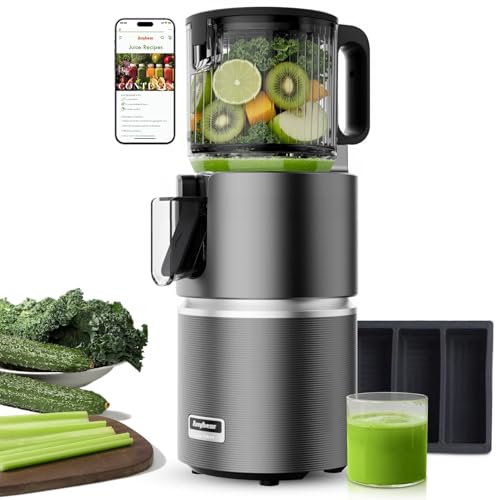
Anybear 350W Cold Press Juicer Juice & Sorbet
Anybear 200W Slow Juicer 4.3″ Feed Chute
ECOSELF Cold Press Juicer Wide Mouth Chute

LINKChef 4.53″ Whole Fruit Slow Masticating Juicer

The Juicing Recipes Book 150 Healthy Recipes

Hurom H330 Self-Feeding Masticating Juicer Charcoal
A Closer Look At Each Pick
The Anybear 350W lands on this list because the wide feed chute and dual-stage auger do the prep work most first-timers dread. You can drop a whole apple in without quartering it, which is the kind of small convenience that keeps a new habit alive past week two.
A masticating juicer works by slowly crushing produce rather than spinning it at high speed, which means less foam and a calmer counter. The 350-watt motor with 230nm of torque handles carrots and beets without straining, and in most kitchens the noise level stays well below a blender. Compared to the Whuto compact unit further down, this one trades a smaller footprint for chute size, so it favors people who’d rather skip the cutting board.
Noteworthy Benefits
- 4.9-inch feed chute accepts whole apples and large carrot sticks
- Dual-stage extraction pulls more liquid from the same produce, meaning less waste per batch
- Slow pressing preserves color and taste better than high-speed spinning models
- Setup is straightforward enough that a single morning is enough to learn the rhythm
Things To Consider
- The auger and screen need a proper rinse after every run, especially after fibrous greens
- Tall produce like celery may still need a halving pass before going in
Who It Suits Best
First-timers who want one machine that handles fruit-heavy mornings and weekly veggie batches without a learning curve.
Where Another Pick Suits Better
The Hurom H330 below is a stronger match for households juicing every single day who want a larger hopper and a long warranty.
The Whuto cold press keeps things tidy for renters and small-space cooks. The body sits low and narrow, so it tucks beside a coffee maker instead of claiming the corner of the counter, and the gray knob adds a small visual cue that’s easy to grab with wet fingers.
Beyond juice, the unit also turns out nut milk and frozen sorbets, which makes it a friend for anyone who bought a juicer and then wondered what else it could do. The wide chute reduces the chopping step, though you’ll still want to halve long stalks. For most apartments this is a practical step up from the Anybear 350W if counter depth is the main constraint.
Where It Delivers
- Compact 7-inch-ish footprint fits beside other small appliances
- Multi-use design handles juice, nut milk, and soft frozen treats
- Wide chute cuts prep time on apples and cucumber rounds
- Single-auger build is simple to take apart and rinse
Points To Note
- Soft fruits like banana and mango can clog without a slower push
- Smaller pulp container means more mid-batch emptying during weekend prep
Key Product Details
Made For
Studio dwellers and anyone working with a tight counter who still wants a full slow-press experience.
Consider Something Else When
The Anybear 4.9″ chute above is a better fit if you mostly juice large fruit and want to skip all chopping.
The SJ-068 stands out for batch cooking, where you’d otherwise be refilling a smaller hopper every few minutes. The 80-ounce capacity takes a meaningful amount of produce before you need to pause, which makes weekend prep feel less like a chore.
Three modes cover juice, nut milk, and sorbet, and the reverse function is a quiet hero feature that pushes a stuck piece of pulp back out without you fishing around with a tool. The 400-watt motor has enough headroom for tougher roots. Relative to the Anybear 350W above, this one leans toward people who cook in volume rather than single glasses.
Strengths Worth Knowing
- 80-ounce hopper holds a full recipe’s worth of produce at once
- Reverse function clears clogs without disassembling the unit
- BPA-free contact parts add a layer of food-safety peace of mind
- Three-in-one design stretches one appliance across multiple kitchen uses
- 400-watt motor handles dense roots without bogging down
Small Caveats
- The larger hopper raises the overall height, so under-cabinet clearance matters
- Heavier base, less convenient to slide aside for daily wipe-downs
Right Fit For
Beginners planning to juice for two or more people at once and anyone curious about nut milks beyond a basic glass of OJ.
Look Elsewhere When
The Hurom H330 further down is worth a look if quiet operation and a 2-liter hopper matter more than multi-mode versatility.
This Anybear sits in the middle of the brand’s range and earns its spot mostly because the included recipe guide answers the first question every new owner asks: “What should I actually make?” The same dual-stage auger as the wider-chute Anybear does the slow-press work.
The 350-watt motor has enough torque for typical home produce, and the build feels sturdy on the counter. You trade the oversized 4.9-inch chute for a smaller opening, which means a touch more knife work. For people who like to follow a recipe rather than improvise, the bundle is a gentle nudge in the right direction.
Useful Highlights
- Recipe guide included removes the blank-page feeling for new owners
- Three-in-one capability covers juice, sorbet, and nut milk in one unit
- Dual-stage pressing extracts a satisfying volume from leafy greens
- Same 350W torque platform as the brand’s flagship model
Room For Improvement
- Smaller chute than the 4.9-inch Anybear means more knife work on apples
- Recipe booklet is a starting point, not a comprehensive course
Best Suited To
First-week juicers who want a structured on-ramp rather than free-styling through the produce drawer.
Not Your Match When
The Whuto unit above is a smarter pick if your main interest is nut milk and your counter space is the limit.
The 200W Anybear is the gentler sibling in the brand’s family, aimed at people who care more about steady mornings than raw power. The motor runs at roughly 65 RPM, which is the kind of speed that won’t wake a sleeping roommate or interrupt a podcast.
The 4.3-inch chute takes most whole fruits, and the recipe bundle is similar to the previous Anybear model. Where the 350W units lean on torque for tough produce, this one is happiest with softer fruit and everyday veggies. It’s a thoughtful pick for the early riser who doesn’t want to feel like they started a lawnmower.
Everyday Perks
- Lower RPM operation keeps noise at a conversational level
- 4.3-inch chute handles most whole produce without pre-cutting
- Recipe guide lowers the barrier for week-one juicers
- High-torque 180nm motor still handles moderate batches
Honest Caveats
- Less wattage means denser roots like ginger need smaller feed sizes
- Slow pace extends batch time on big Sunday-prep sessions
Feature Snapshot
Perfect Match For
Apartment dwellers and anyone who values a quiet kitchen over pure processing speed.
A Better Fit Elsewhere
The 350W Anybear at the top of this list is the better call for households that regularly juice hard roots.
The ECOSELF is built around a hands-free philosophy. Drop produce in the wide chute, and the auto-feeding design pulls it through on its own, leaving you free to pour, swap glasses, or chase a toddler mid-run.
The slow masticating action keeps heat low, which preserves the color of beet-heavy blends and the bright green of wheatgrass shots. The included brush is a small touch that pays off in cleanup, since pulp tends to stick to the fine screen. Compared to the LINKChef unit a few rows down, the ECOSELF skips an internal cutting blade in favor of straight self-feeding.
A Strong Showing
- Wide-mouth chute with self-feeding action reduces hands-on time
- Slow press protects color and flavor in leafy greens and roots
- Cleaning brush bundled in the box for screen maintenance
- Whole apples, carrots, and celery fit without pre-cutting
Some Limits To Know
- Auto-feed works best with round or chunky produce, not long stringy stalks
- Brush speeds up cleanup but doesn’t replace a thorough rinse
Who Will Love This
Busy parents and multitaskers who want to walk away from the machine during longer prep sessions.
Another Choice May Suit
The LINKChef entry further down is a good alternative if you’d rather have an internal auto-cutter working on tougher produce.
The LINKChef earns its slot thanks to a built-in auto-cutter inside the 4.53-inch chute. Whole apples and dense carrots get a quick slice before the auger grabs them, which reduces the stall-outs that frustrate first-time juicer owners.
Operating at roughly 45 RPM, the 200W motor stays quiet enough for early risers. The recipe guide is a friendly companion for the first month of use, and the build feels solid on the counter. The trade-off is a slightly taller body than the ECOSELF, so under-cabinet clearance is worth measuring before you click.
What Earns Its Place
- Auto-cutter pre-slices whole fruit so the auger doesn’t stall
- 4.53-inch chute accepts large produce without chopping first
- Quiet 200W motor fits well into apartment life
- Recipe guide included for new owners looking for guidance
Less Ideal Details
- Taller profile may not slide under standard kitchen cabinets
- Auto-cutter adds a small part to keep clean during the weekly deep rinse
Quick Facts
Who Should Grab It
Juicers who want a near-zero-prep routine and don’t mind a slightly taller machine on the counter.
Reach For A Different Pick When
The ECOSELF above is the cleaner option if short cabinet clearance is the bigger concern.
Pairing a juicer with a recipe book is the move most first-timers skip, and that’s why the Mendocino Press title earns a spot here. The book collects 150 juice combinations aimed at everyday health goals, which gives a new owner a starting lineup instead of staring at a pile of celery.
The format groups recipes by purpose, so you can flip to a section that matches your goal for the week. It doesn’t replace the machine, but it does shorten the awkward “what should I actually make?” phase. For someone already leaning toward an Anybear or LINKChef model, this is a useful companion rather than a competing pick.
What It Does Well
- 150 recipes provide weeks of variety without recipe fatigue
- Organized by health goal, making it easy to browse with intent
- Works with any juicer in this roundup, so no compatibility guesswork
- Print format stays open on the counter, no app required
A Few Limitations
- Recipe-only item, you’ll still need a juicer to use it
- No images provided for the recipes
Built With In Mind
New juicer owners who want a gentle push past the apple-carrot-ginger stage into more interesting blends.
Swap It Out When
The Anybear 4.9″ at the top of the list is the better choice if you don’t yet own a juicer at all.
The Hurom H330 is the most ambitious pick on the list, and for good reason. The 2-liter self-feeding hopper takes whole apples, carrots, and celery in one load, so you press a button and walk away. It feels like a small appliance that respects your time.
The quiet motor and BPA-free chamber check the boxes that matter for daily use, and the 15-year warranty hints at how the brand expects this machine to last. It’s a bigger investment than the Anybear models, but for a household that plans to juice every morning, the math evens out. Compared to the SJ-068 above, the H330 trades multi-mode versatility for batch capacity and long-term durability.
Advantages To Know
- 2-liter self-feeding hopper handles full recipes unattended
- 15-year warranty signals serious long-term durability
- Quiet motor keeps early-morning runs household-friendly
- BPA-free parts and eco-friendly build choices for health-conscious owners
- Charcoal finish looks at home on a modern counter
Trade-Offs To Consider
- Higher price tier than the Anybear and Whuto options
- Larger footprint needs a dedicated spot on the counter or in a cabinet
Technical Highlights
Whose Shelf It Belongs On
Committed daily juicers and family kitchens ready to invest in a machine that will outlast their first year of habit-building.
Where A Sibling Pick Shines
The SJ-068 three picks back is a friendlier starting point if you want a multi-use machine without the long-term commitment.
What Matters Most Before Choosing Your First Juicer
A good first juicer is one you’ll actually keep on the counter, not one with the biggest spec sheet. The attributes below are the ones that decide whether a new machine earns a permanent spot or migrates to the back of a cabinet.
Feed Chute Size and Prep Time
A wider chute, generally 4 inches or more, accepts whole apples and large carrot pieces without pre-cutting. For most beginners, this single feature decides whether juicing feels like a five-minute task or a twenty-minute chore. Smaller chutes cost less but trade convenience for knife work.
Masticating Versus Centrifugal
Masticating juicers press produce slowly with an auger, while centrifugal models spin at high speed. Slow pressing runs cooler, which helps preserve taste and color, and it tends to run quieter. For leafy greens, wheatgrass, and softer fruits, a masticating unit is usually the better match.
Motor Strength and Noise
A higher-wattage motor handles dense roots like ginger and beets without stalling, but it also tends to run louder. For shared apartments or early risers, a 200W-class slow press with moderate torque is often the sweet spot between capability and household harmony.
Cleaning and Maintenance
Every juicer needs a rinse after use, and the parts that touch produce should come apart without tools. Look for models with included brushes, few small pieces, and screens that release pulp easily. The easier it is to clean, the more often you’ll reach for it.
Key Considerations Across These Picks
Common Shopping Slip Ups
The biggest mistake new juicers make is chasing a powerful motor without considering the noise level, especially in shared spaces. Another is buying the smallest unit to save counter space, only to find the chute is too narrow for whole fruit. Measure your cabinet clearance, check the chute width against the produce you actually buy, and read the cleaning steps before you commit.
When Paying More Pays Off
Higher-tier models like the Hurom H330 cost more up front, but they replace the chore of constant refilling with a true hands-off experience. The longer warranty also protects against the kind of slow wear that daily juicing brings. The premium is worth it for households committed to a daily routine, less so for the curious cook testing the waters.



